

Ancient Shan Tuyet tea trees represent one of Vietnam’s most extraordinary botanical legacies, growing as towering forest timber up to 15 meters tall in the mist-shrouded cloud forests of Tay Con Linh.
At TVPalm Ecolodge, our guiding team works in daily partnership with indigenous ethnic families in Khuoi My village and Cao Bo who have protected these living monuments for over three centuries.
In this field guide, I, Van Trung Nguyen, share practical insights into the biology of ancient tea trees, indigenous tree-climbing harvests, tasting profiles, and authentic community tea treks in Ha Giang.
What Are Ancient Shan Tuyet Tea Trees? Botanical Profile & Forest Terroir
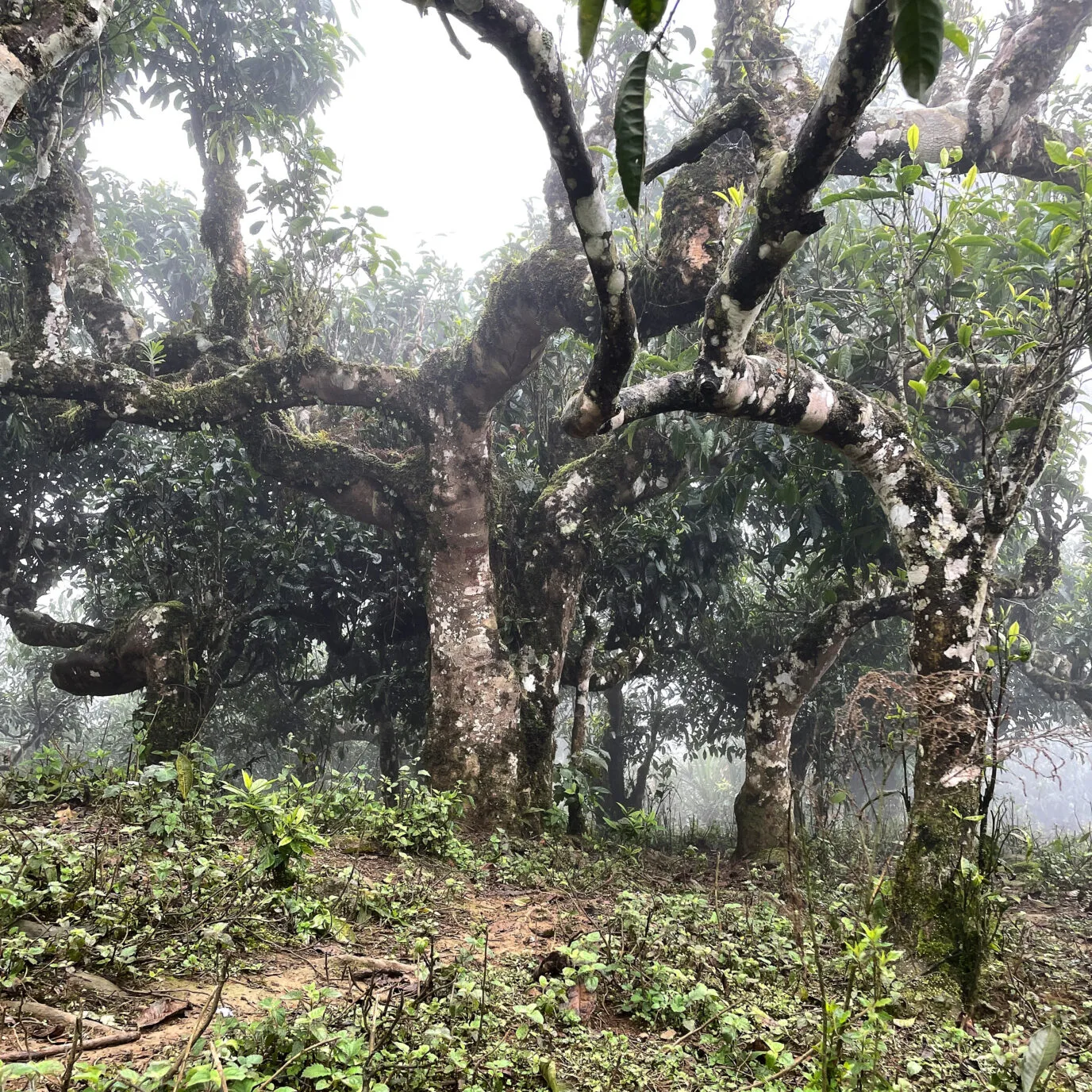
Ancient Shan Tuyet tea trees are wild heirloom specimens of Camellia sinensis var. assamica that reach ages between 200 and over 500 years, native to the high-elevation alpine cloud forests of Northern Vietnam at altitudes from 1,200 to 2,427 meters.
Unlike commercial plantation bushes pruned to waist height, these ancient specimens grow into substantial forest canopy trees with trunk circumferences exceeding 1.5 to 2.5 meters. The trees anchor deep into rocky granite substrate across the Tay Con Linh range, deriving nutrients entirely from primary forest compost without artificial inputs.
The name Shan Tuyet translates directly from Sino-Vietnamese as high mountain snow. Shan signifies the rugged alpine peaks where the trees thrive, while Tuyet describes the thick blanket of silvery-white downy hairs (botanically known as trichomes) covering every young bud.
These trichomes function as a specialized evolutionary defense mechanism, insulating fragile leaf tissue from frost temperatures that drop below 0°C in winter and reflecting intense ultraviolet radiation at high elevations.
The Snow-White Trichomes and Alpine Adaptations
The distinctive silvery velvet on Shan Tuyet buds is dense and persistent. When dried, these hairs retain their white coloration, giving finished loose-leaf tea its signature snowy appearance. In the cup, the trichomes release natural plant oils into the liquor, contributing a characteristic shimmering sheen and a uniquely velvety mouthfeel that cannot be replicated by lowland cultivars.
The high-altitude microclimate of Tay Con Linh plays an essential role in leaf chemistry. With annual precipitation averaging 2,000 to 2,800 mm and year-round humidity over 85%, ancient tea trees absorb water through aerial mosses and epiphytic ferns covering their bark.
Sharp diurnal temperature fluctuations, often shifting by 15°C between day and night, slow the rate of photosynthesis. This sluggish growth cycle forces the trees to synthesize high concentrations of polyphenols, catechins, and L-theanine over months rather than weeks.
Ancient Forest Trees vs Lowland Plantation Tea: Agronomic Comparison
Comparing ancient Shan Tuyet tea trees to commercial lowland plantation tea highlights fundamental differences in agronomy, root depth, biodiversity, and ecology:
| Agronomic Feature | Ancient Shan Tuyet Trees (Tay Con Linh) | Lowland Plantation Tea (Industrial) |
|---|---|---|
| Botanical Variety | Camellia sinensis var. assamica | Camellia sinensis var. sinensis |
| Tree Lifespan | 200 to 500+ years | 15 to 30 years (commercial replanting) |
| Tree Height | 6 to 15 meters (requires tree-climbing) | 0.8 to 1.2 meters (mechanically pruned) |
| Growing Elevation | 1,200 to 2,427 meters above sea level | 100 to 600 meters above sea level |
| Root System | Deep vertical taproots (3 to 6 meters) | Shallow lateral roots (0.5 to 1 meter) |
| Chemical Inputs | Zero fertilizers or chemical pesticides | Frequent synthetic fertilization & sprays |
| Harvest Frequency | 3 to 4 flushes per year | 15 to 20 harvest cycles per year |
While Tay Con Linh harbors ancient wild tea canopies, the surrounding valleys are dotted with secluded settlements where traditional stilt architecture and rural tranquility remain preserved. Compare elevations, hiking trails, and cultural highlights across our curated selection of the most peaceful villages in Ha Giang.
Ancestral Climbing Harvest and Artisanal Wood-Fired Crafting

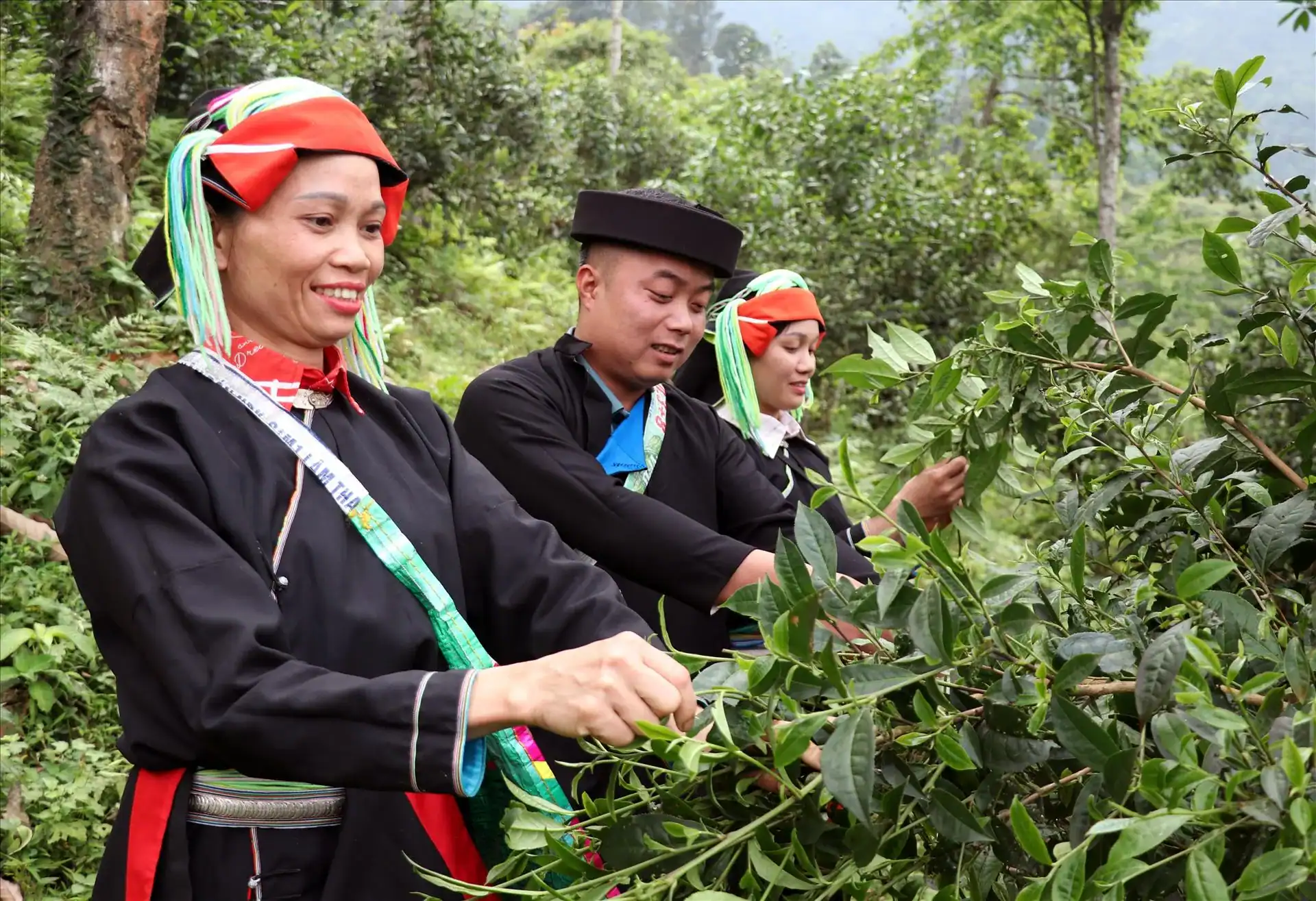
Harvesting ancient Shan Tuyet tea is an athletic, skilled endeavor handed down through generations of Red Dao and Hmong families in Ha Giang. Because the tender buds grow at the very tips of upper canopy branches high above the forest floor, harvesters cannot pick leaves while standing on level ground.
Harvesters scale mossy, lichen-encrusted limbs barefoot or in thin rubber grip shoes, balancing high in the canopy to selectively hand-pluck individual shoots.
Tree-Climbing Harvesting Techniques of the Red Dao
Harvesters observe strict harvesting protocols to ensure tree health and longevity:
- Dawn Harvesting Schedule: Picking begins at 5:30 AM when morning mist still coats the mountain canopy. Plucking before the midday sun burns off natural moisture preserves the bud’s delicate aromatic oils.
- One-Bud Two-Leaf Standard: Harvesters strictly gather only the unopened terminal bud and the two adjacent tender young leaves (known as mot bup hai la), leaving older foliage intact to nourish the tree.
- Hand Plucking Without Shears: Buds are gently pinched with thumb and forefinger rather than cut with mechanical tools, avoiding cellular crushing at the harvest node.
- Breathable Woven Baskets: Freshly harvested leaves are placed immediately into open-weave bamboo baskets strapped across the chest, preventing heat accumulation and premature sweat fermentation.
Traditional Wood-Fired Wok Roasting and Sun-Drying
Once brought down from the mountains, fresh leaves undergo processing within six hours of harvest. Across settlements of the Dao Ao Dai ethnic group and Red Dao in Khuoi My and Cao Bo, tea masters use large cast-iron woks set over wood fires fueled by dried mountain hardwood. The processing follows four precise artisanal stages:
- Withering (Lam heo): Leaves are spread on raised bamboo trays in shade for 2 to 4 hours to reduce surface moisture.
- Pan-Firing (Sao che): Leaves are tossed by hand in the wok heated to 250°C to 280°C for 8 to 12 minutes to deactivate polyphenol oxidase enzymes, halting oxidation.
- Hand Rolling (Vo che): Still-warm leaves are transferred onto ribbed bamboo mats and rolled firmly by hand to rupture leaf cells and twist the shoots into uniform needle shapes.
- Slow Hearth Drying (Say kho): Rolled leaves return to lower heat woks or charcoal-fired drying racks at 80°C until moisture content drops below 5%, locking in aroma.
Tasting Notes, Brewing Rituals, and Experiencing TVPalm Ecolodge
Brewing authentic whole-leaf ancient Shan Tuyet tea is a captivating sensory ritual. The liquor pours a luminous golden honey amber, releasing distinct aromatic notes of wild alpine wildflowers, raw honeycomb, sweet hay, and wet forest granite. On the palate, a delicate crisp bitterness quickly dissolves into a profound, lasting sweetness in the throat known as hau ngot that lingers for over twenty minutes.
Because ancient tea leaves retain their complex sweetness for years, tightly rolled dry buds rank among the finest authentic Ha Giang specialties to buy as souvenirs, allowing travelers to recreate the mountain tea ritual back home.
Traditional Gongfu Brewing Protocol

To extract the richest aromatics without scalding delicate downy bud trichomes, prepare ancient Shan Tuyet tea using this time-tested method:
- Teaware Selection: Use a non-porous glazed porcelain gaiwan or purple clay yixing teapot (120 ml to 150 ml capacity) preheated with boiling water.
- Leaf-to-Water Ratio: Weigh 5 to 6 grams of dry whole leaf for 120 ml of filtered spring water (approximately 1:20 ratio).
- Water Temperature: Heat fresh water to 85°C to 90°C. Never pour rolling 100°C boiling water directly onto dry buds, as excessive heat burns delicate leaf hairs and creates unwanted harshness.
- Flash Rinse: Pour water gently along the gaiwan rim and decant immediately (within 3 seconds) to awaken the leaves and release bouquet aromatics.
- Short Infusions: Steep for 15 to 20 seconds on the first infusion. Add 5 to 10 seconds for each subsequent brew. High-grade ancient Shan Tuyet yields 8 to 12 distinct infusions without losing structural sweetness.
Sipping freshly roasted Shan Tuyet tea beside a wood-fired hearth after a full day of canopy hiking is an integral part of village life. Discover customary stilt house etiquette, communal family dinners, and traditional sleeping arrangements in our guide to an authentic homestay experience in Ha Giang.
Visiting the Ancient Tea Forests with TVPalm Ecolodge
Travelers seeking genuine contact with these living monuments can embark on guided agroforestry journeys based out of TVPalm Ecolodge in Khuoi My village. Situated right at the foot of Tay Con Linh, our lodge provides a peaceful mountain base where guests enjoy private stilt bungalows, fresh local organic meals, and direct trail access into the protected tea forests.
« Standing beneath a 500-year-old Shan Tuyet tea tree in the morning mist makes you realize that tea here is not merely an agricultural commodity. It is living proof of ecological harmony between indigenous mountain wisdom and forest stewardship. »
Van Trung Nguyen, Founder of TVPalm Ecolodge & Adventure
Our guided 1 Day Ancient Snow Shan Tea Trekking Tour leads visitors through old-growth groves, introduces ethical tree-climbing techniques alongside Red Dao elders, and includes an evening tea roasting workshop. Practicing community-based tourism in Ha Giang guarantees tree-climbing harvest fees directly benefit indigenous elders and fund the long-term conservation of ancient tea reserves.
For broader highland journeys, multi-day routes for trekking Tay Con Linh mountain connect ancient tea trails with high cloud forest ridge summits and remote ethnic hamlets.
Frequently Asked Questions About Ancient Shan Tuyet Tea Trees
How old are the oldest Shan Tuyet tea trees in Ha Giang?
Botanical surveys conducted across the Tay Con Linh range (particularly in Cao Bo, Lung Phin, and Hoang Su Phi) have documented multiple ancient specimens aged between 300 and over 500 years old.
Many of these historical trees have been formally recognized by the Vietnam Association for Conservation of Nature and Environment (VACNE) as protected Vietnam Heritage Trees, ensuring they cannot be cut down or commercially relocated.
What is the best month to visit the ancient tea groves?
The premier time to visit is during the spring harvest from late March through early May, when the trees put forth their first tender buds of the year after winter dormancy.
This spring flush produces the most prized, nutrient-dense tea. A secondary autumn harvest occurs from September through October, offering crisp sunny weather, vibrant golden rice terraces, and active tea roasting in highland stilt villages.
How does ancient Shan Tuyet tea caffeine compare to coffee?
A standard 150 ml cup of brewed ancient Shan Tuyet tea contains approximately 35 to 45 milligrams of caffeine, roughly one-third that of a brewed cup of Arabica coffee.
Moreover, because ancient forest tea leaves synthesize abundant L-theanine, caffeine is absorbed gradually into the body over several hours. This sustained release delivers clean alertness and mental focus without the jittery spike, heart racing, or sudden energy crash associated with commercial coffee.


