

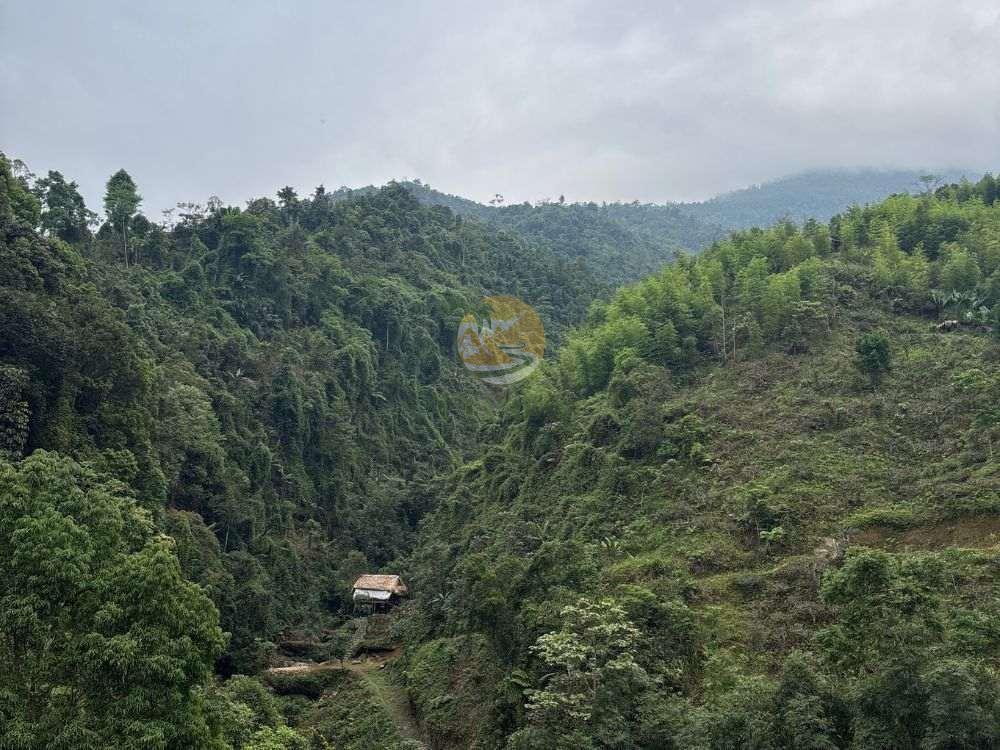
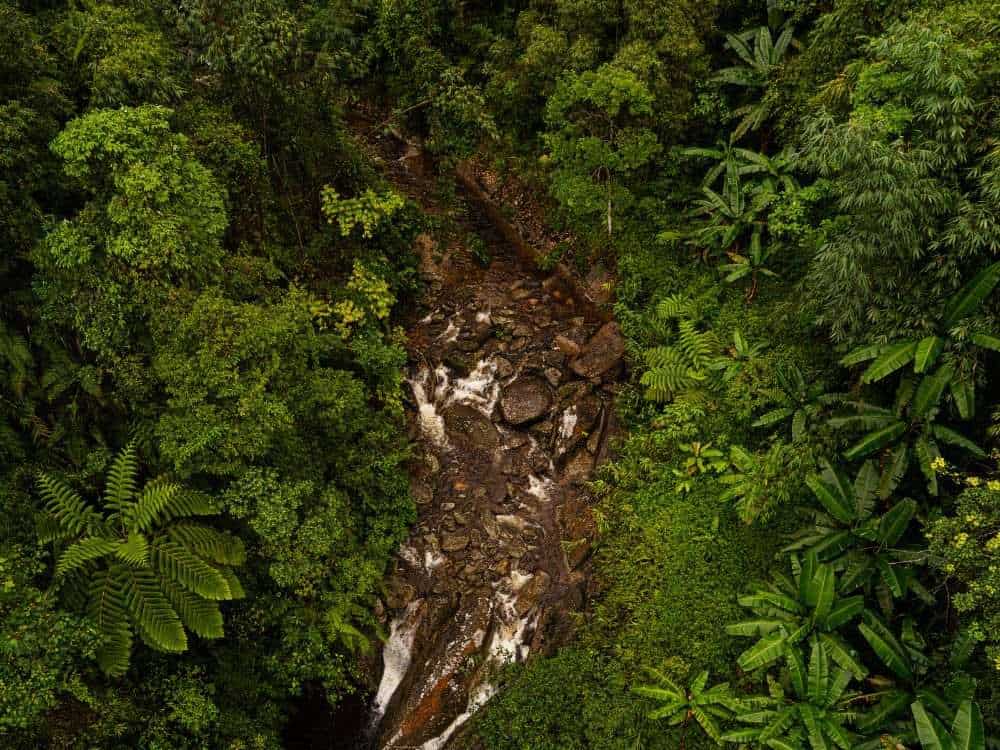
I don’t believe a business can protect a forest.
If one day we no longer exist, I still hope Tay Con Linh will be as green as it is today.
If a forest can only survive because of a tour company, then it isn’t a forest with a future.
A forest must be protected by the people who live alongside it.
We only hope to contribute a very small part of that story.
After many years walking alongside forest rangers, Dao people, and families living at the foot of Tay Con Linh, I’ve come to understand something very simple.
No one gets up each morning thinking they’re going to go protect nature.
The ranger just shoulders his pack and enters the forest.
The Dao woman just goes up to the field to pick tea, the way her mother and grandmother did.
A father simply tells his child not to cut trees in the headwater forest.
These actions repeat, day after day.
Quietly.
Known by very few.
But it is precisely these ordinary things that have kept the forest alive until today.
On the other side, a forest doesn’t disappear in a single day either.
It doesn’t begin with the sound of a saw.
It begins when people no longer see their future in that forest.
When protecting the forest means becoming poorer.
When young people have to leave the village to find other work.
When a tree is seen only as money that can be sold today, rather than water, shade, and soil for many years ahead.
This is not a story unique to Tay Con Linh.
It is a choice that very many mountain communities around the world have had to face.
That’s why I don’t think tourism was born to save nature.
That’s too large an expectation.
But tourism can do something smaller.
And perhaps more realistic.
Help the people who are protecting the forest have one more reason to continue their work.
A guide can make a living from his knowledge of his homeland.
A family can have extra income from their own kitchen.
An ancient Shan tuyet tea tree continues to be cared for because it holds long-term value rather than being cut down.
When these things happen, tourism doesn’t protect the forest.
People protect the forest.
Tourism just helps make that choice more sustainable.
That’s also why we don’t try to run as many trips as possible.
Not because more people in the forest means more love for it.
Sometimes the opposite is true.
A forest becomes just another destination when too many people enter without anyone truly listening to it.
We choose small groups.
We decline itineraries that don’t fit.
We don’t promise sightings of the Tonkin snub-nosed monkey.
Not because that’s a way of standing out.
But because we believe nature shouldn’t have to change to meet human expectations.
It is humans who need to learn to behave appropriately toward nature.
Someone once asked me:
‘What do you hope for most after a trip?’
Not a five-star review.
Not a beautiful photo.
Not even that they come back.
What I hope for most is that, many years later, standing before some forest somewhere, they will naturally speak a little more softly.
Walk a little more slowly.
Naturally not break a branch just to take a photo.
Naturally ask permission before pointing a camera at someone they don’t know.
Not because anyone reminded them.
But because it has become a reflex.
If Tay Con Linh can leave in a person just that one small change, I think the trip has had meaning.
Maybe one day you’ll have forgotten the name of the stream you crossed.
Forgotten the climb that tired you out.
Even forgotten the name of the guide who walked with you the whole way.
Maybe you’ll also have forgotten us.
That’s perfectly normal.
I only hope that one day, in a forest far from Tay Con Linh, you’ll suddenly slow your pace.
Not because there’s a sign.
Not because someone is asking you to.
But because you know that every forest has its own rhythm of life.
And humans, if they truly love a place, sometimes the right thing to do is not to leave their mark on it.
But to leave so that place remains untouched — just as it was the day you first stepped into it.
If that happens, then for me, that is already the most beautiful meaning of travel.
Not bringing many people to a forest.
But from one forest, having more and more people who know how to care for other forests.
Perhaps…
That is also the greatest gift Tay Con Linh can give to all who have passed through here.


