

There are tea trees on Tay Con Linh that have stood there longer than many people in the village.
They were not planted for tourism.
Not born to become a promotional story.
They do not know they are called « ancient Shan snow tea trees ».
They do not know that people in the lowlands call them a specialty.
They only grew on the mountain slope, through mist, through wind, through long rainy seasons, through deep cold seasons, through the hands of many Dao people who picked tea, roasted tea, drank tea and lived alongside these trees as a perfectly ordinary part of life.
Perhaps it is precisely that ordinariness that makes them worthy of respect.
Tea does not begin in the cup
A cup of Shan snow tea does not begin with hot water.
It begins with altitude.
With climate.
With soil.
With forest.
With morning dew settling on the leaves.
With the feet of tea pickers climbing the mountain while it is still cold.
With hands that know which buds to pick and which to leave.
And with patience.
Not everything slow is inefficient.
Some things, if pushed, lose the very value they hold.
Ancient tea trees are one of those things.
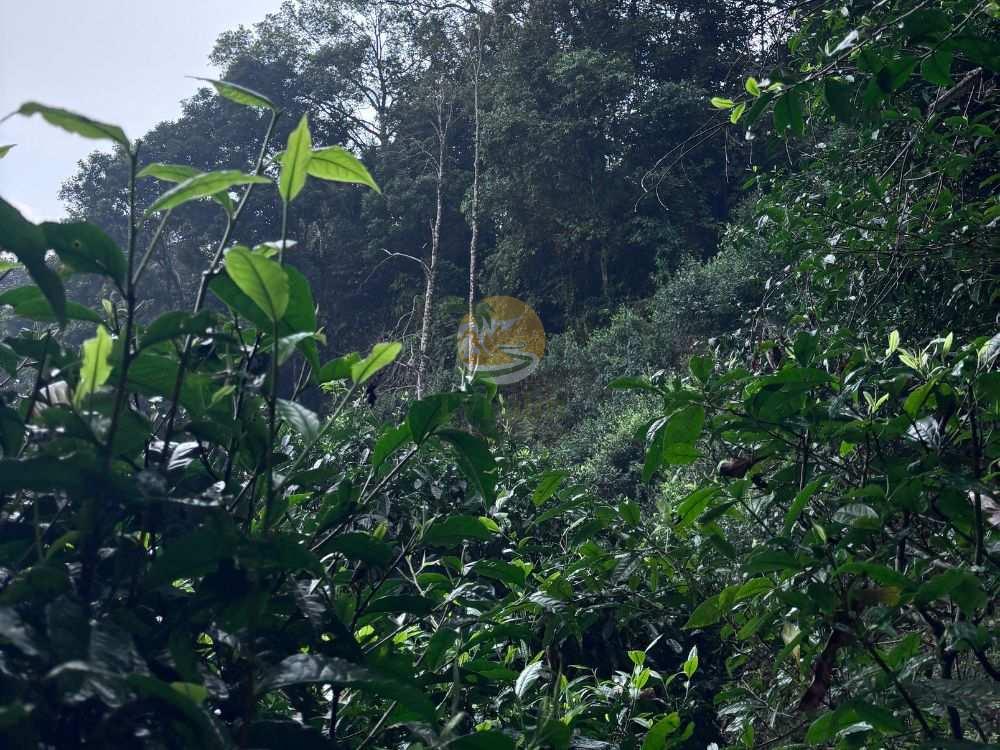
A tea picker does more than pick tea
A skilled tea picker does not only know how to take buds.
They know the season.
Know the tree.
Know the path.
Know whether today the mist is still heavy or has lifted.
Know that after rain, which path is slippery, which tree is hard to climb, which stretch should not be used.
Know that a tea tree needs its strength saved for seasons still to come.
Picking tea is not about taking as much as possible.
Picking tea correctly means knowing how much is enough.
That is the difference between extraction and living alongside.
Not every ancient tree should receive visitors
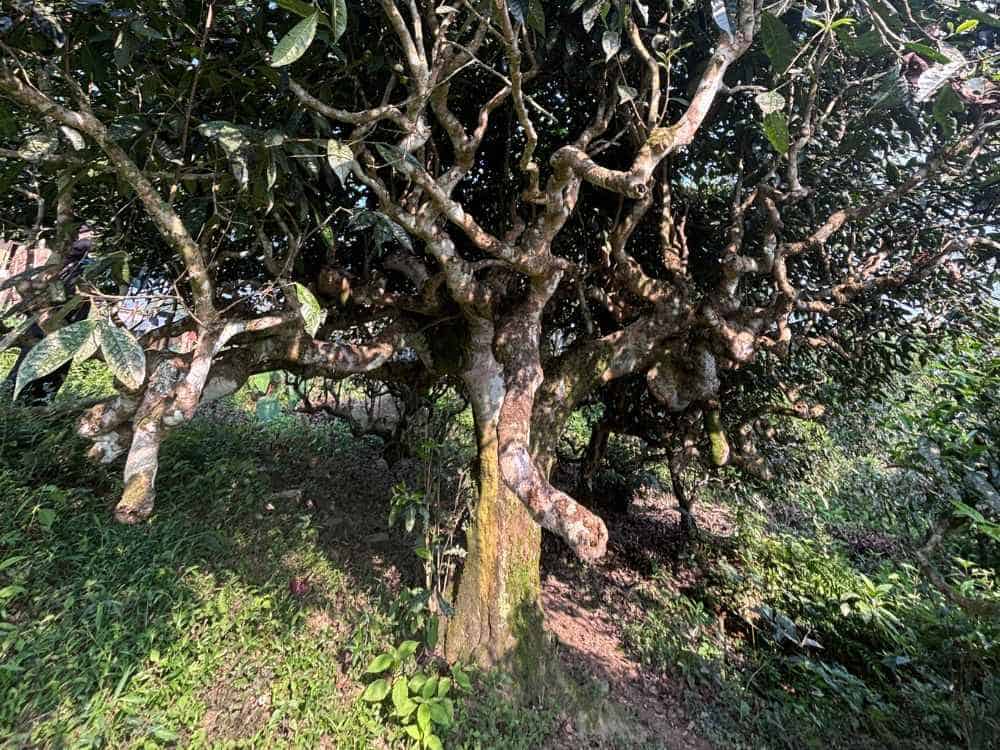
Some tea trees are very beautiful.
Old trunk.
White lichen.
Wide canopy.
Standing alone on a mountain slope as if it has witnessed many human generations pass.
If we took visitors there, people would certainly love it.
But we do not think every ancient tea tree should become an attraction.
Some trees grow in areas with sensitive paths.
Some tea gardens belong to the private livelihood of individual families.
Some areas are not suitable for groups of visitors coming and going repeatedly.
A tea tree may withstand wind and weather for hundreds of years, but it may not withstand uncontrolled human curiosity.
So there are places we will describe, but not take visitors to.
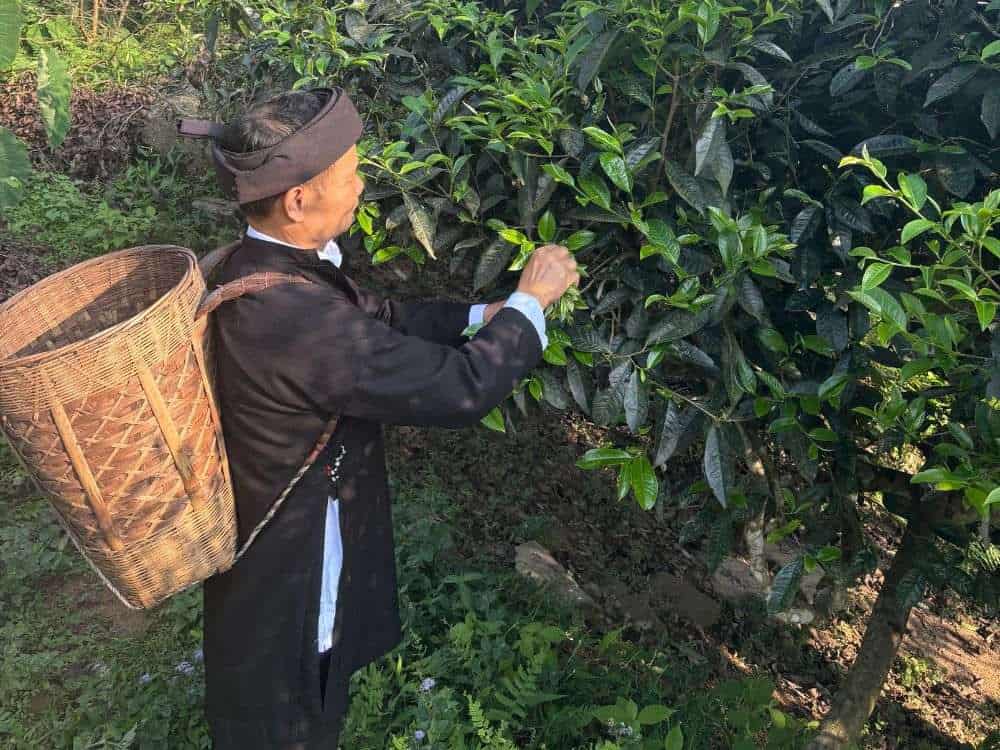
Shan snow tea does not need to be romanticized
It is very easy to write about tea in beautiful sentences.
Mist.
High peaks.
White buds.
Dao people.
Roasting fire.
All of that is real.
But if we only write like that, we diminish the labor of the people who make tea.
Making tea is work.
Walking.
Cold.
Aching hands.
A wrong roasting temperature ruins a whole batch.
One bad season can reduce the harvest significantly.
A selling price sometimes does not match the effort put in.
A good cup of tea does not only have poetry.
It also has sweat.
And if we do not see that, we have only tasted the flavor — not the story behind it.
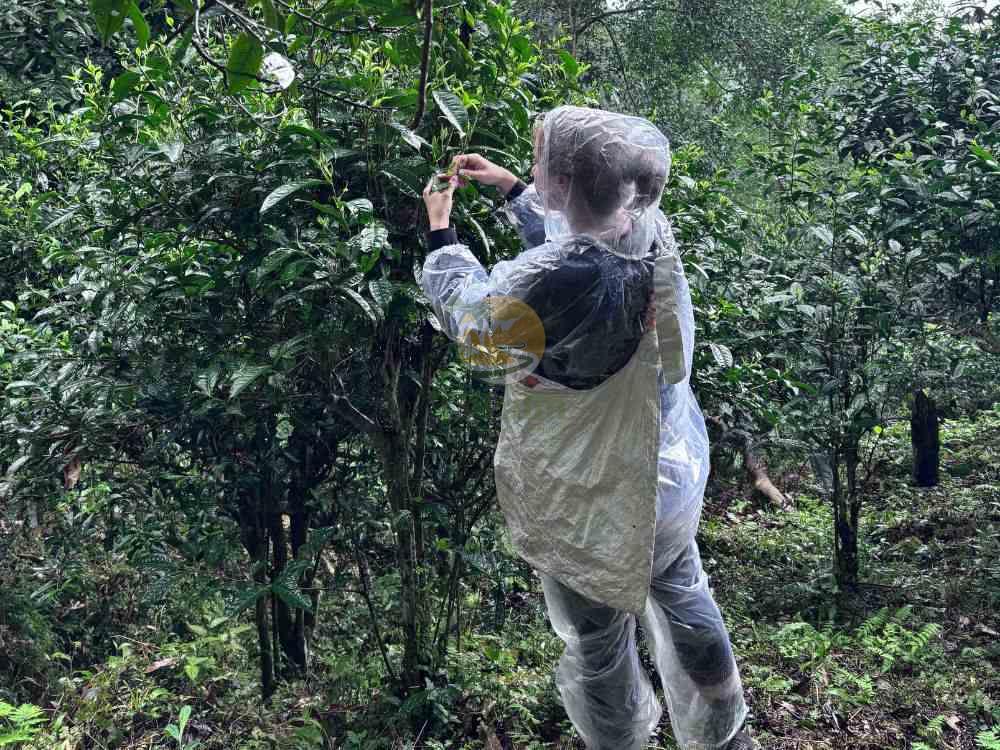
What TVPalm Can Do
We can tell the story of tea with respect.
Not calling everything « ancient » if we are not sure.
Not turning tea gardens into photo backdrops.
Not taking visitors to places people do not want or where movement could cause damage.
Not pushing tea-makers to perform.
Not turning real work into a tourism show.
What we can do is help visitors understand that behind a cup of tea is a whole connection between forest, soil, water, climate and people.
If they understand that, they will drink more slowly.
And perhaps, with more respect.
What We Will Not Do
We will not sell Shan snow tea as an empty legend.
We will not use images of tea workers to decorate our brand.
We will not open trekking routes simply because there are a few beautiful tea trees.
We will not forget that tea trees belong first to the life of the people here — not to the curiosity of visitors.
And we will not let a cup of tea become something cut off from the forest that nurtured it.
A cup of tea can hold the memory of an entire mountain
Perhaps after the trip, you will not remember all the village names you passed through.
Perhaps you will forget which path led up to that slope.
But perhaps you will remember an afternoon, sitting down at the edge of a house, holding a warm cup of tea, watching mist drift past in front of you.
Nothing very large happening.
Just a cup of tea.
A person pouring it.
A mountain in quiet.
And the feeling that some things in life should not be rushed into products.
An ancient tea tree did not grow to become a destination.
It grew because this place once had enough forest, enough water, enough mist, enough time — and enough people who knew how to live slowly alongside it.
If that is still kept, perhaps we keep more than just a good cup of tea.
We keep part of the memory of Tay Con Linh.


