

There’s a question I think visitors should ask more often before booking a trip.
Not just: what does this trip include?
But: where does the money I pay actually go?
That question is very direct.
And to my mind, it’s very necessary.
Because in tourism, a low or high price is sometimes only the visible part. What matters more lies underneath: who gets paid, who is pushed to cut their price, who carries the risk, and what’s left for the place after the group of visitors is gone.
A trip doesn’t just have costs.
It has consequences.
Good ones.
Or bad ones.
At Tay Con Linh, we don’t want the money from a trip to simply pass through this place like water running fast.
Visitors arrive.
Eat a meal.
Take a few photographs.
And leave.
If that’s all there is, tourism very easily becomes a way of taking more than it leaves behind.
What we try to do is leave a portion of the trip’s value with the people who created it.
Not as charity.
Not as a nice story to tell visitors.
But as something very ordinary called fairness.
Whoever contributes deserves to be properly paid for their work.
Part of that money goes to the local guide.
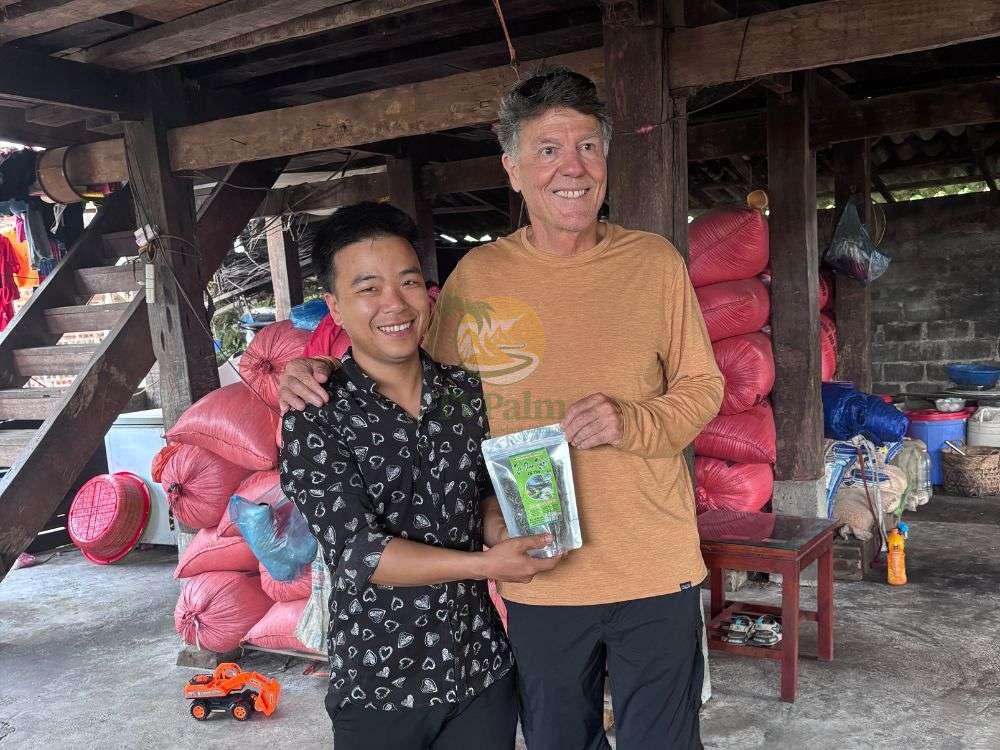
Not just because he knows the trails.
Knowing the trails is only the most visible part.
What matters more is that he knows how to read this land.
He knows which slope will be slippery after rain.
He knows which stream is still shallow in the morning but can rise fast by afternoon.
He knows which household is ready to receive visitors today and which one has something personal going on and should not be disturbed.
He knows when to tell a story.
And when to go quiet so visitors can hear the forest themselves.
If we pay him too little, we’re not just shortchanging one worker.
We’re eroding the value of a kind of knowledge that cannot be learned quickly in a few training sessions.
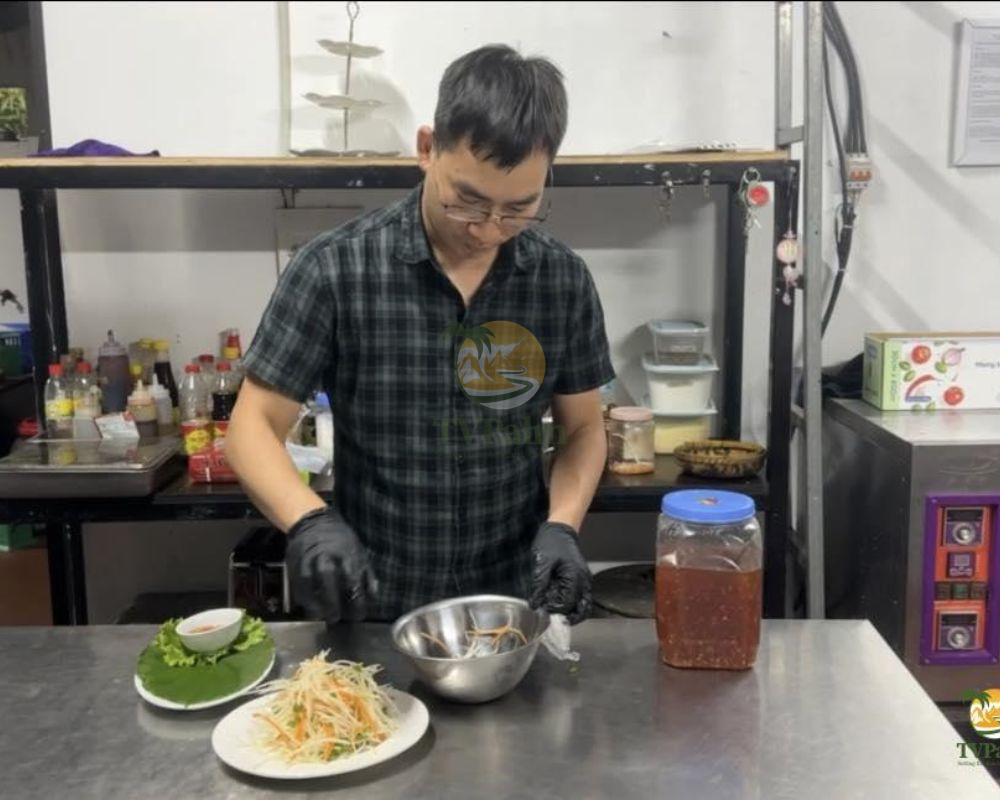
Another portion stays with the families who cook a meal in the village.
A real meal doesn’t appear naturally on the table.
It begins with the bunch of vegetables from the garden, the chicken from behind the house, the handful of rice, the cup of tea, the fire, the preparation time — and the fact that this family has agreed to open the door of their daily life to strangers.
When a tour is too cheap, what gets cut first is usually not what visitors see.
It’s the parts visitors see least.
The cook’s pay.
The preparation time.
The quality of the ingredients.
The host’s comfort.
And in the end, a village meal very easily becomes a tourist food portion.
It still looks local.
But the truth is slowly lost.
Part of the money also goes toward keeping the trip at a reasonable size.
This is something many people don’t see.
Going in a small group often costs more.
Same guide, same vehicle, same preparation — but divided by fewer people.
If you only look at the price sheet, a larger group always seems more logical.
But Tay Con Linh is not a place where everything should be optimized by headcount.
A small group can stop when it rains suddenly.
Can wait for an elderly villager to pass on a narrow path.
Can sit longer by the fire without tiring the host.
Can pass through a stretch of forest without human voices drowning out the birdsong.
These things are not cheap.
Not because someone is trying to make them expensive.
But because care always requires time, people, and limits.
There are costs that don’t appear neatly in tourism stories.
Re-checking trails after the rainy season.
Changing the route when a section of forest needs to rest.
Paying the local person extra because the group came back late.
Preparing a safety plan even when it ends up never being needed.
Taking the time to talk with a village family beforehand, rather than simply showing up with visitors.
These tasks don’t produce a beautiful photo.
But without them, the quality of the trip slowly degrades.
A company can cut these parts to sell cheaper.
Visitors may not notice immediately.
But the forest will notice.
The local people will notice.
And after a few seasons, the experience itself will notice.
I’m not saying a more expensive trip is always better.
Not at all.
A high price doesn’t automatically create responsibility.
But a very cheap trip always deserves a closer look.
Cheaper how?
Who is receiving less?
What is being overlooked?
Has safety been lightened?
Are local people being paid fairly?
Is the forest being pushed into a schedule beyond what it can sustain?
These questions don’t spoil the joy of the trip.
On the contrary, they help the trip become more considerate.
For us, the money visitors pay is not just revenue.
It is how a model of tourism is kept alive.
If visitors choose a trip only because it’s the cheapest, the market will eventually reward the cheapest ways of doing things.
If visitors choose a trip because it’s fairer, slower, more careful, then those who do things seriously will have one more reason to continue.
This is something very concrete.
A place is not preserved by love alone.
It also needs an economy fair enough that the people, guides, local families, and small businesses can live by protecting what is worth protecting.
When you pay for a trip with us, I don’t want you to think you’re buying a perfect product.
We are not perfect.
We are still learning.
Still improving.
Still have things we need to do better.
But I want that money to pass through the most honest places possible.
Into the hands of the person who walked with you in the rain.
To the kitchen that cooked you a hot meal.
To the quiet work that keeps the trail still safe, the forest still peaceful, and the village from being turned into a stage.
And in the end, toward a way of doing tourism that we hope to have the strength to sustain for many years to come.
Not so that we grow very fast.
But so that every time someone comes to Tay Con Linh, they still have the chance to encounter something real.
Real nature.
Real people.
Real gestures — small, but not fake.


