

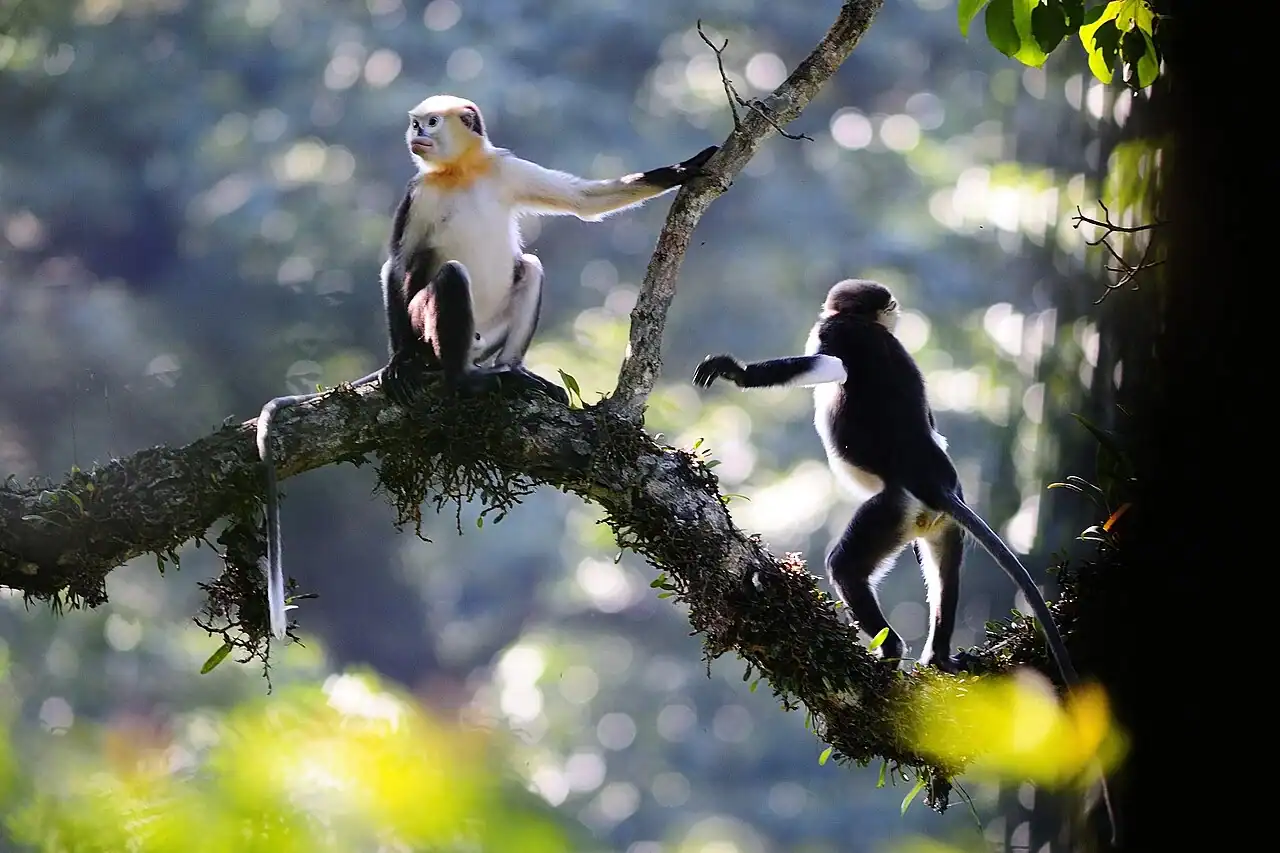
Le rhinopithèque du Tonkin est un symbole du patrimoine sauvage du Vietnam, et pourtant il est au bord de l’extinction. Comprendre pourquoi ce primate est menacé est la première étape pour le protéger. Dans cet article, j’analyse les menaces critiques qui pèsent sur l’espèce, de la perte d’habitat au braconnage illégal, à partir de ce que j’ai vu en randonnant dans les forêts primaires de Ha Giang.
Je suis Nguyễn Văn Trung, fondateur de TVPalm. Je parcours depuis des années les forêts du Tay Con Linh et de Khau Ca, et j’organise des voyages à Ha Giang depuis 2021. Voici ce que j’ai vu.
Les principales raisons pour lesquelles le rhinopithèque du Tonkin est menacé
La survie du rhinopithèque du Tonkin (Rhinopithecus avunculus) est à un point de rupture. Il ne reste qu’environ 250 individus à l’état sauvage. Plusieurs facteurs critiques expliquent pourquoi le rhinopithèque du Tonkin est aujourd’hui menacé d’extinction.
Perte d’habitat sévère et dégradation des forêts
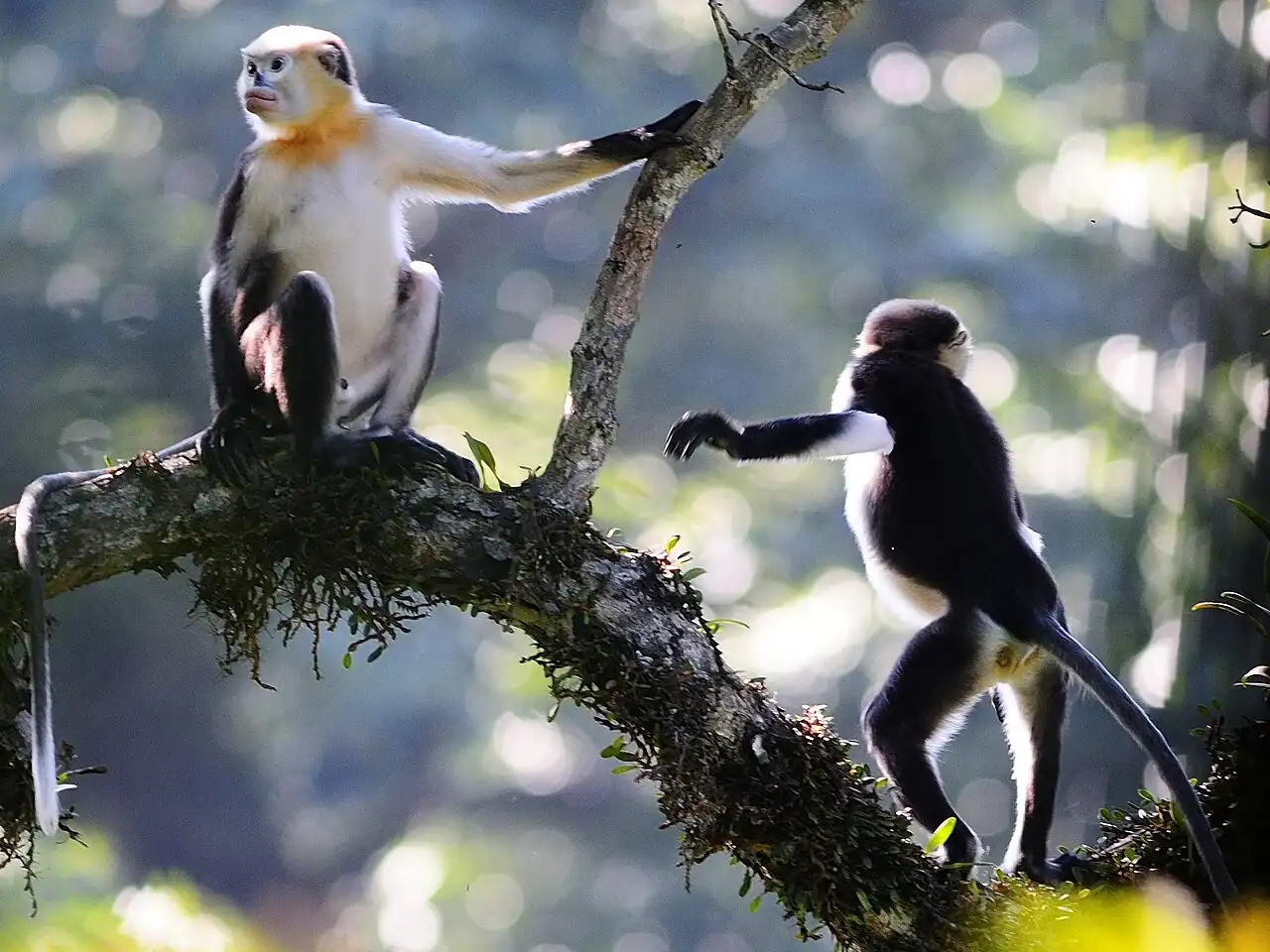
L’agriculture et l’exploitation du bois sont les principaux ennemis de la forêt. Les agriculteurs locaux défrichent souvent les forêts primaires calcaires pour planter du maïs ou de la cardamome. L’abattage supprime aussi les arbres anciens et élevés que ces singes utilisent pour dormir et se déplacer.
Quand la forêt disparaît, les singes perdent leur unique foyer. À TVPalm, nous voyons chaque année ces corridors verts se réduire. Sans grandes forêts continues, les singes ne peuvent pas survivre.
Chasse illégale et braconnage pour la médecine traditionnelle
La chasse reste une menace mortelle. Autrefois, on chassait ces singes pour leur viande. Aujourd’hui, les braconniers les ciblent pour la médecine traditionnelle. Ils utilisent les os de singe pour fabriquer une « colle d’os » (appelée localement cao).
La population totale étant très réduite, moins de 250 singes, la perte d’un seul adulte est un désastre. Des lois strictes, comme le décret 06/2019/ND-CP, les protègent désormais, mais des pièges illégaux subsistent dans les jungles profondes.
Fragmentation et isolement extrêmes des populations
Les singes restants vivent en petits groupes isolés. Ils sont piégés sur des « îlots de forêt » entourés de champs et de routes. Par exemple, les 160 singes de Khau Ca ne peuvent pas rejoindre les groupes de Quan Ba. Cet isolement entraîne de la consanguinité.
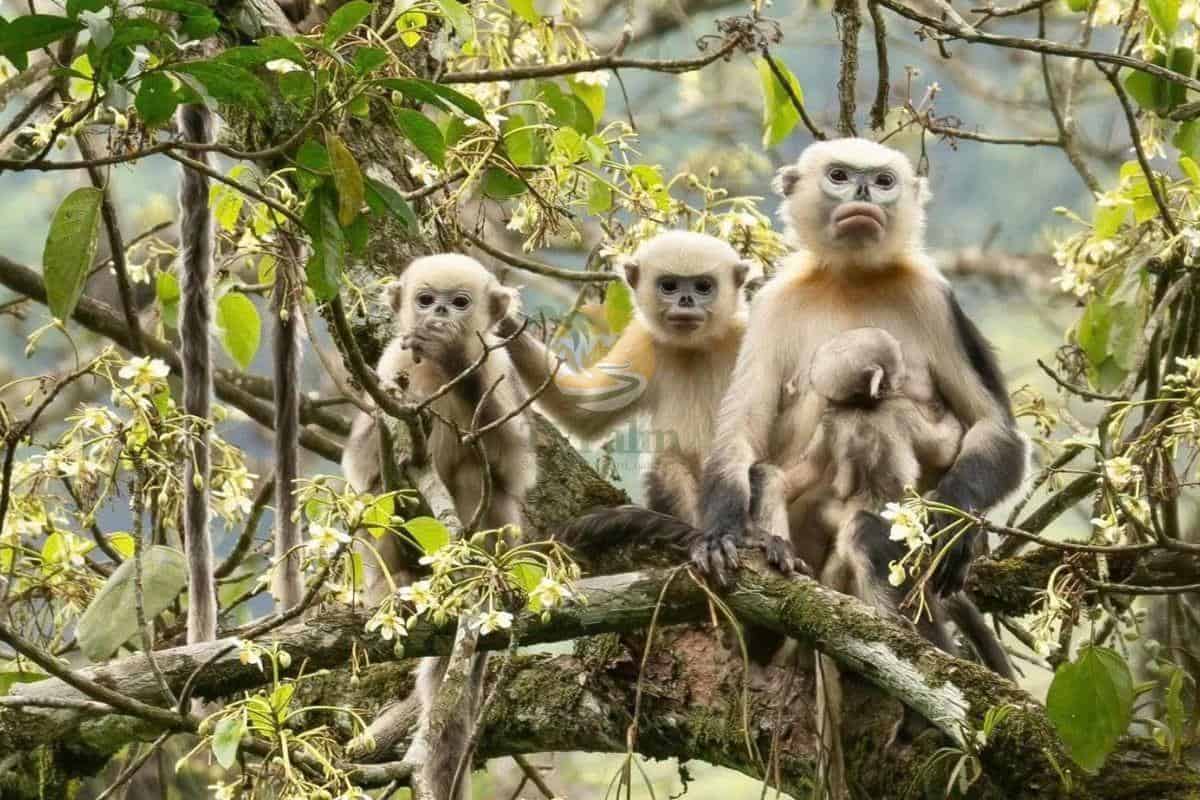
Lorsque les singes s’accouplent au sein d’une même petite famille, leurs petits deviennent plus faibles. Ces jeunes singes sont plus exposés aux maladies et ont un taux de survie plus bas.
Rareté des sources de nourriture spécialisées
Ces primates sont difficiles dans leur alimentation. Ils vivent d’un régime précis de jeunes feuilles, de fruits et de boutons floraux d’arbres indigènes. La dégradation de la forêt détruit ces ressources. Lorsque les humains récoltent des produits forestiers ou font paître du bétail, ils perturbent la chaîne alimentaire.
Si une femelle ne trouve pas assez de nutriments, elle ne peut pas allaiter son petit. Cette faim ralentit la croissance de toute la population.
L’impact de la perte d’habitat sur la survie des primates
Extension des terres agricoles et culture de la cardamome
L’agriculture locale grignote lentement la jungle. Les agriculteurs défrichent souvent les pentes abruptes pour planter du maïs et de la cardamome. La culture de la cardamome est particulièrement nuisible à l’écosystème.
Pour cultiver cette épice, les agriculteurs éliminent les petites plantes et les buissons sous les grands arbres. Cela empêche de nouveaux arbres de pousser. Pendant mes 10 années de randonnée à Ha Giang, j’ai vu des jungles épaisses se transformer en maigres exploitations. Cette expansion force les singes à vivre dans des zones plus petites et moins sûres.
Exploitation forestière illégale et disparition des arbres de nidification anciens
L’abattage illégal vise les arbres les plus grands et les plus vieux de la forêt calcaire. Ces arbres anciens sont essentiels aux singes. Ils utilisent les hautes branches comme des « autoroutes » pour traverser la forêt et échapper aux prédateurs. Ils dorment aussi dans ces hautes canopées pour rester au chaud et en sécurité.
Supprimer seulement 3 ou 4 grands arbres peut détruire le site de nidification d’une famille. Sans ces grands arbres, les singes doivent se déplacer au sol. Cela les rend vulnérables face aux chasseurs et aux ennemis naturels.
Développement des infrastructures et conséquences historiques
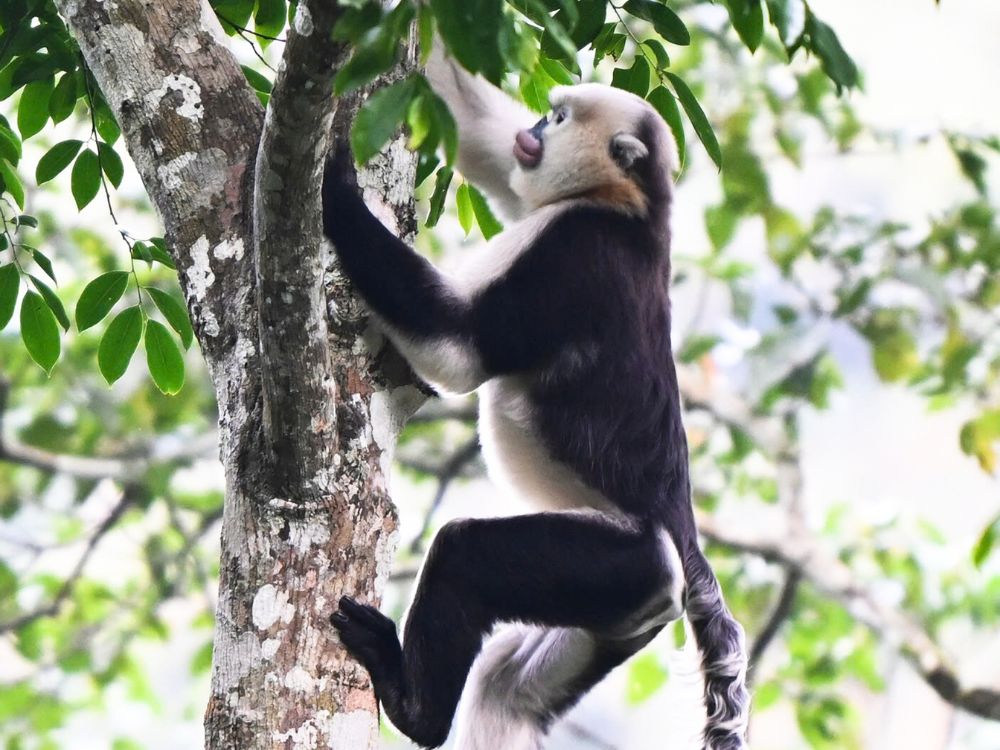
De grands projets ont historiquement endommagé l’habitat du singe. Par exemple, la construction de la centrale hydroélectrique de Na Hang a autrefois inondé de vastes zones de forêt primaire. Cet événement a forcé les singes à gagner des sommets plus hauts et plus froids.
Aujourd’hui, la construction de nouvelles routes continue d’amener plus de monde au cœur de la jungle. L’activité humaine accrue génère du bruit et de la pollution. Ces changements perturbent le calme dont les singes ont besoin pour survivre et élever leurs petits.
Le danger de la chasse illégale et du commerce de viande de brousse
Croyances traditionnelles et demande de colle d’os
Beaucoup de gens croient que les os de singe ont des vertus curatives. Ils les font cuire pendant 3 à 5 jours pour obtenir de la « colle d’os ». Ce produit est un ingrédient courant de la médecine traditionnelle contre les douleurs articulaires.
Cette forte demande fait des singes une cible de valeur pour les chasseurs. Même si ces singes sont petits, leur valeur marchande est assez élevée pour tenter les braconniers de s’enfoncer dans la forêt.
La menace persistante du braconnage local malgré la protection légale
Le gouvernement vietnamien protège ces primates par des lois strictes. Pourtant, le braconnage local se poursuit en secret. Les chasseurs emploient souvent de simples pièges en fil de fer, peu coûteux et faciles à dissimuler. Ces pièges sont difficiles à repérer pour les gardes dans la jungle dense. Un seul piège peut tuer un singe instantanément ou lui infliger une mort lente et douloureuse. Cette menace persistante empêche la population de croître.
Vulnérabilités biologiques et isolement des populations
L’effet d’« île » dans les forêts calcaires
Les singes vivent sur des « îlots de forêt ». Des routes et des champs séparent ces petits bosquets. Les singes ont peur de traverser les terrains ouverts pour rejoindre d’autres groupes. Une famille d’une forêt ne peut donc pas rencontrer une famille d’une autre forêt. Ils sont piégés dans de petits espaces.
Cet isolement limite leur accès à des sources de nourriture variées et à des sites de nidification sûrs.
Déclin génétique et risques de consanguinité
L’isolement conduit à la consanguinité. Quand des singes s’accouplent avec des proches parents, la population perd sa robustesse génétique. Les singes tombent alors plus facilement malades. La consanguinité réduit aussi leur capacité à s’adapter à un climat qui change. Avec le temps, tout le groupe s’affaiblit et a moins de chances de survivre aux catastrophes naturelles.
Faible taux de reproduction et forte mortalité infantile
Ces singes grandissent et se reproduisent très lentement. Une femelle ne donne généralement naissance qu’à un petit tous les 2 ans. Ce rythme lent rend très difficile l’augmentation de leur effectif total. De plus, la mortalité infantile est élevée.
Beaucoup de bébés ne survivent pas à leur première année, à cause du froid extrême ou du manque de nutriments. Quand un bébé meurt, le groupe doit attendre 2 ans de plus avant de réessayer.
Les efforts de conservation actuels et le rôle de FFI
La création de la zone de conservation des espèces et des habitats de Khau Ca
Khau Ca est le sanctuaire le plus important pour cette espèce. Créée en 2009, cette zone couvre près de 4 000 hectares de forêt calcaire. Elle abrite environ 160 singes, soit plus de la moitié de la population mondiale. Cette zone protégée interdit l’agriculture et l’abattage dans le cœur de l’habitat du singe.
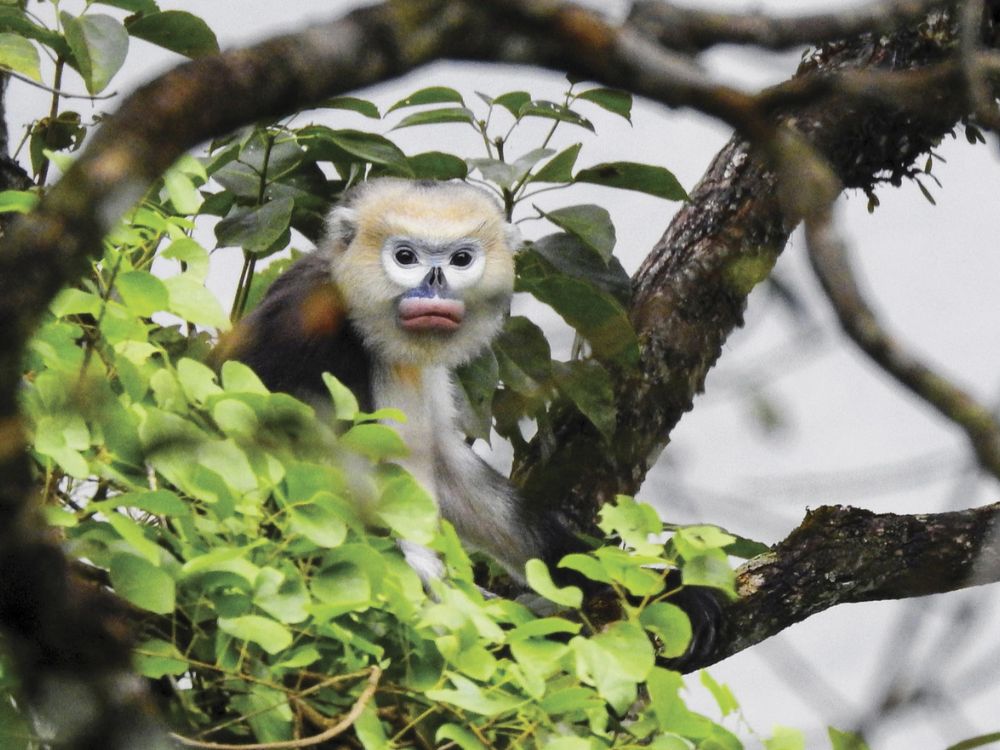
À TVPalm, nous respectons ces limites afin que les singes restent à l’abri de tout dérangement.
Des équipes communautaires de protection de la forêt à Ha Giang
Les habitants sont les véritables gardiens de la forêt. FFI et les autorités locales ont constitué 3 équipes de patrouille spécialisées à Ha Giang. Elles comptent de 15 à 20 villageois qui connaissent parfaitement le terrain.
Ils patrouillent dans la jungle 15 jours par mois pour retirer les pièges illégaux et arrêter les voleurs de bois. Leur présence a nettement réduit la pression de chasse qui menaçait autrefois l’espèce.
Le cadre juridique et le décret 06/2019/ND-CP
Le gouvernement vietnamien accorde à ces singes le plus haut niveau de protection juridique. Selon le décret 06/2019/ND-CP, le rhinopithèque du Tonkin figure dans le groupe IB. Cela signifie que toute chasse, tout piégeage ou tout commerce de ces animaux constitue un crime grave.
Les contrevenants encourent de lourdes amendes, voire jusqu’à 15 ans de prison. Ces lois strictes constituent un puissant bouclier contre le trafic illégal d’espèces sauvages.
Le rôle du tourisme durable dans la protection de l’espèce
Comment la randonnée responsable crée des incitations économiques à la conservation
La randonnée responsable apporte 2 grands bénéfices à la conservation. D’abord, elle crée des emplois pour d’anciens chasseurs. Quand une personne du pays gagne un salaire équitable comme guide de randonnée pour TVPalm, elle n’a plus besoin de chasser pour survivre.
Ensuite, une partie des revenus du voyage retourne souvent aux fonds forestiers locaux. Tout le village a ainsi une raison financière de protéger chaque singe de sa forêt.
Pratiques éthiques d’observation de la faune pour les voyageurs internationaux
Si vous visitez Ha Giang, vous devez respecter 3 règles strictes pour protéger les singes. Premièrement, gardez toujours une distance d’au moins 30 mètres de tout primate. Deuxièmement, ne donnez jamais de nourriture aux animaux, car la nourriture humaine peut les rendre malades. Troisièmement, parlez à voix basse et évitez la photographie au flash.
Ces gestes simples garantissent que votre visite n’ajoute pas de stress à une population déjà vulnérable.
Questions fréquentes sur le rhinopithèque du Tonkin
Combien reste-t-il de rhinopithèques du Tonkin à l’état sauvage ?
Il n’en reste que 200 à 250 individus dans le monde. Ce petit nombre en fait l’un des primates les plus rares de la planète. Environ 160 de ces singes vivent dans la forêt de Khau Ca, à Ha Giang.
Où se trouve le meilleur endroit pour voir cette espèce ?
La zone de conservation des espèces et des habitats de Khau Ca est le lieu le plus fiable. Ces singes sont très timides et vivent dans les hautes canopées. À TVPalm, nous disons toujours à nos hôtes qu’il faut compter 1 à 2 jours de randonnée patiente et une approche très silencieuse pour les apercevoir.
Pourquoi le rhinopithèque du Tonkin est-il menacé ?
L’espèce fait face à trois grandes menaces : la destruction de son habitat pour l’agriculture, le braconnage illégal pour la médecine traditionnelle et la faiblesse génétique due à l’isolement des populations. Ces facteurs combinés rendent difficile un rétablissement naturel de la population.


