

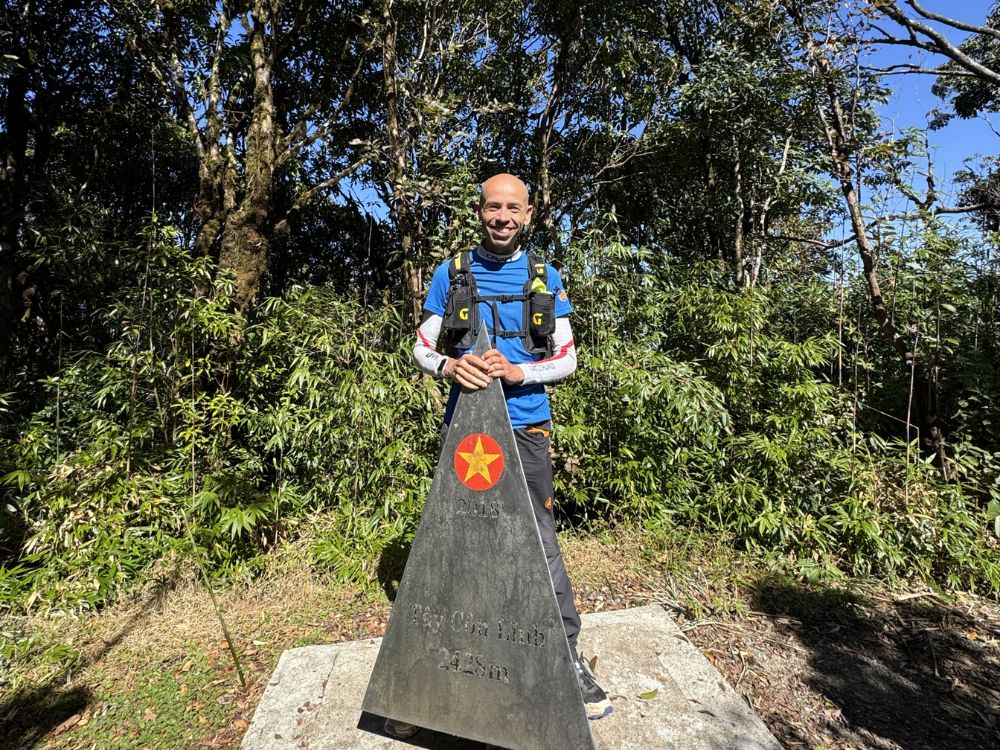
Standing at 2,427 meters (7,963 feet) above sea level as the « Roof of Northeast Vietnam, » the Mount Tay Con Linh range is a dreamscape for landscape, cultural, and adventure photographers. From the legendary moss-thatched stilt roofs of Xa Phin village and centuries-old Shan Tuyet tea forests to the ethereal 360-degree sea-of-clouds inversions at the granite summit, this biodiverse mountain offers unmatched visual storytelling.
This comprehensive 2026 photography guide details the 13 best photo locations across three distinct elevation zones, complete with optimal golden-hour lighting windows, lens recommendations, and camera protection techniques.
1. The 2,427m Granite Summit Landmark
The ultimate crown of the expedition is the physical summit marker set among rugged granite boulders at 2,427 meters. Position your camera low with an ultra-wide angle lens (16-35mm) to emphasize the rugged foreground rock textures while framing the metal summit pyramid against distant ridgelines stretching toward China.
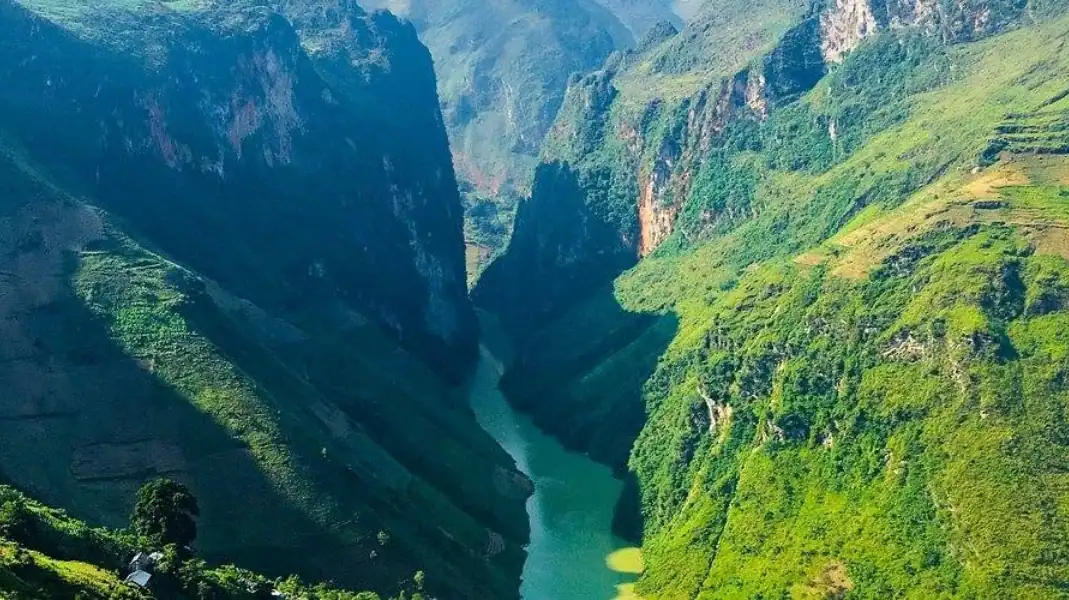
Between October and April, cold high-pressure mornings create breathtaking thermal inversions (san may). Arrive between 05:30 AM and 07:00 AM on a sturdy carbon-fiber tripod, shooting at ISO 100, f/8 to f/11 with bracketed exposures (-2, 0, +2 EV) to retain vibrant sunrise gradients and cloud textures.
2. Palm roofs of Xa Phin village
Nestled in a perpetual cloud basin, the Dao Ao Dai village of Xa Phin is celebrated for its historic stilt houses blanketed in thick green velvet moss. The persistent mountain fog acts as a giant natural softbox, eliminating harsh shadows and enriching the vivid emerald green tones of the mossy roofs.
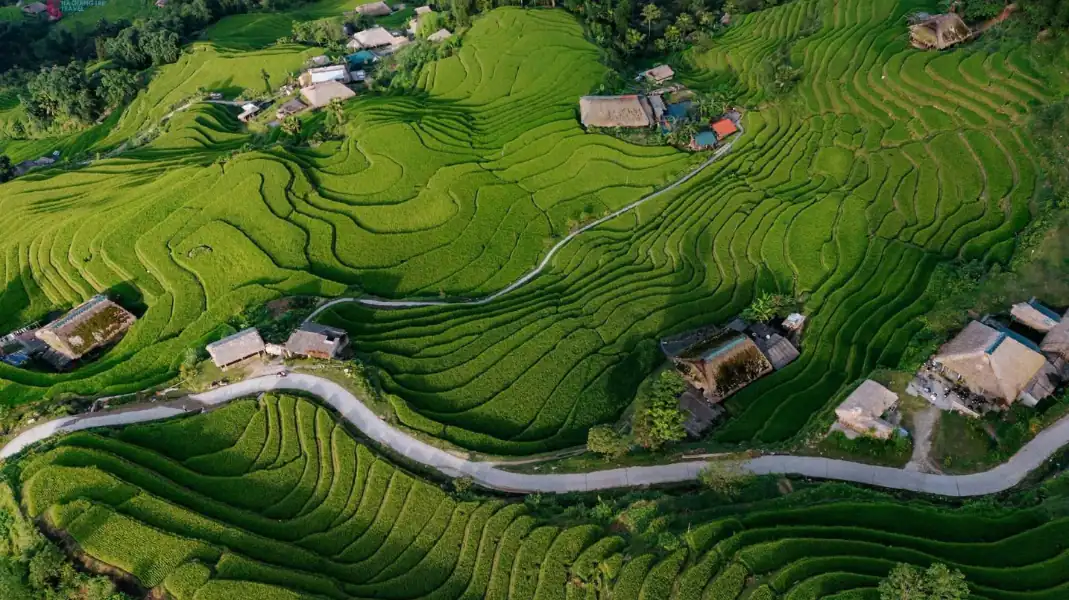
The optimal shooting window is 07:00 AM to 09:30 AM on misty or overcast mornings using a 35mm or 50mm f/1.8 prime lens for crisp architectural details with soft background blur. You can also capture compelling environmental portraits of local Dao craftswomen in traditional hand-embroidered indigo attire on wooden verandas with warm morning hearth smoke filtering through the rafters.
3. Centenarian Shan Tuyet tea forests
High on the mountain slopes grow living botanical monuments: ancient Shan Tuyet tea trees aged between 300 and 500 years. These massive, gnarled trees are draped in wild lichens, moss, and epiphytic orchids. Use a 24-70mm lens to capture the prehistoric, fairy-tale atmosphere as morning mist weaves through the canopy.
The best time to shoot is early morning (07:30 AM to 09:00 AM) during spring harvest (March – April) or autumn harvest (September – October) when Dao women hand-pick the silver downy tea buds into traditional woven bamboo baskets.
4. Khuoi My golden terraced rice fields
Rising above Phuong Do commune, Khuoi My village features cascading amphitheaters of stone-walled rice terraces carved into the steep slopes. Use a 70-200mm telephoto lens to compress the sweeping horizontal contours of the terraces, highlighting farmers working in colorful headscarves against golden paddy steps.
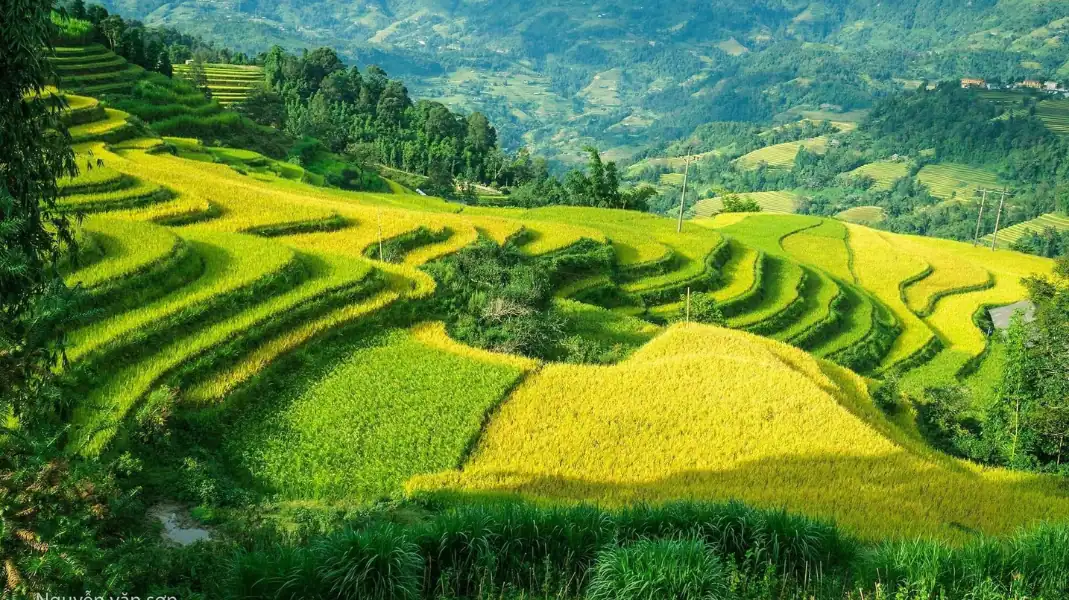
The magical light occurs from 16:00 PM to 17:30 PM in September and October (Golden Harvest Season) when low-angle sunlight turns the entire valley into shimmering gold.
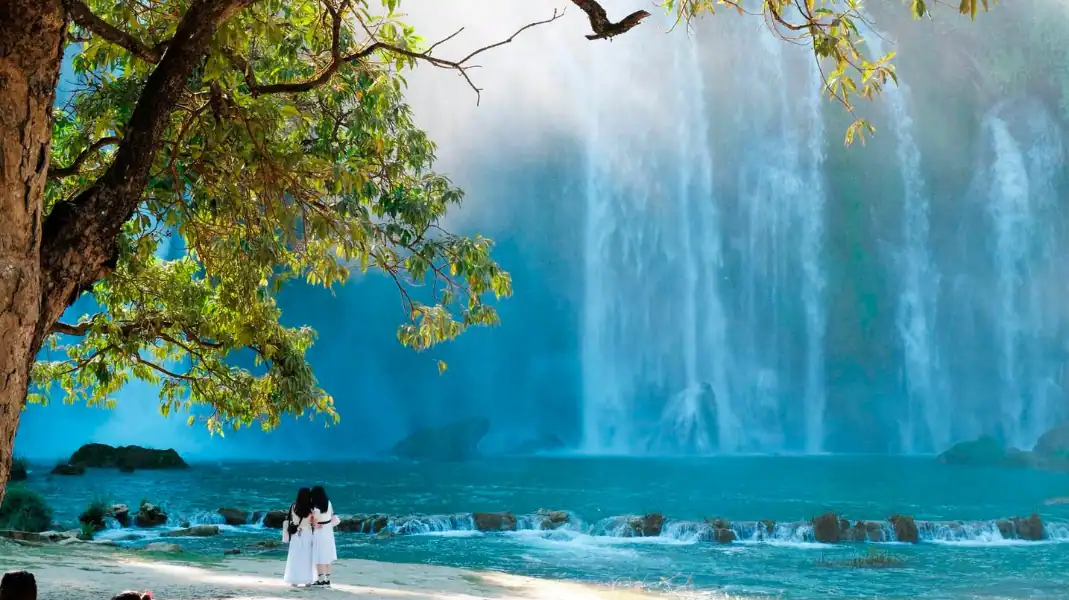
5. Huou Waterfall cascades and granite plunge pools
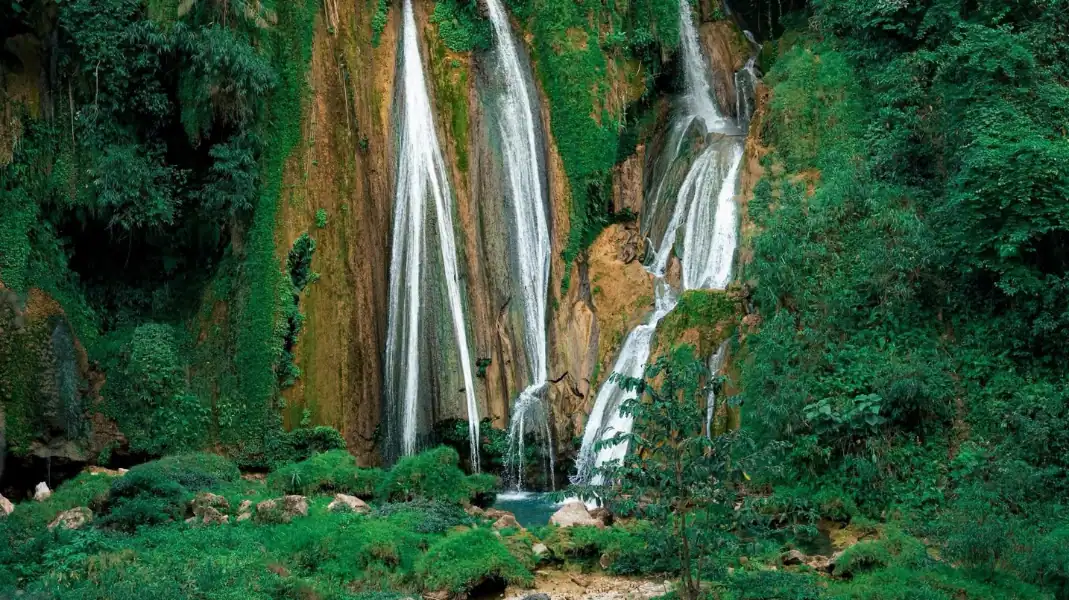
Hidden deep within the primary rainforest near Xa Phin, Huou Waterfall plunges through multi-tiered granite shelves into crystal-clear mountain pools. Under overcast midday light, mount a 6-stop or 10-stop Neutral Density (ND) filter combined with a Circular Polarizer (CPL) to cut water glare and create silky smooth water cascades with a 2 to 4-second shutter speed, framed by lush ferns and wet mossy boulders.
6. Thon Tha 100-year Tay Wooden Stilt Village
Located just 2 kilometers from TVPalm Ecolodge, Thon Tha is a tranquil cultural sanctuary of classic Tay stilt architecture. Shoot early in the morning (06:00 AM to 07:30 AM) when blue hearth smoke drifts across thatched palm roofs and clear mountain streams reflect the lush surrounding palm canopy. A 24-70mm standard zoom provides balanced framing for authentic village life, free-range water buffalo, and traditional garden fences.
7. Traditional stream waterwheels and giant bamboo groves
Along the crystal mountain streams between Thon Tha and Lung Vai, traditional wooden waterwheels (coi nuoc) continuously lift stream water into elevated bamboo irrigation channels.
The best lighting occurs mid-morning (08:30 AM to 10:00 AM) when direct sunbeams pierce the dense giant bamboo groves. Use a CPL filter to saturate the deep bamboo greens and wet timber textures.
8. Prehistoric giant tree fern valleys
As you climb above the tea line, you enter an untouched cloud forest filled with ancient giant tree ferns reminiscent of a Jurassic landscape. Position a trekking companion in bright outdoor gear along the narrow dirt path to provide dramatic scale against the towering 5-meter fern fronds and moss-draped branches.
9. High-altitude alpine ridge trails
Along the narrow ridgelines between 1,800m and 2,200m, the single-track footpath offers dramatic drop-offs into misty ravines on both sides. Shoot with a wide-angle lens during golden hour to capture hikers backlit against glowing alpine haze and vast undulating ridgelines.
10. Ancient wild rhododendron
Between February and April, centuries-old wild rhododendron trees burst into vibrant crimson, pink, and white blooms across the upper mountain slopes above 2,000 meters. Frame close-up blossoms in the foreground while keeping the misty granite ridges in soft background focus.
11. Lung Vai cardamom plantations
Under the canopy of giant hardwood trees, ethnic Dao farmers cultivate high-value wild cardamom. Capture authentic farming moments as farmers harvest the fragrant red pods in dappled jungle sunlight between August and October.
12. Night astrophotography and Milky Way above high camp
With zero light pollution, the high-altitude camp at 1,900m offers world-class astrophotography. On moonless nights between April and September, point your wide-angle f/2.8 lens southeast to capture the galactic core of the Milky Way arching over the dark mountain silhouettes (20-second exposure, ISO 3200, f/2.8).
13. TVPalm Ecolodge infinity pool and Palm Clouds bar panoramic overlook
Unwind after your summit trek with stunning panoramic shots from the TVPalm Ecolodge infinity pool, looking out across the emerald green palm forests of Phuong Do toward the towering Tay Con Linh massif bathed in sunset colors.
Camera protection and technical packing checklist for mountain humidity
| Photography Gear Item | Recommended Spec | Why It Is Essential on Tay Con Linh |
|---|---|---|
| Weather-Sealed Camera Body | Full-frame or APS-C with rubber gaskets | Protects internal electronics from perpetual 90%+ jungle humidity and mist |
| Desiccant Silica Gel Packs | 5 to 8 reusable silica gel canisters | Absorbs moisture inside camera dry bags overnight to prevent internal lens fungus |
| Circular Polarizer (CPL) | Multi-coated slim brass frame | Cuts glare on wet moss, tea leaves, and waterfalls for rich saturated colors |
| Carbon-Fiber Tripod | Lightweight compact travel tripod (under 1.3 kg) | Provides rock-solid stability for sunrise bracketing and long-exposure waterfall shots |
Frequently asked questions about photographing Tay Con Linh
Can I fly a camera drone on Mount Tay Con Linh?
Because Mount Tay Con Linh lies within the sensitive northern border security corridor of Ha Giang, drone flights are subject to strict military regulations and require official flight permits from local authorities.
What is the best season for photography on Tay Con Linh?
October through April offers the clearest skies, crispest mountain light, and highest probability of dramatic sunrise sea-of-clouds inversions.
How do I protect lenses from condensation during the trek?
Store your camera equipment in airtight dry bags packed with rechargeable silica gel desiccant packs when transitioning between cold mountain air and warm homestay interiors.
Written by Van Trung Nguyen, Lead Expedition Director & Licensed Tour Operator at TVPalm Adventure, Ha Giang. Providing safety compliance briefings and leading small-group eco-journeys across Northeast Vietnam since 2021.


