

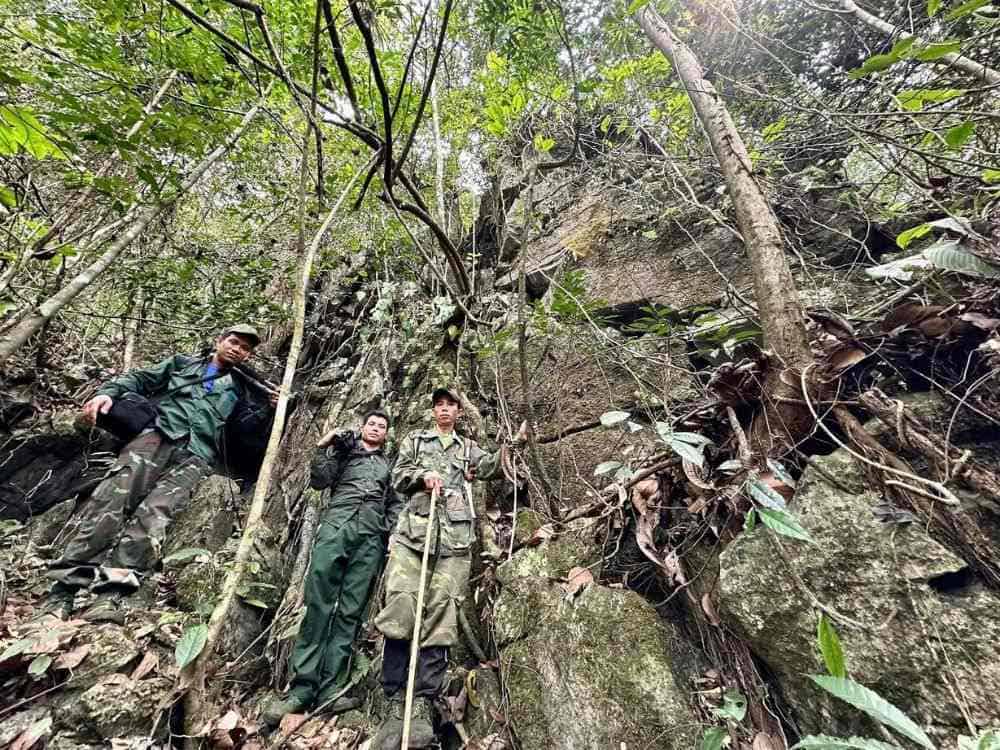
Community tourism is often told through easy images: a stilt house, a local meal, a few trails through terraced fields, a few smiles over hot tea.
But if that is all we see, we misunderstand
In Tay Con Linh, community tourism does not begin with building more homestays. It does not begin with opening a new trekking route either. It begins with a much harder question: if the forest slowly disappears, if young people leave the village, if local people are left on the margins of the tourism industry growing around them — what will remain of this land in ten or twenty years?
Not everyone believes that question immediately.
Some thought tourism was for companies, for city people, for those who could speak foreign languages. Some thought foreign visitors only came to take photographs and leave. Some worried that tourism would take up time, with no certainty of income, no certainty of lasting. Some joined and then stopped, because life in the mountains is not as simple as a plan written on paper.
All of that is true.
And precisely because it is true, this story is worth telling.
From a village to a shared choice
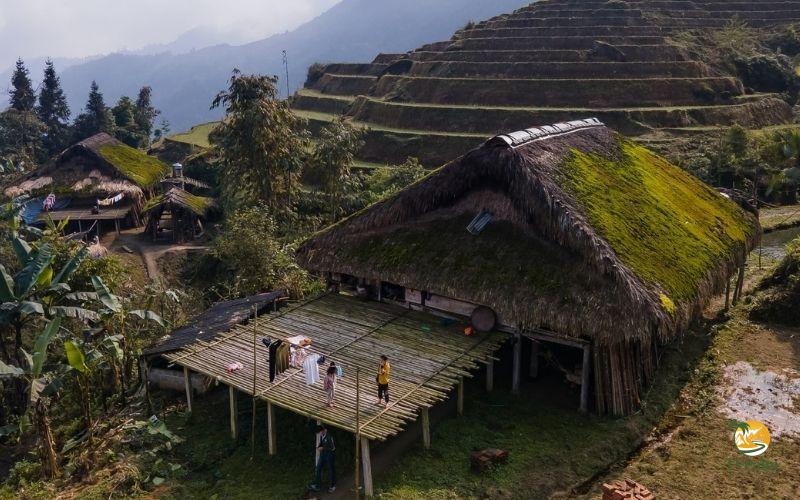
The Dao people of the Tay Con Linh area do not need anyone to teach them to love the forest. They grew up with the forest, walked through it, drew water from it, planted tea beneath its shade, knew which seasons brought slippery paths, which brought thick fog, which brought streams that could rise very fast after heavy rain.
But loving the forest does not mean having enough means to protect it.
When livelihoods are difficult, when cash becomes a daily pressure, when young people have to leave home to work elsewhere, the forest is easily seen as an immediate resource rather than a long-term foundation. This is not any one person’s fault. It is the reality of many mountain regions.
Tourism, done wrong, can make everything worse: more waste, more noise, more hastily-opened routes, more cultural images performed for visitors.
But done right, tourism can create an economic reason for people to stay on the land, with the forest, with their own local knowledge.
That is why the first Dao members came together to join the Tay Con Linh Sustainable Tourism Cooperative.
Not because they wanted to become a « tourism product ».
But because they wanted another way to live alongside the forest.
Not everyone goes on
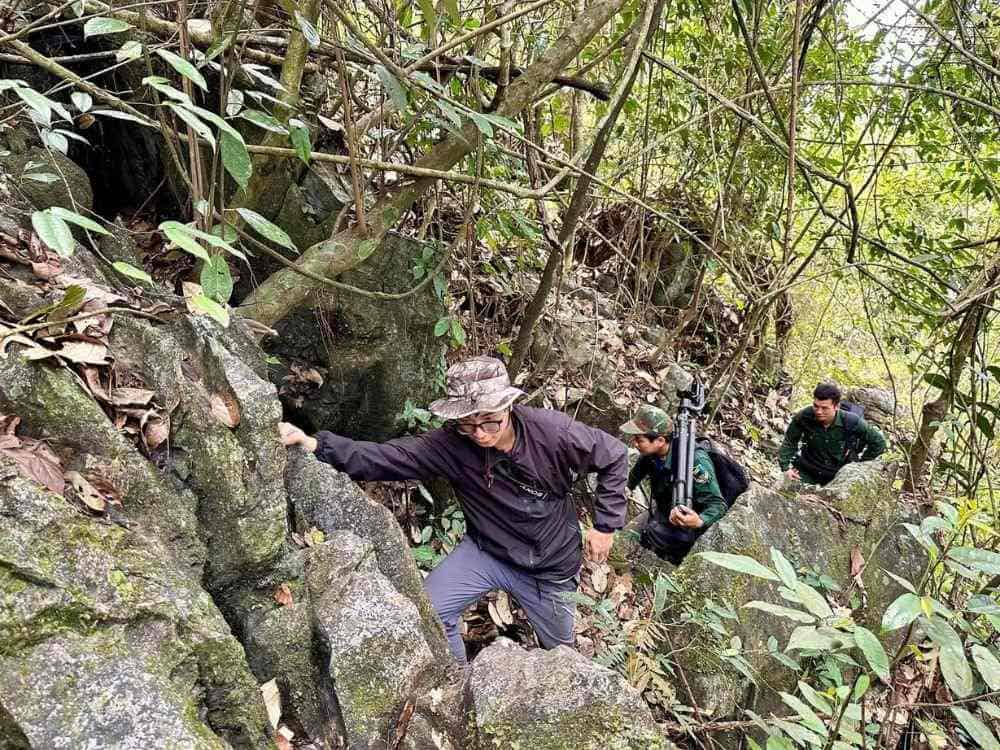
In a community, trust does not come all at once.
Some move quickly. Some move slowly. Some observe for a long time. Some join out of curiosity. Some only believe when they see the first trip organized with care, the first small income shared clearly, the first visitor who knows to thank a local guide.
Some also quit.
That should not be hidden.
Community tourism is not easy. It demands punctuality, cleanliness, patience, listening, keeping promises, knowing how to say « no » to things that might bring quick money but damage the community in the long run. It asks people to step from familiar daily life into a new space — where every small action can affect a visitor’s experience and the image of the whole village.
Not everyone wants to live under that pressure.Not every family has the time.
Not every young person wants to come back.
But some keep going.
They keep going not because everything has become easier. They keep going because they are beginning to see a possibility: if the community works together, if the right visitors are chosen, if routes are kept under control, if money is shared transparently, if the forest is not turned into a stage — then tourism might become part of the solution.
Not the whole solution.
But a part worth trying.
Where Does TVPalm Fit In This Story?
We do not rescue the community.
We do not lead the community in the sense of one party standing above and directing the other.
We are simply one member of a shared choice: to do tourism in a smaller, slower, more responsible way — respecting the limits of the mountains.
Our role is to connect the right visitors with the right experiences, to organize schedules so that local people are not caught off-guard and not forced to serve at any cost, to set basic standards around safety, hygiene, how to receive guests, how to handle bad weather, how to walk forest paths without damaging the route. And most importantly: to protect principles.
Some routes should not be expanded. Some places should not receive visitors. Some seasons require a pause. Some groups are not the right fit. And some requests should be declined even when they might bring revenue.
If we have one commitment in this story, it is not to bring as many visitors as possible. It is to help the community earn more income without trading away what gives this land its value.
A forest cannot be protected with slogans
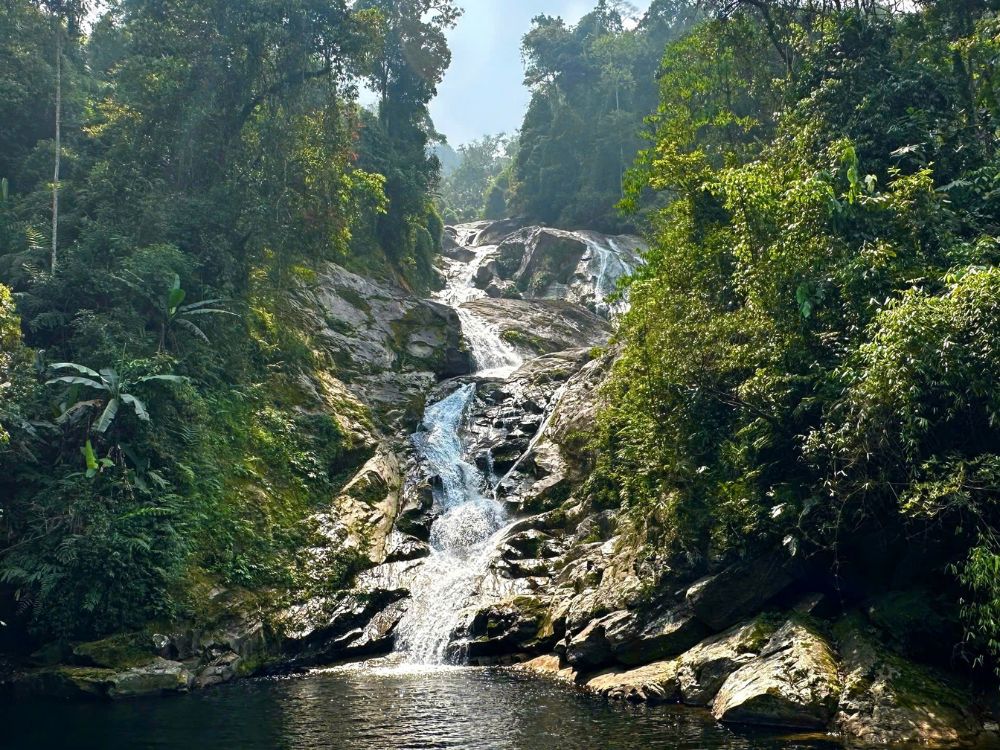
Talking about protecting forests is easy.
Living in a way that respects forests is harder.
A community cannot protect a forest on love alone if daily life is too precarious. A business cannot talk about sustainable tourism if visitor money does not genuinely reach local people. A trekking route cannot call itself responsible if it erodes trails, leaves waste, disturbs village life, or turns culture into performance.
So for us, community tourism is measured by specific questions:
Do local people earn more income?
Are they respected as the primary actors?
Do visitors understand the places they pass through, or only consume the scenery?
Does the forest face more pressure after each visitor season?
Do the village’s children see any future in their own home?
If these questions are not taken seriously, community tourism is nothing but a nice name.
A road still being learned
We do not want to tell this story as a completed success.
It is not complete.
There is still much to do. More training is needed. Better language skills. Clearer processes. Fairer benefit-sharing. More young people patient enough to return. More visitors who understand that the mountains are not a place to be consumed in a hurry.
But one thing is clear: no one can protect this forest alone.
No single business can do it.
No single family can do it.
No single ranger can do it.
No visitor, however well-intentioned, can create change alone if their trip is not part of a responsible system.
Only when community, business, local government, rangers and visitors together accept the necessary limits can the forest have any further chance of being kept.
We believe community tourism does not begin with building homestays.
It begins when enough people believe the forest is worth keeping more than exploiting to exhaustion.
It begins when local people are not just service providers, but co-owners of the knowledge, routes, stories and future of their own homeland.
It begins when a business knows when to step back — and does not turn the community into a backdrop for its own brand.
And it begins when visitors understand that the money they pay does not only buy a trip. It can help preserve a way of life, a body of local knowledge, an old trail, a watershed forest — and a reason for young people to still want to come home.
Tay Con Linh does not need a louder kind of tourism.
This place needs a kind of tourism that knows when to be silent, when to go slowly, when to refuse, and that keeps community and forest at the center.
That is the path we have chosen.
Not perfect.
But serious.


