

Capturing stunning photos along the 350-kilometer Ha Giang Loop requires the right camera gear, optical filters to cut limestone haze, disciplined roadside stopping safety, and respectful cultural etiquette. Navigating sharp mountain passes while carrying delicate camera equipment presents unique challenges, from intense engine vibrations and unexpected alpine downpours to high-contrast mountain lighting.
This practical photography guide provides field-tested advice on gear selection, iconic viewpoint timing, drone regulations, and shooting techniques for two-wheel travelers.
Essential camera gear and protective equipment for motorbike travel
1. Cameras vs mirrorless bodies for two-wheel travel
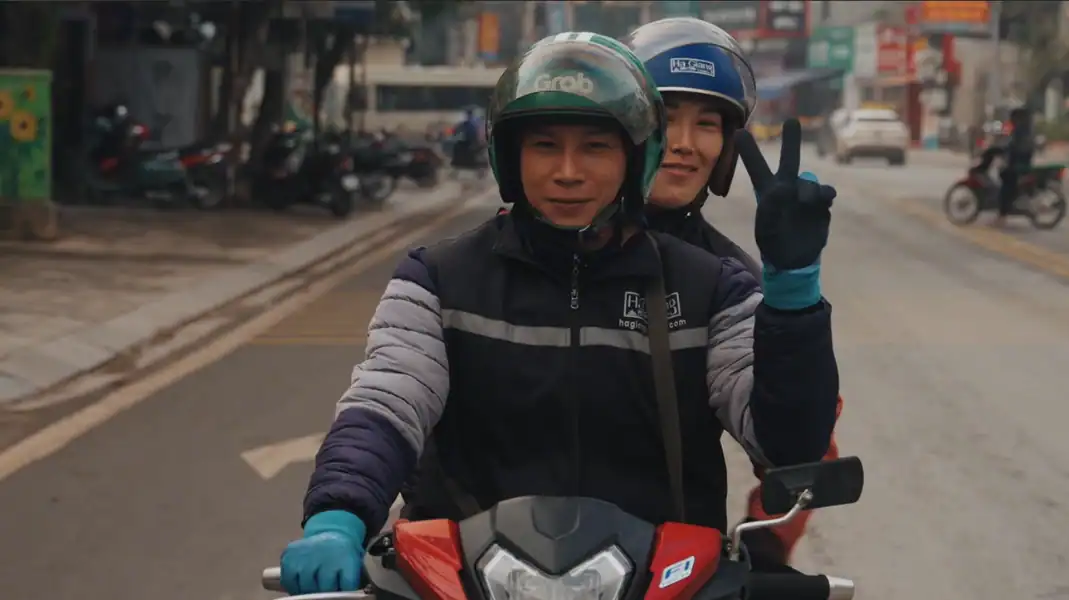
Action cameras such as GoPro Hero or Insta360 X4 excel at capturing dynamic point-of-view (POV) footage and immersive wide-angle stills while riding. Mounting an action camera to your helmet chin bar or chest harness delivers stable, horizon-leveled footage of winding passes without taking your hands off the handlebars.
For dedicated landscape photography, a weather-sealed mirrorless camera body paired with a versatile zoom lens (24-70mm or 24-105mm equivalent) provides the dynamic range necessary to capture high-contrast limestone peaks and shadowed valleys.
2. Indispensable optical filters and lens focal lengths
- Circular Polarizer (CPL Filter): The single most essential accessory for Northern Vietnam. A CPL filter cuts atmospheric haze, removes harsh glare from wet limestone, and deepens the emerald-green hue of the Nho Que River.
- Variable Neutral Density (ND Filter): Essential for capturing smooth, long-exposure motion blur at Du Gia Waterfall or shooting wide-aperture portraits in bright midday sun.
- Ultra-Wide Lens (16-35mm): Captures the immense vertical scale of Tu San Canyon and sweeping mountain switchbacks.
- Telephoto Zoom (70-200mm): Compresses distant karst mountain ridges, highlighting layer after layer of misty limestone peaks receding into the horizon.
3. Vibration damping and waterproof weather protection
Continuous road vibrations from single-cylinder motorbikes can loosen internal camera lens elements and damage optical image stabilization (OIS) mechanisms over several days of riding. Never pack hard camera cases directly onto rigid metal luggage racks.
| Protection Gear | Recommended Specification | Field Function on Motorbike |
|---|---|---|
| Padded Tank Bag | Quick-release magnetic or strap tank bag with foam divider | Absorbs road vibrations and provides 3-second camera access at scenic stops |
| Waterproof Dry Bag | 20L to 30L IP68 heavy-duty PVC roll-top dry sack | Protects camera bodies, drone, and lenses from sudden mountain downpours |
| Lens Cleaning Kit | Sealed airtight pouch with microfiber cloths and rocket blower | Removes fine limestone dust and water droplets without scratching glass |
| Silica Gel Packs | 5 to 10 reusable moisture-absorbing desiccant sachets | Prevents internal lens fogging when transitioning between warm valleys and cold mountain passes |
« On the Ha Giang Loop, the best camera is the one you can access safely in under five seconds. A padded tank bag combined with a circular polarizer filter will capture 90% of your best shots without slowing down your travel pace. » – Van Trung Nguyen, Lead Expedition Director at TVPalm Adventure
Iconic photography locations and optimal lighting windows
1. Tham Ma and Bac Sum winding pass switchbacks
Tham Ma Pass features an iconic series of nine S-curve switchbacks carving through a steep limestone notch. Arrive between 14:30 and 16:30 when afternoon sun illuminates the road surface from the west, casting long mountain shadows that accentuate the curves.
2. Ma Pi Leng Pass and Tu San Canyon gorge vistas
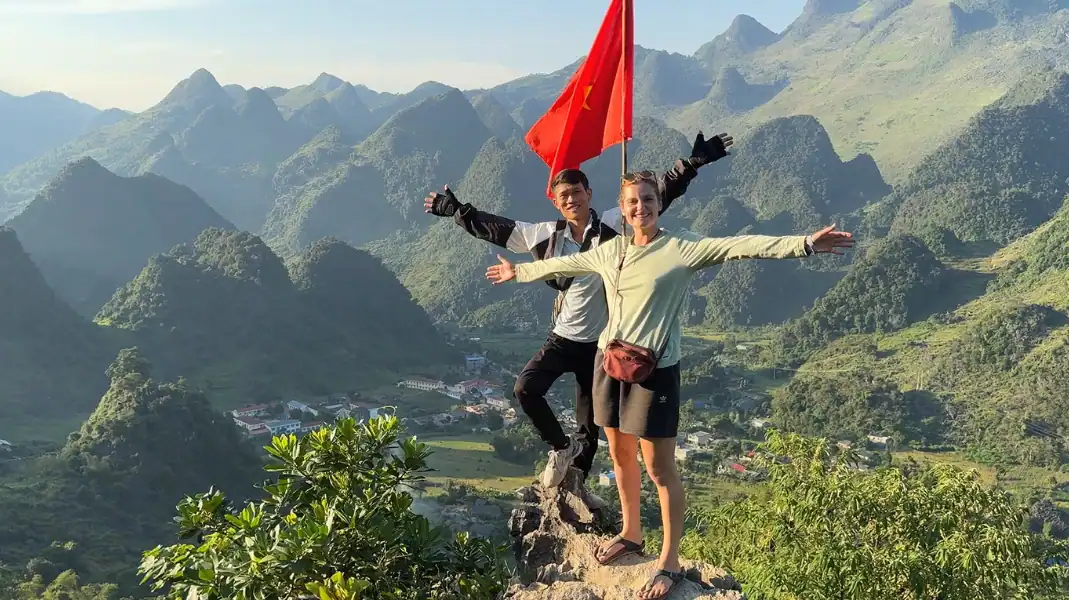
Ma Pi Leng Pass offers dramatic 800-meter vertical perspectives overlooking the emerald Nho Que River. Plan to shoot during early morning golden hour (07:00 – 08:30) or late afternoon (16:00 – 17:30) to avoid harsh vertical midday glare.
3. Du Gia Waterfall and mountain stream motion shots
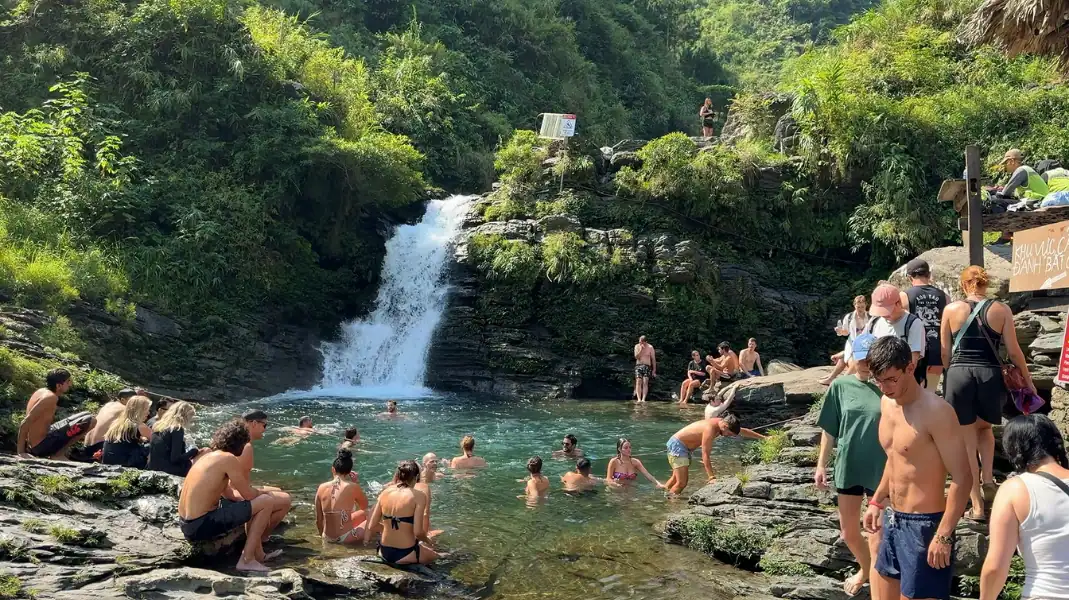
For silky, long-exposure waterfall photography at Du Gia, mount a 3-stop or 6-stop ND filter to your lens, set your camera on a compact travel tripod, and select a shutter speed between 0.5 and 2 seconds at f/8 to f/11.
4. Golden terraced fields and buckwheat seasonal blooms
- Rice Harvest Season (September to October): Terraced paddies across Hoang Su Phi and Yen Minh turn brilliant golden-yellow. Shoot in early morning when valley mist hovers just above the terraces.
- Buckwheat Flower Season (October to November): Slopes around Dong Van, Lung Cu, and Meo Vac are carpeted with delicate pink and white blossoms. Use a wide aperture (f/1.8 to f/2.8) to blur the floral foreground.
| Photo Hotspot | Best Lighting Window | Ideal Lens Choice | Key Compositional Element |
|---|---|---|---|
| Tham Ma Pass | 14:30 – 16:30 (Afternoon side light) | 24-70mm Standard Zoom | S-curve leading line with moving motorbikes |
| Ma Pi Leng Canyon | 07:00 – 08:30 & 16:00 – 17:30 | 16-35mm Ultra-Wide | Massive vertical depth down to turquoise river |
| Du Gia Waterfall | 08:00 – 10:00 (Soft diffused light) | 24-70mm with ND Filter | Long-exposure water motion with jungle framing |
| Lung Cu Flag Tower | 16:30 – 18:00 (Sunset golden hour) | 70-200mm Telephoto Zoom | Karst valley layers into northern border horizon |
Roadside stopping safety and moving motorbike shot techniques
- Never stop directly in blind corners or narrow single-lane pass cuts. Always pull completely off the tarmac onto wide gravel aprons.
- Keep your hazard lights on and check your rearview mirrors before dismounting.
- When shooting on the move as a pillion passenger, secure your camera with a short wrist tether and set shutter speeds above 1/1000s to eliminate engine vibration blur.
Drone regulations and aerial photography guidelines in the border zone
Ha Giang contains sensitive international frontier districts along the Vietnam-China border. Unpermitted drone flights within 5 kilometers of the border (including Lung Cu and northern Meo Vac) are strictly prohibited by border defense authorities. Always seek guidance from licensed tour guides before launching UAVs.
Ethical portraiture and ethnic minority cultural etiquette
- Always ask permission with a warm smile and a polite gesture before taking portraits of ethnic Hmong, Dao, or Tay villagers.
- Avoid giving cash or candy directly to children along the road, as it encourages begging and truancy. Support local community cooperatives and craft artisans instead.
- Show captured photos to your subjects on your camera LCD screen to share the joy and create respectful connections.
Frequently asked questions about Ha Giang Loop photography
Can I shoot high-quality photos using only a modern smartphone?
Yes. Flagship smartphones with dedicated ultra-wide and 3x/5x telephoto lenses produce spectacular results for social media, especially when paired with a clip-on CPL filter.
How many camera batteries should I carry on a 4-day loop tour?
Carry a minimum of 3 camera batteries and a 20,000mAh power bank, as cold high-altitude mountain winds accelerate battery depletion.
What is the single best month for landscape photography on the Ha Giang Loop?
October is widely regarded as the ultimate month, offering golden terraced rice harvests in Hoang Su Phi, blooming buckwheat flowers in Dong Van, and clear, dry skies across high mountain passes.
Written by Van Trung Nguyen, Lead Expedition Director & Licensed Tour Operator at TVPalm Adventure, Ha Giang. Providing safety compliance briefings and leading small-group eco-journeys across Northeast Vietnam since 2021.


