

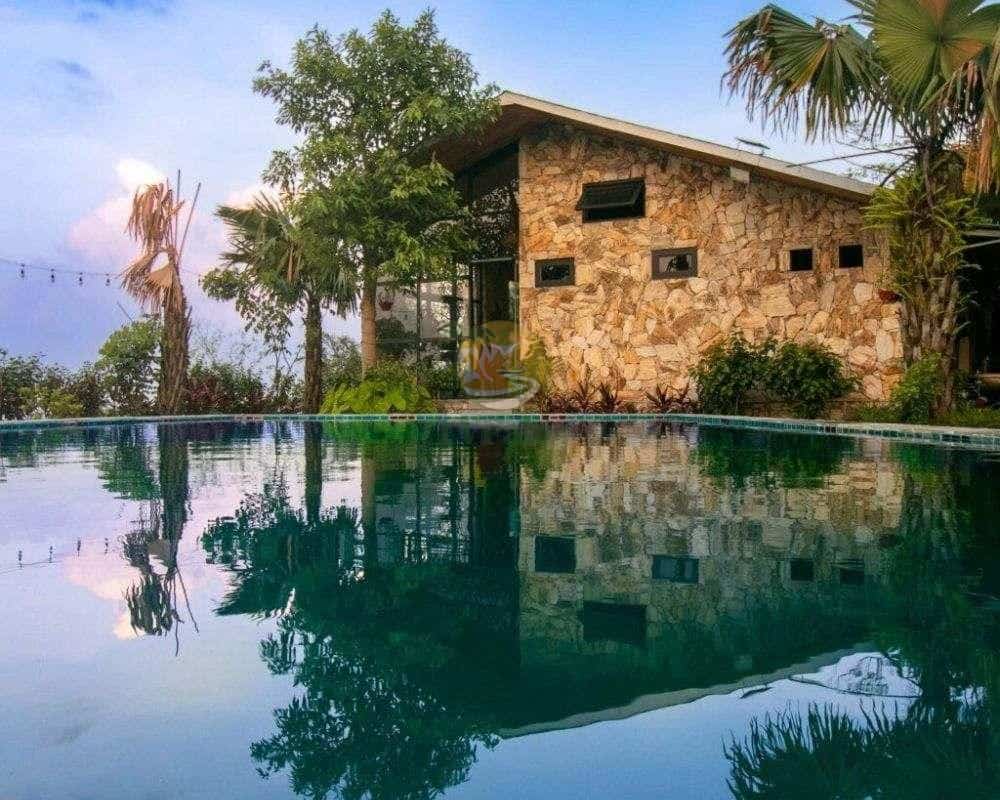
An authentic homestay in Ha Giang means staying inside the private home of an indigenous mountain family such as the Tay or Dao Ao Dai vand sharing their daily rhythm. As founder of TVPalm, I have guided private walking journeys through these valleys connecting mindful travelers with authentic communities.
While TVPalm Ecolodge offers private rooms near Khuoi My rather than homestay lodging, our custom treks include homestay visits. This guide shares honest advice on living realities, communal meals, village etiquette, and sleeping arrangements.
What defines an authentic homestay in Ha Giang?
An authentic homestay in Ha Giang is an overnight cultural stay inside an active multigenerational household of an ethnic minority family. Rather than checking into a roadside hostel, travelers share home-cooked meals around a family hearth, sleep in traditional wooden quarters, and experience unvarnished highland hospitality.
A genuine homestay operates within a working agricultural hamlet where farming, cooking, and seasonal traditions continue undisturbed.
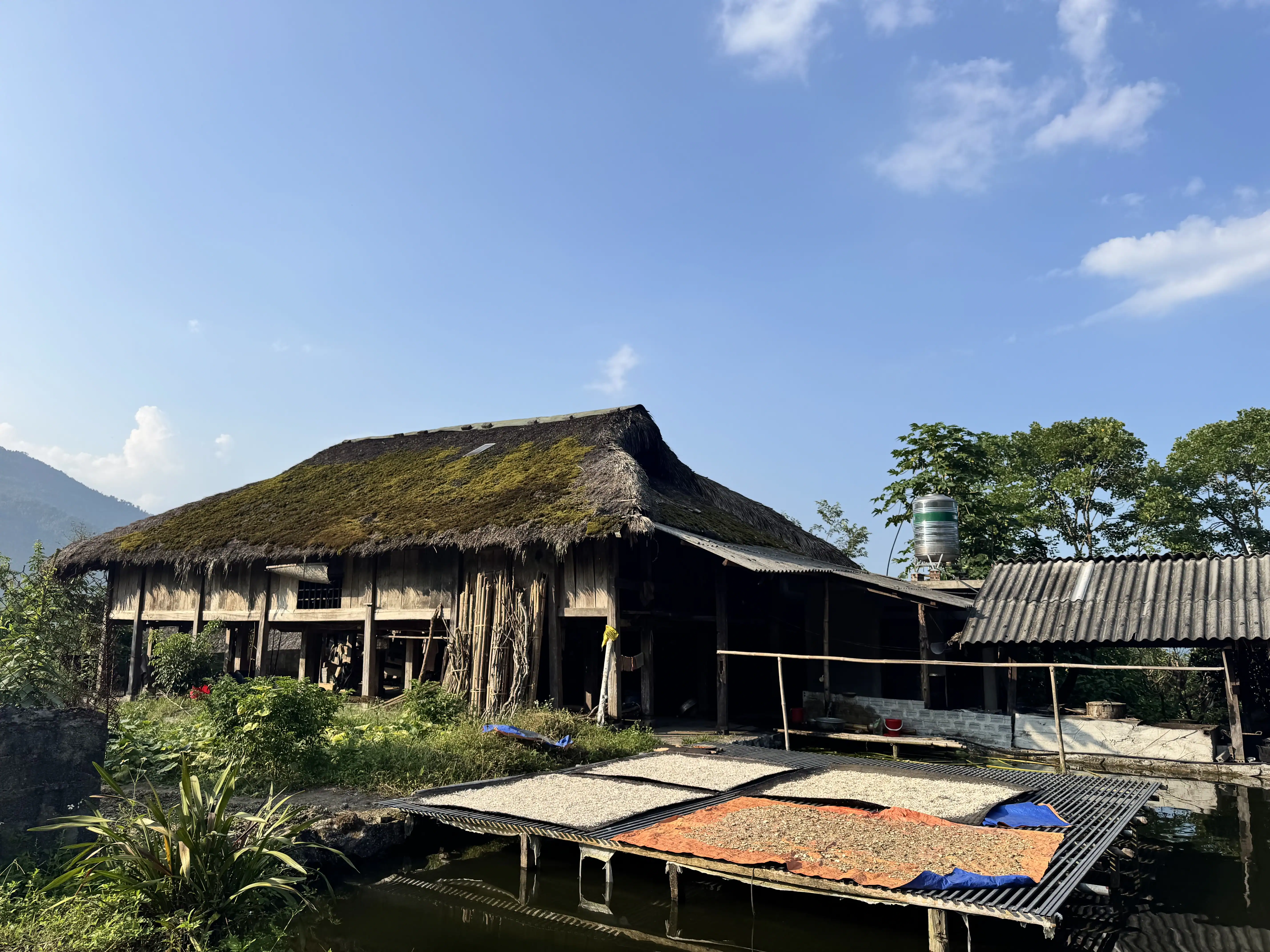
In a real family home, grandparents, parents, and children work together, welcoming you as a personal guest rather than a room number. Families earn direct supplemental income that supports children’s schooling, roof repairs, and farm tools without altering their agricultural heritage.
The operational differences between authentic family homestays and roadside commercial hostels are substantial:
| Experience Factor | Authentic Family Homestay | Roadside Commercial Hostel |
|---|---|---|
| Living Setting | Quiet mountain hamlets amid terraced paddies and bamboo | Dense roadside strips along noisy highway corridors |
| Hosting Dynamic | Multigenerational families living and farming together | Seasonal shift workers or managers from lowland cities |
| Evening Atmosphere | Quiet village evenings, stilt living lofts, and early rest | Loud music, social drinking games, and late parties |
| Dining Format | Single communal family meal cooked with garden produce | Laminated menus with Western dishes and fried noodles |
| Sleeping Quarters | Shared wooden loft with privacy curtains and clean quilts | Multi-bunk dormitories with metal frame beds |
| Community Impact | Direct household income for farming, schooling, and village upkeep | Significant revenue leaks to outside commercial agencies |
Traditional mountain architecture of ethnic stilt houses
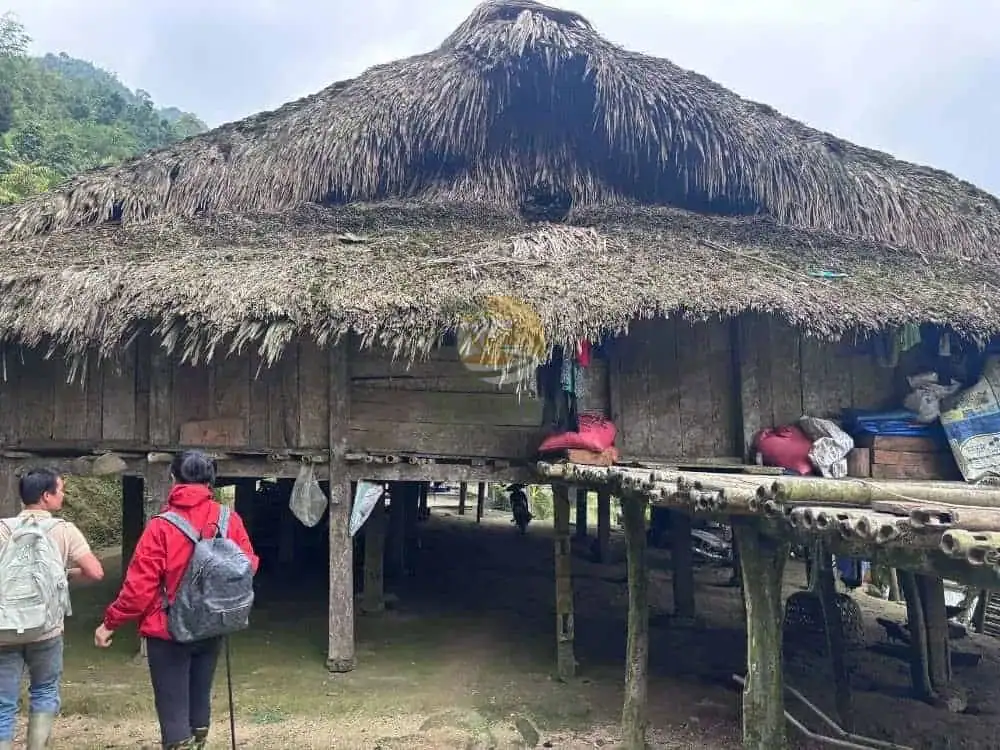
Traditional homestay architecture reflects centuries of adaptation to steep mountain terrain, monsoon rains, and seasonal humidity. Indigenous communities build dwellings using native timber, bamboo poles, woven panels, and palm thatch roofing.
In valley hamlets near Mount Tay Con Linh, indigenous Tay communities construct spacious wooden stilt houses (nha san) raised two to three meters on hardwood columns. Elevated floors catch valley breezes while keeping living quarters dry above wet agricultural ground during monsoon season.
Higher on Mount Tay Con Linh (2,427 meters), the Dao Ao Dai ethnic group in Khuoi My and Xa Phin build stilt homes along steep slopes. Cool mist blankets palm thatch in moss, insulating homes against winter cold and summer humidity. For travelers comparing lodging styles, our guide to eco lodges in Ha Giang explores how sustainable retreats adapt these vernacular methods.
Evenings around the family hearth and communal dining
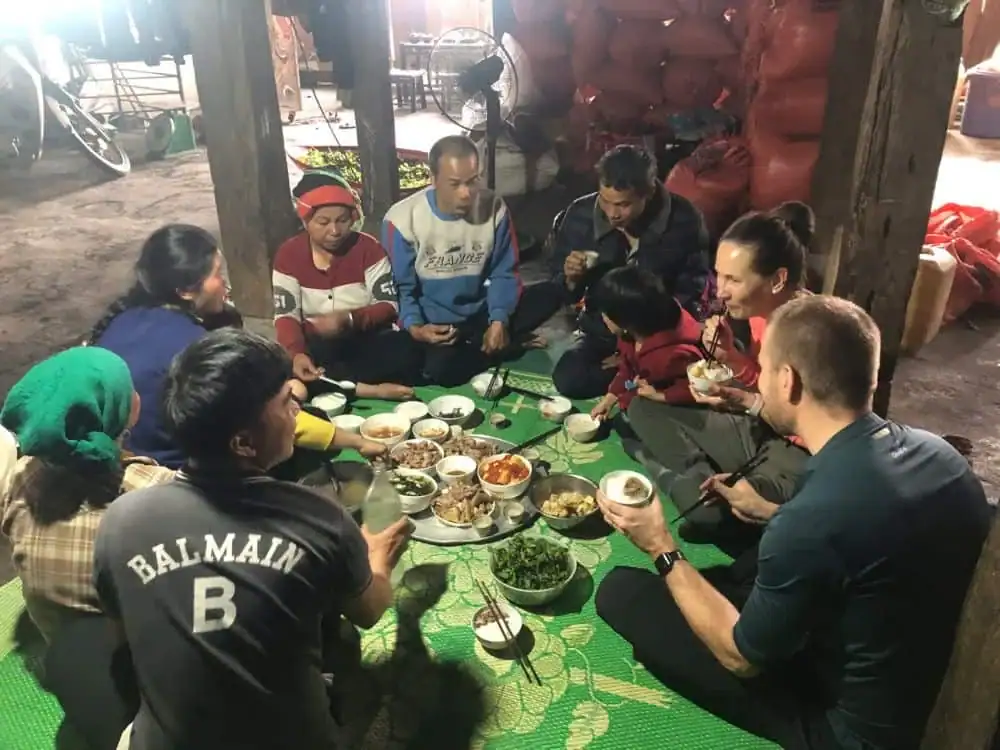
The cultural centerpiece of an authentic homestay in Ha Giang is the evening meal, when field labor concludes and the household gathers around a communal dining tray. This dinner represents the shared hearth of family life where hosts and guests connect naturally across languages.
Dishes reflect seasonal harvests gathered directly from hillside plots:
- Fresh Garden Produce: Stir-fried wild mustard greens, tender bamboo shoots from mountain ravines, pumpkin blossoms, and sweet chayote leaves.
- Mountain Proteins: Free-range mountain pork stir-fried with scallions, pasture-raised chicken braised with ginger, or pan-fried tofu with fresh herbs.
- Highland Staples: Steamed upland fragrant rice, sweet corn cakes, and broths simmered with medicinal forest herbs.
Meals are served on a woven bamboo tray around the hearth. Wait until the eldest family member sits and invites everyone to eat before picking up chopsticks.
Hosts often pour small cups of corn wine (ruou ngo), known as happy water. Distilled over wood fires with herbal fermentation cakes, corn wine is a staple of highland hospitality.
Hosts toast with chuc suc khoe (wishing good health). If you prefer not to drink alcohol, smile politely or ask for green tea; hosts respect your choice without taking offense.
Standing beneath a four-hundred-year-old tea tree as woodsmoke curls from a nearby village hearth reminds you that tea here is not an industrial commodity. It is living history, preserved by mountain families who understand that real quality cannot be rushed.
Nguyễn Văn Trung, Founder of TVPalm
Sleeping arrangements and the true realities of Overnight
Sleeping in a Ha Giang family homestay involves simple communal living rather than luxury resort amenities. Approaching village realities with realistic expectations ensures a rewarding cultural journey.
In traditional stilt houses, guests sleep on firm cotton mattresses along an elevated wooden mezzanine. Sleeping bays are partitioned by fabric curtains for privacy, equipped with freshly washed linens, heavy quilts, and mosquito netting.
Practical realities to expect:
- Shared Bathrooms: Bathrooms are typically shared outbuildings offering clean Western flush toilets and hot showers. Gravity-fed water pressure can fluctuate in higher mountain hamlets.
- Early Village Rhythms: Farming households wake before dawn to tend hearths and livestock. Light sleepers should pack earplugs for early morning roosters and village dogs.
- Natural Climate: Traditional stilt homes lack air conditioning and heating. Timber walls breathe naturally in summer, while thick quilts provide warmth on cold nights.
- Intermittent Reception: Valley homestays usually offer Wi-Fi, but high mountain hamlets experience weak cellular signals, offering an ideal setting for digital disconnection.
Travelers seeking private ensuite rooms can stay at TVPalm Ecolodge near Khuoi My, exploring neighboring villages on day walks.
Preserved villages for authentic homestays in Ha Giang
Preserved agricultural hamlets away from highway noise offer the finest homestay experiences in Ha Giang, particularly Thon Tha at the mountain base and Khuoi My and Xa Phin along upper ridges. Choosing quiet settlements ensures your tourism spend directly supports agrarian families while providing peaceful mountain nights.
Travelers can integrate these village stays into their Ha Giang Loop itinerary:
- Thon Tha Village (Tay Community): Located five kilometers southwest of Ha Giang city, Thon Tha is a tranquil Tay settlement celebrated for palm-thatched stilt houses, emerald paddies, and stone lanes. Villagers weave fish traps, tend water buffalo, and farm rice, offering gentle valley scenery without commercial traffic.
- Khuoi My and Xa Phin Villages (Dao Ao Dai Community): Perched between 700 and 1,000 meters on Mount Tay Con Linh, Khuoi My and Xa Phin belong to the Dao Ao Dai group. Families care for ancient Shan Tuyet tea trees, and women wear traditional indigo tunics with silver neck torcs. Staying here provides mist-shrouded panoramas and deep cultural immersion, reflecting sustainable practices supported by Vietnam National Tourism.
7 Rules of conduct and customs within the family
Practicing respectful etiquette requires sensitivity toward sacred domestic spaces, ancestral shrines, and hearth customs. Because a homestay is a private family residence, mindful behavior honors local dignity and supports community tourism.
Review this cultural checklist and our comprehensive guide to Ha Giang ethnic village etiquette before your stay:
- 1. Remove Footwear at the Threshold: Take off outdoor shoes and trekking boots before stepping onto elevated wooden stilt house floors.
- 2. Respect the Ancestor Altar: Never point your feet toward the elevated altar (ban tho) in the main room, and never touch sacred ritual incense bowls.
- 3. Honor Hearth Fire Taboos: The central cooking hearth is the spiritual heart of the home. Never step over boundary stones, kick burning logs, or throw plastic waste into the fire.
- 4. Accept Hospitality with Both Hands: Receive and present tea cups, food bowls, or small gifts with both hands as a universal gesture of respect.
- 5. Dress Modestly in Common Areas: Cover shoulders and knees when moving through communal living spaces and village paths; avoid walking around in sleepwear.
- 6. Ask Permission Before Taking Portraits: Always ask politely with a smile before photographing village elders, artisans at work, or children.
- 7. Carry Out Waste: Bring a refillable water flask to avoid single-use plastic, read our plastic-free travel guide.
Frequently asked questions
Do authentic homestays in Ha Giang have private rooms, hot water, and Wi-Fi?
Most family homestays feature communal sleeping lofts with curtains rather than private rooms. Hamlets like Thon Tha offer shared bathrooms with hot water and Wi-Fi, while remote mountain hamlets remain simple.
How much does an authentic family homestay cost in Ha Giang?
A genuine family homestay typically costs 150,000 to 300,000 VND ($6 to $12 USD) per person per night for a mattress in a shared stilt loft. Communal family dinners cost an additional 120,000 to 200,000 VND ($5 to $8 USD). Booking directly or through a responsible local operator keeps tourism income within the village.
Should I book my family homestay in advance?
Yes, reserving in advance is strongly recommended, especially from September to April. Authentic homestays have limited beds—often only 4 to 8 guests per night—and hosts need advance notice to purchase fresh ingredients from morning markets for the evening meal.
Written by Nguyễn Văn Trung, founder of TVPalm. He has led small-group trips across Northeast Vietnam since 2021.


