

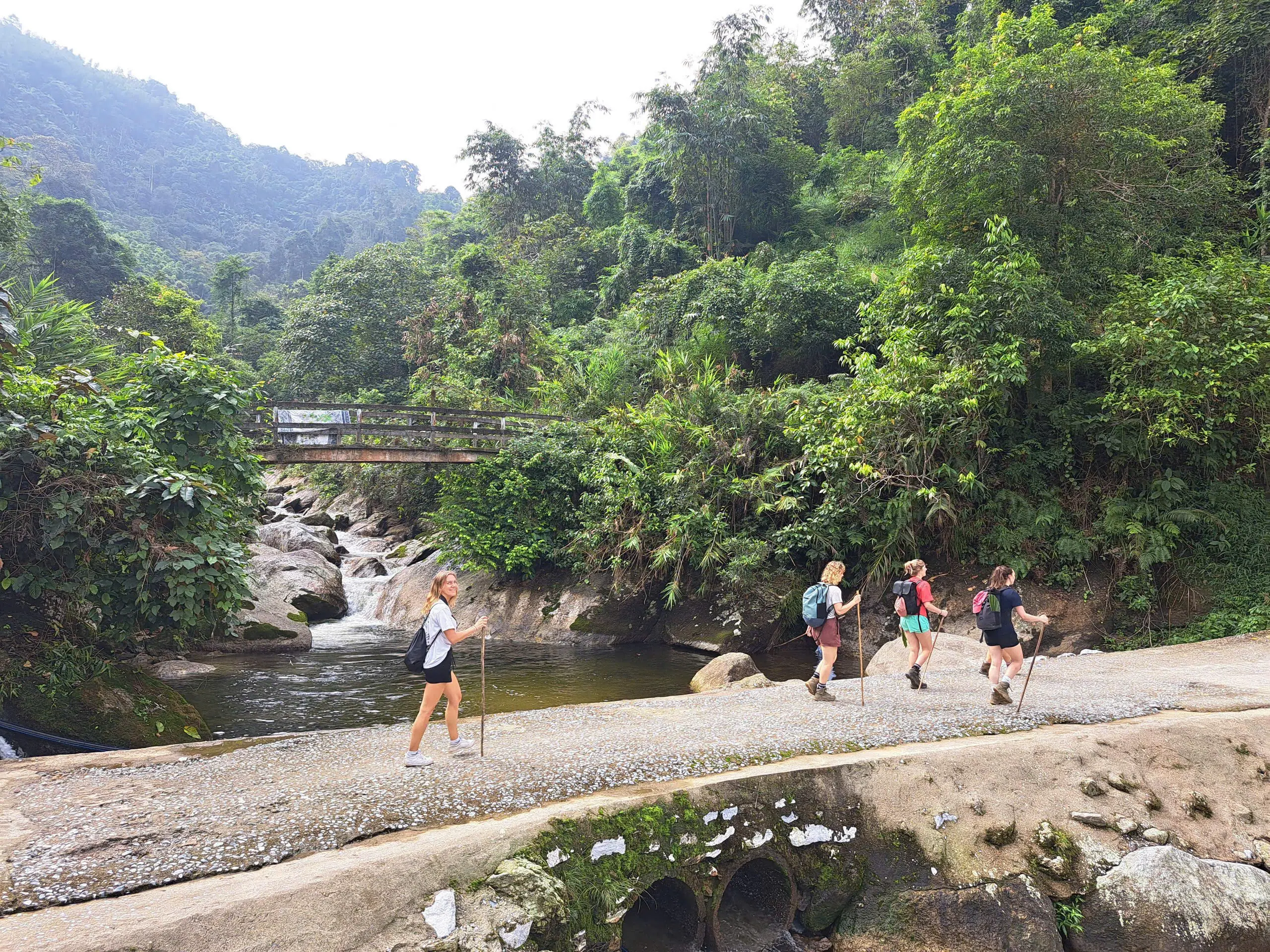
Sustainable travel tries to do less harm. Regenerative travel asks for more: that a trip leaves a place a little better than it found it, for the forest, for local culture and for the families who host you.
In practice, that means choosing who you travel with, where you sleep and how you spend, so that more of your money and attention go to the people and ecosystems of places like Ha Giang (part of Tuyen Quang province since July 2025).
This guide explains the difference, what regenerative travel looks like on the ground in northern Vietnam, and what you can actually do as a traveller.
From sustainable to regenerative
For years, the rule was “take only photos, leave only footprints”. Sustainable tourism tries to keep the footprint small. But as visitor numbers grow, a neutral impact is often not enough.
On busy routes in Vietnam, from crowded beaches to the most travelled mountain roads, sheer numbers strain water supplies, push up local prices and flatten local traditions into something for show.
Regenerative travel asks a different question. Not only “How do I avoid harming this place?”, but “Can my visit leave this valley a little healthier, and its people a little better off?” It is a standard to aim for, not a label anyone can claim easily.
Sustainable and regenerative travel compared
The table below sums up the main differences:
| Dimension | Conventional Sustainable Travel | Active Regenerative Travel | Practical Application in Vietnam |
|---|---|---|---|
| Core Mindset | “Do no harm” / Neutral impact | “Leave it better” / Positive net gain | Planting native trees; funding wild habitat protection |
| Environmental Focus | Reducing plastic waste and carbon | Active ecological restoration and rewilding | Restoring ancient tea canopies and forest corridors |
| Community Relationship | Observing local culture politely | Equitable partnership and knowledge exchange | Fair wages for indigenous porters; community-owned lodges |
| Economic Flow | Spending with certified green operators | As much spending as possible stays local | Staying in village cooperatives; eating local heirloom crops |
| Cultural Heritage | Avoiding disturbance to sacred sites | Actively reviving indigenous craft and rituals | Supporting traditional Dao weaving, herbalists, and shamans |
What regenerative travel means in practice
1. Putting something back into the land
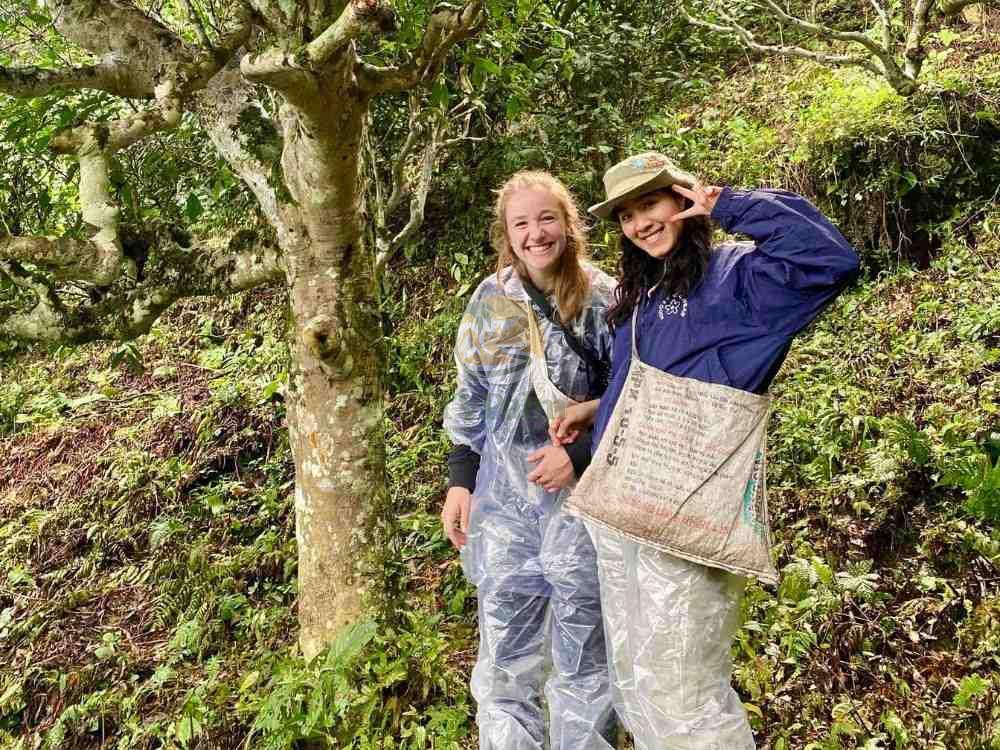
Regenerative trips put something back into the ecosystem. On Tay Con Linh, that means planting native trees and protecting water sources.
It also means not overusing the forest: small groups, set trails, and places we choose not to take visitors at all.
2. Money that stays in the valley
In conventional tourism, a large share of what travellers spend leaves the host community, through booking sites, city transport and companies based far away. Regenerative tourism tries to reverse that, by spending as directly as possible with village cooperatives, family homestays and local guides.
In community-based tourism in Ha Giang, Tay and Dao families keep ownership of their homestays and decide how many guests they take.
3. Keeping culture alive without turning it into a show
Instead of staging rituals for visitors, regenerative travel gives young people a reason to learn traditional skills from their elders.
When travellers value indigo dyeing, hemp weaving, herbal knowledge and wooden house building, these skills keep their place, and their income, in the village.
Visitors who follow local village etiquette are guests, not spectators, and the relationship goes both ways.
4. Hospitality that wastes less
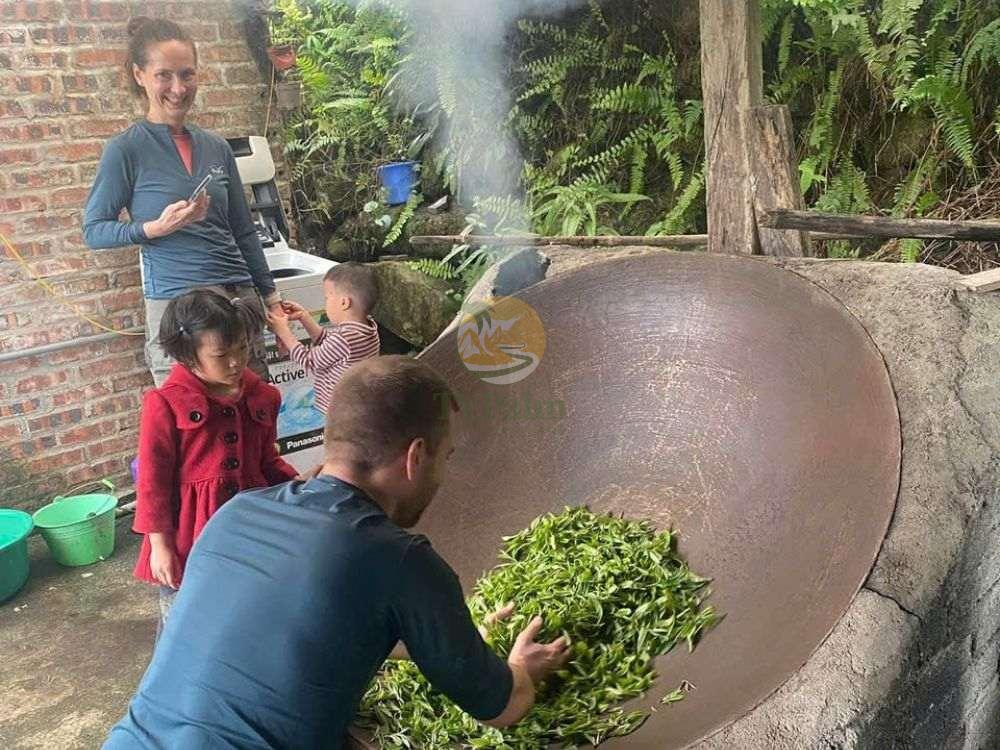
Regenerative places to stay try to close the loop: food grown on site or bought from neighbouring farms, little packaging, food scraps returned to the soil.
At TVPalm Ecolodge we work on zero-waste principles and cook farm-to-table. We are still learning, and we say so.
What you can do as a traveller
A few simple changes make a real difference:
- Travel slowly: fewer places, more time in each. Walking, or travelling with a responsible Ha Giang Loop operator, uses less fuel and lets you actually know a place.
- Cut single-use plastic: refill your bottle from 20-litre water jugs, carry a cloth bag, and say no to polystyrene boxes. Our plastic-free travel Vietnam guide has more ideas.
- Eat local: eat in family-run places that use vegetables from their own garden and nearby farms. Native vegetables, wild ferns and mountain sticky rice keep local farming alive.
- Pay fairly: pay porters, guides and homestay hosts a fair rate, and tip when the service is good.
- Ask questions before you book: who works there, where the food comes from, what happens to the waste. At TVPalm Ecolodge, most of the team, about 70%, are ethnic minority people from nearby villages.
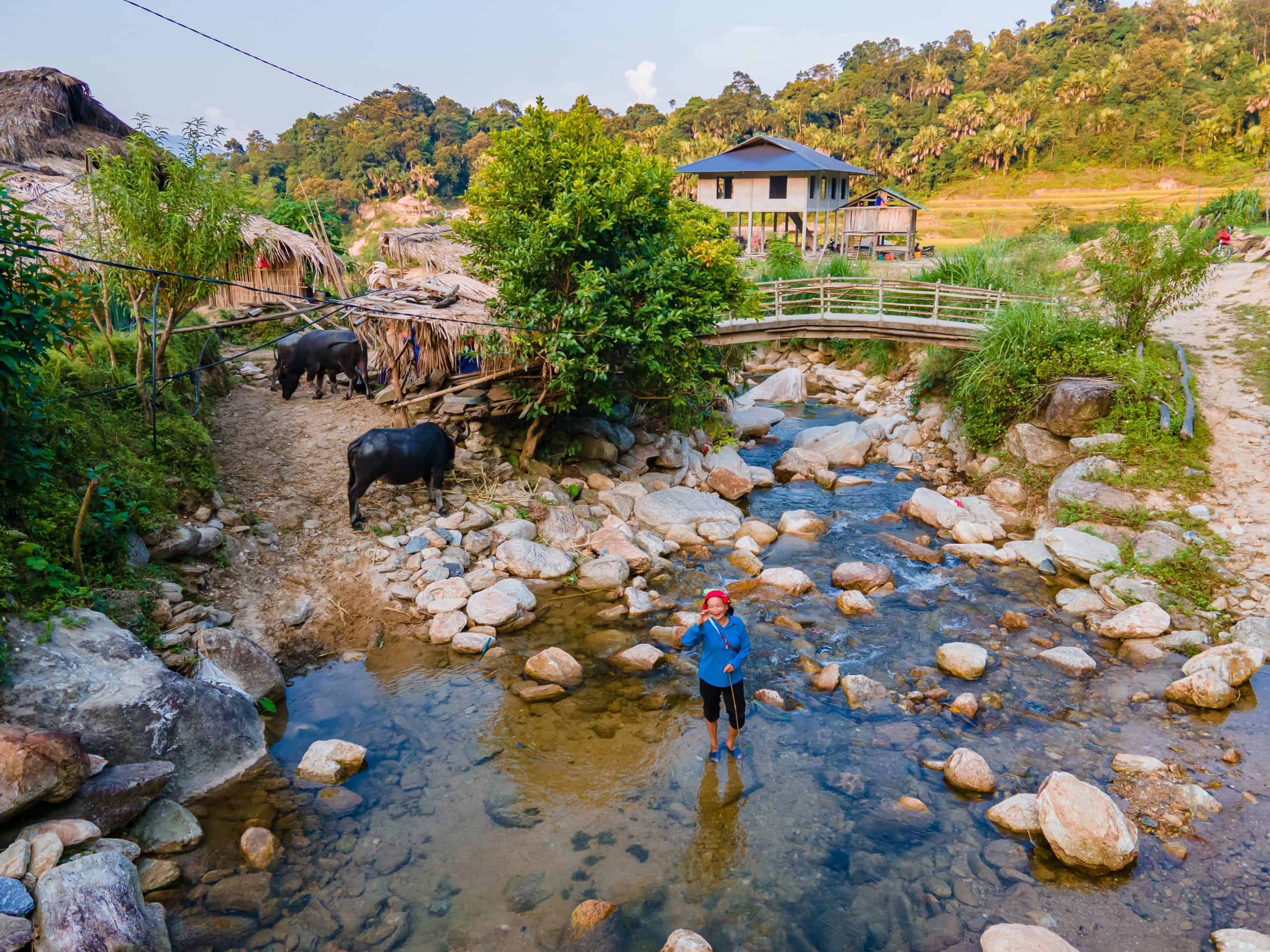
Our view: in Ha Giang, regenerative travel is not a slogan. It is a lot of small choices, about the forest, the families and the pace of the trip, and we try to make them honestly.
Nguyễn Văn Trung, Founder, TVPalm
Frequently asked questions
What is the main difference between sustainable and regenerative travel?
Sustainable travel tries to reduce harm and keep a neutral footprint, for example by cutting plastic and saving energy. Regenerative travel goes further: it tries to leave a place better off, by restoring nature and putting more of the money in the hands of the host community.
How can I make sure my money stays in local communities?
Book directly with locally owned operators, family homestays and community cooperatives rather than international middlemen. Hire local guides and porters, eat at local stalls and markets, and buy crafts straight from the people who make them.
Does regenerative travel cost more?
Not necessarily. It avoids the cheapest tours that cut corners on porter safety and wages, but village homestays and local food are affordable. Paying a fair price is part of it.
Written by Nguyễn Văn Trung
Founder of TVPalm
Want to walk this land yourself, with local Dao guides? See our 3 days 2 nights Tay Con Linh trekking tour.


