

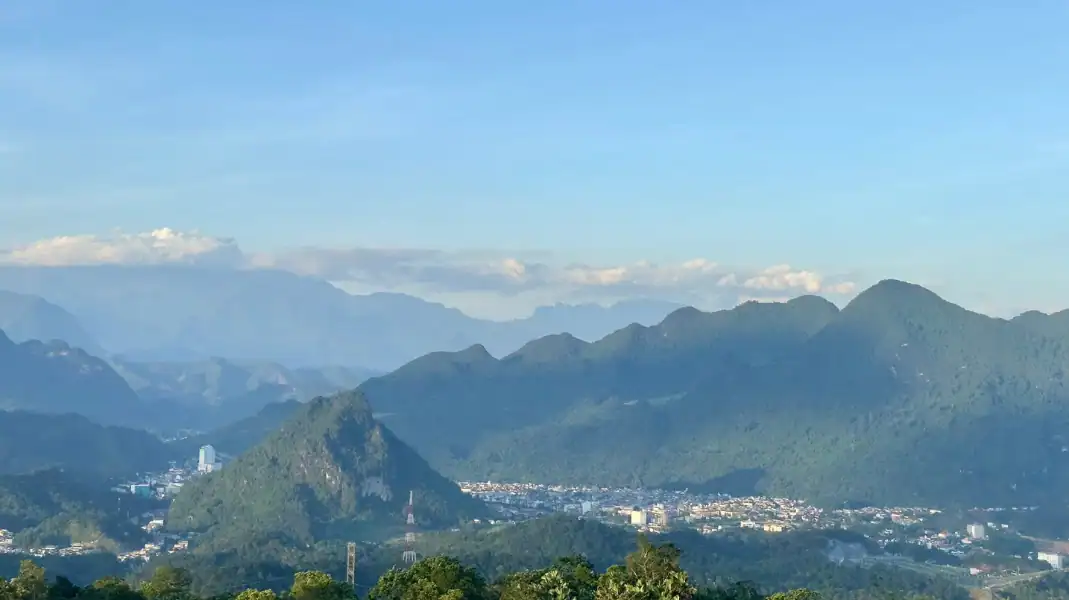
Planning accommodation for Mount Tay Con Linh (2,428 m) requires understanding local terrain and highland conservation rules. As founder of TVPalm, I have guided trekking teams across Northeast Vietnam , and our expedition philosophy prioritizes warmth, road safety, and direct support for indigenous communities.
Planning the trek? The 2-day Tay Con Linh trek sleeps one night in the Dao homestay at Xa Phin. The 3-day Tay Con Linh trek adds a first night at TVPalm Ecolodge before you walk.
Below is a practical guide detailing where you sleep on multi-day treks, what village stilt houses provide, why mountain camping is prohibited, and packing essentials for cold highland nights.
Where to sleep on a Tay Con Linh trek?
Trekker accommodation on Mount Tay Con Linh relies entirely on village stilt homestays and valley lodges because forest protection authorities prohibit camping on the upper mountain.
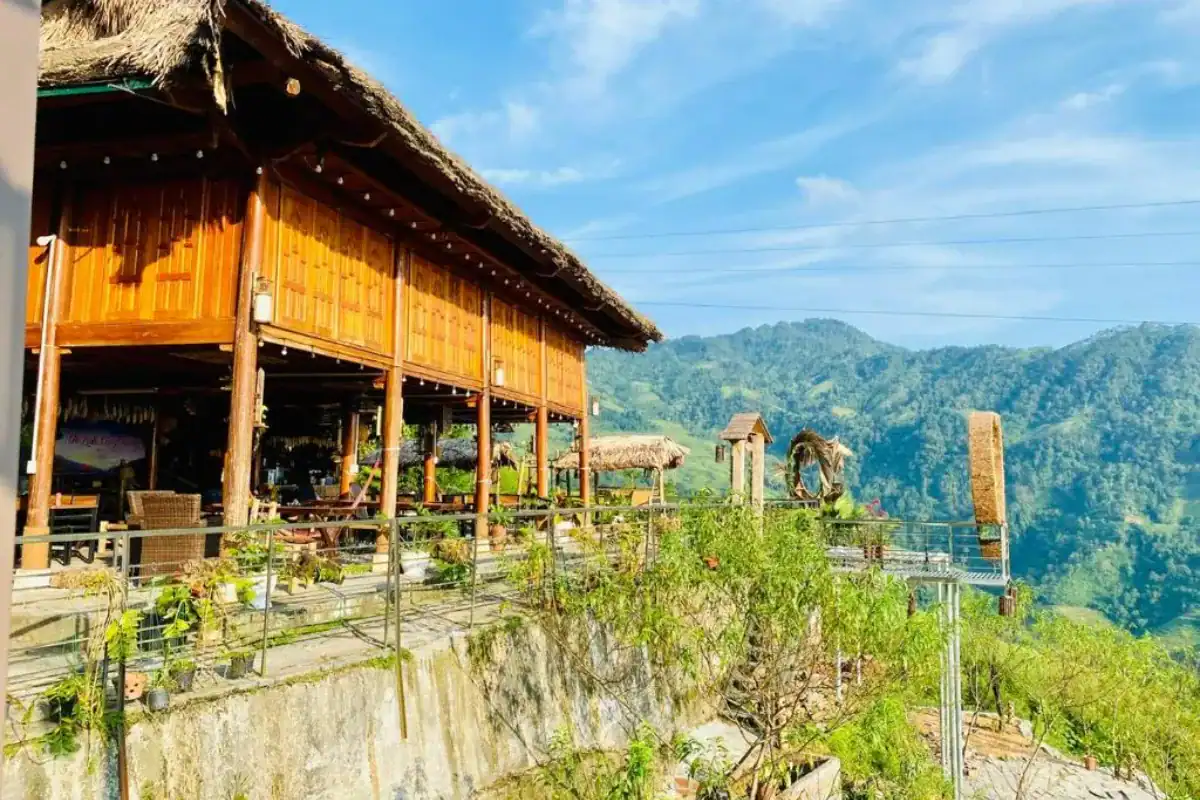
On a standard 3-day summit expedition with TVPalm, you sleep in a private room at TVPalm Ecolodge on the valley floor for Night 1. On Night 2, you sleep in a traditional Dao Ao Dai moss-roofed stilt homestay in Xa Phin village at 940 meters elevation.
Trekkers joining a 2-day summit climb or a 2-day village walk spend their single mountain night directly at the Xa Phin homestay. This staged elevation profile lets hikers rest warmly at 940 meters before ascending the upper cloud forest to the 2,428-meter peak.
| Trek Stage | Overnight Location | Elevation | Lodging Facilities and Experience |
|---|---|---|---|
| Night 1 (3-Day Trek) | TVPalm Ecolodge (near Khuoi My village) | Valley floor (~350 m) | Private wooden bungalow, ensuite bathroom, hot shower, farm-to-table dinner |
| Night 2 (3-Day Trek) | Dao Ao Dai Stilt Homestay (Xa Phin village) | Mid-mountain (940 m) | Traditional palm-thatched stilt house, curtained sleeping spaces, clean bedding, mosquito nets, cold-water shared washrooms |
| Night 1 (2-Day Trek) | Dao Ao Dai Stilt Homestay (Xa Phin village) | Mid-mountain (940 m) | Direct homestay check-in, curtained sleeping berths, hearty mountain dinner, early rest before summit day |
| Forest Ranger Station | Highland Forestry Outpost | Upper trail (1,800 m) | Short rest stop and gear check only; strictly no overnight stays or camping |
Why there is no camping on Mount Tay Con Linh?
Overnight tent camping is prohibited on Mount Tay Con Linh, and reputable local operators do not run camping programs on this massif for three essential reasons. Many hikers ask whether they can pitch a tent near the summit to watch the sunrise, and the direct answer is no:
- Strict nature reserve regulations: Tay Con Linh is a protected primary forest watershed containing 200-to-400-year-old Shan Tuyet tea trees and rare alpine flora. Local forestry authorities prohibit overnight campfires and pitching tents outside designated residential villages to prevent wildfire risks.
- Hazardous terrain and microclimates: Above 1,600 meters, slopes are precipitous with loose granite boulders and dense bamboo thickets. Nights bring sudden temperature drops to 4°C in winter, high humidity, and thick mist, creating hypothermia risks for tent campers.
- The 1,800 m ranger hut is a transit checkpoint only: The Forest Ranger outpost at 1,800 meters marks where the morning Easy Rider motorbike transfer ends. From here, the steep 600-meter vertical footpath begins. It serves purely as an operational rest stop and cannot accommodate overnight guests.
Choosing established village homestays ensures you stay warm, sleep dry, and follow responsible tourism guidelines recognized by Vietnam National Tourism authorities.
Homestay in Xa Phin village
Living heritage under moss-covered roofs
Indigenous Dao Ao Dai families in Xa Phin village (940 meters elevation, Thanh Thuy commune) build substantial stilt houses using durable mountain hardwoods. Trekkers reach Xa Phin around 15:30 after hiking 10 kilometers from Khuoi My village through Lung Vai, Na Mau, and Huou Waterfall.
Their roofs are thatched with native palm leaves that gather dense layers of green velvet moss over decades. A palm roof requires 20 to 30 years of mist exposure before moss flourishes fully. This natural insulation keeps interiors warm during winter and cool in summer.

Sleeping arrangements and hygiene facilities
While village homestays are rustic, your comfort and rest are carefully managed after a 6-to-7-hour hiking day:
- Curtained sleeping spaces: You sleep on a communal wooden floor divided into curtained sections, giving each guest or couple their own private space. Wood-frame platforms are fitted with clean mattresses, thick quilted duvets, and full-cover mosquito nets.
- Clean shared washrooms with cold mountain water: Village bathrooms and western toilets are clean and well-kept. Water runs directly from highland streams, so homestay showers use natural cold mountain water. Guests wash or refresh with warm face towels, while full hot showers and resort amenities are enjoyed at TVPalm Ecolodge on Night 1.
- Village electricity until 21:00: Local micro-hydro generators provide lighting and wall outlets until roughly 21:00. Trekkers should recharge camera batteries, mobile phones, and headlamps early in the evening before the village powers down for a quiet mountain night.
Communal dinners and mountain hospitality
Evenings in Xa Phin center around the traditional hearth at 18:00. Hosts serve hearty, home-cooked dinners prepared from garden vegetables, free-range chicken, smoked mountain pork, wild bamboo shoots, and ancient Shan Tuyet tea. Sharing food on handwoven bamboo trays with local guides and host families provides cultural insight that no commercial hotel can match.
“Sleeping in Xa Phin is not merely an overnight rest stop. It directly supports local Dao Ao Dai families through community-based tourism, ensuring mountain hospitality preserves cultural heritage without exploiting fragile ecosystems.”
Village homestay vs tent camping compared
| Evaluation Feature | Xa Phin Village Stilt Homestay | Wild Mountain Camping (Hypothetical) |
|---|---|---|
| Weather Protection | Solid timber frame, draft-free roof, thick warm duvets | Vulnerable to heavy mountain downpours, wind gusts, and damp soil |
| Sanitation and Washrooms | Clean western flush toilets, sheltered cold mountain washrooms (hot showers at base Ecolodge) | No sanitation facilities; leave-no-trace wilderness waste disposal required |
| Backpack Weight | Lightweight daypack (5-7 kg); bedding and kitchen gear fully provided | Heavy load (14-18 kg); must carry tent, sleeping mat, gas stove, and food |
| Local Economic Impact | 100% of accommodation fee goes directly to indigenous family hosts | Minimal direct contribution to remote ethnic community livelihoods |
Recovering at TVPalm Ecolodge before and after the trek
For 3-day trekking programs, your journey begins and concludes at TVPalm Ecolodge, set in the peaceful valley foothills near Khuoi My village. Staying 10 kilometers outside Ha Giang City provides a comfortable transition between city travel and rugged wilderness.
- Pre-trek preparation: Arrive from Hanoi by limousine or sleeper bus and check into a private bungalow room. Enjoy the swimming pool, eat a nutritious breakfast, and review trail safety notes with your mountain guide.
- Luggage storage: Store large roller suitcases and non-trekking travel clothing in secure base lockers at the ecolodge, carrying only your lightweight daypack onto the trail.
- Post-trek recovery: After descending the mountain on Day 3, our Ha Giang Easy Rider team transfers you back to the lodge by 17:00. Enjoy hot showers, herbal footbaths, fresh local coffee, and a celebratory farm-to-table dinner before returning to Hanoi.
6 essentials to prepare for a night at a homestay
Because mattresses, pillows, and warm blankets are provided at every overnight stop, you do not need heavy camping equipment. Focus on packing personal warmth and hygiene items into your daypack:
- 1. Warm Mid-Layer (Fleece or Lightweight Down): Evening temperatures at 940 meters drop to 10-15°C in autumn and 4-12°C in winter.
- 2. Dedicated Dry Sleeping Clothes: Keep one clean base layer and thermal socks sealed inside a waterproof dry bag for nighttime use only.
- 3. Headlamp with Spare Batteries: Essential for moving around the wooden stilt house after 21:00 lights out and during early morning trail preparations.
- 4. Personal Toiletries and Quick-Dry Towel: Pack biodegradable soap, toothbrush, personal medication, and a compact microfibre towel.
- 5. Portable Power Bank (10,000-20,000 mAh): Village micro-hydro electricity shuts down around 21:00. A reliable power bank keeps your phone, watch, and cameras fully charged for summit day.
- 6. Highland Border Area Entry Permit (260,000 VND): Mandatory legal registration for foreign travelers in border communes, arranged through TVPalm by sending passport and visa scans 3 days before arrival.
Frequently asked questions
Can I camp overnight on Mount Tay Con Linh?
No. TVPalm does not offer wild camping on the mountain, and local forest protection regulations forbid camping on the upper slopes. All multi-day treks use verified village stilt homestays and base ecolodges.
Do I need to carry a sleeping bag or tent?
No. Clean mattresses, thick blankets, pillows, and mosquito nets are provided at TVPalm Ecolodge and the Xa Phin homestay. You only need personal clothing and toiletries.
Are homestay bathrooms clean and is there hot water?
Homestays in Xa Phin feature clean, well-maintained shared bathrooms with western flush toilets, but water runs cold directly from mountain streams. There is no hot water at the homestay. Full hot showers and resort amenities are provided at TVPalm Ecolodge during your first night before the trek.
How cold does it get at night in Xa Phin village?
Because Xa Phin sits at 940 meters, nights are significantly cooler than Ha Giang City. From October to April, night temperatures range between 4°C and 16°C. Warm thermal sleepwear and a fleece jacket are recommended.
How are sleeping spaces arranged for solo trekkers and couples?
At TVPalm Ecolodge on Night 1, solo travelers and couples stay in private wooden bungalows with ensuite hot showers.
At the Xa Phin village homestay on Night 2, the upper timber floor is partitioned by heavy fabric curtains into individual sleeping berths. Each curtained alcove includes its own thick mattress, winter blanket, pillow, and mosquito net for personal privacy.
Written by Nguyễn Văn Trung, founder of TVPalm. He has organized responsible community-based trekking expeditions across Northeast Vietnam since 2021.


