


Community-based tourism means that village families, not outside companies, run and benefit from the homestays, meals and guiding that travellers pay for. In Ha Giang (part of Tuyen Quang province since July 2025), it has grown from a few pioneer villages into an important source of income for many families.
On Tay Con Linh, TVPalm is helping to build the Tay Con Linh Sustainable Ecotourism Cooperative, which brings together about 20 Dao members. This guide explains how community tourism works, where to see it, and how to make sure your money really reaches the village.
Understanding community-based tourism
What is community-based tourism?
Community-based tourism (CBT) is tourism that is owned and managed, at least in part, by the local community. Families host guests, cook, guide and share their culture, and they decide how tourism fits into village life.
The goal is simple: more of the money stays in the village, and the community has a say in what happens to it.
For travellers, it means meeting people as hosts, not as a backdrop. For families, it means extra income without leaving their land.
| Thon Tha | Nam Dam | Xa Phin | |
|---|---|---|---|
| People | Tay | Dao | Dao Ao Dai |
| Where | Residential group 15, Ha Giang 1 ward, near Ha Giang city | Former Quan Ba district | Slopes of Tay Con Linh |
| Known for | Stilt houses, rice fields, Tay festivals | ASEAN Homestay Award 2017; ASEAN CBT award 2023 | Quiet trails, tea, small village life |
Well-known community tourism villages in Ha Giang
1. Thon Tha: a Tay village near the city
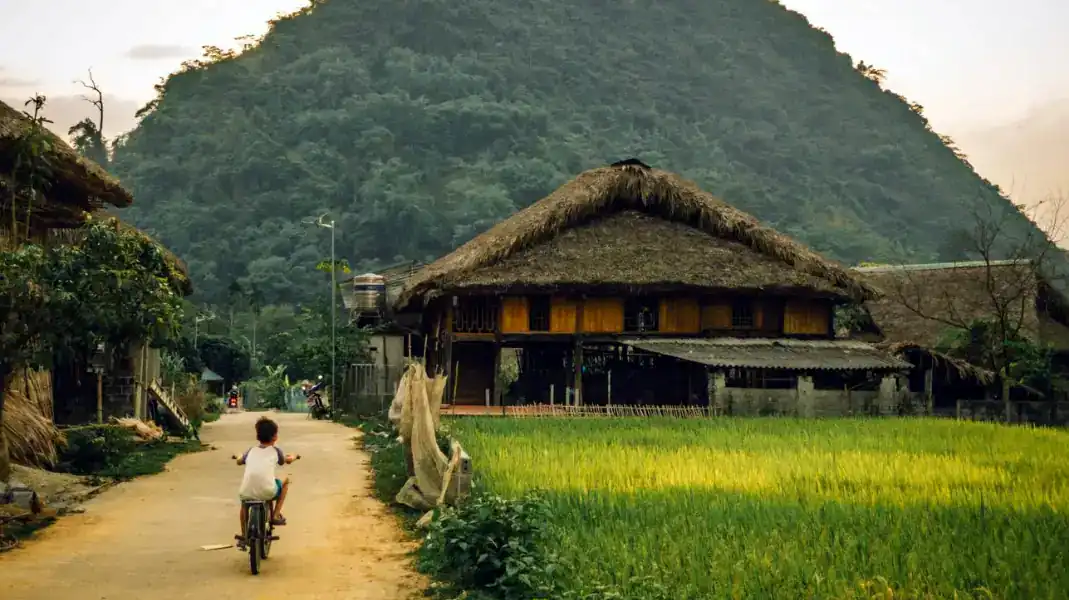
Thon Tha, near Ha Giang city (residential group 15, Ha Giang 1 ward, Tuyen Quang province), is a Tay village of more than 150 households, recognised as a community cultural tourism village. It is known for its traditional stilt houses and rice fields.
Visitors come to walk or cycle through the fields, stay with families and, at the right time of year, see Tay festivals such as Long Tong in the first lunar month.
2. Nam Dam: a pioneer Dao village
Nam Dam, in the former Quan Ba district, is a Dao village and one of Ha Giang’s best-known community tourism villages, with more than 30 households taking part.
It received the ASEAN Homestay Award in 2017, the first international tourism award for Ha Giang, and an ASEAN community-based tourism award in 2023.
Guests stay with Dao families, eat home cooking and walk in the surrounding hills. Ask your host what is on offer when you book.
3. Xa Phin: quiet trails on Tay Con Linh
Xa Phin is a village of the Dao Ao Dai ethnic group on the slopes of Tay Con Linh. It is small and quiet, far from the main tourist road.
Families here grow rice, corn and tea, including ancient Shan Tuyet tea trees. Visits are on foot with a local guide, and there is no big tourism infrastructure, which is part of its charm.
For quieter places on and around Tay Con Linh, see our guide to peaceful villages in Ha Giang.
Where your money goes
Ask where the money goes
The difference between community tourism and mass tourism is who keeps the money. In mass tourism, much of what you pay can leave the region. In community tourism, more of it reaches the families who host you.
There is no fixed formula. Ask your operator or host simply: how much of what I pay goes to the family, the guide and the village? A good partner will answer clearly.
What community tourism can protect
When it is done well, community tourism gives families a reason to keep their culture, their houses and their forest.
Traditional houses
Many families are under pressure to replace old wooden houses with concrete. Income from guests can make it worth keeping and repairing a traditional house.
Farming and food
Guests who want local food give families a reason to keep growing local rice, vegetables and other crops.
Fair prices and dignity
When villagers organise, for example in a cooperative, they can agree on fair prices and decide together how tourism should work in their village.
Before you stay with a family, read our guide to homestays in Ha Giang: what to expect, what to bring and how to be a good guest.


Good manners in a community homestay
Staying with a family is a privilege. These simple habits help:
- Shoes Off Indoors: Take off your shoes at the door when your hosts do.
- Dress Modestly in Common Areas: Wear clothing that covers shoulders and knees; avoid walking around in swimwear or revealing sleepwear.
- Respect the Family Ancestral Altar: Do not photograph, touch, or place luggage near the central sacred altar; never point your feet directly toward it when seated.
- Ask Before Photographing Individuals: Politely seek permission before taking portraits of village elders, women working on handicrafts, or children.
- Follow Designated Bathing Protocols: Use bathroom water respectfully, especially during dry winter months when mountain water springs run low.
- Practice Pack-It-In, Pack-It-Out Waste Disposal: Carry all non-biodegradable trash, including plastic water bottles and snack packets, back with you, or ask your guide where it can be sorted.
Community tourism is not charity. It is a fair exchange. When guests pay fairly and treat families with respect, the village gains, and the forest has more reasons to stay standing.
Nguyễn Văn Trung, Founder, TVPalm
Frequently asked questions
How much privacy should I expect?
In many family homes, guests sleep in a shared room or loft, sometimes with curtains between beds. Some homestays have private rooms. Ask before you book.
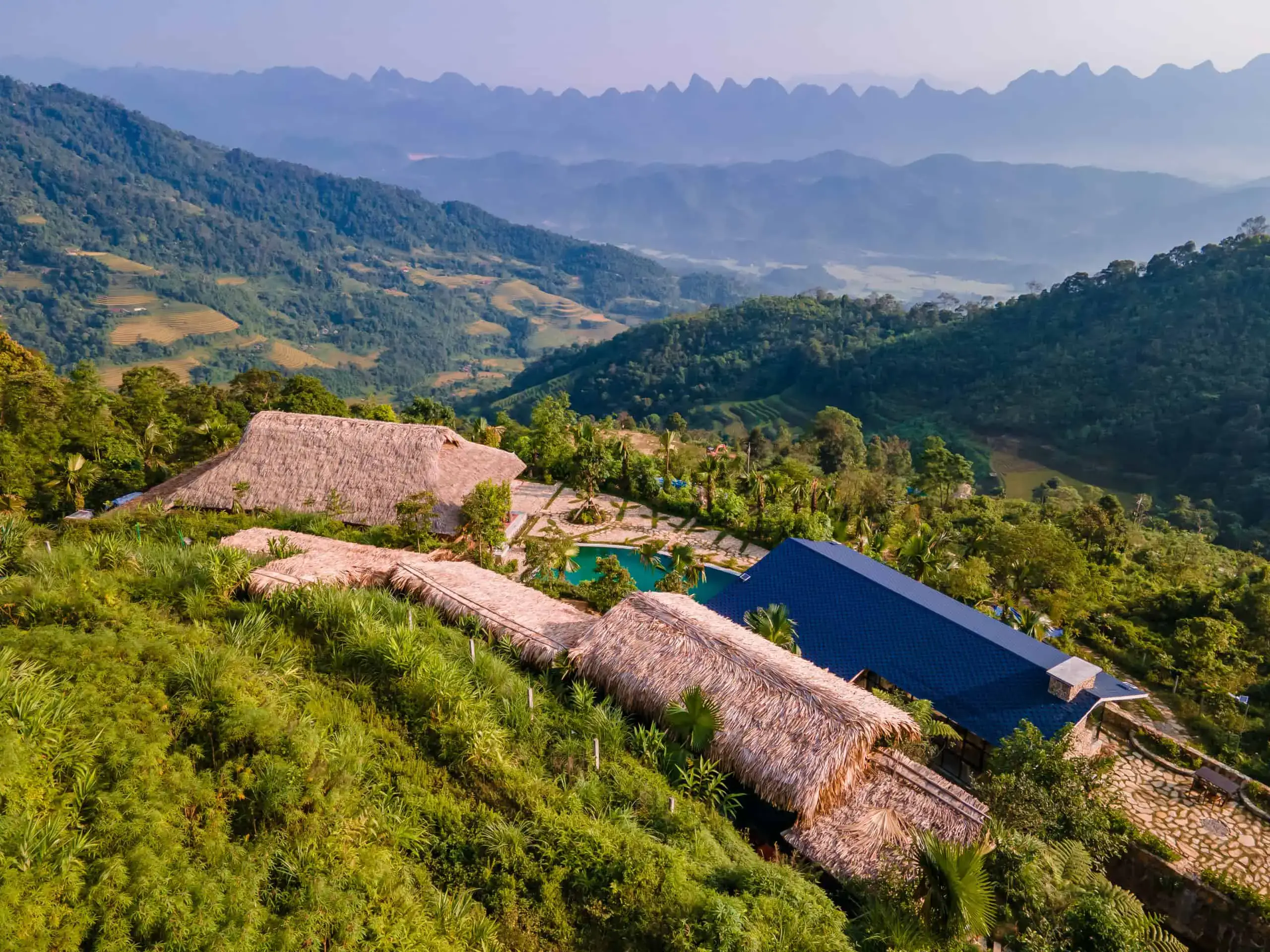
If you want more privacy, you can stay in a private room at TVPalm Ecolodge, near Khuoi My, and visit the villages during the day.
Is a community homestay safe for solo travellers?
Village homestays in Ha Giang are generally welcoming places, including for solo travellers. As anywhere, use common sense, let someone know your plans and book through people you trust.
What food is served?
Families cook what they have: rice, vegetables from the garden, tofu, and often pork or chicken raised at home. For more, see our guide to local foods in Ha Giang.
Tell your hosts in advance if you are vegetarian, vegan or have other needs, so they can prepare.


