

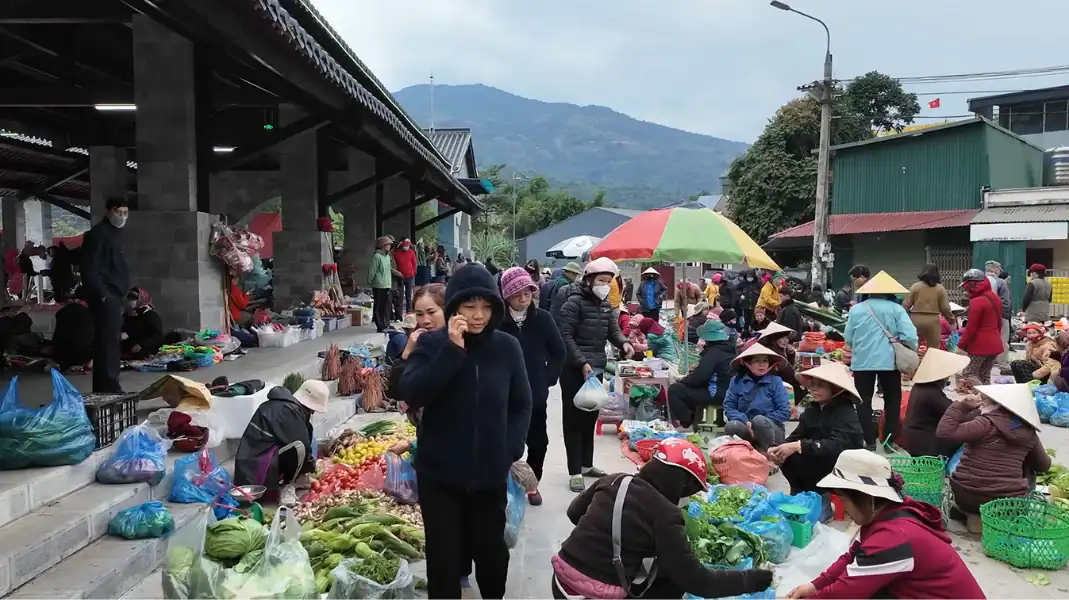
A Ha Giang market is not a souvenir street. It is where mountain families come once a week to sell, buy, eat and talk: Hmong, Tay, Dao Ao Dai, Giay and Lo Lo, from villages across the Dong Van Karst Plateau Geopark.
I am Nguyễn Văn Trung, founder of TVPalm. I have taken travellers to these markets since 2021. This guide covers when each market happens, how the rotating markets work, the cattle trading, what to eat, and how to behave.
What are Ha Giang’s ethnic markets, and why go?
They are weekly gatherings where highland families trade farm produce, livestock, hand-woven cloth and silver, and share corn wine (ruou ngo) with friends they may not see the rest of the week.
There are two kinds: fixed markets every Sunday morning, and rotating markets (cho lui, “backward markets”) that move one day earlier each week. Go early, and you see village life as it is, not as a show.
Ha Giang markets at a glance
| Category Parameter | Technical Metric / Value | Practical Significance for Visitors |
|---|---|---|
| Ethnic Group Presence | 17 Distinct Minority Communities | Hmong, Tay, Dao Ao Dai, Black Lolo, Giay, Flower Hmong |
| Primary Operating Hours | 05:00 AM to 11:00 AM | Peak social and trading activity occurs before 08:30 AM |
| Trading Schedule Systems | Fixed Weekly (Sunday) vs. Rotating (Lunar 6-Day) | Sunday fixed markets in main towns; lunar rotating in remote hamlets |
| Largest Livestock Trading Hub | Meo Vac Sunday Cattle Market | Hundreds of mountain cows, water buffalo, and pigs traded weekly |
| Admission Fees | Completely Free (0 VND) | Public community events; no tickets required |
| Primary Economic Exchange | Direct Cash & Barter Trading | No credit cards or digital payments accepted in mountain markets |
The main Sunday markets
The biggest and easiest markets to reach happen every Sunday morning. Dong Van and Meo Vac both run at the same time, so pick one for your Sunday.
1. Meo Vac Sunday market
Meo Vac is one of the largest markets in the Ha Giang region. Hmong, Dao and Tay families walk or ride in from the communes around the valley.
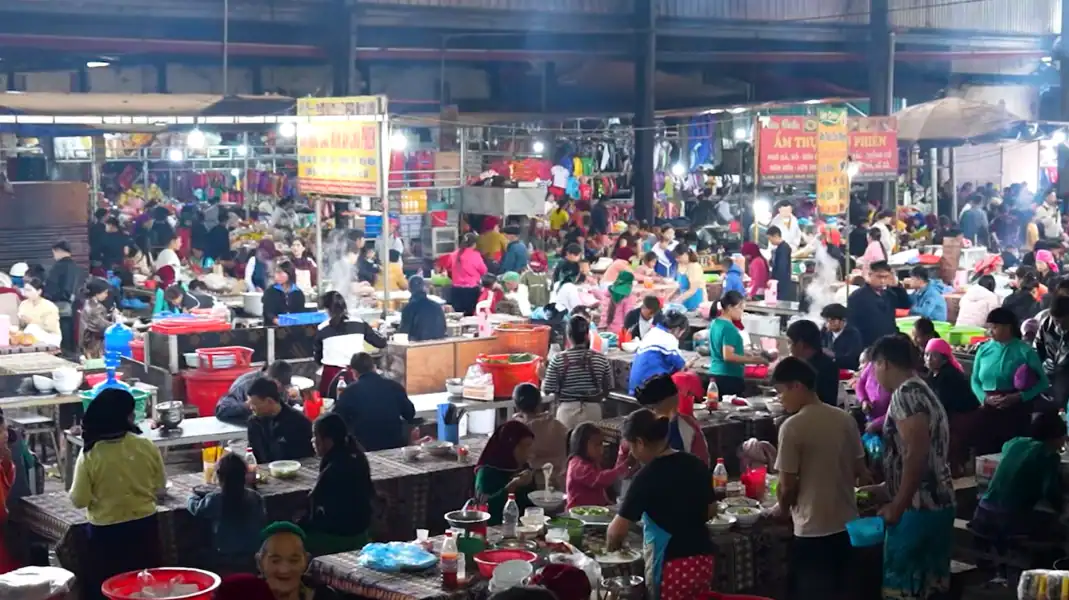
What you will find at Meo Vac:
- Cattle market: behind the main market, yellow mountain cattle and buffalo are looked over, bargained for and sold for cash.
- Food stalls: wood-fire stalls serving thang co (a Hmong stew of horse or beef offal) and bowls of pho chua (sour noodles).
- Cloth and farm produce: hand-woven hemp, indigo-dyed cloth, forest honey and cardamom, sold by the people who make or grow them.
Best time: 06:00 to 08:00. Trading slows after 10:30, when families start the long walk home.
To understand the beliefs, ceremonies and indigo textiles behind what you see at the market, read about the Dao Ao Dai of Tay Con Linh.
2. Dong Van Sunday market
In the centre of Dong Van’s old quarter, the Sunday market fills an old stone-and-wood market hall from the 1920s.
- The feel: busy and colourful, with Flower Hmong women in pleated skirts and Dao women in tall black turbans.
- What to look for: old Shan Tuyet tea, medicinal herbs, local silver and hand-made bamboo flutes.
- Where to sit: the coffee stalls around the old quarter are a good place to watch families arrive at dawn.
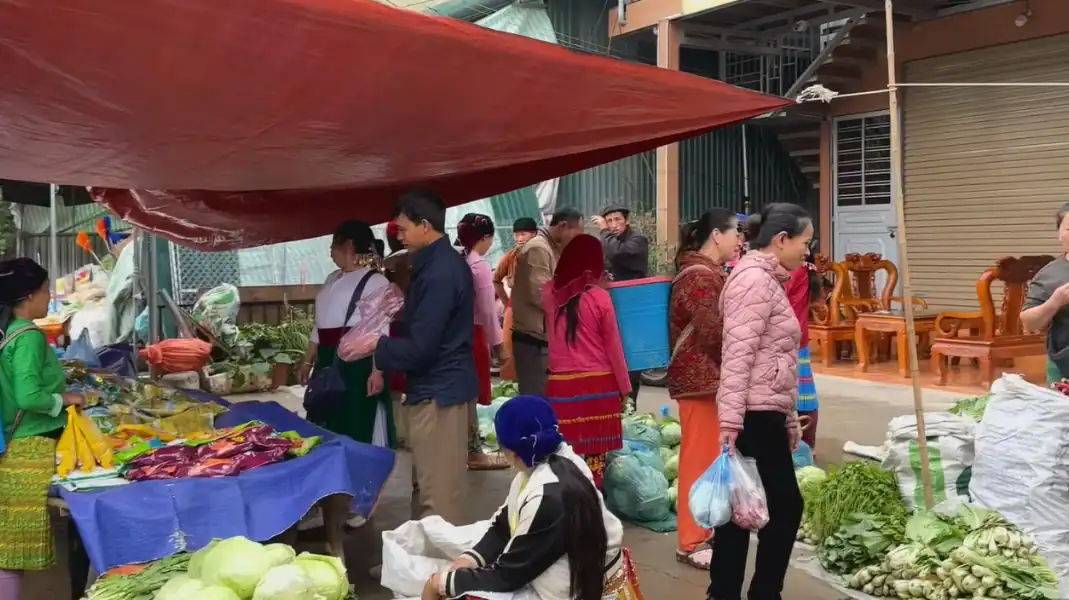
Rotating “backward” markets (cho lui)
How the rotating schedule works
A backward market moves one day earlier every week. If it is on a Sunday this week, it will be on Saturday next week, Friday the week after, then Thursday.
Week 1: SUNDAY ──► Week 2: SATURDAY ──► Week 3: FRIDAY ──► Week 4: THURSDAY
Four rotating markets worth fitting in
- Lung Phin (Meo Vac district): follows the lunar-calendar days of the Tiger and the Monkey. One of the least commercial markets in the area.
- Pho Cao (Dong Van district): days of the Dragon and the Dog. Known for its stone-walled village and buckwheat food stalls.
- Sa Phin (opposite the Hmong King’s Palace): days of the Snake and the Pig. Right across the road from the Vuong family palace.
- Ma Le (north of Dong Van): days of the Rat and the Horse. Close to the Chinese border, with rare herbs and hand-forged farm tools.
Tip: the lunar days shift, so check the date with your guide or homestay before you plan around a rotating market. On a TVPalm trip, we fit one into your route when the dates allow.
Market schedule and locations
| Market Name | Location District | Operating Schedule / Cycle | Key Cultural Highlight |
|---|---|---|---|
| Meo Vac Market | Meo Vac town center | Every Sunday morning (05:00 – 11:00) | Largest cattle and livestock market in Northern Vietnam |
| Dong Van Market | Dong Van Old Quarter | Every Sunday morning (06:00 – 11:00) | Historic stone architecture, food stalls, textiles |
| Yen Minh Market | Yen Minh town center | Every Sunday morning (06:00 – 10:30) | Agricultural produce, Shan Tuyet tea, local timber items |
| Quang Bạ (Tam Son) | Quan Ba town center | Every Sunday morning (06:00 – 10:30) | Lung Tam linen products, corn wine, organic mountain honey |
| Lung Phin Market | Meo Vac (15 km from town) | Rotating 6-Day (Tiger & Monkey days) | Uncommercialized tribal trading, rare highland herbs |
| Pho Cao Market | Dong Van district | Rotating 6-Day (Dragon & Dog days) | Traditional mud-wall housing background, Hmong crafts |
| Sa Phin Market | Sa Phin commune | Rotating 6-Day (Snake & Pig days) | Located near Hmong King Palace; easy transport access |
| Du Gia Market (Du Gia village review) | Du Gia commune | Every Saturday morning (06:30 – 10:00) | Tay minority handicrafts, stream fish, local produce |
What to eat and drink at the market
Markets are where Ha Giang (part of Tuyen Quang province since July 2025) eats. To know what you are ordering, see our guide to local foods in Ha Giang.
- Thang co: a Hmong stew of horse or beef offal, simmered with mountain spices such as star anise, cardamom and lemongrass, served from big iron pans.
- Men men: ground corn steamed twice in wooden barrels, the everyday staple of Hmong families in the dry karst areas.
- Au tau porridge (chao au tau): a savoury night porridge made from an Aconitum root, cooked for many hours to make it safe to eat. Bitter-sweet, and only to be eaten where it is properly prepared.
- Corn wine (ruou ngo): distilled from fermented mountain corn. Being offered a small cup is a sign of welcome.
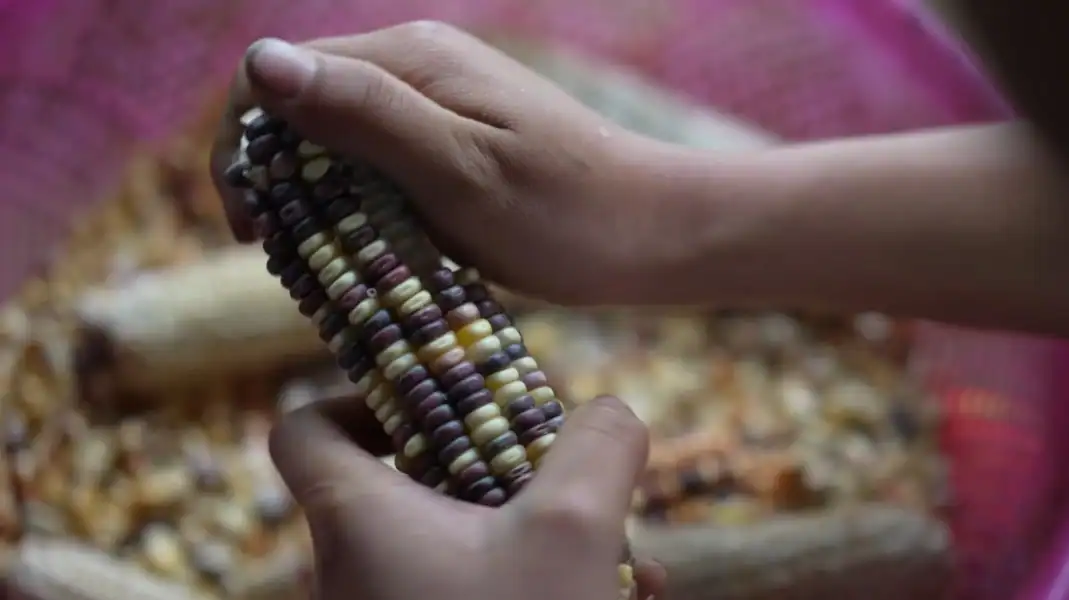
Buy food from stalls that are busy with local people, and respect local customs on how and where to eat.
Etiquette and photography
1. Photos
Always ask before taking a close portrait, especially of children and elders. A smile and a gesture at your camera is usually understood. If someone says no, put the camera down.
2. Buying fairly
Gentle bargaining is fine, but prices are already low. Arguing hard over 10,000 VND (about $0.40) costs the seller more than it saves you.
Buying cloth, honey and herbs straight from the people who make them keeps the money in the villages. See how this works in community-based tourism in Ha Giang.
3. Dress and waste
Wear long, breathable trousers and sleeved tops. Bring a reusable bag so you do not add plastic to the mountains.
What to bring
For an early market morning, pack a small daypack with:
- Small notes in Vietnamese dong (10,000, 20,000 and 50,000 VND)
- A warm jacket or fleece for cold mornings (8°C to 14°C in winter)
- Walking shoes with good grip for wet stones
- A camera with a zoom lens, so you do not need to push into people’s faces
- A refillable water bottle and hand sanitiser
- A light rain poncho or small umbrella for the mountain mist
Frequently asked questions
What time should I arrive at a Ha Giang market?
Between 06:00 and 07:30. Early, you see families arriving in traditional dress and the busiest trading, before midday heat and tour groups. Many travellers then walk out to the peaceful villages in Ha Giang nearby.
Can I see both Dong Van and Meo Vac markets on the same Sunday?
Not properly. Both are busiest between 07:00 and 09:00, and the drive between them over Ma Pi Leng Pass takes 45 to 60 minutes. Choose one for Sunday and see a rotating market on another day.
Can I pay by card or phone at the markets?
Mostly not. Markets run on cash in Vietnamese dong. A few sellers accept a bank QR transfer, but do not count on it. Take out enough cash in Ha Giang City or Dong Van before you go.
Written by Nguyễn Văn Trung, founder of TVPalm. He has led small-group trips across Northeast Vietnam since 2021.


