

Du Gia village in Ha Giang is widely considered the most peaceful and authentic overnight stop along the iconic Ha Giang Loop route circuit.
Located 72 kilometers southeast of Ha Giang City in Yen Minh district, this quiet highland valley offers a stark contrast to the high-altitude limestone peaks of Dong Van by combining emerald rice terraces, traditional Tay ethnic wooden stilt houses, and natural freshwater swimming holes.
As an eco-adventure lead and expedition director at TVPalm Ecolodge, I, Văn Trung Nguyễn, have guided small-group journeys through Du Gia for over eight years.
This comprehensive du gia village review covers essential travel routes, waterfall cliff jumping safety, authentic homestay selections, and practical travel logistics for Western travelers.
What is Du Gia village?
Du Gia village is a peaceful mountain commune situated in Yen Minh district, Ha Giang province, famous for its emerald terraced rice fields, crystal-clear streams, and authentic Tay ethnic stilt house culture.
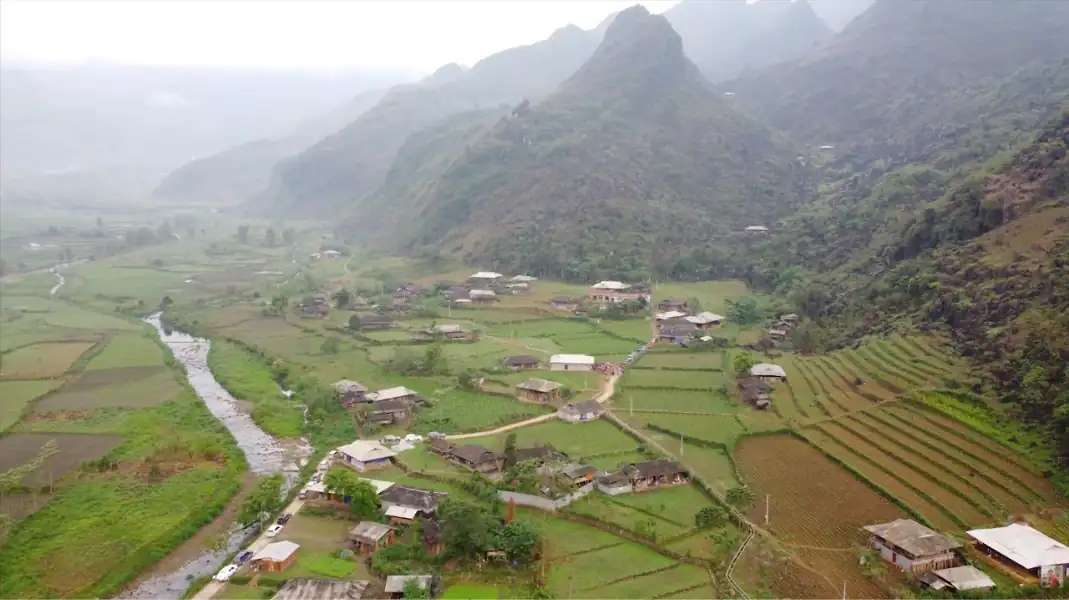
Unlike urban transit hubs like Yen Minh town or tourist-dense quarters in Dong Van, Du Gia retains an unhurried rural atmosphere where travelers slow down, enjoy communal family dinners, and swim in natural mountain waterfalls after days of mountain riding.
Essential Destination Parameters and Metrics:
| Category Parameter | Value / Technical Metric | Practical Travel Significance |
|---|---|---|
| Geographic Location | Yên Minh District, Hà Giang Province | 72 km from Ha Giang City; 90 km from Meo Vac town |
| Valley Altitude | ~450 to 600 Meters | Warmer climate and lusher vegetation than Dong Van (1,100m) |
| Primary Ethnic Groups | Tay and Hmong Communities | Traditional wooden stilt architecture and organic agriculture |
| Crown Natural Feature | Du Gia Waterfall (Thác Thâm Luông) | Free entry natural pool for swimming and safe cliff jumping |
| Ideal Travel Duration | 2 Days / 1 Night | Perfect final overnight stop before returning to Ha Giang City |
| Road Access Route | Provincial Road DT176 & DT182 | Mountain pass with pine forests, mountain streams, and switchbacks |
Key Highlights of Du Gia Village
1. Du Gia Waterfall (Thac Tham Luong)
Du Gia Waterfall, locally known as Thac Tham Luong, is a natural multi-tiered cascade located 3 kilometers from Du Gia village center. The waterfall feeds into a deep, turquoise freshwater basin carved into natural bedrock, offering a refreshing swim stop to wash off road dust after long motorbike rides.

Safety and Cliff Jumping Guidelines:
- The natural pool depth varies between 3.5 meters and 5 meters near the primary drop ledge.
- Jump exclusively from designated lower rocky platforms (4 meters to 6 meters high).
- Avoid jumping during heavy summer rainstorms when river currents accelerate rapidly.
- Wear water shoes or rubber-soled sandals to prevent slipping on wet rocks along the pool edge.
Entry to Du Gia Waterfall is completely free. Local villagers maintain basic trash receptacles near the entrance, and travelers are urged to pack out all personal waste.
2. Traditional Tay Ethnic Stilt House Homestays
Accommodation in Du Gia revolves around traditional Tay wooden stilt houses built using local ironwood, bamboo, and palm leaf thatch. Sleeping quarters consist of clean communal wooden floors equipped with individual privacy curtains, clean mattresses, mosquito nets, and fresh bedding.
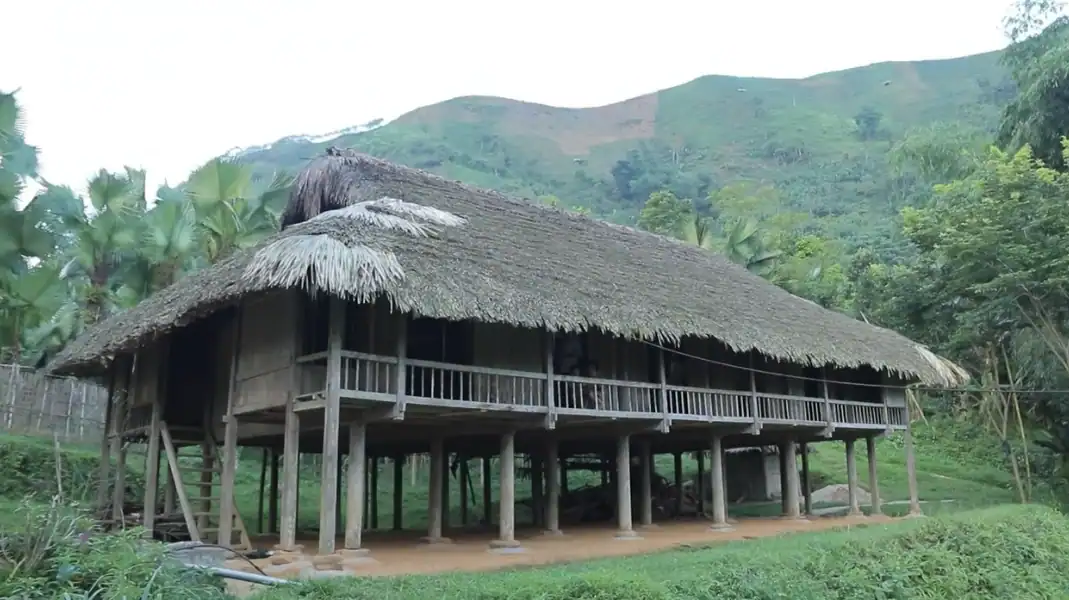
The Family Dinner Culture: Every evening at Du Gia homestays centers on a communal “family dinner” served on woven floor mats. Hosts prepare organic highland dishes including mountain pork, free-range chicken, stir-fried bamboo shoots, and local tofu paired with traditional corn wine (ruou ngo). To understand the unique ingredients, spices, and dining etiquette of these evening banquets, explore the must-try local foods in Ha Giang shared across ethnic households.
“At TVPalm Ecolodge, we coordinate with local Tay homestay cooperatives in Du Gia to ensure fair host compensation and authentic farm-to-table meals cooked over wood fires.”
Choosing an unhurried family stilt house over crowded roadside motels transforms your journey from an ordinary motorbike transit into a meaningful cultural exchange. Review our practical guide to an authentic homestay experience in Ha Giang to learn traditional stilt house etiquette, room amenities, and how to spot genuine community hosts.
3. Terraced Rice Fields and Stream Side Walking
Du Gia valley features wide terraced rice paddies framed by steep limestone mountains. Walking through the valley floor along narrow earth paths allows visitors to observe daily rural routines, such as water buffalo grazing, carding flax, and tending vegetable plots without tourist commercialization.
Du Gia vs. Other Overnight Stops on the Ha Giang Loop
Choosing where to stay along the Ha Giang Loop impacts your overall travel pacing and comfort. The table below compares Du Gia against major alternative overnight towns:
| Overnight Location | Pacing & Vibe | Landscape Style | Accommodation Types | Best Suited For |
|---|---|---|---|---|
| Du Gia Village | Relaxed, authentic, nature-focused | Green valley, streams, rice fields | Traditional Tay stilt house homestays | Swimming, cultural relaxation, family dinners |
| Dong Van Town | Historic, busy, tourist center | Karst plateau, stone heritage houses | Hotels, private rooms, hostels | Night market, historic buildings, central location |
| Meo Vac Town | Quiet transit town, authentic markets | Rugged limestone canyons | Guesthouses, boutique ecolodges | Early morning Sunday market, Ma Pi Leng proximity |
| Yen Minh Town | Highway transit hub, commercial | Pine forests, valley basin | Basic motels, roadside hotels | Quick emergency stops, budget transit |
While Du Gia offers a tranquil valley escape with freshwater springs, travelers planning a broader slow-travel itinerary can explore our curated field guide to the peaceful villages in Ha Giang to compare highland atmospheres, ancient palm-thatched architecture, and cultural traditions across the province.
How to Get to Du Gia Village? Route & Road Conditions
Reaching Du Gia involves driving along mountainous provincial roads. Motorcyclists and private 4WD vehicle drivers can reach Du Gia via two primary access routes:
Route 1: From Meo Vac to Du Gia (Via Mau Due & DT176)
- Distance: 75 Kilometers (Approximately 2.5 to 3 hours driving).
- Road Character: Takes riders over steep pass switchbacks from Meo Vac through Mau Due valley onto DT176. The road features dramatic mountain overlooks and pine forest stretches.
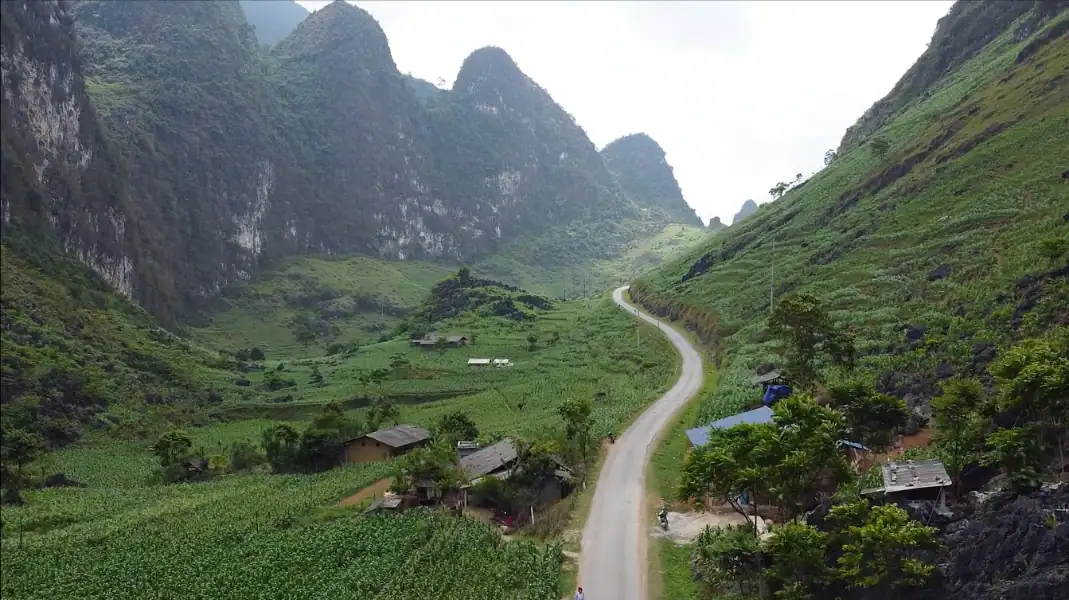
Route 2: From Du Gia to Ha Giang City (Via DT182 & QL4C)
- Distance: 72 Kilometers (Approximately 2.5 hours driving).
- Road Character: The standard return leg for loop riders heading back to Ha Giang City or TVPalm Ecolodge. Connects through Quan Ba district via Pac Sum Pass.
Road Condition Advisory: Provincial roads DT176 and DT182 are paved but feature occasional gravel patches, narrow blind corners, and mountain runoff after heavy rain. Drivers should maintain speeds under 35 km/h on downhill switchbacks.
Official travel safety advisories from the Vietnam National Authority of Tourism advise international riders operating motorcycles in Vietnam to carry a valid 1968 international driving permit in Vietnam alongside their national motorcycle license.
Best Time to Visit Du Gia Village
Weather patterns in Du Gia shift across four main seasonal windows:
- Harvest Season (September to October – Peak Window): Rice terraces turn vibrant golden yellow, dry clear weather with daytime temperatures averaging 20°C to 26°C. Ideal for photography and swimming.
- Spring (February to April): Fresh green valleys, blooming peach and plum blossoms, crisp mountain air (16°C to 22°C).
- Summer Monsoon (June to August): Lush green scenery and maximum waterfall volume. Heavy afternoon rain showers require cautious riding on mountain passes.
- Winter (November to January): Cool, dry mountain mist with temperatures dropping to 10°C to 15°C. Pleasant for hiking but cold for waterfall swimming.
Essential Packing & Preparation Checklist
Before adding Du Gia to your Ha Giang Loop itinerary, ensure you pack the following essential gear into a waterproof dry bag:
- High-traction water shoes or rubber sandals for rocky waterfall swimming
- Quick-dry swimwear and lightweight micro-fiber towel
- Compact headlamp or flashlight for night walks in rural stilt villages
- Refillable water bottle (Du Gia homestays provide filtered water refills)
- Biodegradable insect repellent and sunblock
- Sufficient cash in small VND denominations (no ATMs exist in Du Gia village)
- Basic first-aid kit containing antiseptic wipes, band-aids, and rehydration salts
Frequently Asked Questions
Is Du Gia Waterfall entry free?
Yes. Entry to Du Gia Waterfall (Thac Tham Luong) is completely free of charge. Local villagers ask visitors to keep the area clean and take all personal trash back to their homestays.
Can beginners or non-swimmers visit Du Gia Waterfall safely?
Yes. Shallow rocky stream sections exist near the base of the waterfall where visitors can safely wade and relax without entering deep cliff jumping water zones.
How many days should I stay in Du Gia Village?
A 2-day 1-night stay is ideal for most Ha Giang Loop itineraries. This allows enough time to arrive in the afternoon, swim at the waterfall, enjoy a traditional family dinner, and relax before departing the following morning.
Written by Văn Trung Nguyễn, Lead Expedition Director & Eco-Tour Specialist at TVPalm Ecolodge, Ha Giang.


