

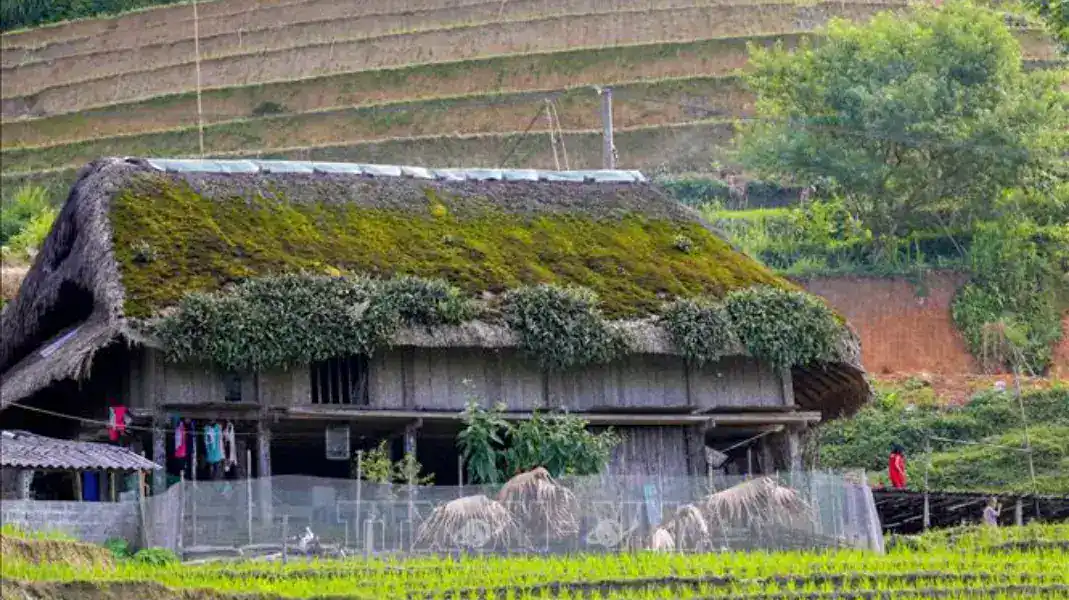
Xa Phin rests on the mist-shrouded slopes of Tay Con Linh in Ha Giang, where palm-thatched stilt houses turn emerald under mountain clouds. As founder of TVPalm, I have guided private walking journeys through these valleys since 2021, helping travelers experience authentic Dao Ao Dai culture.
This field guide provides local insights into village geography, roof botany, ancient tea groves, and respectful trekking far from commercial crowds.
Understanding Xa Phin village on the slopes of Tay Con Linh
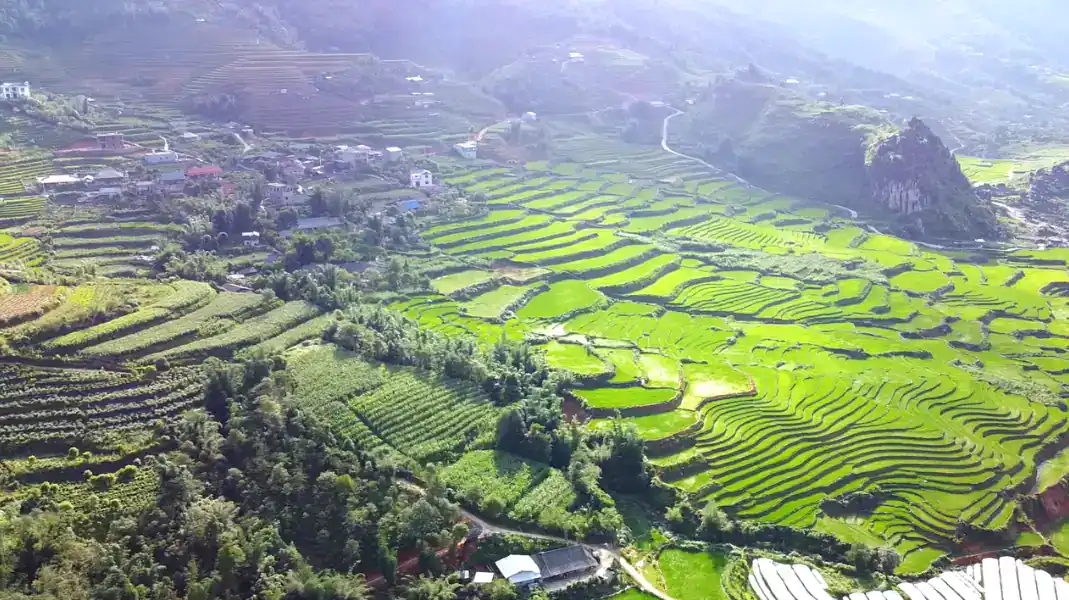
Xa Phin is an authentic highland hamlet of the Dao Ao Dai ethnic group located between 900 and 1,200 meters above sea level in Phuong Tien commune, Vi Xuyen district, Ha Giang province. The village sits quietly on the granite ridges of Mount Tay Con Linh, the highest peak in Northeast Vietnam at 2,427 meters.
Unlike commercial stops along the loop, Xa Phin remains a peaceful farming community of roughly 53 households cultivating terraced rice and wild tea trees.
Travelers occasionally confuse Xa Phin on Tay Con Linh with Sa Phin in Dong Van district. Sa Phin lies over 130 kilometers northeast on the karst plateau, home to the historic Vuong Family Palace. In contrast, Xa Phin in Vi Xuyen features montane rainforests, spring streams, and palm-thatched architecture.
Mount Tay Con Linh lies entirely within Ha Giang province, serving as a vital watershed for the Lo River basin. For destination planning, the official Vietnam Tourism Board provides curated resources on sustainable highland routes.
| Indicator | Specification | Field Notes |
|---|---|---|
| Location | Phuong Tien, Vi Xuyen | 22 km northwest of Ha Giang |
| Elevation | 900 to 1,200 meters | Slopes of Mount Tay Con Linh |
| People | Dao Ao Dai | Roughly 53 households |
| Roofs | Mossy palm thatch | Over 40 historic green roofs |
| Climate | Montane cloud belt | 16 to 20°C average, humidity over 85% |
| Economy | Shan Tuyet tea and rice | Old tea trees and sticky rice |
The natural science and craftsmanship of green mossy roofs
The green roofs of Xa Phin are living ecological systems created by thatch craftsmanship and the humid microclimate of Tay Con Linh. Dao Ao Dai carpenters build these stilt houses using durable hardwoods like oak and ironwood to support expansive hip roofs. Each roof requires 8,000 to 10,000 mature palm leaves gathered from foothills, layered onto bamboo purlins for weather protection.
Under persistent mountain fog and humidity exceeding 85%, airborne spores of native bryophyte moss find an ideal moisture substrate within fibrous palm thatch. As documented in green building assessments by the Vietnam Green Building Council, vegetative roofing provides exceptional thermal performance:
- Seasoning stage: Over three years, palm leaves weather from green to deep brown as natural surface waxes break down.
- Colonization stage: From three to five years, pioneer moss spores lodge in crevices, forming distinct pale green patches.
- Mature velvet stage: After ten years, dense bryophyte carpets up to ten centimeters thick create the iconic emerald appearance.
Beyond scenic beauty, dense moss acts as a natural thermal buffer, keeping rooms four to six degrees cooler in summer while trapping hearth heat in winter.
Builders protect this living thatch during maintenance. When an underlying leaf deteriorates, carpenters slide fresh thatch beneath the living moss layer without disturbing the surface carpet. Walking on moss causes roof leaks, so touching thatch is strictly forbidden.

Dao Ao Dai cultural heritage and ancient Shan Tuyet tea forests
The Dao Ao Dai community of Xa Phin maintains a rich culture centered on forest stewardship, ancient arboriculture, and indigo textiles. While some guidebooks mistakenly label residents as Red Dao, they belong to the Dao Ao Dai (Long-tunic Dao) subgroup, wearing long indigo tunics decorated with refined embroidery around collars and lapels.
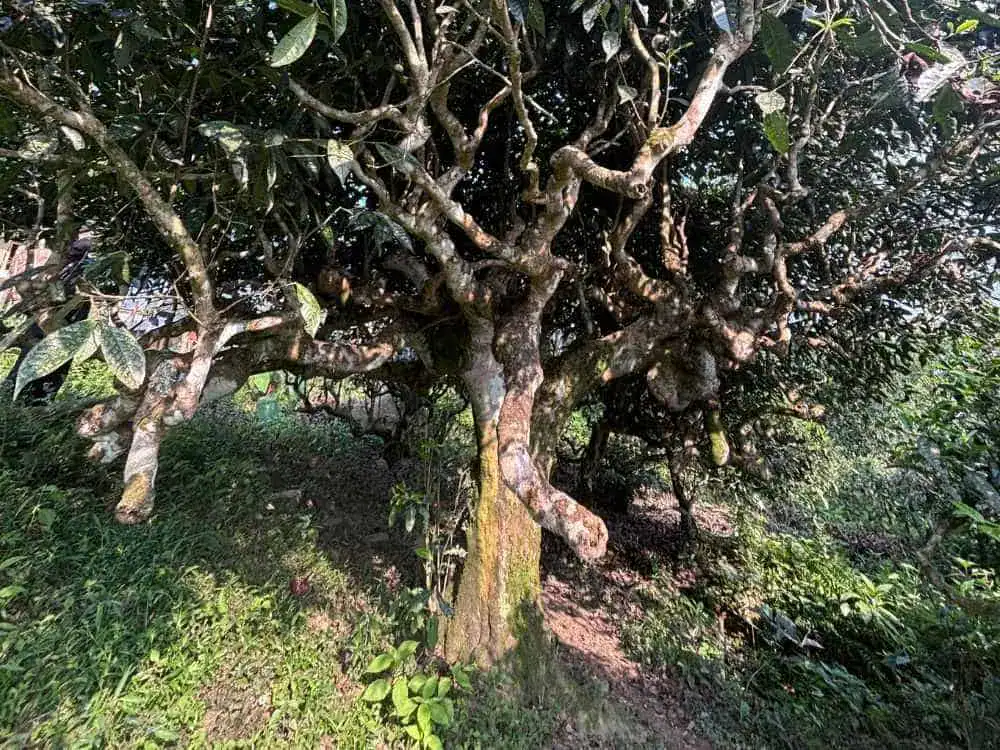
Above the village stand wild groves of ancient Shan Tuyet tea trees (Camellia sinensis var. assamica). These gnarled trees reach ten meters tall, with moss-covered trunks spanning one to four centuries. Nourished by mountain mist, they yield fleshy buds covered in silver-white down, inspiring the name “Snow on the Mountain.”
- Harvesting: Villagers climb into tall branches to pick tender buds during morning mist without ladders.
- Pan-firing: Fresh leaves are hand-withered, rolled on bamboo mats, and roasted in cast-iron woks.
- Flavor profile: The amber liquor offers floral aroma, mineral notes, and a sweet finish.
Visiting tea artisans during harvests allows travelers to observe how tea processing remains woven into daily family life. Explore our guide to the Dao Ao Dai ethnic group to learn more about Cap Sac ceremonies and herbal medicine traditions.
2 hiking trails and their travel times
| Trekking Route | Distance & Duration | Trail Terrain | Fitness Level |
|---|---|---|---|
| Thon Tha to Khuoi My, Xa Phin | 12 to 14 km (5 to 6 hours) | Terraced singletrack | Moderate fitness |
| Deep Tay Con Linh Circuit | 28 to 32 km (2 Days 1 Night) | Cloud forest singletrack | High endurance |
Best seasons and ideal weather conditions for visiting Xa Phin
The best time to visit Xa Phin is during autumn from September to October for golden terraced rice, or winter from November to February for sea-of-clouds phenomena and lush green moss. Tay Con Linh creates distinct conditions throughout the year:
- Autumn golden season (September to October): Dry sunny weather, crisp air, and golden rice terraces framing green roofs in brilliant contrast.
- Winter cloud hunting season (November to February): Temperatures drop between 8 and 14°C, bringing sea-of-cloud phenomena and fog that keeps roof moss saturated.
- Spring tea harvest season (March to April): Pleasant weather, blooming peach trees, and peak activity across ancient tea groves as families pick first-flush tea.
- Summer monsoon season (May to August): Heavy rainfall creates lush greenery and waterfalls, but mountain trails become muddy with slippery clay runoff.
Morning light between seven and nine o’clock offers the best atmosphere, as woodsmoke drifts through green palm eaves while sunbeams pierce the mist.
Essential packing checklist and respectful village etiquette
Essential packing for trekking to Xa Phin includes lugged waterproof boots, telescopic trekking poles, and modest trail apparel that respects Dao Ao Dai traditions. Reliable gear ensures you stay warm, dry, and balanced on steep mountain trails:
- Lugged trail footwear: Boots with deep rubber lugs like Vibram to grip slick clay slopes.
- Lightweight trekking poles: Telescopic poles reduce knee strain by twenty-five percent on steep descents.
- Breathable waterproof shell: A windproof rain jacket protects against rapid temperature drops and sudden cloud showers.
- Compact dry bags: Watertight stuff sacks protect electronics and spare clothing from humidity.
- Modest hiking apparel: Breathable clothing honoring local modesty norms.
- Reliable headlamp: A bright headlamp is indispensable when walking between stilt houses after sunset.
When you hike up the mountain trail and watch woodsmoke curl gently from those moss-covered roofs, your perception of time changes completely. That thick green moss is not an ornamental showpiece. It represents generations of Dao Ao Dai families living in quiet balance with the forests of Tay Con Linh.
Nguyễn Văn Trung, Founder of TVPalm
Respecting local customs ensures your visit remains positive and welcomed by the community:
- Ask before photographing: Request permission from elders and craftspeople before taking portraits.
- Remove footwear before entering homes: Leave muddy boots on the lower balcony deck before stepping onto clean wooden floors.
- Honor the ancestral altar room: Never lean backpacks against the central family altar or point feet toward sacred areas.
- Pack out all waste: Carry all plastic packaging back down the mountain for sorting.
Where to stay Village homestays and TVPalm Ecolodge
Accommodation options for visiting Xa Phin comprise authentic ethnic family stilt homestays within the village or private handcrafted rooms at TVPalm Ecolodge four kilometers down the valley.
For deep cultural immersion, travelers can stay in an authentic Dao family homestay in Xa Phin. Sleeping arrangements feature clean futons and mosquito nets in communal lofts, with home-cooked dinners shared around hearth fires.
For handcrafted comfort, TVPalm Ecolodge near Khuoi My village offers private bungalows overlooking rice terraces. Review our Ha Giang trekking tour itineraries to design a private multi-day journey.
Frequently asked questions
How long does it take for green moss to cover a palm roof in Xa Phin?
Moss begins colonizing palm roofs after three to five years in mountain mist. Mature roofs blanketed in thick moss have accumulated growth over ten to thirty years.
Can travelers reach Xa Phin by regular car or large tour buses?
No, passenger cars and buses cannot reach Xa Phin due to fifteen-percent inclines and narrow switchbacks. The safest way to visit is hiking with an experienced local guide.
What is the primary difference between Xa Phin and Sa Phin in Ha Giang?
Xa Phin is a Dao Ao Dai village on Mount Tay Con Linh in Vi Xuyen district, known for mossy palm roofs. Sa Phin is a karst valley in Dong Van district famous for the Hmong King Palace.
Written by Nguyễn Văn Trung, founder of TVPalm. He has led small-group trips across Northeast Vietnam since 2021.


