


Shan Tuyet is the ancient tea of Vietnam’s high mountains. On Mount Tay Con Linh in Ha Giang province, this heirloom tea comes from centenarian Camellia sinensis trees thriving between 800 and 2,000 meters above sea level.
At TVPalm, we work with indigenous Dao Ao Dai families who have tended these tea forests for generations without synthetic agrochemicals. In this guide, we explore why Shan Tuyet is inherently organic, how artisans pick and process it, and how to brew each cup.
Why is Shan Tuyet tea inherently organic?
Authentic Shan Tuyet tea is inherently organic because centenarian trees grow semi-wild within primary montane cloud forests, drawing pure nutrients from deep forest soil without synthetic chemicals. Unlike monoculture plantation hedges, ancient tea groves depend on natural highland ecosystems.
In Sino-Vietnamese, shan means high mountain, while tuyet means snow. This name honors the silvery-white downy hairs (trichomes) covering every young bud. These trichomes insulate delicate leaves against sub-zero mountain winds and tropical downpours, concentrating natural amino acids and aromatic oils.
Four ecological factors define Tay Con Linh’s distinctive tea terroir:
- Centuries-Deep Taproots: Massive roots extend three to six meters into granite subsoil, drawing minerals unavailable to shallow plantation bushes.
- Cloud Forest Microclimate: Constant mist, cool nights, and mild days between 1,200 and 2,000 meters slow leaf growth, allowing rich catechins to accumulate.
- Biodiverse Forest Canopy: Wild tea trees coexist with mosses, orchids, and ferns. Decomposing leaf litter provides balanced organic nourishment naturally.
- Protected Geographical Indication: Ha Giang Shan Tuyet holds an official Geographical Indication (GI), protecting authentic teas crafted in local mountain districts.
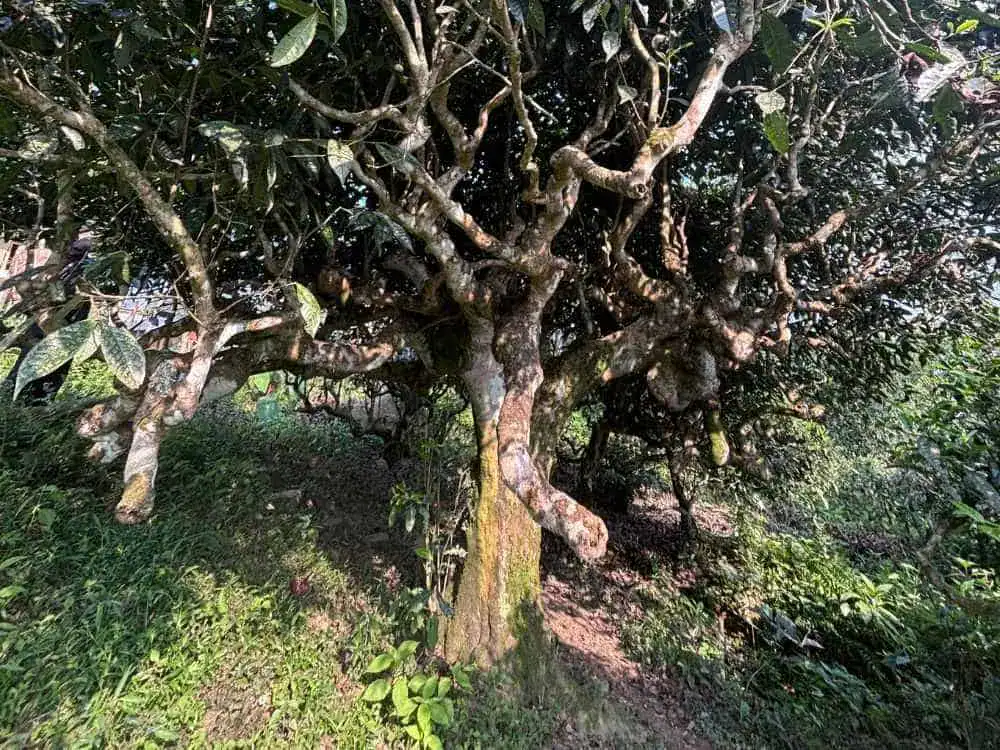
Ancient Shan Tuyet versus conventional plantation tea
| Agronomic Parameter | Ancient Shan Tuyet Tea (Tay Con Linh) | Conventional Plantation Tea (Lowland) |
|---|---|---|
| Botanical Form | Heirloom seed-grown trees (6 to 15 m tall) | Pruned clonal bush hedges (0.8 to 1.2 m tall) |
| Tree Lifespan | 100 to 300+ years (Forest trees) | 15 to 30 years (Commercial replanting) |
| Cultivation Elevation | 1,200 to 2,000+ m above sea level | 100 to 800 m above sea level |
| Root Architecture | Deep taproots (3 to 6 m into granite bedrock) | Shallow lateral roots (30 to 60 cm) |
| Chemical Interventions | Zero synthetic fertilizers, fungicides, or pesticides | Synthetic NPK fertilizers, regular chemical sprays |
| Total Polyphenols | 24% to 29% dry weight (High catechin content) | 14% to 18% dry weight (Moderate catechin level) |
| Steeping Endurance | 6 to 8+ infusions with lingering throat sweetness | 2 to 3 infusions before flavor loss |
Tea lovers appreciate Shan Tuyet for its mineral backbone, velvety body, and enduring honey sweetness in the throat, known as hậu ngọt.
Ancestral harvesting and artisanal processing methods
How the Dao Ao Dai hand-harvest wild tea trees
Harvesting ancient tea trees requires agility, balance, and generations of experience. In mountain villages like Khuoi My, Xa Phin, and Na Thac, Dao Ao Dai women perform most harvesting work.
Because mature trees reach ten to fifteen meters high, harvesters scale mossy trunks at dawn while mist still blankets the ridges. Shoots are snapped off cleanly with fingertips without shears or scissors. Harvesters observe three primary plucking standards:
- Single Bud (White Tea / Bạch Trà): Only the unopened terminal bud coated in silver down. Yields a delicate, floral, and naturally sweet infusion.
- One Bud and One Leaf (Fine Green & Red Tea): The bud and first leaf, balancing high amino acid sweetness with refined aroma.
- One Bud and Two Leaves (Traditional Green Tea / Lỡ Tiết): The classic standard for full-bodied tea, offering golden amber clarity and a persistent finish.

The four seasonal tea flushes on Mount Tay Con Linh
| Harvest Flush | Timing (Solar Calendar) | Weather Conditions | Flavor Profile & Character |
|---|---|---|---|
| Spring Flush (Vỡ Tiết) | Late March to April | Post-dormancy mist, light rain | Highest amino acids, silkiest mouthfeel, sweetest honey finish |
| Summer Flush (Trà Mùa) | June to July | Warm days, monsoon rains | Boldest tannin structure, robust vegetal notes, rich gold liquor |
| Autumn Flush (Trà Thu) | September to October | Crisp mountain air, cool nights | Intense orchid aroma, wildflower honey notes, clean balance |
| Winter Flush (Trà Vụ Đông) | November to December | Frost, freezing winds | Extremely scarce volume, thickest velvet down, deep amber sweetness |
From fresh forest leaves to artisanal handcrafted tea
1. White Tea (Bạch Trà): The least processed style. Hand-selected buds wither slowly on elevated bamboo racks under shade, followed by low-temperature air-drying. No pan-firing or rolling occurs, keeping silvery trichomes intact.
2. Traditional Green Tea (Lục Trà): Fresh leaves rest briefly before entering cast-iron pans over open wood fires. Artisans toss leaves by hand (diệt men) to halt oxidation, roll them on bamboo mats (vò trà), and dry them over charcoal.
3. Red Tea (Hồng Trà): Fully oxidized tea. Leaves wither, roll to break cell walls, and ferment until deep copper red. The brewed liquor yields notes of wild honey, dried stone fruit, and cedarwood.
4. Pressed Aged Tea (Trà Bánh): Leaves are steamed, pressed into solid discs, and wrapped in palm leaves for aging. Over years of cellaring, aged Shan Tuyet develops rich earthy complexity and warming sweetness.
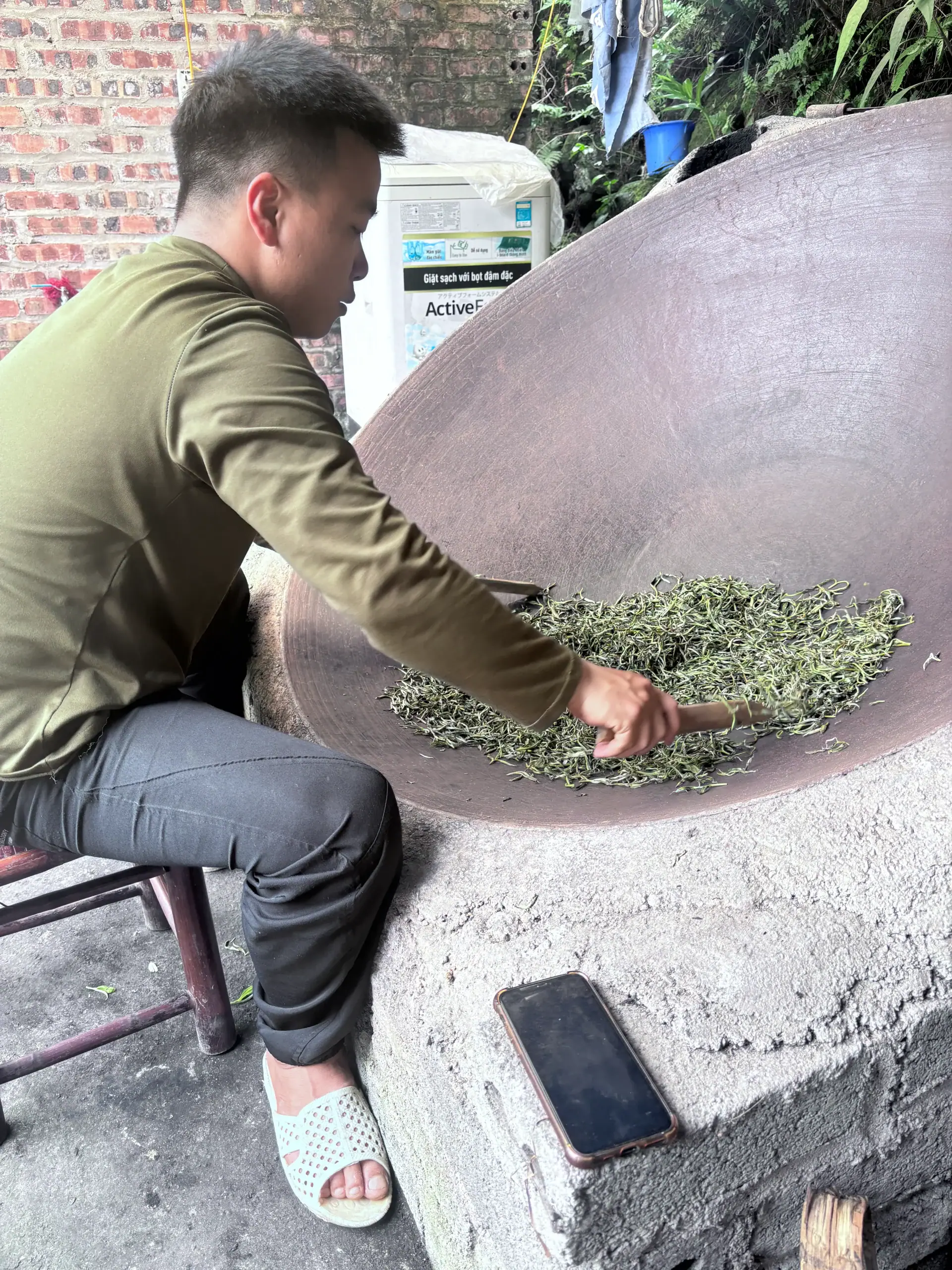
Tasting, brewing, and experiencing Shan Tuyet tea
Tasting profile and professional brewing parameters
- 1. Select Soft Spring Water: Use filtered spring water with total dissolved solids below 80 ppm and neutral pH (6.8 to 7.2) to protect delicate tea florals.
- 2. Control Water Temperature: Heat water to 85°C to 90°C for white and green tea. Never use 100°C boiling water directly, which scorches trichomes. Use 95°C only for red or aged tea.
- 3. Calibrate Leaf-to-Water Ratio: Use 5 grams of loose leaves per 150 milliliters of water in an unglazed clay teapot or porcelain gaiwan.
- 4. Perform a Rapid Awakening Rinse: Pour hot water over dry leaves and decant immediately within three to five seconds, discarding this rinse water.
- 5. Follow Progressive Steeping Durations: Infuse first steep for 15 to 20 seconds, second for 20 seconds, and third for 25 seconds, extending later steeps by 10 seconds.
- 6. Decant Completely into a Fairness Pitcher: Empty all liquid into a fairness pitcher (chén tống) before pouring into cups, preventing bitter standing stew.
Experiencing ancient tea forests with TVPalm Ecolodge
Travelers can discover ancient Shan Tuyet groves directly through mindful walking journeys departing from TVPalm Ecolodge in Khuoi My village at the foot of Mount Tay Con Linh.
“Sitting under a tea tree that has stood for centuries and sipping tea roasted over mountain hardwood, you realize that Shan Tuyet is not just a drink. It is what remains when communities protect their forest rather than clear it.”
Nguyễn Văn Trung, Founder, TVPalm
Our guided Ha Giang trekking tours take visitors into secluded tea villages like Khuoi My and Xa Phin, combining summit walks with home visits and hearthside tea tastings. For cultural etiquette, consult guidelines from the Vietnam National Authority of Tourism.
Frequently asked questions
Does Shan Tuyet tea contain caffeine?
Yes, Shan Tuyet tea contains natural caffeine, usually 30 to 50 milligrams per cup. However, because ancient trees produce abundant L-theanine, drinkers experience sustained mental clarity and calm focus without the restlessness or crashes often associated with coffee.
Why is authentic Shan Tuyet tea more expensive than plantation green tea?
Authentic Shan Tuyet tea commands premium value due to hazardous tree climbing, small seasonal yields, and meticulous hand craft. Harvesters scale tall trees on steep ridges, gathering only two to three kilograms of fresh buds daily, which reduces to a fraction after drying.
How should I store loose-leaf Shan Tuyet tea?
Store Shan Tuyet tea in an airtight canister or sealed foil pouch in a cool, dark, dry place away from culinary odors. Enjoy green tea within twelve to eighteen months for fresh floral notes, while white tea and pressed cakes can age gracefully for years.
Is Shan Tuyet tea officially certified organic?
Yes, major mountain cooperatives hold international organic certifications. For instance, Cao Bo commune on Tay Con Linh achieved IFOAM organic certification in 2011 across nearly 1,000 hectares of centenarian tea groves. Family plots are farmed completely naturally without chemicals.
Written by Nguyễn Văn Trung, founder of TVPalm. He has led small-group trips across Northeast Vietnam since 2021.


