

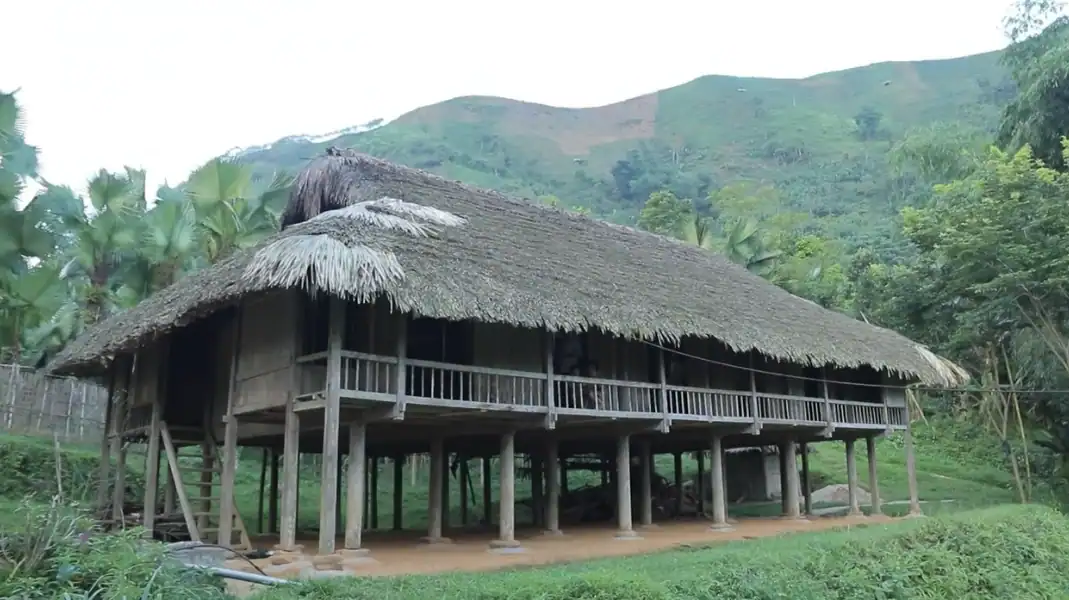
Visiting an ethnic village in Ha Giang means entering the living ancestral home of the Dao Ao Dai, Tay, and Hmong communities. Each hamlet maintains sacred domestic rules, fireside customs, and deep animist beliefs in the valleys beneath Mount Tay Con Linh (2,427m).
By respecting ancestral altars, dressing modestly, asking before taking photos, and sharing meals with sincerity, you honor your hosts while enjoying an authentic stay.
Inside the house thresholds, altars and the main pillar
Traditional wooden stilt houses and rammed-earth dwellings in Ha Giang serve as domestic sanctuaries where families and ancestral spirits reside together.
For Dao Ao Dai households in Khuoi My and Xa Phin, or Tay people in Thon Tha, residential architecture balances human shelter with nature. Your best guide is quiet modesty and following host cues.
The doorway
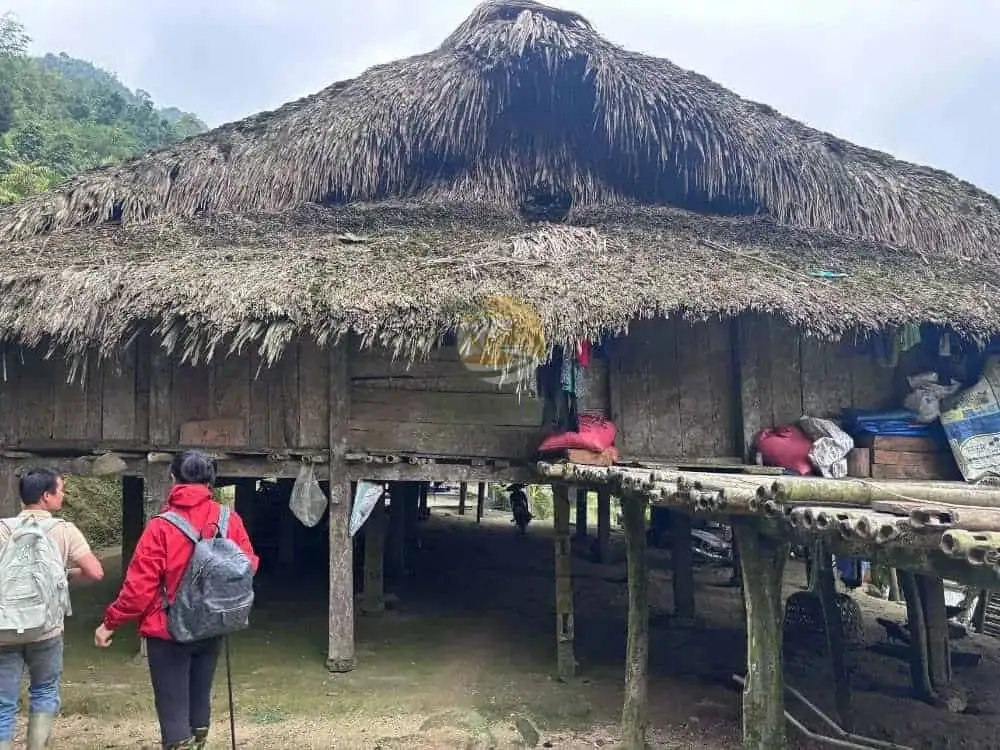
The front entrance and its raised wooden threshold (ngưống cồa) separate the outdoors from the domestic sanctuary. Many families believe a guardian spirit resides in the sill to protect the home.
- Step over the threshold: Lift your foot over the wooden sill rather than standing on it, which offends the doorway spirit.
- Do not sit on the sill: Sitting across the doorway blocks good fortune and shows disrespect toward household elders.
- Remove shoes promptly: Leave trekking footwear on the outer porch before stepping onto clean wooden floorboards.
The altar and the main pillar
Inside every traditional stilt house, the central pillar (cột cái) provides structural support and spiritual grounding. Facing the doorway stands the ancestor altar (bàn thập tổ tiên), placed to welcome ancestral blessings.
- Do not lean on the pillar: Never use the central pillar as a backrest or hang wet garments and gear against it.
- Leave the altar untouched: Never touch incense burners, paper talismans, or offering bowls on the altar shelf.
- Mind your foot direction: Tuck your legs neatly when seated so feet never point directly at the ancestor altar.
- Step aside during prayers: If hosts light incense, step back quietly without crossing before the altar.
Signs at the gate: green branches and woven bamboo
While trekking through rural hamlets, you may see fresh leafy boughs or a woven hexagonal bamboo talisman (ta-leo) hung over a gate. A ta-leo signals that the household is holding a private ritual, resting after childbirth, or healing. Custom strictly forbids outside visitors from entering; pass by quietly without peering inside.
Homestay manners the hearth, clothing and sleeping
The kitchen fire
In mountain villages where winter nights near freezing, the open hearth (bếp lửa) is the warm heart of the home. Families cook, brew tea, and dry crops around the flames. Tradition honors the hearth as the home of the Kitchen God, requiring respectful fireside conduct.
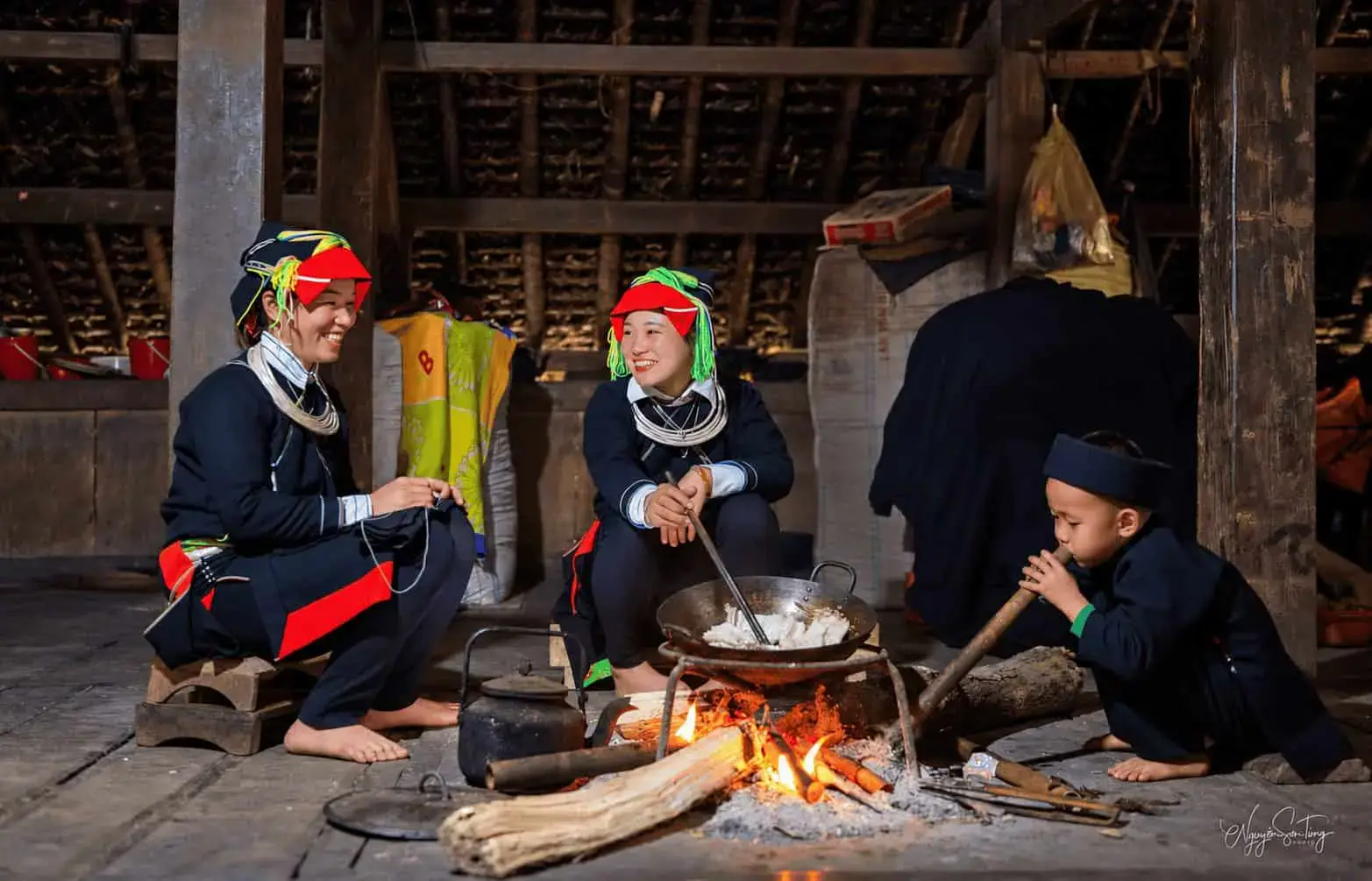
- Respect the hearth stones: The three foundation stones or tripod (ông đầu rau) supporting cooking pots are sacred; never rest feet on them or kick them.
- Never burn rubbish: Do not toss plastic or cigarette butts into the flames. Ask hosts where to dispose of waste.
- Mind sitting posture: Sit cross-legged or with legs tucked; avoid pointing feet toward the hearth or seated elders.
- Leave fire tending to hosts: Allow family members to adjust logs, as placement regulates draft and firewood use.
Clothing and sleeping
Highland communities value modesty. Although shorts suit mountain trails, wearing revealing clothing in a village causes discomfort among elders. Covering your shoulders and knees demonstrates basic courtesy.
| Setting | Recommended Attire | Items to Avoid | Cultural Rationale |
|---|---|---|---|
| Inside Homestays | Cotton trousers, sleeved shirts | Sleeveless vests, swimwear | Upholds domestic modesty |
| Village Paths | Trekking trousers, trail shoes | Crop tops, running shorts | Shows consideration to elders |
| Traditional Festivals | Casual long sleeves, dark trousers | Flashy imitation costumes | Maintains ceremonial dignity |
| Shared Dorms | Modest loungewear, mosquito net | Sleeping shirtless in open lofts | Respects shared family space |
At night, use the bedding provided, keep noise down after 21:00, and ensure your feet point toward the entrance door rather than the altar.
Meals and drinks table manners and “happy water”
Sharing an evening meal around a round woven tray (mâm cơm) represents the heart of upland hospitality. Diners gather around mountain vegetables, smoked pork, and bamboo shoots, paired with distilled corn wine (rượu ngô). Thoughtful table courtesies make shared dinners memorable.
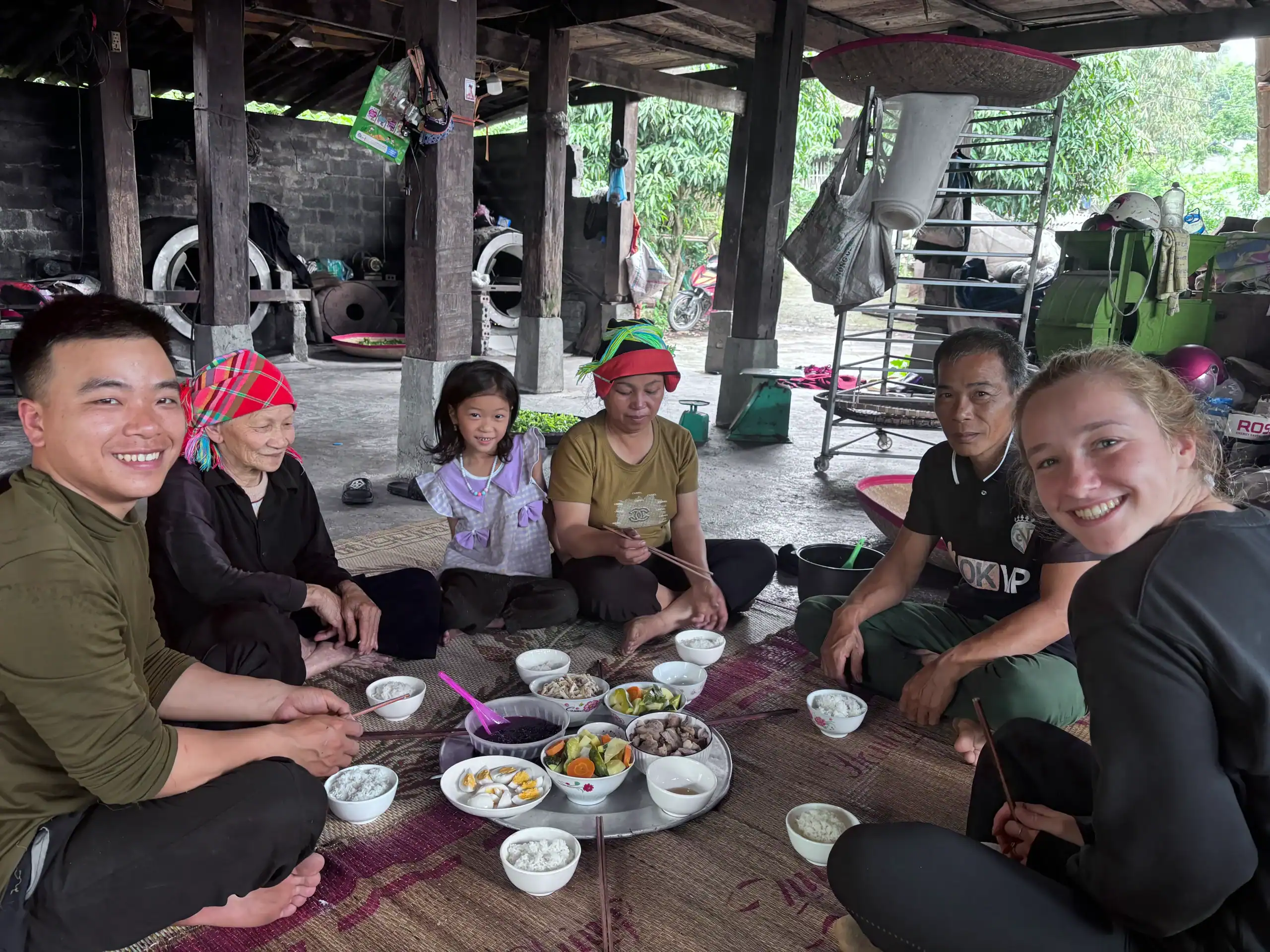
Table manners
- Wait for the invitation: Wait for the eldest host to offer the meal invitation (mời cơm) before tasting your food.
- Never stick chopsticks upright: Vertical chopsticks resemble funeral incense. Lay chopsticks flat across your bowl.
- Do not sift through dishes: Take food from the plate side closest to you rather than sorting through dishes.
- Use both hands: Accept bowls, cups, and dishes from your host with both hands and a gentle nod.
Toasts with corn wine
Corn wine is distilled locally and served in small ceramic cups during group toasts: “Một, hai, ba, dzô!” (Cheers!). Toasts celebrate camaraderie and mutual trust.
“A toast in the mountains is about friendship, not about drinking competitions. Sharing the first sip with your hosts is what builds respect. After that, a warm smile and a polite ‘no, thank you’ with your hand on your heart is completely accepted.”
Nguyễn Văn Trung, Founder, TVPalm
If you prefer to limit or decline alcohol, you can handle toasts politely without embarrassment:
- Accept the first cup: Take the cup with both hands, clink with hosts, and take a tiny sip or touch lips to rim.
- Decline later rounds politely: Smile, place a hand over your cup, and say: “Cảm ơn, tôi không uống được nữa” (Thank you, I cannot drink more). Join toasts with warm tea.
- Pour for others first: When holding the bottle, fill your neighbors’ cups before replenishing your own.
Photos and gifts what to do and what to avoid
Asking first
- Ask before photographing: Smile, point to your camera, or ask: “Tôi có thể chỡp ảnh đƮậc không?” (May I take a photo?). If someone hesitates, lower your lens.
- Share the preview: Showing people their portrait on your screen creates joyful laughter and bridges cultural boundaries.
- Keep private spaces off-camera: Never photograph sleeping quarters, ritual healing, or funerals without explicit elder permission.
- Avoid border and military posts: Ha Giang shares a border with China. Photographing border markers and military installations is prohibited.
Why not to hand out sweets or money
Travelers often bring candy or coins for children along mountain roads. While kindly intended, this practice creates serious unintended problems:
- Dental disease: Remote hamlets have no dentists; sugary candy causes severe tooth decay and pain among children.
- Begging habits: Giving money roadside encourages children to skip school to wait for passing tourists.
- Dignity concerns: Handouts replace mutual respect with unhealthy relationships of dependency.
| Approach | Recommended Action | Harmful Practice | Community Impact |
|---|---|---|---|
| School Support | Donate notebooks and pencils directly to teachers | Tossing toys or coins from vehicles | Ensures fair student distribution |
| Artisan Support | Buy textiles, wild honey, or tea directly from makers | Aggressively bargaining down modest prices | Delivers fair income to women artisans |
| Host Family Gifts | Leave a fair tip, or gift staples like fruit or oil | Leaving broken gear or medicines | Supports hosts without health risks |
6 Everyday beliefs
- 1. Never touch anyone’s head: The head is considered the sacred seat of a person’s soul; touching it disturbs spiritual protection.
- 2. Never whistle after dark: Whistling at night is believed to summon wandering spirits and forest ghosts into village hamlets.
- 3. Avoid pointing with a single finger: Pointing directly at an elder or altar is rude; gesture with an open palm facing upward.
- 4. Watch foot orientation: Soles of feet are seen as the lowest body point; never point feet toward elders or the ancestor altar.
- 5. Speak in calm, quiet tones: Mountain hamlets value serenity; shouting or public anger causes deep embarrassment for local hosts.
- 6. Learn more about local traditions: Deepen your knowledge with our guides to the Dao Ao Dai of Khuoi My, vibrant Dao ethnic festivals, traditional Dao herbal baths, and the Tay Con Linh trekking guide.
Frequently asked questions
What if my host offers food or drink I cannot have?
Accept the cup or bowl with both hands and thank your host. If dietary restrictions prevent consuming it, place your hand over your heart, nod, and explain. Taking a small symbolic sip or requesting hot green tea satisfies hospitality etiquette while preserving goodwill.
Can I give gifts to children in Ha Giang?
Please refrain from handing out candy or coins along roadways. Instead, support village families by buying handmade handicrafts directly from weavers, or ask your guide how to donate school books, pens, and warm jackets through local primary schoolteachers.
What does a green branch or a woven bamboo sign over a door mean?
A green branch or hexagonal woven bamboo marker (ta-leo) hanging above an entryway signals that the family is holding a private ritual, resting after childbirth, or healing from illness. Visitors must respect this boundary and pass by without entering or looking through windows.


