

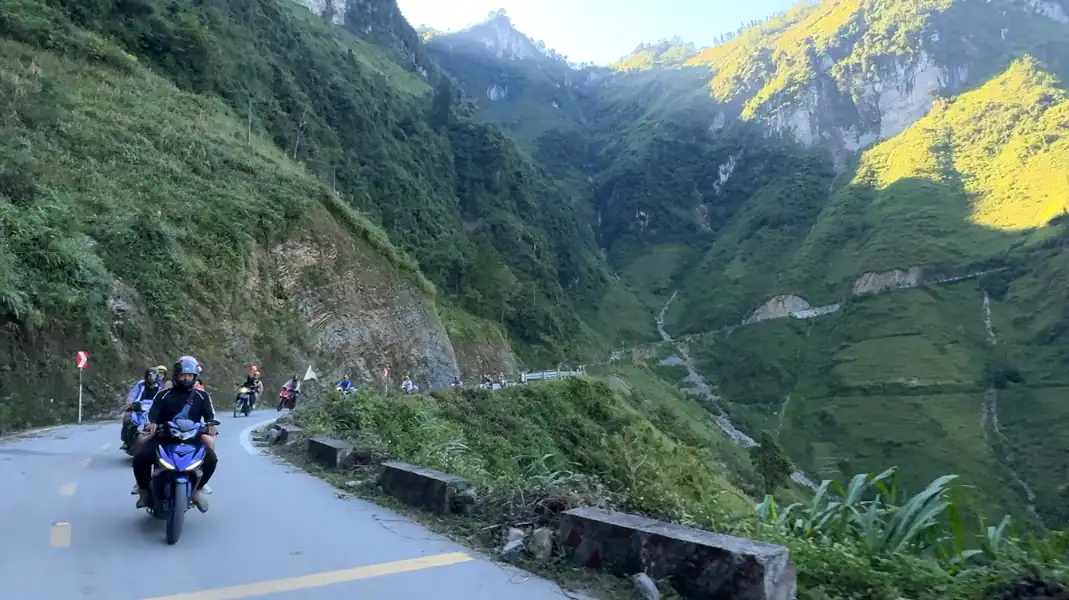
Riding a motorbike through the 350-kilometer Ha Giang Loop is one of the world’s greatest road adventures, but conquering its steep 15% gradients, narrow cliffside switchbacks, and unpredictable mountain weather requires technical riding skills and strict legal compliance.
Selecting a semi-automatic or manual motorcycle, mastering engine braking in Gear 1 and 2, carrying a valid 1968 Vienna Convention IDP, and reaching your homestay before the 17:00 PM mountain curfew are essential rules. This comprehensive 2026 expert guide breaks down everything self-riders and pillion travelers need to know.
Legal compliance and documentation requirements
The 1968 Vienna Convention IDP mandate
Under Vietnamese road traffic law, foreign riders must carry an International Driving Permit (IDP) issued under the 1968 Vienna Convention, endorsed with the Class A (motorcycle) stamp, alongside their original home country motorcycle license.
- Recognized: 1968 Convention IDPs (issued by countries such as the UK, Germany, France, Italy, Australia).
- NOT Recognized: 1949 Geneva Convention IDPs (issued in the United States and Canada). If you hold only a 1949 IDP, your legal and safe choice is booking a licensed Easy Rider tour.
Police checkpoints and insurance coverage criteria
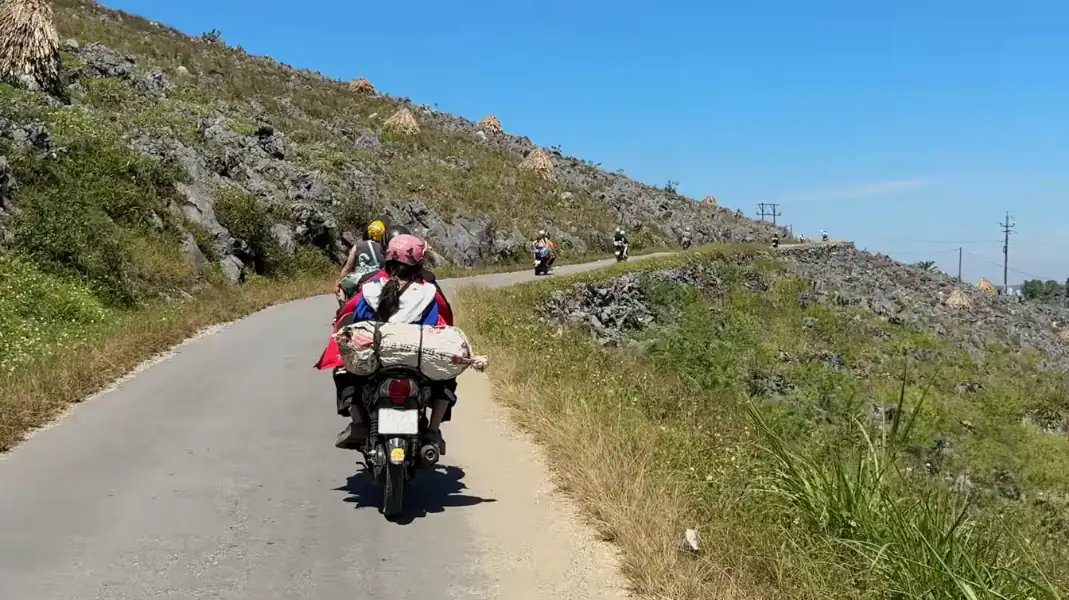
Traffic police frequently operate checkpoints along National Highway 4C near Ha Giang City and Dong Van town.
Failing to present a valid 1968 IDP with Class A endorsement results in an administrative fine of 1,500,000 to 2,000,000 VND and a potential 7-day vehicle impoundment. Furthermore, riding without a legally recognized license automatically voids standard international travel insurance coverage in the event of an accident.
Motorcycle model selection: Semi-automatic vs Manual
| Motorcycle Category | Popular Models | Engine Displacement | Mountain Handling Suitability |
|---|---|---|---|
| Semi-Automatic Bike | Honda Blade / Honda Wave Alpha | 110cc – 125cc | Highly Recommended |
| Manual Clutch Bike | Honda Winner X / Yamaha Exciter | 150cc | Experienced Riders |
| Automatic Scooter | Honda Vision / Honda Air Blade | 110cc – 125cc | Not Recommended (Brake Overheating Risk) |
Daily pre-ride mechanical inspection checklist
Perform this 2-minute safety check every morning before departing your homestay:
- Check tire pressure by pressing firmly on the sidewalls (front: 2.0 bar / rear: 2.25 bar).
- Test both front hand brake and rear foot brake for responsive lever tension.
- Inspect the drive chain for proper lubrication and ensure vertical slack is under 2.5 cm.
- Verify that headlight, taillight, turn signals, and horn are working crisply.
- Top off your fuel tank with RON 95 petrol at authorized Petrolimex stations before noon.
Frequently asked questions about riding a motorbike in Ha Giang
Is the Ha Giang Loop suitable for beginner motorcycle riders?
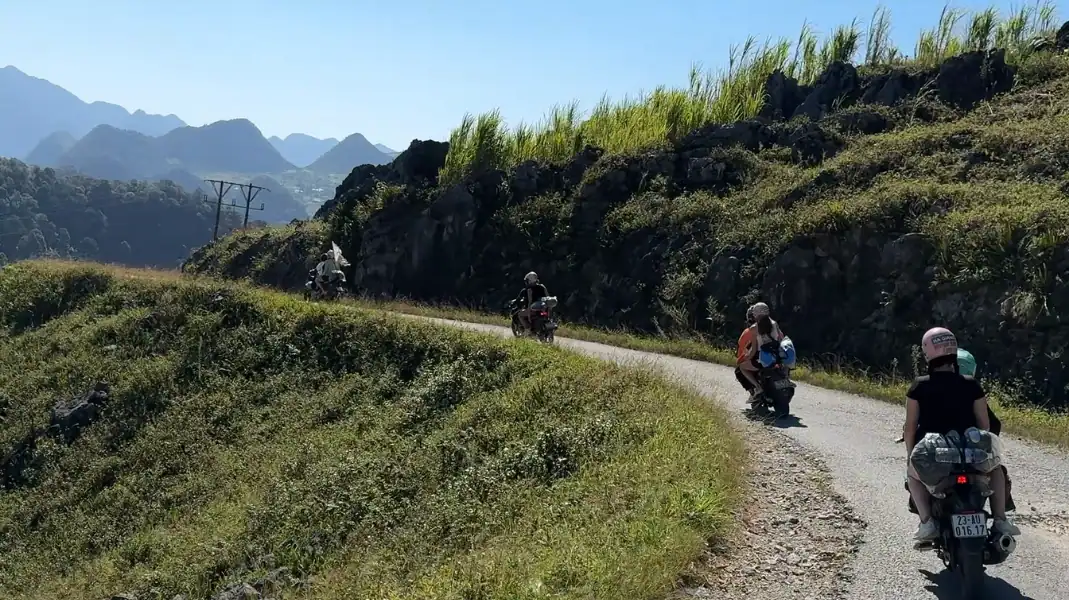
No. The Ha Giang Loop features continuous hairpin turns, steep gradients up to 15%, gravel patches, and heavy truck traffic. If you lack extensive motorcycle experience, hire a licensed Easy Rider to enjoy the stunning scenery safely.
How much does roadside motorcycle repair cost in Ha Giang?
Roadside mechanics (Sua Xe) are widespread along QL4C. A flat tire tube patch costs approximately 30,000 to 50,000 VND (.20 – .00 USD), while a complete tube replacement costs 100,000 to 150,000 VND ( – USD).
What helmet type should I wear on the loop?
Always wear a certified 3/4 open-face or full-face helmet with a clear or tinted visor. Avoid cheap plastic half-helmets, which offer zero facial and chin protection during a fall.
Written by Van Trung Nguyen, Lead Expedition Director & Licensed Tour Operator at TVPalm Adventure, Ha Giang. Providing safety compliance briefings and leading small-group eco-journeys across Northeast Vietnam since 2021.


