

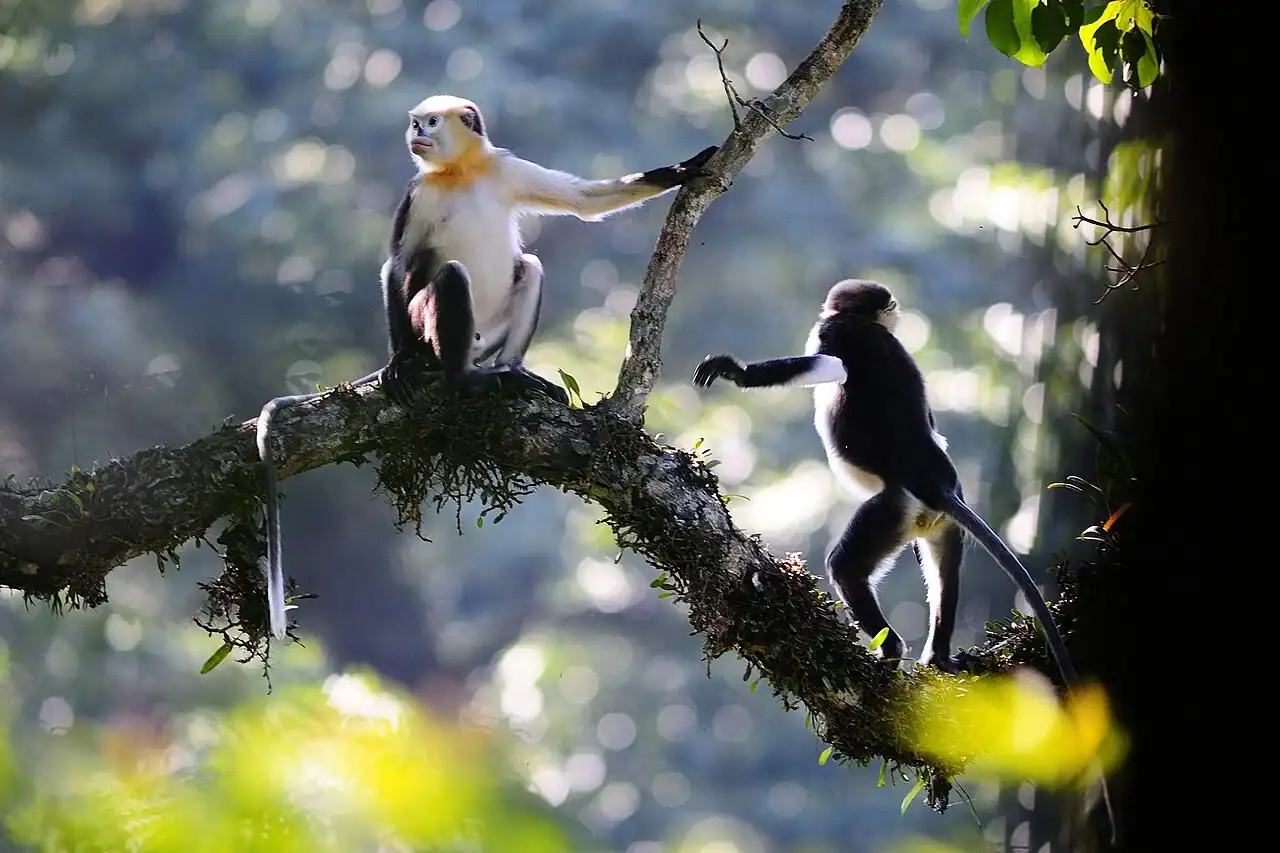
The Tonkin snub-nosed monkey (Rhinopithecus avunculus) is found only in northern Vietnam, and it is one of the rarest primates in the world. Most of those left live in the limestone forest of Khau Ca, in Ha Giang (part of Tuyen Quang province since July 2025). This article explains why the species is in danger, and what is being done to save it.
I am Nguyễn Văn Trung, founder of TVPalm. The forests of Ha Giang are our home ground, and the future of this monkey matters to all of us who live and work here.
Why is the Tonkin snub-nosed monkey endangered?
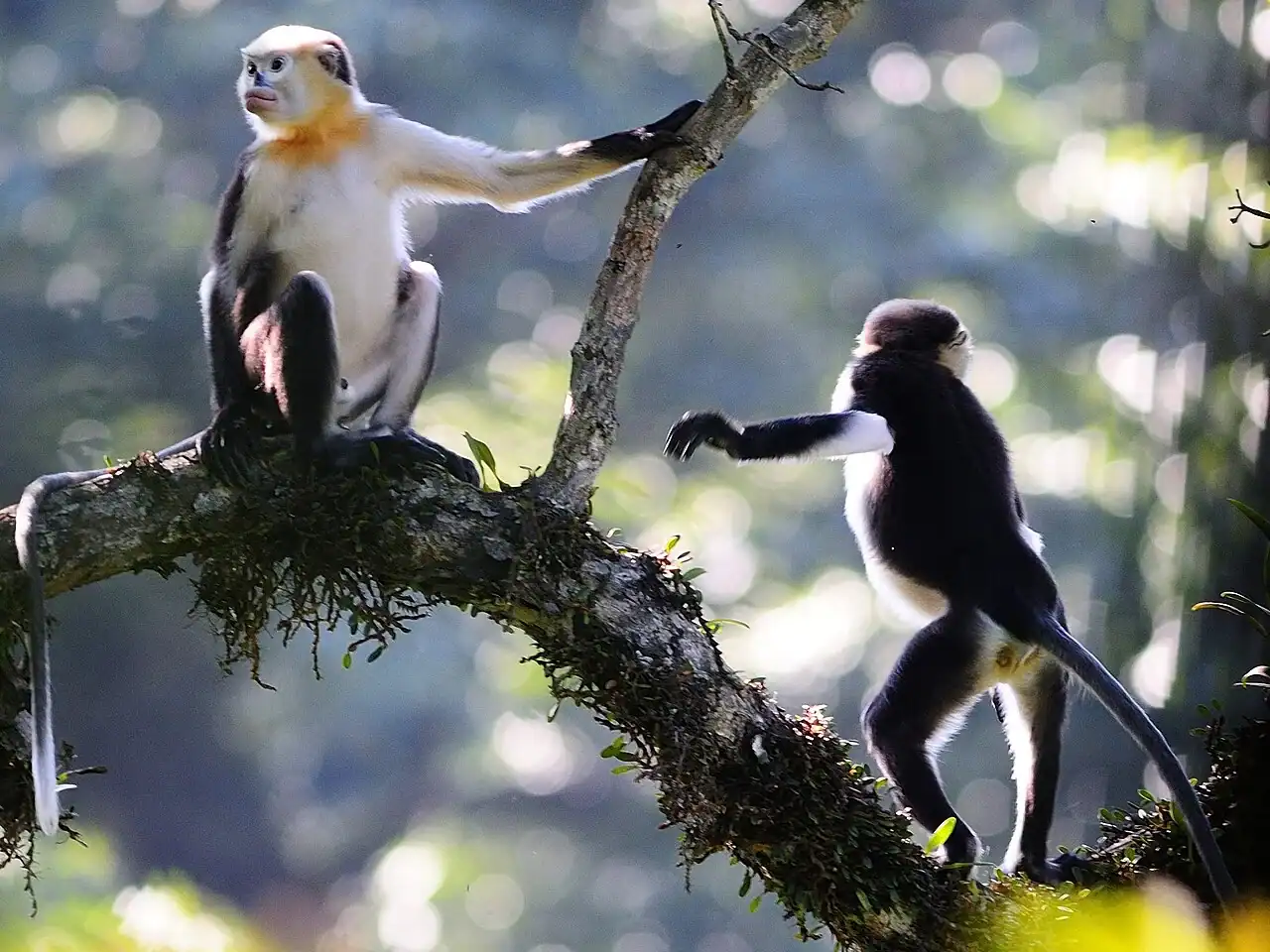
The species is listed as Critically Endangered. The latest census in Khau Ca, by Fauna & Flora (FFI) with the forest authorities in late 2025, counted around 160 individuals, roughly four out of five of all that remain. Several threats explain how it came to this.
Habitat loss
Farming and logging have cut into the forests the monkeys need. Slopes have been cleared for maize and other crops, and large old trees have been felled.
When the forest shrinks, the monkeys lose their food, their shelter and their routes through the trees. Without large, connected forests, they cannot thrive.
Hunting
Hunting has long been a major threat. In the past, the monkeys were hunted for meat, and their bones were boiled down into a “bone glue” (cao) used in traditional medicine.
With so few animals left, losing even one adult is a serious blow. The species is now strictly protected by law, but snares can still be found in the forest.
Small, isolated groups
The remaining monkeys live in small groups cut off from each other by fields, villages and roads. FFI is working on forest corridors to link the population outside Khau Ca with the main group.
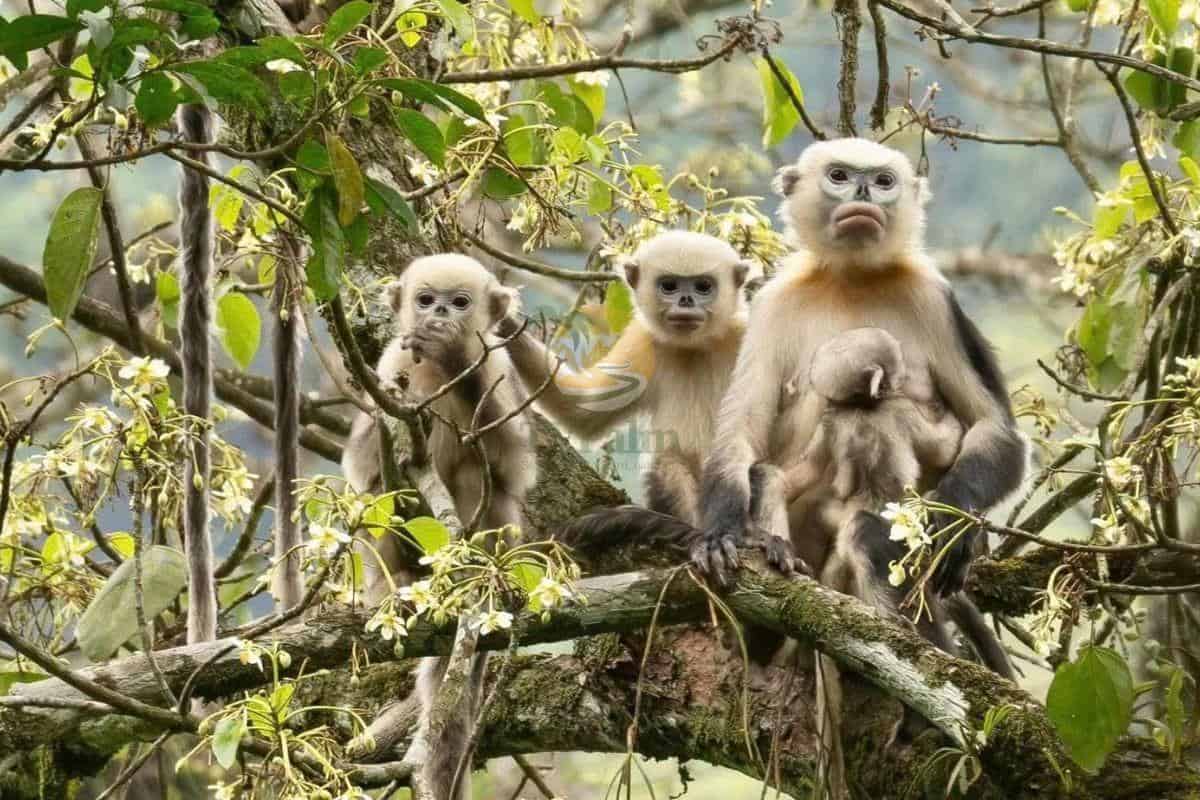
Small, isolated populations face a higher risk of inbreeding, disease and local extinction.
A specialised diet
The monkeys feed mainly on leaves, fruit and flowers of native forest trees. When the forest is degraded, their food becomes harder to find.
Less food means weaker animals and fewer young that survive.
How habitat loss affects the species
Farming on forest land
Farming has slowly pushed into the forest, especially on steep slopes. In parts of Ha Giang, growing cardamom under the forest canopy also changes the forest.
To grow cardamom, the undergrowth beneath the large trees is cleared, so young trees cannot replace the old ones. Over time, the forest thins out, and the monkeys are left with smaller, less safe areas.
Logging and the loss of big trees
Illegal logging tends to target the largest, oldest trees. The monkeys rely on high branches to move through the forest and on tall trees to rest and sleep.
Without them, the monkeys have to come lower or cross open ground, which leaves them more exposed to hunters and predators.

Dams and roads
Large infrastructure has also played a part. The reservoir of the Tuyen Quang hydropower dam, at Na Hang, flooded forest that was once home to another population of this monkey.
New roads bring more people, noise and activity into areas that were once remote. Monkeys need quiet forest to rest and raise their young.
Hunting and the wildlife trade
The demand for bone glue
Some people still believe that medicines made from monkey bones can treat joint pain. This belief has driven hunting for a long time.
As long as there is demand, there is a reason for poachers to enter the forest.
Poaching despite the law
Vietnamese law gives the species the highest level of protection. Even so, hunting can still happen in secret. Wire snares are cheap and easy to hide, hard for patrols to find, and they kill animals that were never their target. This is why patrols and community support matter so much.
Biology and isolation
The “island” effect
The monkeys live on forest “islands” surrounded by fields and roads. They rarely cross open land, so groups in different forests cannot meet.
This limits their access to food, safe resting places and new mates.
Genetic risk
When groups stay small and isolated, animals end up breeding with close relatives. Over time, this weakens the population and makes it harder to adapt to change.
Slow breeding
Like other large leaf-eating monkeys, the Tonkin snub-nosed monkey breeds slowly: a female usually has a single infant, and births are spaced out. This makes recovery slow.
Cold winters and food shortages can also take a toll on the young. That is why the new infants recorded in the 2025 census are such good news.
Conservation today and the role of FFI
Khau Ca and Du Gia National Park
Khau Ca is the stronghold of the species. In 2015, it was joined with the Du Gia Nature Reserve to form Du Gia National Park, and it is managed as special-use forest, where farming and logging are not allowed.
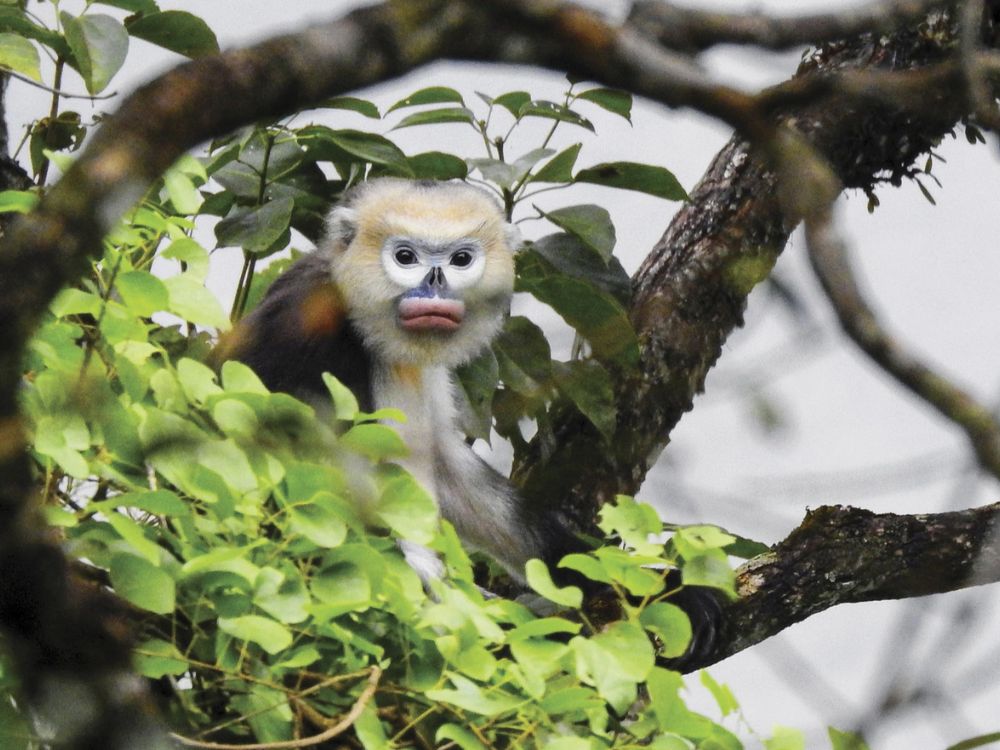
At TVPalm, we will only enter this forest with a forest ranger and with the right permits.
Community patrols
Local people are the forest’s best guardians. Since the early 2000s, FFI has supported local patrol teams around Khau Ca.
They remove snares, report illegal logging and keep an eye on the monkeys. Their work has helped the population recover.
The law
Under Decree 06/2019/ND-CP, the Tonkin snub-nosed monkey is listed in Group IB, the strictest category for endangered wildlife. Hunting, trapping or trading it is a crime.
Under Vietnam’s Penal Code, the most serious wildlife crimes can lead to long prison sentences.
How responsible travel can help
Why tourism can support conservation
Well-run nature tourism gives local people another source of income, linked to a living forest. When villages earn more from a protected forest than from cutting it, the forest has more friends.
For this to work, visits must be small, quiet and organised with the park authorities and local communities.
This is how we run our Tonkin snub-nosed monkey treks in Khau Ca: a local forest ranger leads, groups never exceed 6 guests, and every trek runs under a permit from the Du Gia Special-Use Forest management board. You can choose the 2-day trek or the 3-day trek, which gives you three dawns in the habitat.
How to behave around wild monkeys
If you are lucky enough to see the monkeys, keep your distance and follow your ranger. Never feed them, stay quiet, and do not use flash.
These simple habits mean your visit does not add stress to a population that is already fragile.
FAQ about the Tonkin snub-nosed monkey
How many Tonkin snub-nosed monkeys are left?
The late-2025 census in Khau Ca counted around 160, roughly four out of five of all that remain. It is one of the rarest primates on Earth.
Where is the best place to see them?
Khau Ca, now part of Du Gia National Park, is the stronghold of the species. TVPalm plans to start guided visits from 1 January 2027, entering through Tung Ba, always with a forest ranger, once the permits are complete. Sightings are never guaranteed.
Why is the species endangered?
The main threats are habitat loss, hunting for traditional medicine, and the isolation of small populations. Together, they make it hard for the species to recover on its own, which is why protection and patrols are so important.


