

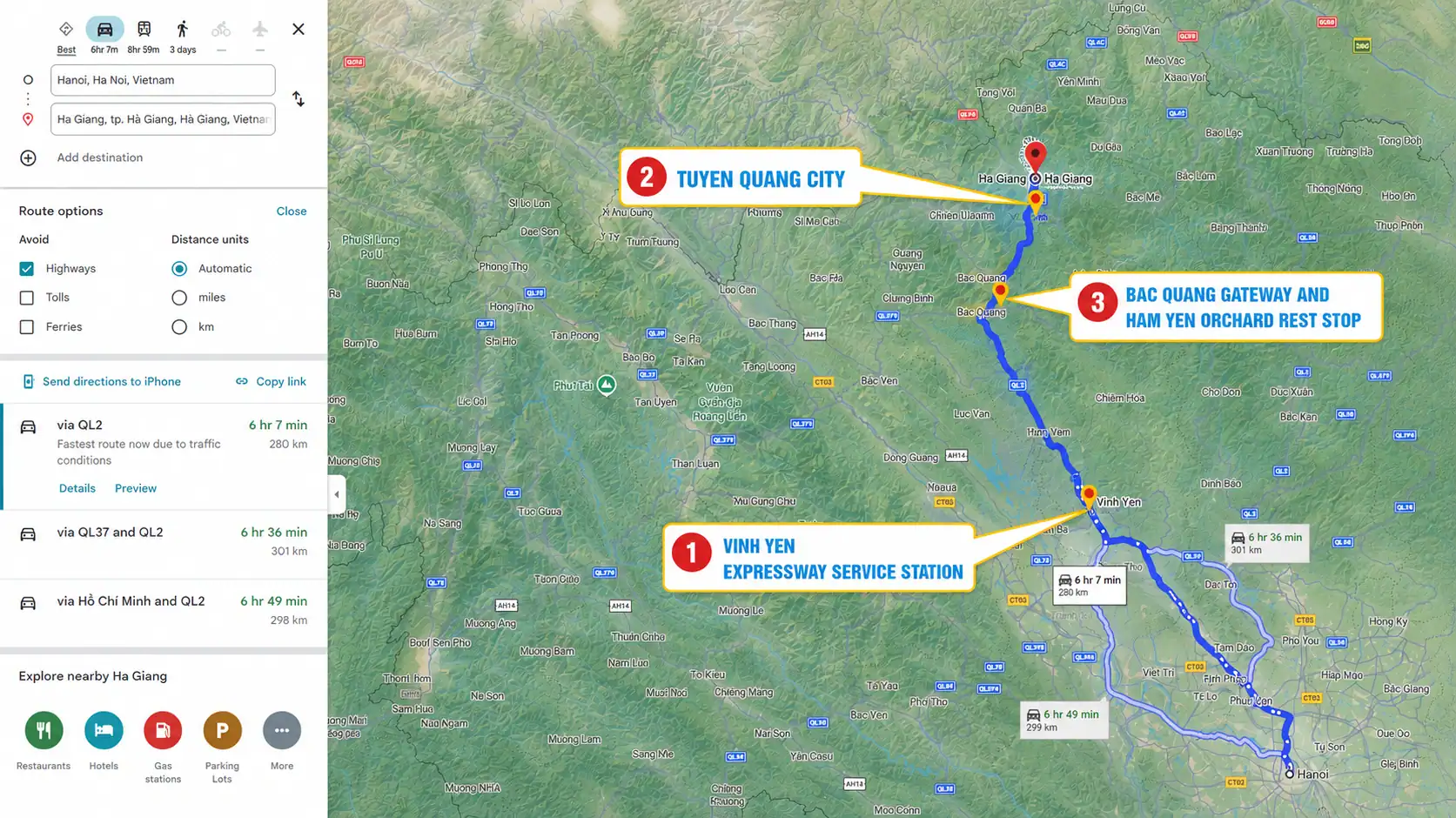
The 300 km from Hanoi to Ha Giang City take 5.5 to 7 hours by limousine van or sleeper bus. It is the way in to the Ha Giang Loop, and a stop every 2 hours or so makes the trip much easier: toilets, a stretch, something to eat.
This guide covers the three main rest stops on Expressway CT05 and Highway QL2, what to eat on the way, and how to stay comfortable on a long bus ride.
The 3 major rest stops along the 300km corridor
1. Stop 1 (KM 57): Vinh Yen Expressway service station
Located approximately 50 to 60 kilometers outside Hanoi on the CT05 expressway (near the Vinh Phuc / Tam Dao interchange), this modern service plaza is the standard first stop for limousines and morning buses.
- Facilities: Spacious air-conditioned convenience marts, clean Western-style flush toilets, ATM cash machines, and outdoor shaded seating.
- Food & Drinks: Freshly brewed Vietnamese iced coffee (ca phe sua da), coconut water, hot steamed buns (banh bao), and packaged snacks.
- Recommended Stop Time: 15 minutes.
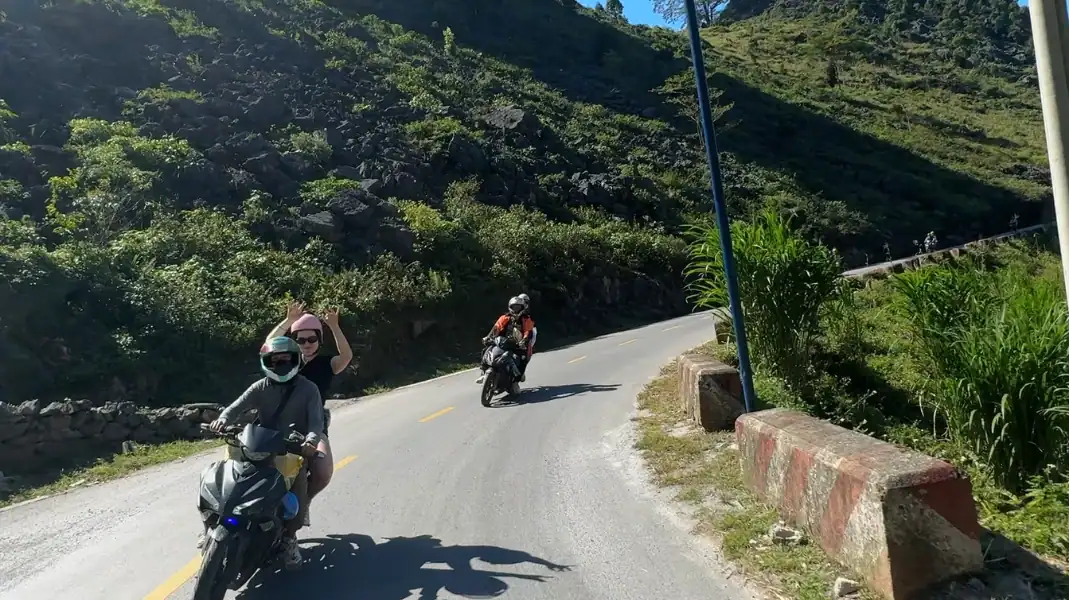
2. Stop 2 (KM 140): Tuyen Quang City main dining and fuel hub
Positioned halfway along the journey (around 135 to 155 kilometers from Hanoi), Tuyen Quang City serves as the primary lunch and dinner hub for nearly all daytime passenger transfers.
- Facilities: Large roadside restaurant complexes (Tram dung nghi) capable of hosting several buses simultaneously, clean multi-stall restrooms, and high-capacity Petrolimex fuel stations.
- Food & Drinks: Fresh hot meals including beef noodle soup (pho bo), steamed rice rolls (banh cuon Tuyen Quang), and family-style rice plates with roasted chicken, stir-fried mountain greens, and tofu.
- Recommended Stop Time: 30 to 45 minutes for a full meal and driver change.
3. Stop 3 (KM 230): Bac Quang gateway and Ham Yen orchard rest stop
Located at the transition between Tuyen Quang Province and the mountainous southern border of Ha Giang (around KM 220 to 240), this stop prepares travelers for the final winding stretch into Ha Giang City.
- Facilities: Roadside cafes, fruit vendor stalls, and motorcycle service garages (Tiem sua xe).
- Food & Drinks: Fresh local citrus from Ham Yen’s famous king orange orchards (cam sanh Ham Yen), hot green tea (che Thai Nguyen), and bottled mineral water.
- Recommended Stop Time: 15 minutes.
| Rest Stop Milestone | Distance from Hanoi | Best For | Typical Amenities |
|---|---|---|---|
| Km 57 Service Area (Vinh Phuc) | 57 km (1.0 hour) | Quick stretch & coffee | Clean flush toilets, convenience store, coffee kiosks |
| Km 140 Hub (Tuyen Quang City) | 145 km (2.5 – 3.0 hours) | Full lunch / dinner break | Hot food canteens, large restrooms, Petrolimex station |
| Km 230 Gateway (Bac Quang / Ham Yen) | 230 km (4.5 – 5.0 hours) | Final stretch & fresh fruit | Fresh orange stalls, tea cafes |
Food, hydration, and roadside dining hygiene
Eating well along the highway keeps your energy stable and avoids digestive discomfort before embarking on the loop.
Choose food that is cooked hot in front of you rather than dishes that have been sitting under glass. Busy stops with many customers usually have fresher food.
- Safe Hot Noodle Soups: Pho Bo (beef noodle soup) or Bun Ga (chicken vermicelli) are safe, nutritious options prepared with boiling broth that kills bacteria.
- Hydration Protocol: Drink bottled water or fresh coconut water. Avoid large quantities of iced tap drinks at small unregulated roadside stands.
- Small Cash Currency: Carry small Vietnamese Dong banknotes (10,000, 20,000, and 50,000 VND) for quick purchases, as small fruit vendors and coffee stalls do not accept international credit cards.
Fuel and repairs: what your driver handles
You do not need to plan fuel or repairs on this leg. Sleeper bus and limousine drivers refuel at Petrolimex or PVOIL stations and know the roadside repair shops along Highway 2. TVPalm does not rent motorbikes or sell self-drive trips.
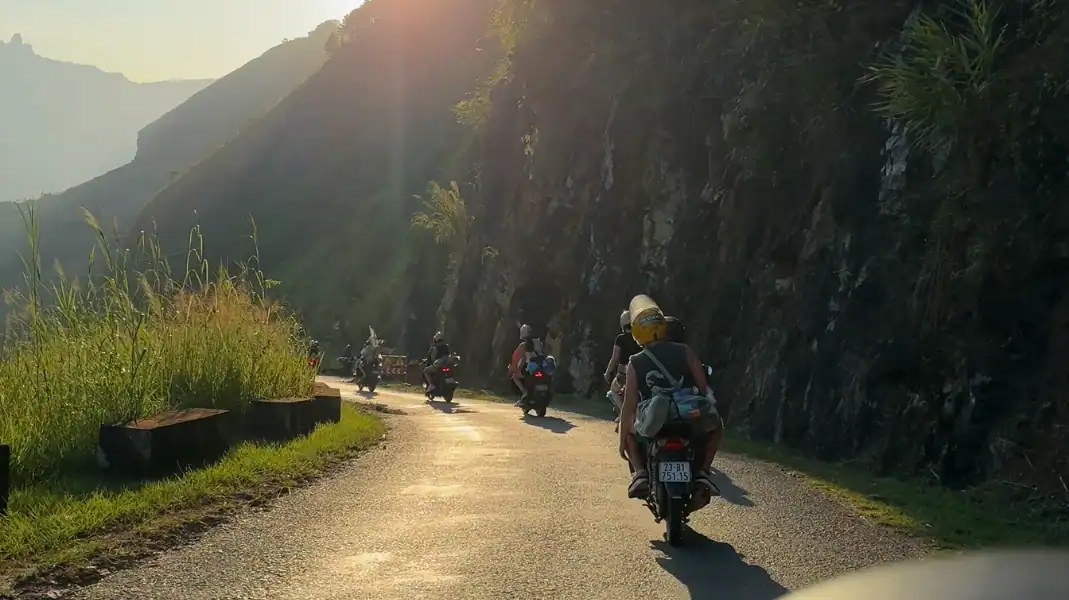
On a TVPalm tour from Ha Giang City, your easy rider or driver refuels, checks tyres, brakes and lights every morning, and handles any repair. Keep water, a headlamp and a warm layer within reach.
Restroom etiquette and personal comfort essentials
Restroom facilities along Vietnamese national highways vary from modern Western-style facilities to traditional squat toilets in smaller rural eateries.
- Carry a personal travel pack of pocket tissues or wet wipes, as roadside restrooms do not always supply toilet paper.
- Carry a small bottle of alcohol-based hand sanitizer in your daypack for use after restroom visits.
- Dispose of used toilet paper in the provided waste bin next to the toilet rather than flushing it down the bowl to prevent plumbing blockages.
- Keep your passport, wallet, phone, and valuables with you in a small shoulder bag whenever stepping off the bus during a rest stop.
- Bring a light windbreaker or hoodie onto the bus, as air conditioning on overnight sleeper buses and limousines can feel quite cold.
Frequently asked questions about Hanoi to Ha Giang rest stops
How long does a sleeper bus stop for breaks during the night?
Most overnight sleeper buses make one 15 to 20-minute rest stop around 11:30 PM to midnight near Tuyen Quang City for passenger restrooms before continuing non-stop into Ha Giang City.
Can I find vegetarian food at highway rest stops between Hanoi and Ha Giang?
Yes. You can order vegetarian stir-fried noodles (Mi xao chay), tofu with tomato sauce (Dau phu sot ca chua), boiled mountain greens (Rau luoc), and steamed white rice at major dining plazas.
Is there mobile signal at the rest stops?
Yes, at the main stops. Coverage on CT05 and QL2 is good for most of the way with Viettel, Vinaphone and Mobifone, with a few weaker stretches in the hills.
Written by Nguyễn Văn Trung, founder of TVPalm. He has led small-group trips across Northeast Vietnam since 2021.


