

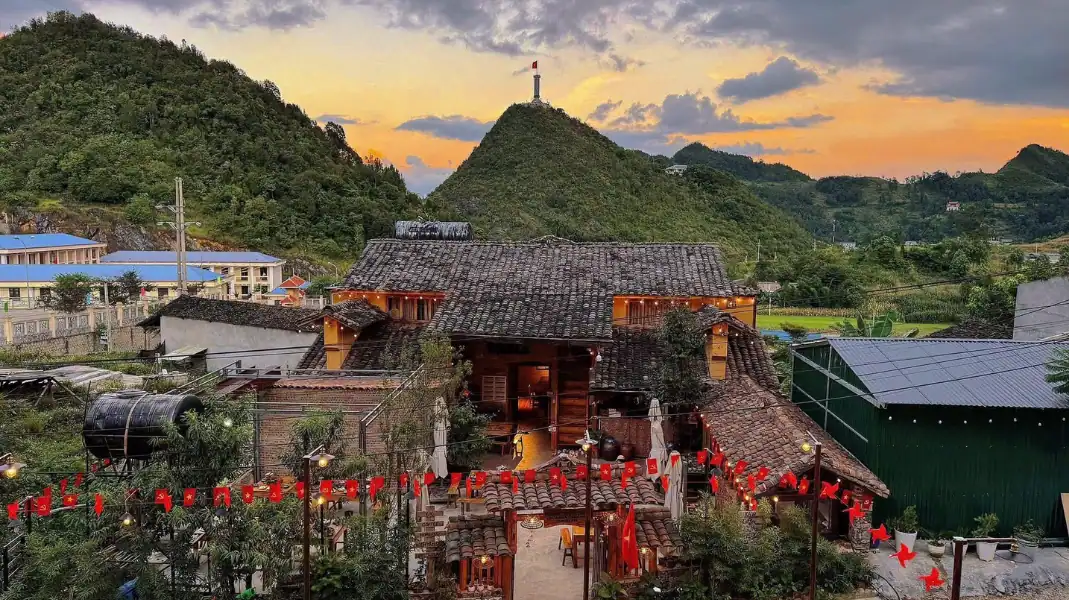
The Ha Giang Loop is a 350-kilometer highland circuit in Northern Vietnam, famous for its towering limestone pinnacles, dramatic mountain passes, and rich ethnic minority heritage. Spanning elevations from 120 meters to over 1,600 meters across the UNESCO-recognized Dong Van Karst Plateau Geopark, this legendary road connects historic frontier monuments, deep river canyons, and traditional villages.
This definitive guide curates the top 10 must-see stops along the circular route, providing practical timing, distance markers, elevation data, and local travel insights.
Detailed guide to the top 10 must-see stops
1. Bac Sum Pass & Quan Ba Heaven Gate
Bac Sum Pass serves as the dramatic mountain gateway marking the official entry from lowland valleys into the UNESCO Dong Van Karst Plateau. The road climbs 8 kilometers of tight hairpin switchbacks to reach Quan Ba Heaven Gate (Cong Troi Quan Ba) at an altitude of 1,500 meters. On clear mornings, cool alpine mist rolls across the pass, unveiling panoramic views of Tam Son Valley below.
- Highlights: High-altitude pass curves, sweeping valley overlook, historic gateway milestone.
- Travel Tip: Stop at the Heaven Gate coffee terrace for morning photos and hot local ginger tea before descending toward Tam Son.
2. Quan Ba Twin Mountains
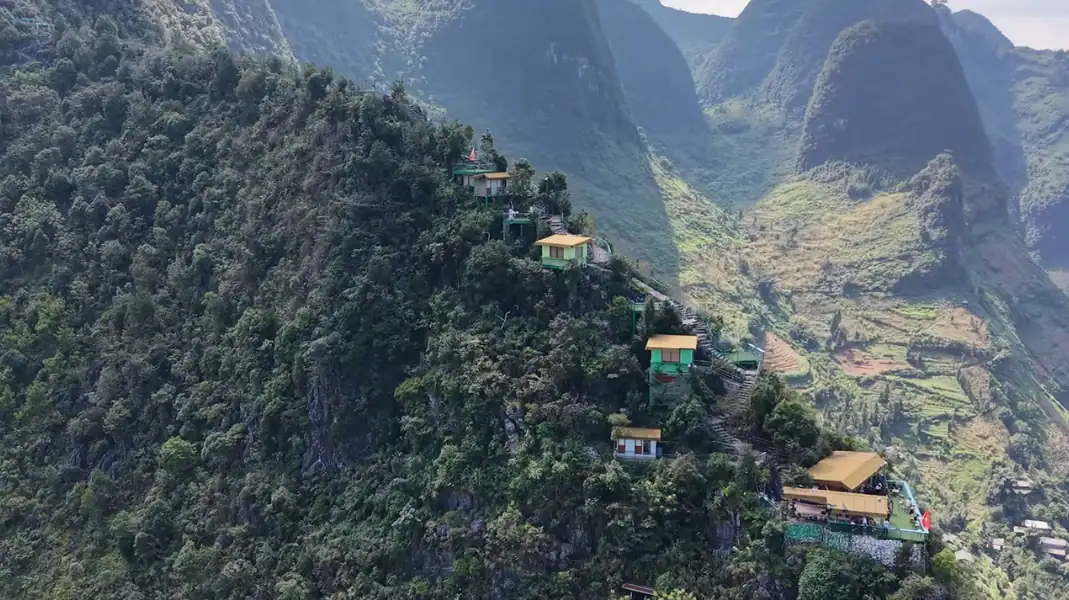
Rising side-by-side in the middle of Tam Son Valley, the Quan Ba Twin Mountains (Nui Doi Quan Ba, also known as Co Tien Mountain) are two cone-shaped limestone hills formed by millions of years of natural erosion.
Surrounded by vibrant green rice terraces in summer and golden crops in autumn, the symmetrical peaks are tied to a touching local Hmong legend of a celestial fairy who left her bosom to nourish the land.
- Highlights: Perfectly symmetrical geological cones, changing seasonal rice terrace colors.
- Travel Tip: The dedicated observation deck right off Highway 4C provides the best elevated framing for wide-angle landscape photography.
3. Lung Khuy Cave
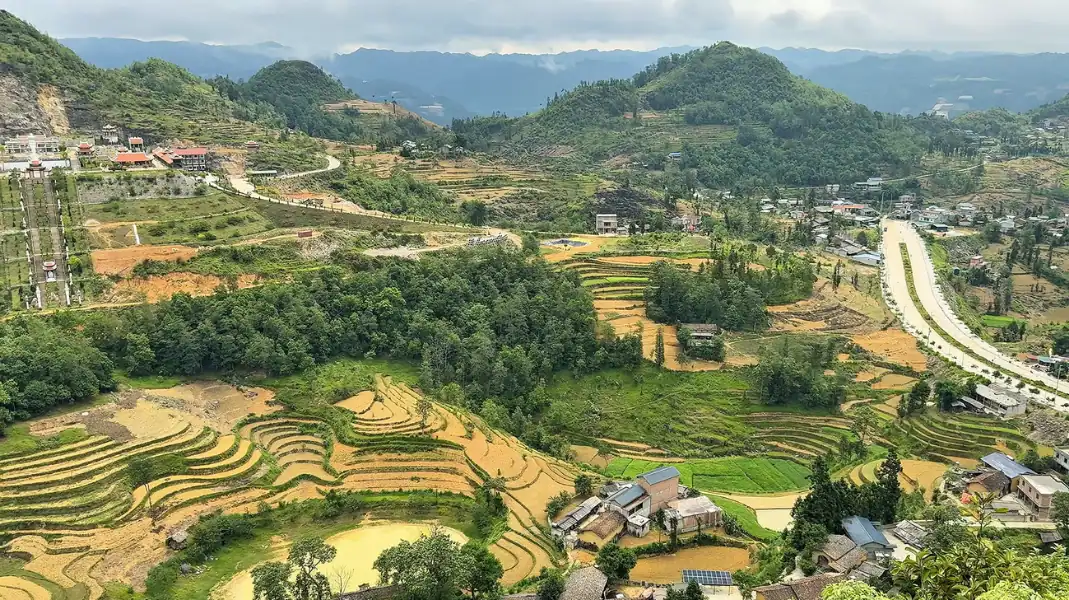
Considered the most magnificent underground cavern in the UNESCO Geopark, Lung Khuy Cave stretches 300 meters inside a limestone mountain. A scenic 1.2-kilometer walking trail winds up from Lung Khuy village to the entrance. Inside, thousands of pristine stalactites, stalagmites, and stone curtains hang in intricate clusters, illuminated by soft atmospheric lighting.
- Highlights: Multi-tiered limestone stalactites, natural cool air temperature, quiet cave pathways.
- Travel Tip: Wear shoes with reliable grip as the cave floor and steps can be wet from natural mineral droplets.
4. Tham Ma Pass
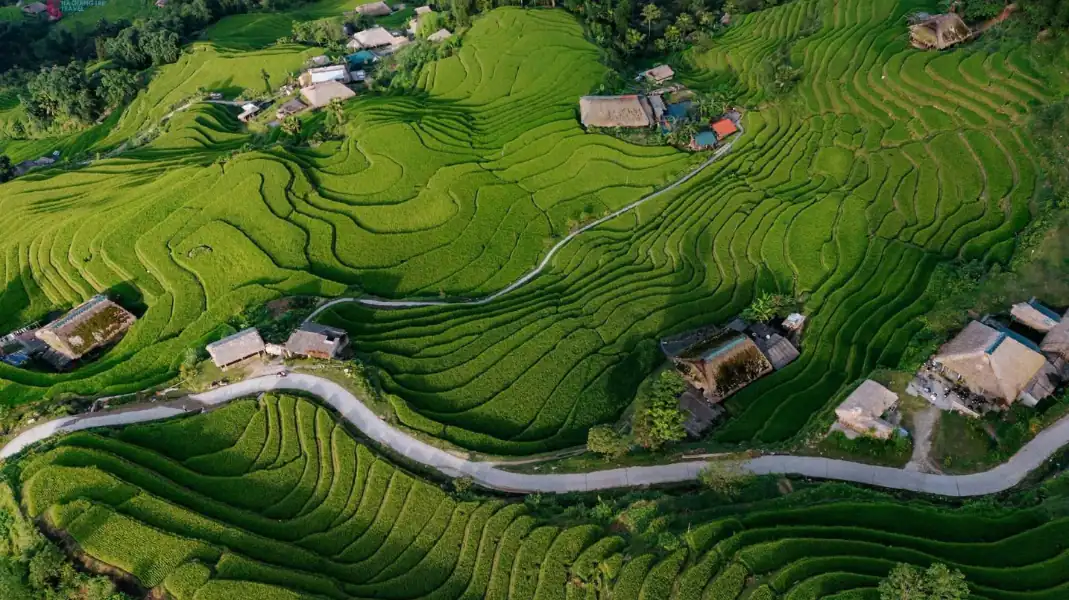
Tham Ma Pass is one of the most photographed road sections in Southeast Asia. This iconic slope features nine consecutive S-shaped hairpin curves carved into a steep limestone ridge between Yen Minh and Pho Bang. Historically, local traders tested the strength of pack horses on this steep incline; horses that carried heavy loads to the summit without stopping were deemed strong (tham ma means “testing horses”).
- Highlights: Classic nine-turn winding switchbacks, expansive mountain gorge backdrop.
- Travel Tip: Pull over at the upper parking platform at the summit for the famous panoramic shot looking down on oncoming motorbikes.
5. Sung La Valley & Pao’s Story House
Sung La Valley is often called the “Flower of the Karst Plateau” for its tranquil, fertile depression surrounded by jagged rock walls. The valley is home to ethnic Hmong and Han communities living in traditional earth-walled houses with yin-yang tiled roofs. The central landmark is Pao’s House (Nha cua Pao), a 100-year-old traditional Hmong compound that served as the film set for the acclaimed Vietnamese movie The Story of Pao.
- Highlights: Traditional clay-walled architecture, buckwheat flower gardens, ancient stone fences.
- Travel Tip: October and November transform the surrounding valley into vast fields of white and pink buckwheat blossoms (tam giac mach).
6. Hmong King’s Palace
Located in Sa Phin Valley, the Hmong King’s Palace was built between 1898 and 1907 by Vuong Chinh Duc, the supreme leader of the highland Hmong people. Constructed with stone, ironwood, and terra-cotta tiles at a cost of 150,000 silver Indochinese piastres, the fortress harmoniously fuses traditional Qing Dynasty Chinese architecture, French colonial fortification elements, and indigenous Hmong craftsmanship.
- Highlights: Ornate wood carvings, opium-flower stone pillars, double-layered defense walls.
- Travel Tip: Visit early in the morning (08:00 to 09:30) to enjoy the quiet courtyards and atmospheric morning light filtering through century-old Cunninghamia pine trees.
7. Lung Cu National Flag Tower & Lo Lo Chai Village
Perched atop Dragon Mountain (Nui Rong) at an altitude of 1,470 meters, Lung Cu Flag Tower marks the sovereign northernmost point of Vietnam.
The summit flying pole supports a massive 54-square-meter national flag representing Vietnam’s 54 ethnic groups. At the base of the mountain lies Lo Lo Chai Village, a picturesque settlement of the Lo Lo ethnic minority featuring earthen houses, stone pathways, and traditional hemp craft workshops.
- Highlights: 360-degree border panoramas into Yunnan, China; authentic Lo Lo cultural architecture.
- Travel Tip: Climb the 839 stone steps to the flag tower summit, then spend an hour walking through Lo Lo Chai village for local buckwheat cookies and hot coffee.
8. Dong Van Ancient Old Town
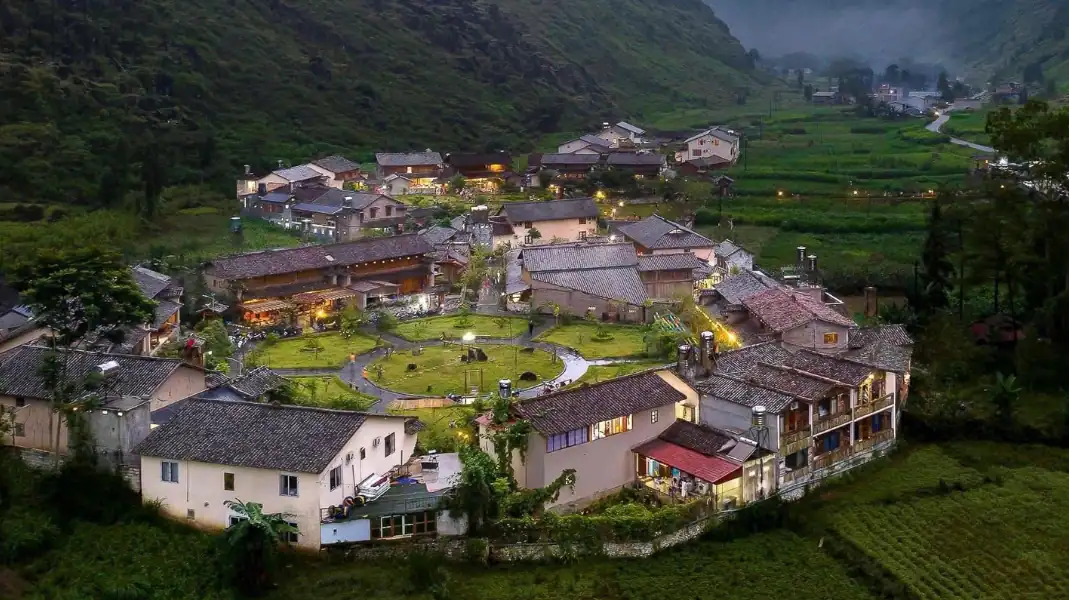
Nestled in a limestone valley near the Chinese border, Dong Van Old Town features a century-old market square surrounded by two-story earthen houses built in the late 19th and early 20th centuries. On weekend evenings, the cobblestone streets come alive with red lanterns, ethnic music, and homestay dinners featuring local hotpot and corn wine.
- Highlights: Historic French colonial and Hmong architecture, vibrant Dong Van Sunday Market, hike to Don Cao French Fortress.
- Travel Tip: Hike the short 20-minute trail up to the Don Cao French Fortress above the town at sunset for breathtaking 360-degree views over Dong Van valley.
9. Ma Pi Leng Pass & Tu San Canyon on Nho Que River
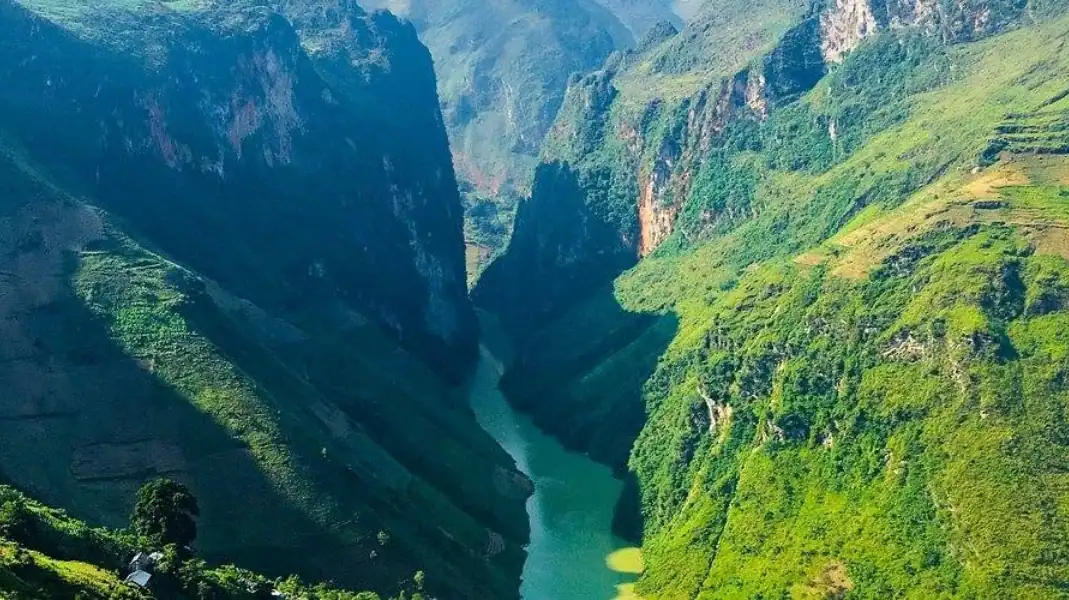
Widely recognized as the “King of Passes” in Vietnam, Ma Pi Leng is a 20-kilometer mountain pass chiseled into vertical limestone cliffs 1,500 meters above sea level. Below the road, the emerald-green Nho Que River flows through Tu San Canyon, Southeast Asia’s deepest gorge with cliff walls rising 800 meters. Travelers can drive along the pass, walk the scenic cliffside White Cliff Skywalk (Vach Da Trang), and take a 45-minute motorboat cruise through the canyon.
- Highlights: World-class mountain panoramas, Tu San Canyon boat tour, historic Happiness Road monument.
- Travel Tip: Allocate at least 3 hours here to combine scenic lookout stops with the descent to Ta Lang boat wharf for the river cruise.
10. Du Gia Waterfall & Valley
Located on the southern loop leg in Yen Minh district, Du Gia is a lush, peaceful valley surrounded by green rice terraces, stream crossings, and stilt houses belonging to the Tay and Black Hmong people. The highlight is Du Gia Waterfall, a natural cascade plunging into a deep, crystal-clear freshwater pool ideal for swimming after days of dusty mountain riding.
- Highlights: Natural freshwater swimming lagoon, scenic stilt house homestays, rural mountain serenity.
- Travel Tip: Du Gia is the ideal final overnight stop on a 4-day itinerary, offering a relaxed social atmosphere before riding back to Ha Giang City via Mau Due pass.
Attraction entrance fees and ticket pricing summary
Most natural pass viewpoints along National Highway 4C are free to access, while designated cultural monuments and boat services require small entrance fees collected by local conservation authorities.
| Attraction / Activity | Entrance Fee (VND) | Approximate USD | Opening Hours |
|---|---|---|---|
| Lung Khuy Cave | 50,000 VND | .00 USD | 07:30 – 17:00 |
| Pao’s Story House (Sung La) | 10,000 VND | .40 USD | 08:00 – 17:30 |
| Hmong King’s Palace (Sa Phin) | 20,000 VND | .80 USD | 07:30 – 17:30 |
| Lung Cu National Flag Tower | 25,000 VND (electric tram: 15,000 VND) | .00 – .60 USD | 07:00 – 17:30 |
| Nho Que River Boat Cruise (Tu San) | 120,000 – 150,000 VND | .00 – .00 USD | 07:30 – 17:00 |
| Du Gia Waterfall | Free (parking: 10,000 VND) | .40 USD | Open 24/7 (Daylight recommended) |
Recommended 4-day itinerary integrating all 10 stops
| Day & Segment | Distance | Stops Visited | Overnight Base |
|---|---|---|---|
| Day 1: Ha Giang to Yen Minh / Dong Van | 110 – 140 km | Bac Sum Pass, Quan Ba Heaven Gate, Twin Mountains, Lung Khuy Cave, Tham Ma Pass | Yen Minh or Dong Van Old Town |
| Day 2: Dong Van to Lung Cu & Dong Van | 70 km | Sung La Valley, Hmong King’s Palace, Lung Cu Flag Tower, Lo Lo Chai Village | Dong Van Old Town |
| Day 3: Dong Van to Meo Vac & Du Gia | 90 km | Ma Pi Leng Pass, Tu San Canyon Boat Tour, Meo Vac Town, Mau Due Highland Pass | Du Gia Village Homestay |
| Day 4: Du Gia to Ha Giang City | 75 km | Du Gia Waterfall swim, Lung Tam Linen Weaving Village, return to TVPalm Ecolodge | Ha Giang City (Evening bus to Hanoi) |
Travel planning checklist
- Secure your mandatory Border Area Permit (210,000 VND) in Ha Giang City before departing.
- Pack a 20L waterproof daypack with warm layers, raincoat, and closed-toe riding shoes.
- Carry at least 1,500,000 VND in cash as ATMs are scarce outside major district towns.
- Inspect your motorcycle tire pressure, brakes, and drive chain daily.
Frequently asked questions about Ha Giang Loop stops
How many days are needed to see all 10 stops?
A 4-day, 3-night itinerary is optimal to experience all 10 stops at a comfortable, scenic pace without rushing through mountain passes.
Can I visit these stops without driving a motorbike?
Yes. You can book an Easy Rider tour where an experienced licensed local driver navigates the mountain passes while you sit comfortably on the passenger seat, or travel via private air-conditioned SUV.
What is the best month to see buckwheat flowers at these stops?
Late October through November is prime buckwheat flower season, when hillsides around Sung La, Pho Bang, and Lung Cu are blanketed in purple and pink blossoms.
Written by Van Trung Nguyen, Lead Expedition Director & Licensed Tour Operator at TVPalm Adventure, Ha Giang. Providing safety compliance briefings and leading small-group eco-journeys across Northeast Vietnam since 2021.


