

The best times to visit Ha Giang (part of Tuyen Quang province since July 2025) are usually September to November and March to May: dry roads, clear views and mild temperatures. But every month has something, and the right month depends on what you want to see.
Weather changes a lot with height. The high plateau around Dong Van and Meo Vac, at about 1,100 to 1,200 m, is much cooler than Ha Giang city, at about 200 m. For month-by-month weather, see our Ha Giang Loop weather guide.
What is the best time to visit Ha Giang?
For most travellers, autumn is the favourite: dry, stable weather, golden rice terraces in many valleys and, later, buckwheat flowers on the karst plateau.
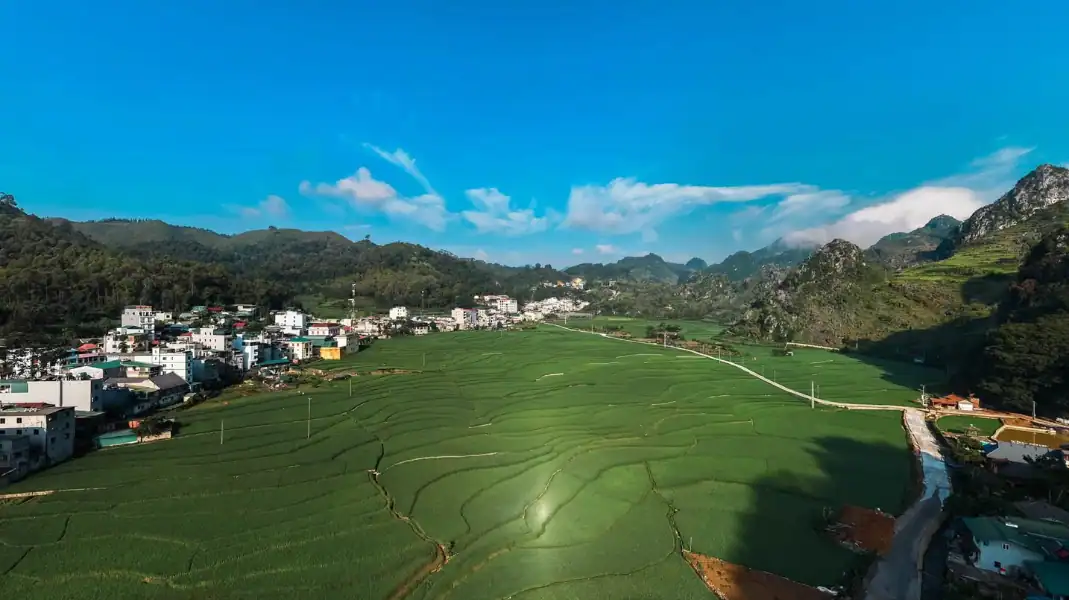
In autumn, days are usually mild in the valleys and cooler on the high passes. Roads are drier than in summer, which makes riding safer and more pleasant.
Ha Giang seasons at a glance
| Season | Months | What to expect |
|---|---|---|
| Autumn | September to November | Dry, mild, golden rice then buckwheat flowers; the busiest season |
| Winter | December to February | Cold, foggy mornings, quiet roads; frost possible on the plateau |
| Spring | March to May | Mild, blossom and clear skies; showers increase in May |
| Summer | June to August | Hot and very wet; landslides possible; green and quiet |
Autumn (September to November)
Autumn is Ha Giang at its most beautiful, and also at its busiest. If you plan to travel in October, book early.
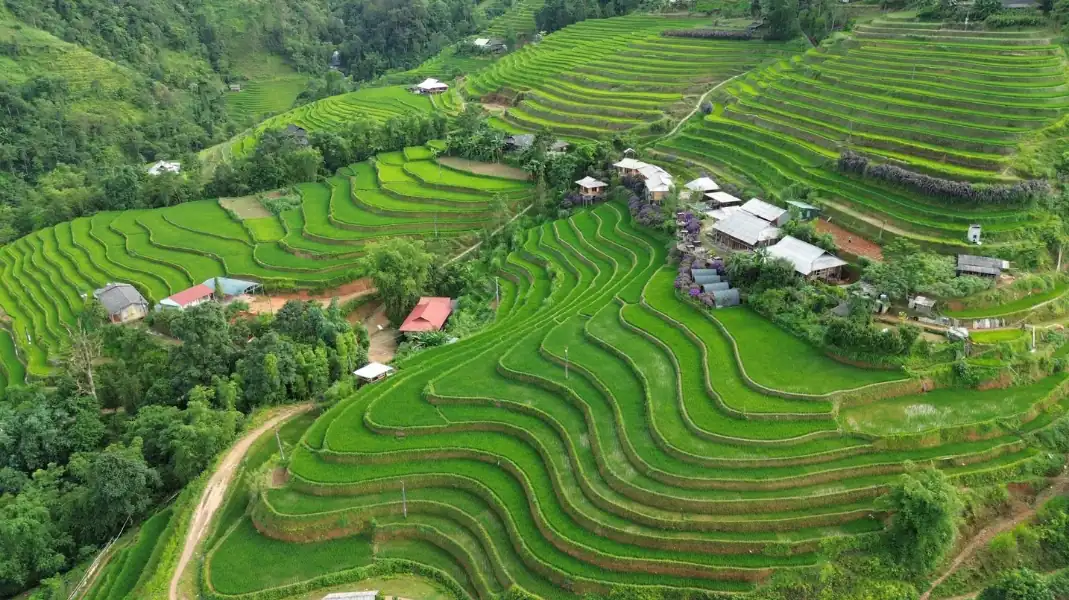
September and early October: golden rice
In many valleys, including Hoang Su Phi and the valleys below Tay Con Linh, the rice turns from green to gold before the harvest. The exact timing changes from year to year and valley to valley.
- When: Usually from mid-September to early October, depending on the place and the year.
- Where: The terraces of Hoang Su Phi, the valleys around Du Gia and the fields near Ha Giang city.
- Light: Early mornings are often misty over the fields, which is beautiful for photos.
- Respect: Terraces are people’s farms. Stay on the paths and ask before walking into a field.
October and November: buckwheat flowers
From October, buckwheat flowers bloom in pink and white on the karst plateau around Dong Van and Meo Vac, among the stones and on the slopes.
- When: Usually from October into November; the peak changes each year.
- Where: Fields around Dong Van, Lung Cu, Pho Cao and Meo Vac.
- Festival: Ha Giang has held a buckwheat flower festival in autumn in recent years; dates change, so check close to your trip.
Autumn is our busiest season. If you want to see golden rice and the first buckwheat flowers on the same trip, mid-October is often a good compromise, but nature does not follow a calendar.
Spring (March to May)
Spring is the second great season. Temperatures rise through the season, and skies are often clear in March and April before the rains start in May.
Spring highlights
- Blossom: Peach and plum blossom appear around the lunar new year and into early spring, especially in the high villages.
- Khau Vai love market: Held once a year on the 27th day of the third lunar month in Khau Vai, Meo Vac, usually in April or May.
- Tea: Spring is the season of new tea shoots on the Shan Tuyet trees of Tay Con Linh, including around Xa Phin.
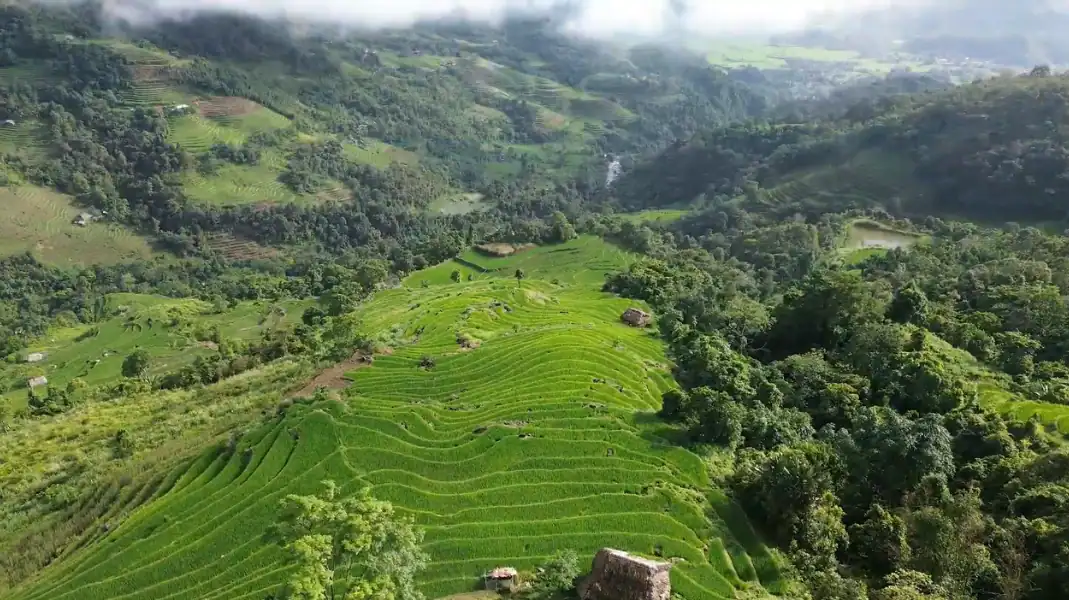
Spring is generally drier than summer, though showers become more frequent as May goes on.
Spring roads
Roads are usually dry and good in March and April. From May, rain becomes more frequent and some days are wet on the passes.
Winter (December to February)
Winter is cold, foggy in the mornings and quiet. If you dress for it, it can be wonderful. If you come in summer clothes, it will be miserable.
How cold it gets
- Ha Giang city (about 200 m): about 15°C to 18°C in winter, cooler at night.
- Dong Van and Meo Vac (about 1,100 to 1,200 m): 6°C to 9°C cooler than the city; nights often below 5°C.
- High passes: Colder still, especially on a motorbike in the wind; occasional frost on cold nights.
What winter offers
- Fewer visitors: The Loop is much quieter than in autumn.
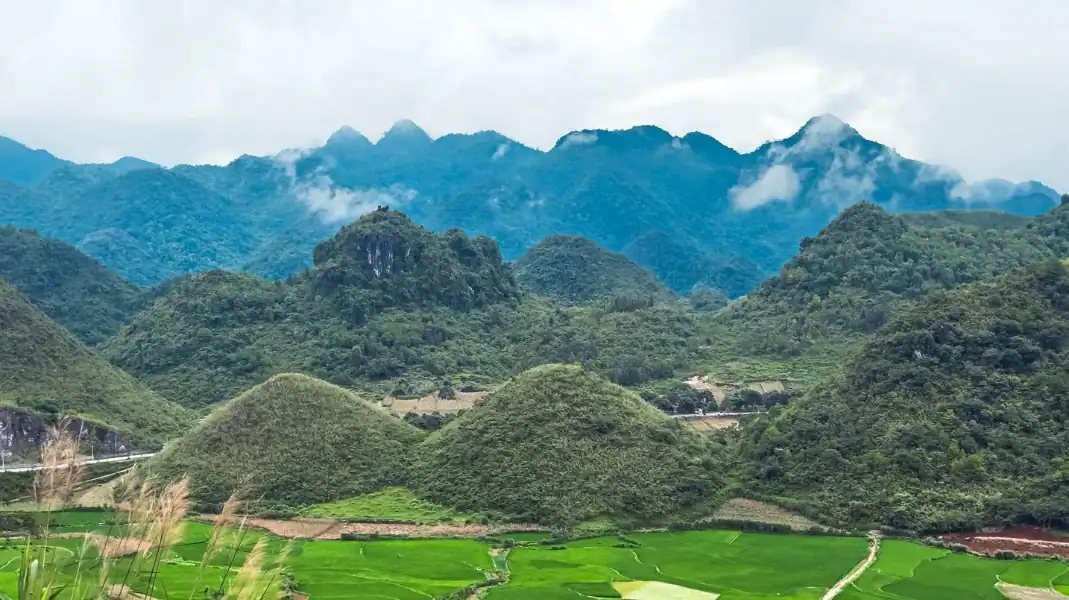
- Fog and light: Morning fog in the valleys, then clear, sharp light when it lifts.
- Early blossom: Around the lunar new year, plum and peach blossom start to appear. See our guide to the Ha Giang Loop in January.
Winter packing list
- Thermal base layer, top and bottom
- A windproof jacket with a warm layer underneath
- Warm, windproof gloves
- A neck warmer or balaclava for the passes
- Warm socks
- A rain jacket or poncho for drizzle on the passes
Summer (June to August)
Summer is the rainy season. It is hot in the valleys, very green everywhere, and the hardest time for riding.
What to know about summer
- Landslides: Heavy rain can cause landslides on mountain roads, and some sections may close for hours.
- Floods: Valley roads and streams can rise quickly after heavy rain.
- Wet roads: Wet roads lose grip. TVPalm only offers easy rider tours, and your rider slows down when the roads are wet.
Who might enjoy summer
Travellers who love green landscapes and few crowds, and who have a flexible schedule. We plan summer trips carefully and may change the route because of the weather.
Month by month
| Month | In short |
|---|---|
| January | Cold, foggy mornings, quiet |
| February | Cold; Tet and blossom in many years |
| March | Mild, clear, blossom |
| April | Mild, clear; Khau Vai love market in some years |
| May | Warmer; more showers; Khau Vai in some years |
| June | Rainy season begins |
| July | Hot and wet |
| August | Hot and wet |
| September | Rice turns gold in many valleys |
| October | Dry; buckwheat flowers begin; busiest month |
| November | Dry, cooler; buckwheat flowers |
| December | Cold, quiet, foggy mornings |
Frequently asked questions
September or October?
Both are excellent. September is often better for golden rice, October for the first buckwheat flowers and drier roads. Mid-October can give you a bit of both, depending on the year.
Can I visit in the rainy season, in July or August?
Yes, with an experienced easy rider and a flexible schedule. Rain makes mountain roads slippery and can cause landslides, so expect possible delays.
How cold does Ha Giang get in winter?
On the plateau around Dong Van and Meo Vac, nights in winter often drop below 5°C, and the passes are colder still. Bring thermal layers, warm gloves and a windproof jacket.
Written by Nguyễn Văn Trung, founder of TVPalm. He has led small-group trips across Northeast Vietnam since 2021.


