

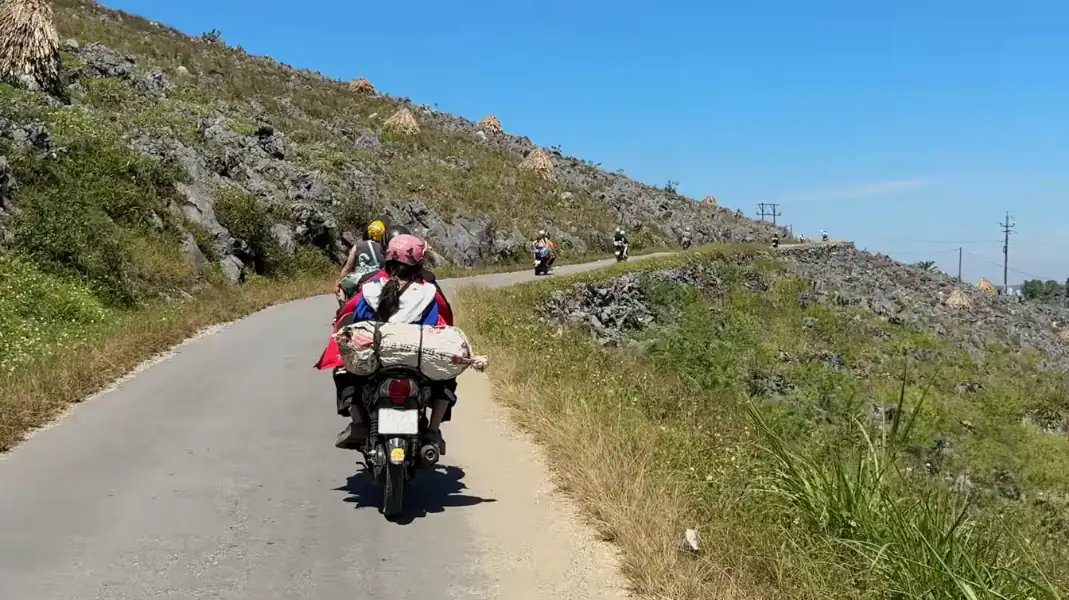
Should you climb Tay Con Linh (2,428 m) on your own or with a guided team? It is the most important safety decision you will make for this mountain. Going alone gives you freedom and costs less up front. But Tay Con Linh is not Fansipan: there are no steps or signs, only unmarked trails through primary cloud forest, almost no phone signal, and border permit rules. Ha Giang has been part of Tuyen Quang province since July 2025.
With TVPalm you walk with a trek leader and Dao Ao Dai porters paid fairly, with the permit arranged and a night in Xa Phin. This guide compares the two options honestly: navigation, safety, logistics, cost and what you learn on the way.
What Tay Con Linh is really like
Unlike Fansipan or the walking trails around Sapa, with paved steps, handrails and signs, Tay Con Linh has none of this. The 32 km route brings three real difficulties:
- Unmarked paths: narrow hunting and tea-picking trails that split into logging tracks, steep gullies and animal paths that go nowhere.
- No signal, unreliable GPS: most of the mountain has no mobile coverage, and the forest canopy and granite cliffs make phone maps drift in the ravines.
- Border rules: the mountain is close to the Vietnam–China border. Foreigners need a Border Area Entry Permit (260,000 VND, about $10 per guest). Hikers without one risk fines and being turned back at a checkpoint.
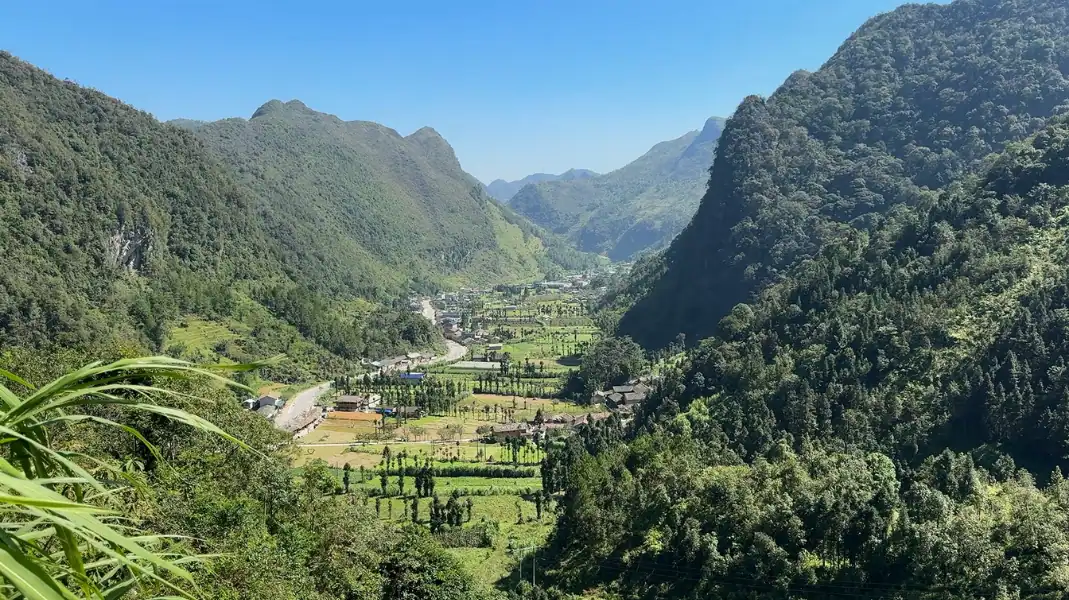
Going alone: what it really means
Carrying everything yourself
Alone, you carry everything. Climbing about 600 m to the top after a long walk on slippery red clay with a full pack is much more tiring, and the risk of injury goes up.
A solo hiker needs to carry:
- Offline maps, a GPS device and a satellite messenger, because there is no phone signal under the canopy.
- Enough food and water for the whole day, and a full first-aid kit.
- A water filter and electrolyte sachets.
- An emergency beacon and spare power banks.
Getting lost, running out of water, and slow rescue
Higher up, a solo hiker is exposed:
- Little water up high: the lower valleys have streams, but the ridges above 1,800 m run through dry bamboo with few springs.
- Fog: cloud can come down within minutes and cut visibility to a few metres.
- Slow help: if you are injured or get too cold in a ravine away from the trail, rescue from the valley takes many hours.
Solo or guided, side by side
| Expedition Feature | Solo / Self-Guided Hike | TVPalm Guided Expedition |
|---|---|---|
| Trail Navigation & Safety | High risk; unmarked trails, GPS signal drop | TVPalm trek leader & Dao porters |
| Pack Weight on Trail | Heavy pack (food, water, safety and navigation gear) | 5 kg – 7 kg (Light daypack) |
| Ha Giang Border Permit | Self-applied at Immigration (Time-consuming) | Processed in advance, in line with regulations |
| Accommodation Style | No legal overnight stop on the mountain; the Forest Ranger hut is a short stop only | Historic Xa Phin moss-roof homestay + TVPalm Ecolodge |
| Meals & Nutrition | Dry rations, instant noodles, trail bars | Hot farm-to-table highland dinners & organic trail meals |
| Cultural Immersion | Minimal; language barrier with hill tribes | Meet Dao Ao Dai families and learn about Shan Tuyet tea |
| Emergency Protocols | Zero cell signal; delayed search & rescue | Satellite SOS communicator & first-aid certified staff |
| Estimated Daily Cost | $25 – $40 USD / Day (Basic supplies only) | Transparent all-inclusive package with full support |
Our view: on Tay Con Linh, a guided trek is not about comfort. It means you do not have to fight the pack and the map, so you can look at the forest and spend time with the Dao families who live there.
What a guided trek gives you
1. Time with Dao Ao Dai families in Xa Phin
On a TVPalm trek, you sleep in a wooden stilt house with a moss-covered roof in Xa Phin (920 m):
After a walk of about 12.5 km, you eat dinner with the family: mountain pork, bamboo shoots, local corn wine (ruou ngo). In the morning you can walk through the old Shan Tuyet tea forest with people who pick it.
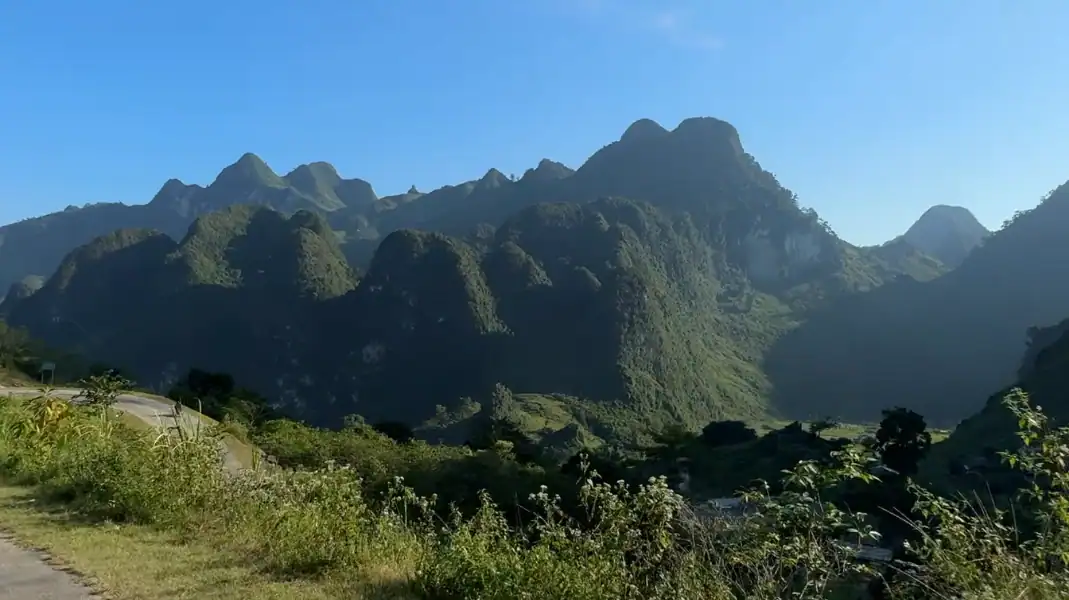
2. Fairly paid porters and a team ready for trouble
A guided trek takes the logistics off your back:
- A light pack: you carry 5 to 7 kg (water, rain jacket, camera); the team handles the rest.
- Money that stays in the villages: TVPalm works with the Tay Con Linh Sustainable Tourism Cooperative and pays the Dao and Tay families who work with us fairly.
- Ready for trouble: the trek leader carries a first-aid kit and a phone, and knows how to reach help from the nearest village or ranger post.
Before you go: checklist
Check these before you confirm:
- Your travel insurance covers non-technical mountain trekking and emergency evacuation.
- Your passport has at least 6 months of validity, for the border permit.
- Your hiking boots are worn in and have deep-lugged soles (5 mm or more), for wet clay and granite.
- You have three layers: a quick-dry base layer, a fleece and a light down jacket for summit mornings between 0°C and 8°C.
- You carry a small 10,000 mAh power bank, kept warm, for your phone and camera.
Solo or guided on Tay Con Linh: common questions
Can foreigners legally hike Tay Con Linh without a guide?
You can get the border permit yourself, but local authorities strongly discourage hiking Tay Con Linh alone, because rescue is difficult and the area is near the border. With a local team, the paperwork and checkpoints are handled.
How much do I carry on a guided trek?
Only a light 5 to 7 kg daypack with water, rain gear, snacks and your camera. The team handles food and logistics. You need no tent or sleeping bag: you sleep in a homestay and at TVPalm Ecolodge.
I am travelling alone. Can I join a group?
TVPalm does not run shared group departures. You can book a private trek on your own, with your own trek leader and porter. It costs more per person than a shared trek, so ask us for a quote.
Written by Nguyễn Văn Trung, founder of TVPalm. He leads small-group trips across Northeast Vietnam.


