

Ha Giang is a land of extremes. Deep canyons sit beside towering summits that reach the clouds. Understanding the elevation of Ha Giang mountain peaks is key to planning a safe trekking journey. It helps you avoid crowded routes and find authentic experiences. This guide provides precise data on the northernmost topography.
I am Nguyen Van Trung, CEO of TVPalm. I have spent 10 years leading treks through the Tay Con Linh range. I will share my field research and expertise to help you master the roof of Northeast Vietnam.
Overview of topography and elevation in Ha Giang province
Elevation differentiation from valleys to peaks
The elevation changes rapidly across the province. Low valleys like the Lo River basin sit at 100 meters. In contrast, the limestone peaks of the Dong Van Karst Plateau reach 1,600 meters.
The highest summits in the west exceed 2,400 meters. This variation creates distinct ecological zones. You will see lush jungles in the valleys and ancient mossy forests on the peaks.
Why elevation affects your itinerary decisions
Altitude shapes your travel experience. Higher elevations mean lower temperatures. On average, the temperature drops by 0.6°C for every 100 meters you climb. A sunny day in Ha Giang city can be a freezing day on a summit. Elevation also dictates physical difficulty. Trekking at 2,000 meters requires more stamina due to thinner air.
At TVPalm, we always advise travelers to check the elevation of Ha Giang mountain peaks before packing. This ensures you have the right gear for the cold and the climb.
The highest mountain peaks in Ha Giang for conquerors
Tay Con Linh: The roof of the Northeast (2,419m)
Tay Con Linh is the highest peak in Ha Giang at 2,419 meters. It is the ultimate goal for serious trekkers. I have reached this summit over 50 times.
The trail is steep and passes through primary forests. You will encounter ancient Shan Tuyet tea trees that are hundreds of years old. The air at the top is crisp and thin. It offers a sense of absolute conquest that few other places can match.
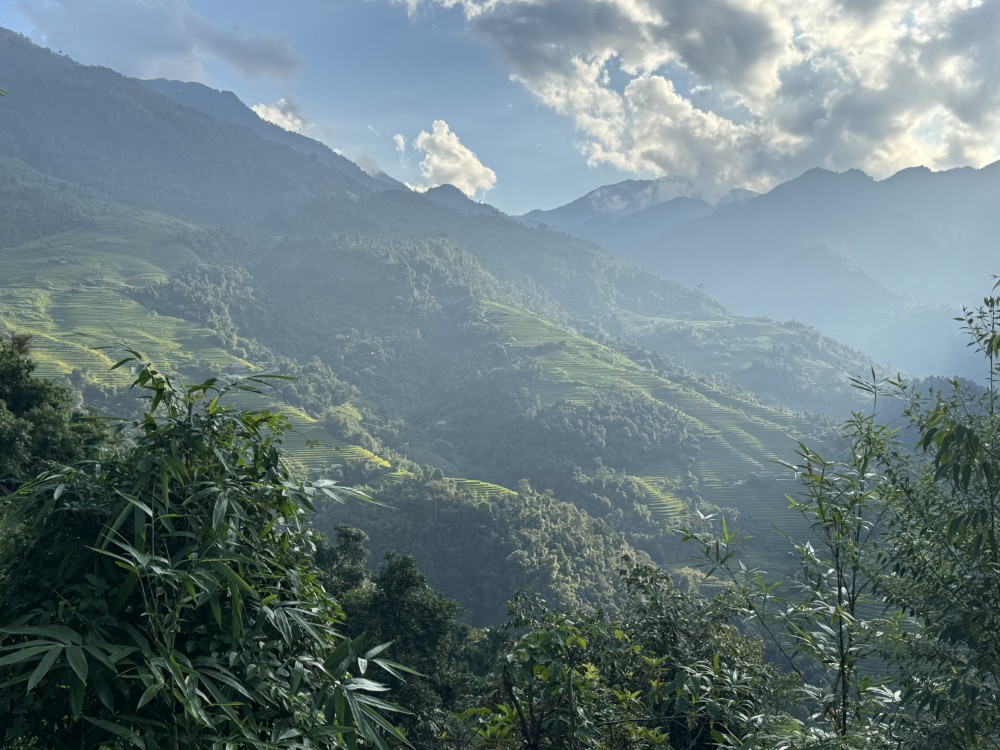
Chieu Lau Thi: Nine steps to the clouds in Hoang Su Phi (2,402m)
Chieu Lau Thi stands at 2,402 meters. Its name means “nine layers of stairs.” This peak is famous for “cloud hunting.” In the early morning, a thick sea of white clouds covers the valleys below. The trek is shorter than Tay Con Linh but equally beautiful. It is the perfect spot for photographers who want to capture the vastness of Hoang Su Phi.
Pu Tha Ca: The hidden peak in Quan Ba (2,276m)
Pu Tha Ca reaches 2,276 meters. It is less famous than the other peaks. This makes it ideal for travelers who value privacy. The mountain is located in a protected forest area in Quan Ba. The terrain is rocky and wild. If you want to avoid the crowds of the standard Ha Giang loop, this is your destination.
Iconic high-altitude landmarks and mountain passes
Ma Pi Leng Pass: A majestic viewpoint at 1,500m
Ma Pi Leng is the king of Vietnamese passes. It sits at an elevation of 1,500 meters. The road clings to the side of a limestone cliff. From the top, you look down 700 meters to the emerald Nho Que River. The scale of the landscape is overwhelming. It is a mandatory stop for anyone exploring the elevation of Ha Giang mountain peaks.
Lung Cu Flag Tower: The northernmost point on Dragon Mountain (1,470m)
The Lung Cu Flag Tower sits atop Dragon Mountain at 1,470 meters. It marks the northernmost point of Vietnam. To reach the flag, you must climb 839 stone steps. The view from the top extends into China. It is a place where history meets high altitude.
Tham Ma Slope and the winding mountain curves
Tham Ma Slope is a famous series of nine M-shaped curves. It serves as the gateway to the Dong Van plateau. While the elevation is lower than the major peaks, the slope demonstrates the vertical nature of Ha Giang. It was historically used to test the strength of horses. Today, it tests the brakes of travelers and the power of engines.
Geological characteristics of the UNESCO Dong Van Karst Plateau
Average elevation and tower karst structure (1,000m – 1,600m)
The plateau sits at an average elevation of 1,000 to 1,600 meters. The most striking features are the “tower karsts.” These are steep limestone hills that rise abruptly from the ground. Thousands of these grey towers create a jagged skyline. This unique elevation of Ha Giang mountain peaks in the plateau area makes it one of the most dramatic landscapes in Asia. The rock here dates back over 500 million years
Tu San Canyon: The contrast between heights and depths
Tu San Canyon is the deepest canyon in Southeast Asia. It sits at the foot of the Ma Pi Leng Pass. The cliffs rise nearly 800 meters high. The Nho Que River flows at the bottom. Standing at the viewpoint, you feel the immense scale of nature. The vertical drop is sudden and sharp. It is the perfect example of the extreme topography found in Ha Giang.
Practical experience when traveling at high altitudes in Ha Giang
Temperature and weather changes by elevation
Weather changes fast in the mountains. For every 100 meters you climb, the temperature drops by 0.6°C. If it is 25°C in Ha Giang city, it may be only 10°C on a 2,400m peak. Wind is also much stronger on open ridges. Fog can appear in less than 5 minutes, reducing visibility to zero. TVPalm recommends wearing layers. A high-quality windproof jacket is essential for any trek.
Fitness and equipment requirements for peaks over 2,000m
Climbing peaks like Tay Con Linh is physically demanding. You need good cardiovascular health. These trails are often muddy and steep. Use professional trekking boots with deep rubber grips. Bring two trekking poles to protect your knees during descents. I always carry 3 liters of water for a full-day climb. High altitude increases dehydration. Proper gear makes the difference between a great experience and a dangerous one.
Border permit regulations for international tourists
Ha Giang is a sensitive border province. All foreign travelers must obtain a “Border Entry Permit.” It costs 230,000 VND (about $10). You can buy this at the Ha Giang Immigration Office or in Dong Van town. You must show this permit at hotels and checkpoints. Without it, you cannot access the highest elevation of Ha Giang mountain peaks near the border. TVPalm manages this paperwork for all our private guests to ensure a smooth journey.
How we verify data and information in this article
Research process based on geological data and field measurements
We do not rely on old maps alone. Our team uses handheld GPS devices during every trek. We cross-reference our field data with UNESCO geological reports and official provincial records. This ensures the elevations listed for Tay Con Linh and Chieu Lau Thi are precise. We update our database every 12 months to reflect any changes in trail accessibility.
The role of local experience in assessing terrain difficulty
Numbers do not tell the whole story. A 2,000m peak with a clear path is easier than a 1,500m peak with no trail. I have walked these mountains for a decade. I consult with local Hmong and Dao hunters before every new season. They know the terrain better than any satellite. This combined knowledge allows TVPalm to rank the difficulty of each peak accurately for our clients.
Common questions about the elevation of Ha Giang mountain peaks
What is the highest point you can reach in Ha Giang?
Tay Con Linh is the highest summit in the province. It reaches an elevation of 2,419 meters. This peak is known as the roof of Northeast Vietnam. It offers a challenging trek through ancient tea forests and primary jungles. Most travelers spend 2 days to complete this climb safely.
Is altitude sickness a risk when exploring Ha Giang?
Most elevation of Ha Giang mountain peaks stay below 2,500 meters. Altitude sickness is very rare at these heights. You might feel slightly shorter of breath during steep climbs. However, the main challenge is physical fatigue rather than oxygen levels.
I recommend building your stamina 4 weeks before your trip to enjoy the trek fully.
Which high-altitude location offers the best views for photography?
Chieu Lau Thi is the top choice for photographers. It stands at 2,402 meters in Hoang Su Phi. The summit provides a clear 360-degree view of the surrounding valleys. It is the most reliable spot for cloud hunting between October and February. The contrast between the white clouds and the dark mountain ridges creates stunning images.