

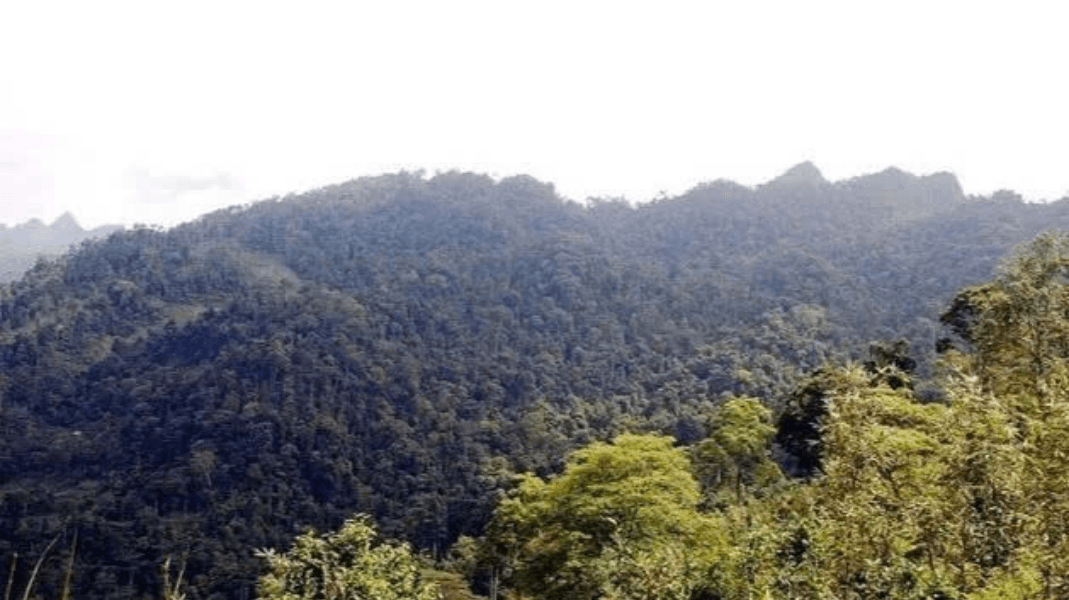
If you hope to see the Tonkin snub-nosed monkey in Ha Giang (part of Tuyen Quang province since July 2025), there is really one place to focus on: the limestone forest of Khau Ca, now part of Du Gia National Park. It holds around 160 monkeys, roughly four out of five of all that remain.
There are no open public trails into this forest. Any visit must be approved by the forest management and made with a forest ranger. TVPalm will start taking guests on monkey tours from 1 January 2027, once the permits are complete.
Where the monkeys live
The Tonkin snub-nosed monkey (Rhinopithecus avunculus) lives only in northern Vietnam. It is Critically Endangered, and almost all of it now survives in a few patches of limestone forest in the old Ha Giang province.
It lives high in the canopy of old forest on steep limestone, far from villages and fields. That is why seeing it is never easy, and never guaranteed.
| Area | Population | Can visitors go? |
|---|---|---|
| Khau Ca (Du Gia National Park) | About 160 (late 2025 census) | Only with approval and a forest ranger; TVPalm tours from 1 January 2027 |
| Quan Ba | Much smaller and falling sharply | No; the forest needs protection, not tourism |
| Other forests | Very small or gone | No |
1. Khau Ca and Du Gia National Park
Khau Ca is the stronghold of the species. In 2015 it was joined with the Du Gia Nature Reserve to form Du Gia National Park, and it is managed as special-use forest.
The latest census, by Fauna & Flora (FFI) with the forest authorities in late 2025, counted around 160 individuals, including several new infants. Local patrol teams, supported by FFI since the early 2000s, have helped the population recover.
This is where our planned tours will go, entering through Tung Ba, a village at the edge of the forest, always with a forest ranger. Read our Khau Ca guide.
2. Quan Ba
The second known population lives in forest in the Quan Ba area.
According to FFI, this population has fallen sharply, and the forest there is not formally protected. It is not a place for tourism; what it needs is protection, and FFI is working on forest corridors to link it with Khau Ca.
3. Other forests
The species was once found in a wider area of northern Vietnam, including forests on the border of Ha Giang and Tuyen Quang.
Today those populations are very small or gone. We do not offer treks there, and we do not recommend that anyone look for the monkeys in these places.

Permits and rules
Khau Ca is special-use forest under Vietnam’s Forestry Law. Entering it without permission is not allowed.
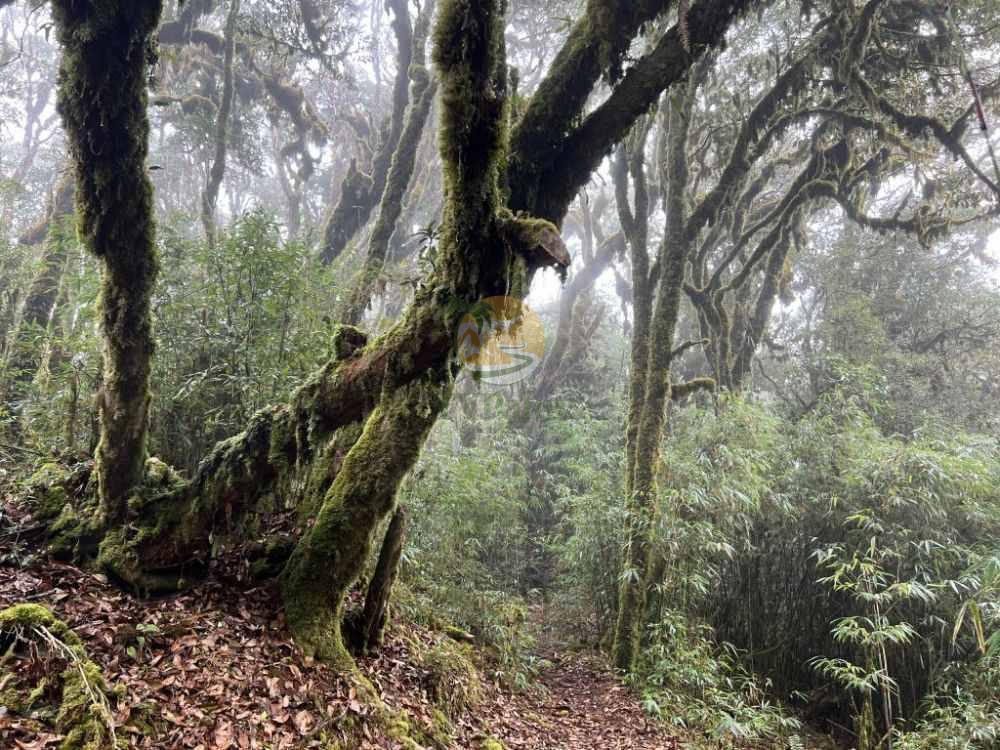
Visits need the approval of the forest management. Here is how TVPalm is preparing:
- Permits: We are completing the permits with the management board of the Du Gia special-use forest.
- Rangers: Every visit will go with a forest ranger, as the permit requires.
- Small groups: Visits will be small and quiet, to disturb the forest as little as possible.
- Supporting protection: We want tourism to support the people who protect the forest, not to disturb the monkeys.
How to behave in monkey forest
Seeing a wild Tonkin snub-nosed monkey is a rare privilege. Disturbing them can drive them away from their feeding trees.
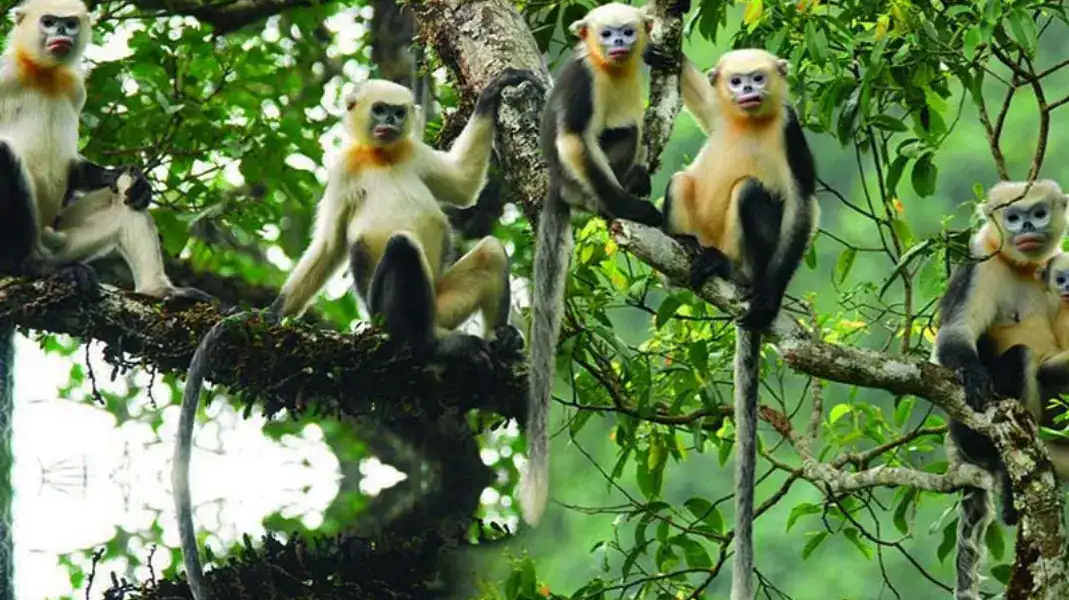
Rules for watching the monkeys
On any visit, follow the ranger’s instructions at all times. These rules apply everywhere:
- Keep your distance: Never try to get closer or move under a tree where monkeys are feeding or resting.
- No flash: Never use flash photography or bright lights.
- Be quiet and blend in: Speak softly or not at all, and wear neutral colours rather than bright ones.
- Never feed them: Do not leave food, rubbish or anything else in the forest.
- Stay home if you are ill: Primates can catch human diseases. If you have a cold or a cough, do not go into their forest.
Seeing them, even for a minute, is a gift. Our job is to leave the forest so quietly that the monkeys go on feeding as if we were never there.
Nguyễn Văn Trung, Founder, TVPalm
What to bring
The terrain is steep, rocky and often wet. Good boots, trekking poles, leech socks, rain gear and binoculars make a big difference.
| What to bring | Why |
|---|---|
| Boots with good grip | Steep, sharp limestone and wet ground |
| Trekking poles | Balance on steep descents |
| Leech socks | Leeches in damp forest |
| Rain gear in neutral colours | Weather changes fast; bright colours disturb wildlife |
| Binoculars | To watch from a respectful distance |
For our planned tour, read our Tonkin snub-nosed monkey tour page.
Frequently asked questions
When is the best time to try?
The cooler, drier months from October to April are usually easier for walking. But the monkeys move with the seasons and the food, and no month guarantees a sighting.
How long does a visit take?
We plan two formats into Tung Ba’s forest from 2027, and the details will depend on the permit conditions. We do not publish sighting odds, because nobody can promise them.
Can wildlife photographers join?
Yes, if you are fit for steep forest walking and accept the rules: no flash, keep your distance and follow the ranger. Bring a long lens and binoculars.


