

Embarking on the Ha Giang Loop is an adventure for the senses. For me, Nguyen Trung, CEO of TVPalm with over two decades of navigating Northern Vietnam, the culinary journey is just as vital as the scenery.
Through my deep connection with local ethnic cultures, I’ve curated this guide to the essential local dishes. Get ready to transform your trip into an unforgettable gastronomic exploration and taste the true essence of this magnificent highland
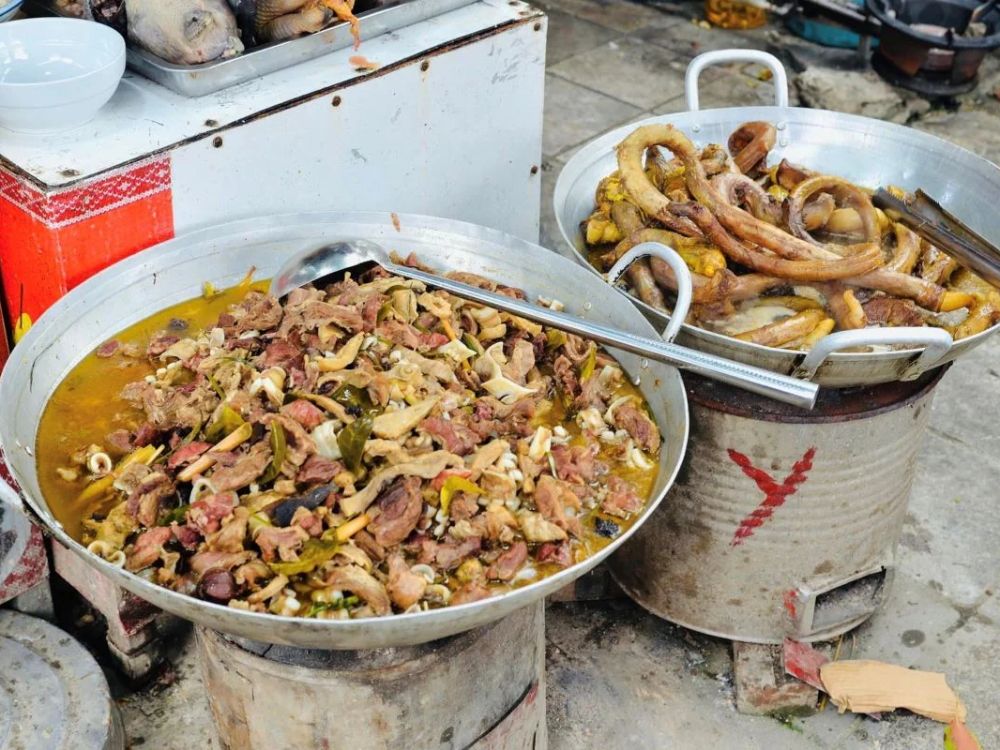
Thang Co (Horse Meat Stew)
Thang Co is an iconic and traditional H’Mong horse meat stew, considered an adventurous culinary experience and a must-try Ha Giang specialty. This hearty highland stew is prepared by simmering various parts of horse meat and offal, including intestines, liver, heart, clotted blood, and bones, in a large pot for several hours.
The stew is seasoned with a distinctive blend of mountain spices like cardamom, star anise, cinnamon, ginger, lemongrass, and local herbs such as “doi seeds.” It boasts a rich, savory, and intensely aromatic flavor, often bold and slightly pungent, perfect for Ha Giang’s cold weather.
Thang Co holds significant cultural importance, central to H’Mong festivals and communal gatherings, symbolizing sharing and celebration. You can find the most authentic versions at vibrant local markets in towns like Dong Van and Meo Vac, best savored hot and traditionally paired with local corn wine, often called “Happy Water.”
Au Tau Porridge (Chao Au Tau)
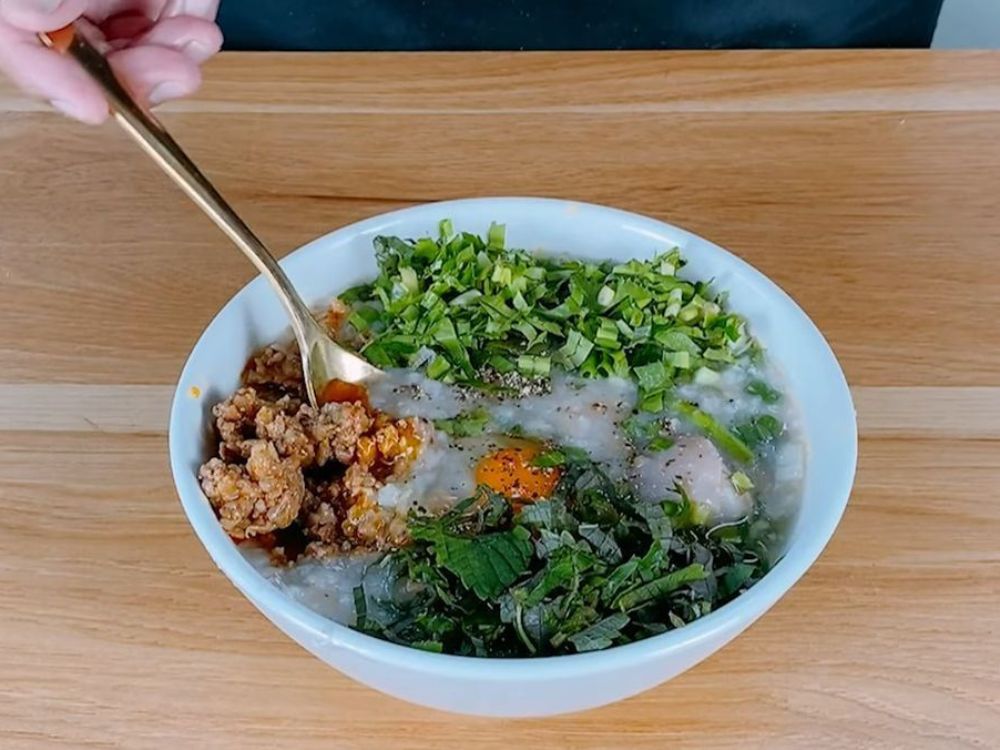
Au Tau Porridge, or Chao Au Tau, is a unique and renowned specialty made from the au tau root, sticky rice, pork leg, and egg. The au tau root, naturally toxic, requires meticulous preparation, including overnight soaking and hours of simmering, to neutralize harmful substances.
This bitter porridge offers a distinctive mild bitterness that transitions into a sweet aftertaste, complemented by minced pork, pork sausage, and fresh herbs like cilantro and perilla. Locals believe it’s a folk remedy, known for its warming properties, alleviating colds, reducing fatigue, and promoting restful sleep.
This Ha Giang food for cold weather is particularly popular in the evening and late at night, commonly found at roadside stalls and night markets in Ha Giang City and Dong Van. A bowl typically costs between 30,000 and 40,000 VND.
Banh Cuon (Steamed Rice Rolls) Ha Giang Style
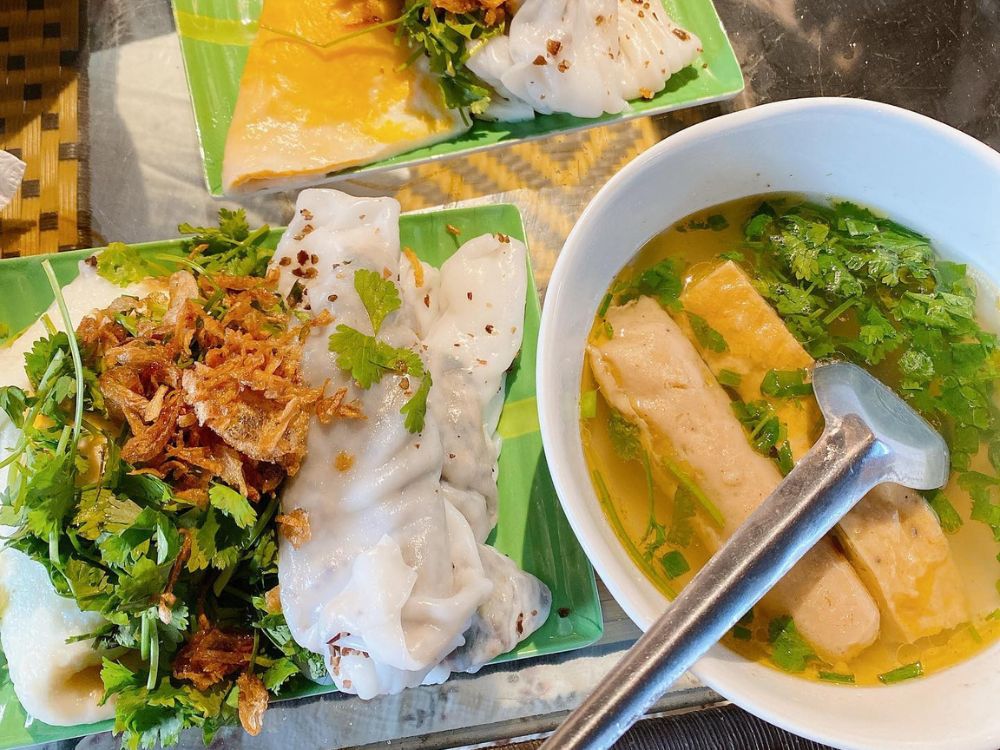
Banh Cuon, delicate steamed rice rolls, take on a distinctive Ha Giang twist compared to other Vietnamese regions. Unlike the standard fish sauce accompaniment, Ha Giang’s Banh Cuon is typically served with a hot, savory bone broth, often garnished with fried onions and fresh coriander.
Some local variations, known as Banh Cuon Trung, feature an egg cracked directly onto the steaming rice sheet. These soft, delicate rolls, often filled with savory minced pork and wood ear mushrooms, are perfectly complemented by the rich, warm broth. As a popular breakfast on Ha Giang Loop, you can find them readily available at local markets, food stalls, and restaurants throughout the province, especially in Dong Van.
The hot steamed rice rolls with broth make them an ideal and comforting choice for cold Ha Giang mornings.
Pho Chua (Sour Pho)
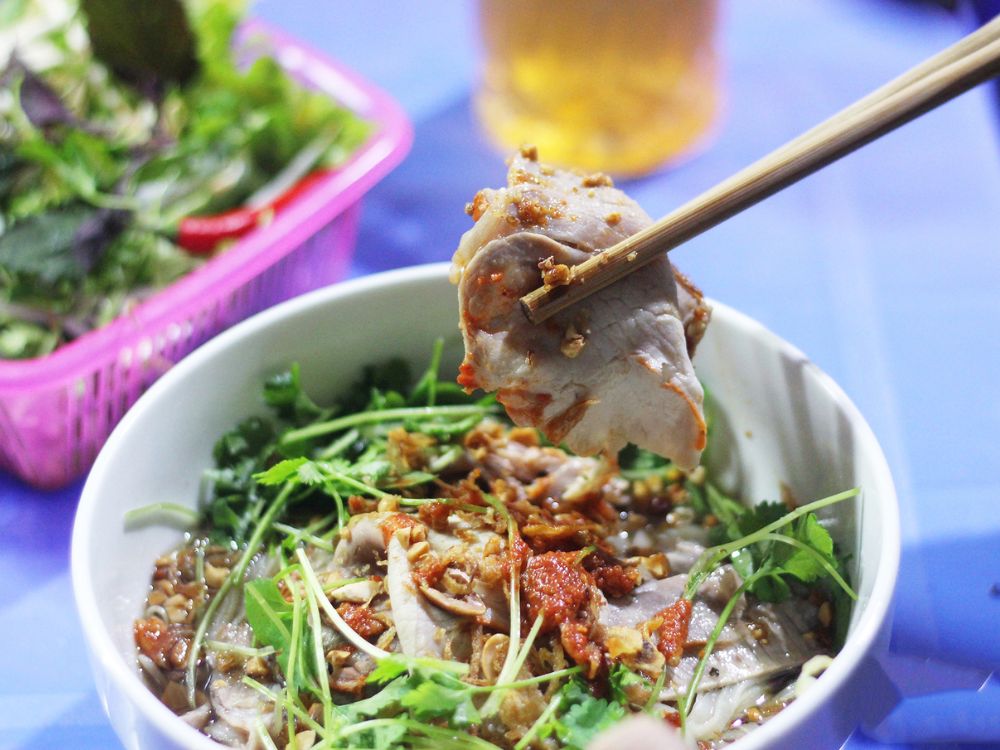
Pho Chua, also known as Sour Pho or “cool pho,” is a unique and refreshing variation of pho, characterized by its sour, sweet, and mildly spicy flavors. This tangy noodle bowl can be served either cold or warm and has become a popular Ha Giang specialty.
It features chewy rice noodles, tougher than typical pho noodles, topped with sliced char siu pork, roasted duck, fried sausage, roasted peanuts, garlic, and fresh herbs like basil, spearmint, shredded cucumber, and green papaya. The defining element is its distinctive sweet and tangy sauce, made from vinegar, sugar, and sometimes tapioca, blended with sweet bone broth and chili.
This Ha Giang local delicacy offers a harmonious blend of flavors and textures. You can find it in Ha Giang City and towns like Yen Minh, with Ly Dinh Restaurant at 543 Nguyen Trai Street noted for its quality. A plate typically costs around 45,000 VND.
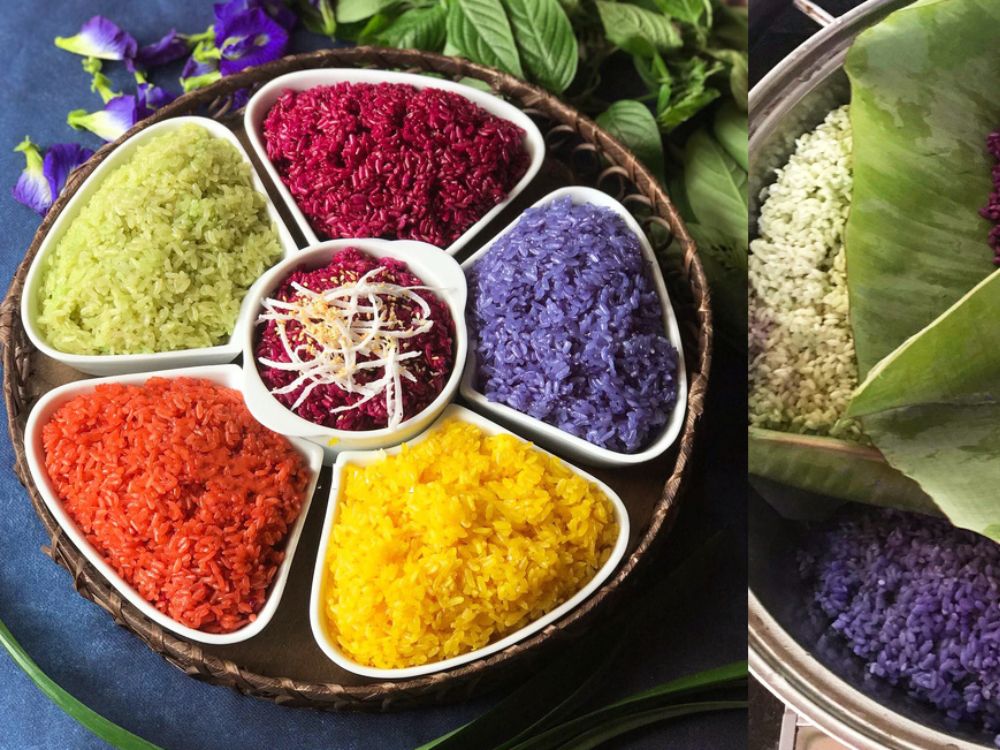
Xoi Ngu Sac (Five-Colored Sticky Rice)
Xoi Ngu Sac, or Five-Colored Sticky Rice, is a visually stunning and delicious traditional dish, predominantly associated with the Tay ethnic group. This Ha Giang local delicacy features five distinct colors—white, red, green, purple, and yellow—each derived naturally from local plants.
Fragrant glutinous rice is used, with colors typically sourced from Gac fruit for red, pandan or ginger leaves for green, black sticky rice leaves for purple/black, and turmeric for yellow. Xoi Ngu Sac is an essential dish during ancestral worship ceremonies and holidays, symbolizing the five elements and bringing good fortune.
The rice is fragrant, sticky, and mildly sweet, enjoyable on its own or seasoned with sesame salt. This naturally vegan dish is available at local markets, food stalls, and restaurants throughout Ha Giang, especially during special occasions.
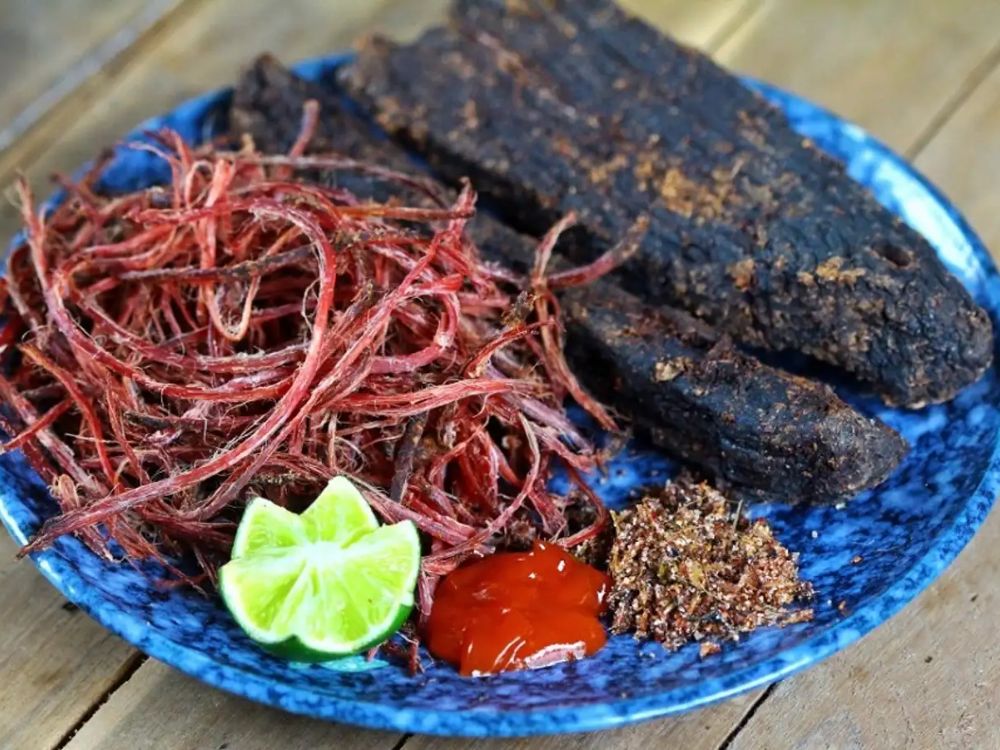
Thit Trau Gac Bep (Smoked Buffalo Meat)
Thit Trau Gac Bep, or Smoked Buffalo Meat, is a signature delicacy popular across the Ha Giang highlands, particularly among the Thai ethnic group. Buffalo meat is sliced along the grain, marinated with a blend of traditional spices Ha Giang, including mac khen pepper, ginger, chili, salt, garlic, lemongrass, cardamom, star anise, and doi seeds. It is then hung above a kitchen fire (gac bep) or sun-dried for several hours, imparting a distinct smoky flavor.
The meat is tender, chewy, naturally sweet, and deeply infused with a rich smoky aroma. This authentic Ha Giang food can be eaten directly, dipped in chili salt, or grilled again to enhance its aroma. It is widely available at local markets and restaurants in Dong Van and Meo Vac and makes an excellent Ha Giang food souvenir.
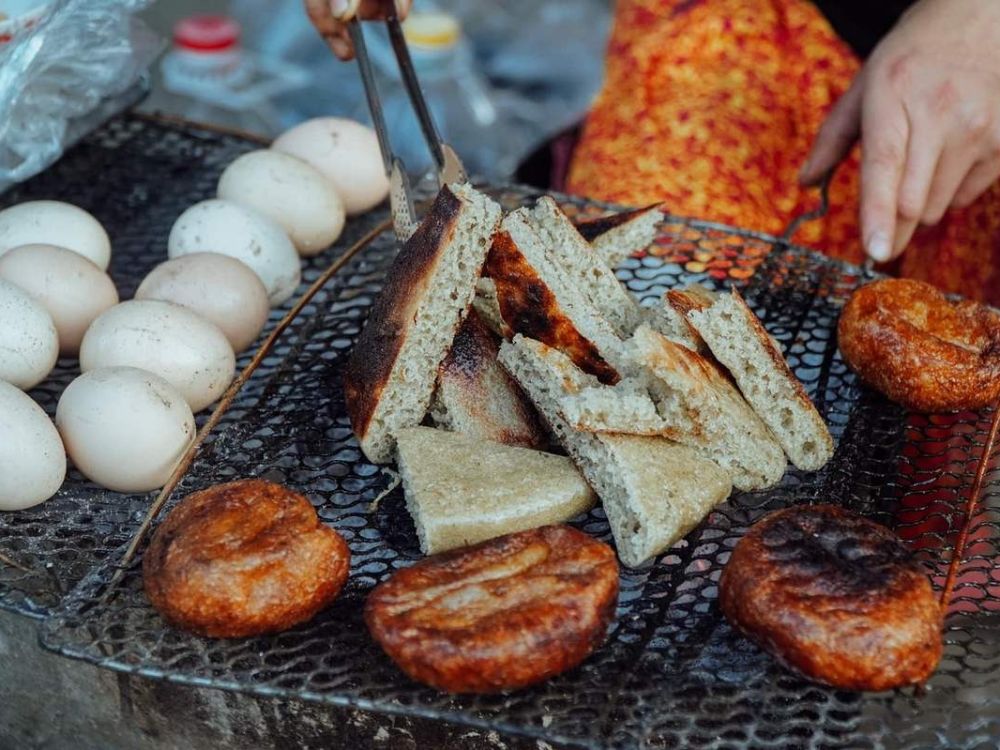
Banh Tam Giac Mach (Buckwheat Cake)
Banh Tam Giac Mach, or Buckwheat Cake, is a unique cake made from the seeds of buckwheat, which is both the floral symbol of Ha Giang and a vital staple crop for the local population. After harvest, the seeds are ground into a fine flour, mixed with water, molded, and then either steamed or grilled. This buckwheat cake soft texture has a nutty flavor and a soft, spongy texture, often with a subtle purple hue and a pleasant aroma.
The cake is generally light and mildly sweet, offering a simple yet memorable highland experience. Commonly sold at local markets and festivals, enjoying a warm buckwheat cake while exploring the buckwheat flower fields deeply connects you with Ha Giang’s food culture.
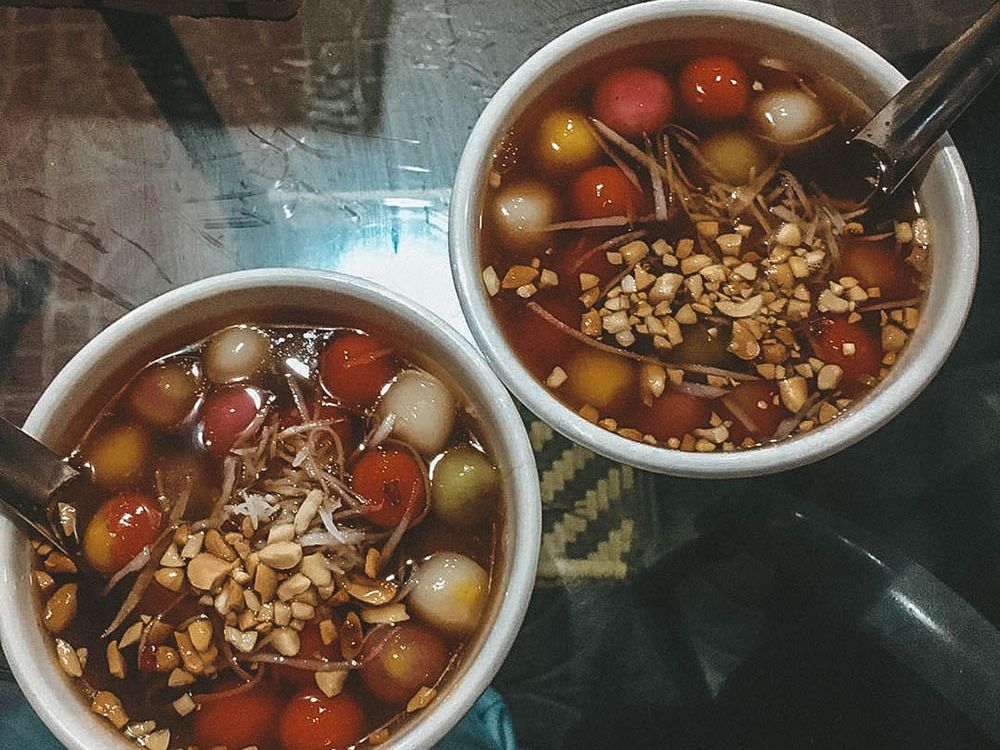
Thang Den
Thang Den is a sweet and simple dessert, similar to Hanoi’s Banh Troi Nuoc (floating sticky rice cakes) but typically smaller. It is made from glutinous rice flour, shaped into small spherical balls, and then boiled. These rice balls, often using Yen Minh sticky rice, can have fillings like green beans or red beans, or be plain.
They are served in a warm, sweetened soup made from apricot blossom sugar, coconut, and ginger syrup, typically topped with crushed peanuts and sesame seeds. Thang Den offers a sweet, slightly chewy, and doughy texture, complemented by a nutty crunch and a warming, spicy kick from ginger.
This naturally vegan dessert is particularly well-suited for consumption on cold winter days and can be found at local markets and food stalls, offering a delightful Ha Giang food recommendation.
Men Men (Steamed Corn Flour)
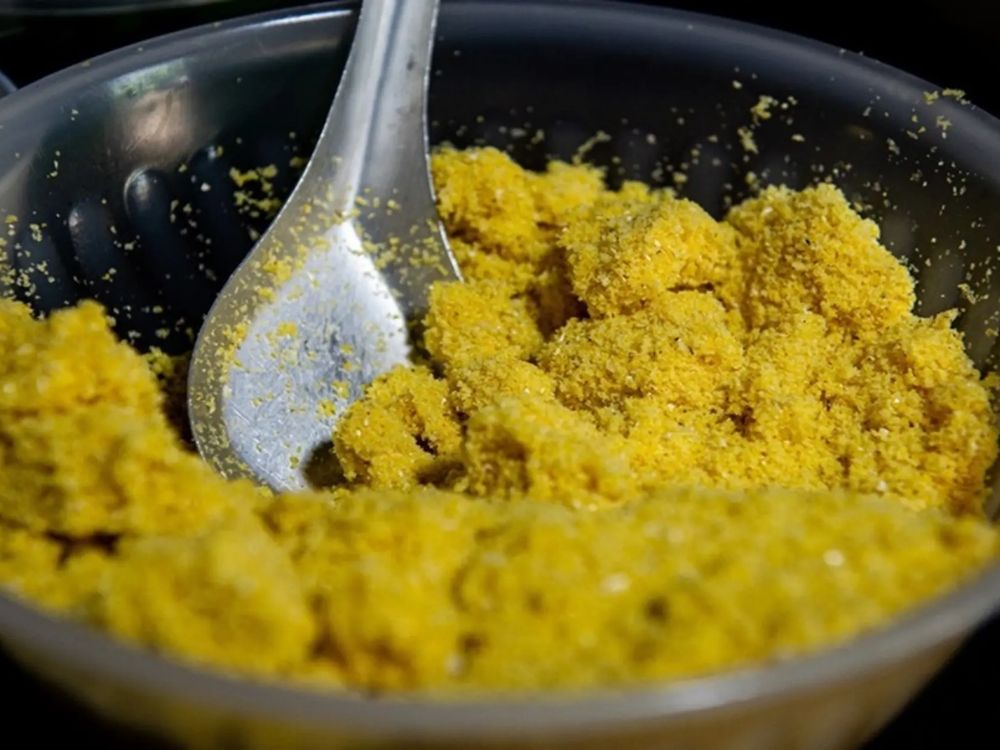
Men Men, or Steamed Corn Flour, is an indispensable traditional staple food of the H’Mong ethnic group in Ha Giang. It is made from corn kernels that are dried, ground twice into a fine, sand-like powder, mixed with a precise amount of water, and then steamed twice.
Men Men symbolizes the resilience and ingenuity of the H’Mong people, who have adapted to the harsh karst plateau where rice cultivation is challenging. It has an earthy, grainy texture with the natural sweet taste of corn. This mountain cuisine Ha Giang is often consumed with accompanying soups such as kohlrabi, pumpkin buds, or “cháo lảo” (a sour soup made from fermented ground soybean).
It is a communal dish, frequently shared by the fire, and commonly found in H’Mong villages and local markets, especially in Dong Van.
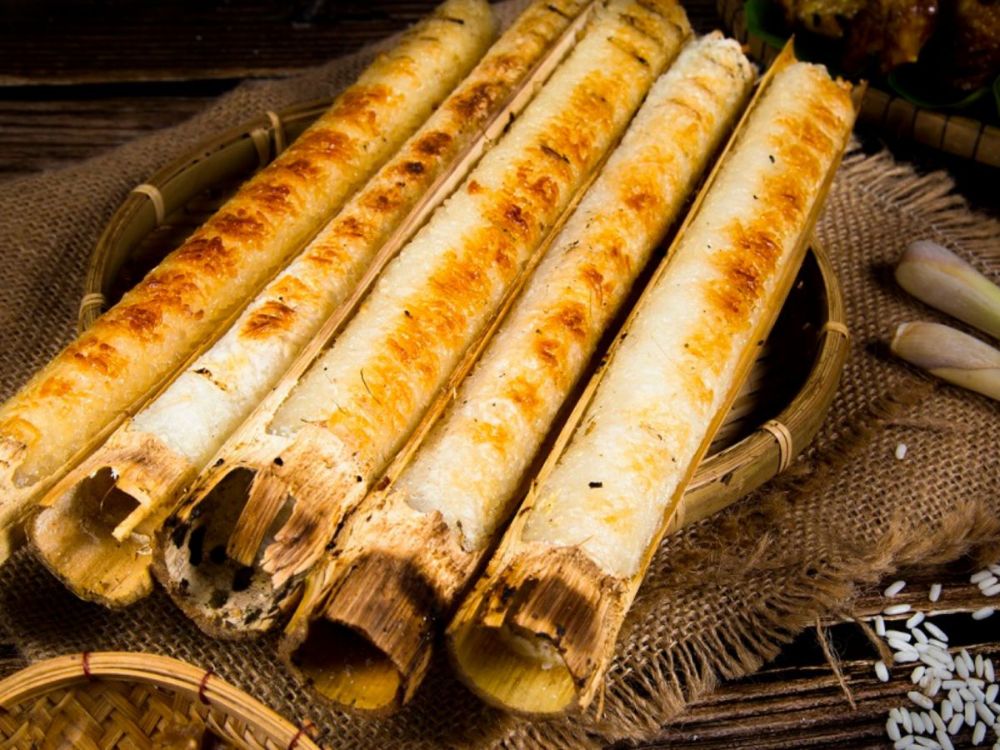
Com Lam (Sticky Rice Cooked in Bamboo Tubes)
Com Lam, or Sticky Rice Cooked in Bamboo Tubes, is a rustic delicacy consisting of glutinous rice cooked inside bamboo tubes, sealed with banana leaves, and then grilled over an open fire. It is a specialty of the Tay ethnic people, particularly in the Bac Me district, offering a genuine taste of Ha Giang’s heritage. Made from glutinous rice, water (often from ravines or mineral streams), and a pinch of salt, it sometimes includes coconut milk.
Com Lam offers a harmonious blend of sticky rice with the aromatic fragrance of bamboo, a smoky essence, and a slightly sweet flavor. The bamboo tube is peeled back like a wrapper, and the rice is typically eaten by hand, often paired with sesame salt or grilled fish. This naturally vegan dish is sold at roadside stalls, homestays, and various local markets, including Dong Van, Quyet Tien, and Meo Vac, typically costing between 10,000 and 25,000 VND.
Lon Cap Nach (Miniature Pig)
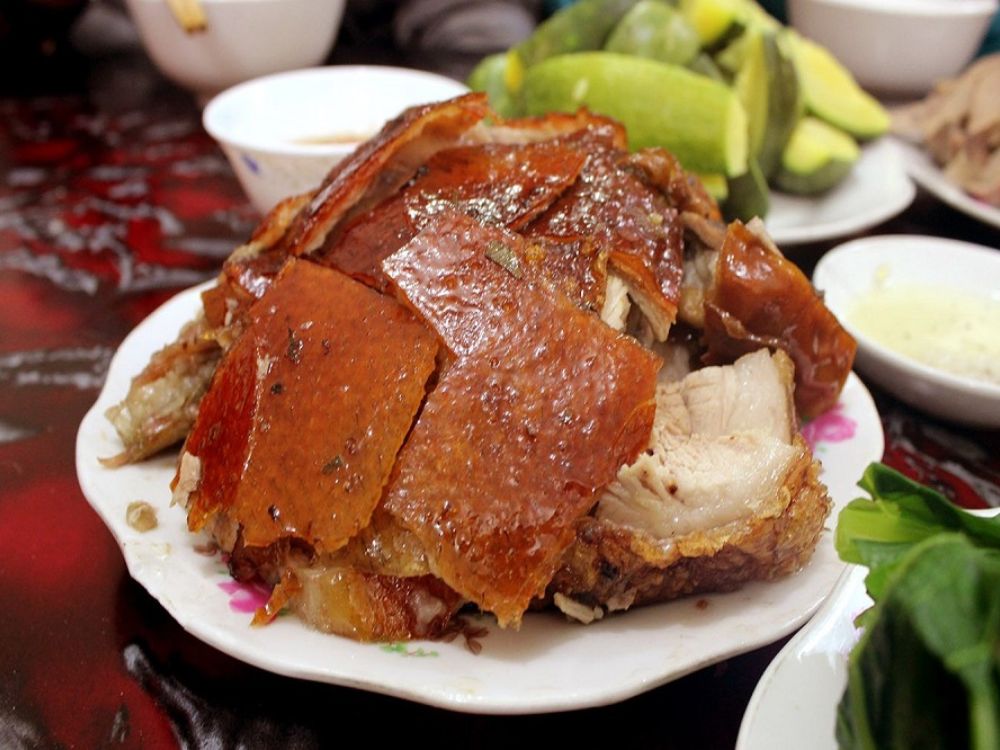
Lon Cap Nach, literally “Armpit Pig,” refers to small, free-range pigs, typically weighing between 5-10 kg, raised by local ethnic groups. They are often carried under the arm to markets, hence the name.
This Ha Giang local delicacy is known for its lean, chewy, and highly flavorful meat, a result of the pigs’ free-roaming lifestyle. The meat can be prepared in various ways, including grilling, roasting, frying, boiling, or steaming, and is often seasoned with local spices such as “hat doi” (doi seeds), cumin, and ginger.
Lon Cap Nach offers a truly authentic Ha Giang food experience, available in traditional restaurants specializing in local delicacies and at local markets, making it a highly recommended Ha Giang food to try.
Criteria for Evaluating, Choosing Ha Giang Local Foods
When exploring the diverse culinary landscape of Ha Giang, selecting the right dishes can elevate your travel experience. Based on my extensive experience in sustainable tourism and local culture, here are the key criteria I use to evaluate and recommend Ha Giang’s must-try local foods:
- Authenticity and Cultural Significance: A truly must-try dish reflects the unique traditions and history of Ha Giang’s ethnic minority groups (H’Mong, Tay, Dao). This includes traditional preparation methods, locally sourced ingredients, and its role in local festivals or daily life. We prioritize dishes that offer a genuine taste of Ha Giang’s heritage.
- Distinctive Flavor Profile and Ingredients: Ha Giang cuisine is known for its unique flavors, often incorporating mountain herbs, wild spices like mac khen pepper, and staple crops such as corn and buckwheat. Our selection emphasizes dishes with a memorable and characteristic taste that stands apart from generic Vietnamese fare, appealing to adventurous palates.
- Accessibility and Availability on the Loop: Given the mountainous terrain, the ease of finding these dishes in major towns (Dong Van, Meo Vac) and along the Ha Giang Loop is crucial. Recommendations consider where travelers can realistically experience these foods, whether at bustling markets, roadside stalls, or reputable local eateries.
- Value for Money: While food in Ha Giang is generally affordable, the cost-effectiveness of a dish is still a factor. We look for specialties that offer a rich culinary experience without being overly expensive, ensuring travelers can budget effectively for their gastronomic journey.
- Suitability for Different Dietary Needs (where applicable): Recognizing diverse traveler needs, we consider dishes that offer vegetarian or vegan alternatives, or those that are naturally plant-based. We also highlight dishes that are particularly comforting in Ha Giang’s cold weather.
Which Ha Giang local food is best?
Based on the criteria of authenticity, distinctive flavor, cultural significance, and overall unique experience, Thang Co (Horse Meat Stew) stands out as the ultimate must-try local food in Ha Giang. This iconic H’Mong dish offers an unparalleled immersion into the region’s culinary traditions.
Its rich, savory, and intensely aromatic flavor, derived from a blend of mountain spices and horse meat, provides a bold and unforgettable taste that truly embodies the adventurous spirit of Ha Giang. While it might be an adventurous choice for some, experiencing Thang Co, especially at a vibrant local market like Dong Van or Meo Vac, often paired with corn wine, is a profound cultural encounter that deeply connects you with the heart of the H’Mong community and their resilient way of life.
It’s more than just a meal; it’s a shared tradition and a testament to the highland’s robust cuisine.
Frequently Asked Questions About Ha Giang Local Foods
How to book a tour to get the best culinary experience?
To fully experience the local cuisine, you should choose tours with local guides, market visit itineraries, and homestay stays. Depending on your time, you can refer to these options:
- For a quick trip focused on tasting the most famous specialties, consider booking a ha giang loop in 2 days.
- The ideal choice to leisurely explore night markets and enjoy authentic family dinners at homestays is a ha giang loop 3 day tour.
- If you want to go deeper into remote villages to discover the most authentic and traditional dishes, opt for a ha giang loop tour 4 days.
Are there vegetarian or vegan options available in Ha Giang?
Yes, vegetarian and vegan options are available in Ha Giang, though they may require some effort and clear communication. Common vegetarian dishes include Pho Chay (vegetarian pho with tofu and vegetables), Banh Mi Chay (vegetarian baguette sandwich), Dau Sot Ca Chua (tofu in tomato sauce), Goi Cuon Chay (vegan fresh spring rolls), Xoi Chay (savory fried sticky rice), Com Lam (bamboo rice), Thang Den, and Five-Color Sticky Rice (Xoi Ngu Sac). Learning the Vietnamese phrase “Tôi ăn chay” (I eat vegetarian) and “Không thịt, không cá” (No meat, no fish) is helpful. Buddhist vegetarian restaurants can be found in Ha Giang City, but are rarer on the Loop.
What are the typical meal times for local specialties on the Ha Giang Loop?
Meal times for local specialties are flexible, often adapting to market schedules and daily routines. Many dishes like Banh Cuon are popular for breakfast on Ha Giang Loop. Heartier stews like Thang Co and Men Men are often enjoyed for lunch or dinner, especially at communal gatherings. Au Tau Porridge is particularly popular in the evening and late at night due to its warming properties. Generally, you will find food available throughout the day in major towns and at local markets.