

Meo Vac Sunday market is the largest highland gathering in the Dong Van Karst Plateau. Held every Sunday from 05:00 to 11:30 in Meo Vac town, it unites traders from H’Mong, Tay, Lo Lo, and Giay communities.
Unlike tourist bazaars, it remains a genuine trading post for livestock and highland foods. As founder of TVPalm Ecolodge, I designed this guide to help you navigate timing, zones, and etiquette.
Understanding the Meo Vac Sunday Market
The Meo Vac Sunday market sits in Meo Vac town center, within the UNESCO-recognized Dong Van Karst Plateau Geopark. For generations, steep limestone cliffs isolated plateau hamlets. Ethnic families established weekly gatherings to trade goods and connect with neighbors. Today, the market remains an essential economic hub and social lifeline.
Trading begins at dawn around 05:00 and peaks between 06:30 and 09:00. By 11:30, transactions conclude as villagers head home with wicker back-baskets.
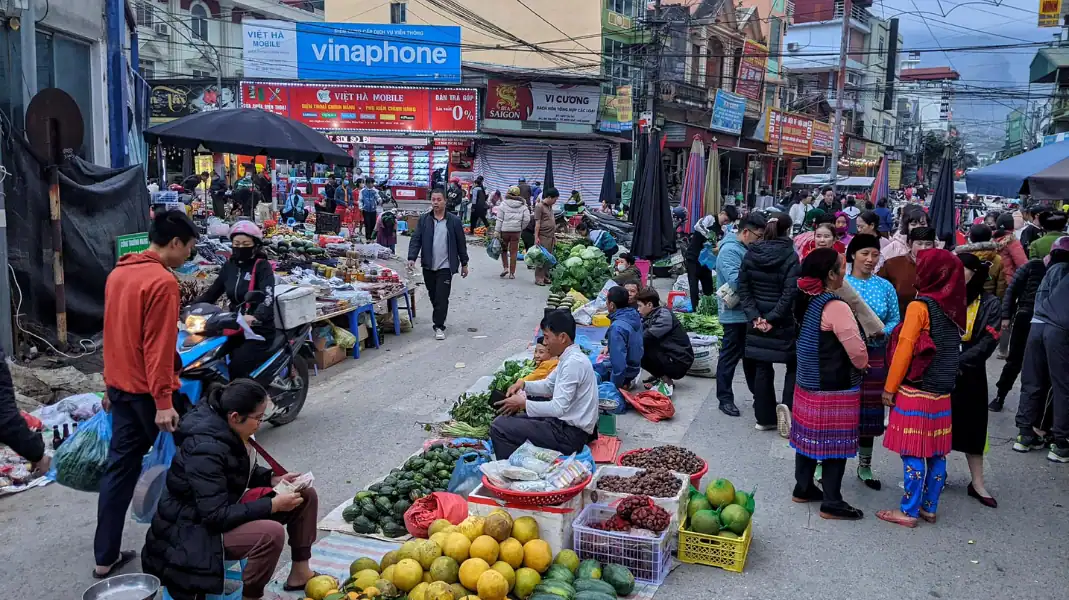
The market gathers several distinct ethnic groups:
- White, Black, and Flower H’Mong: Recognizable by pleated indigo skirts, embroidered collars, and bright headscarves.
- Tay community: Known for indigo tunics with silver clasps, bringing bamboo shoots and herbal remedies.
- Lo Lo ethnic group: Notable for intricate geometric needlework and colorful turbans.
- Giay people: Wearing understated satin tunics, trading sticky rice cakes and woven baskets.
This gathering balances commerce with community bonding. Relatives share news, elders smoke pipes, and friends reconnect. It offers travelers an authentic window into highland heritage among Northern Vietnam’s celebrated Ha Giang ethnic markets.
| Market Zone | Trading Hours | Key Commodities | Cultural Atmosphere |
|---|---|---|---|
| Livestock Ring | 05:00 – 08:30 | Cattle, buffalos, pigs, goats | Energetic, driven by physical inspection and cash bargaining |
| Food Court | 05:30 – 11:00 | Thang co stew, men men, pho, corn wine | Warm, steamy, communal tables shared across ethnic groups |
| Produce Alley | 06:00 – 10:30 | Mustard greens, mushrooms, honey | Quiet, steady, run mainly by women selling family crops |
| Textiles & Tools | 06:30 – 11:30 | Hemp fabrics, sickles, silver jewelry | Colorful, tactile, showcasing time-honored craftsmanship |
The Livestock Trading Ring Mountain
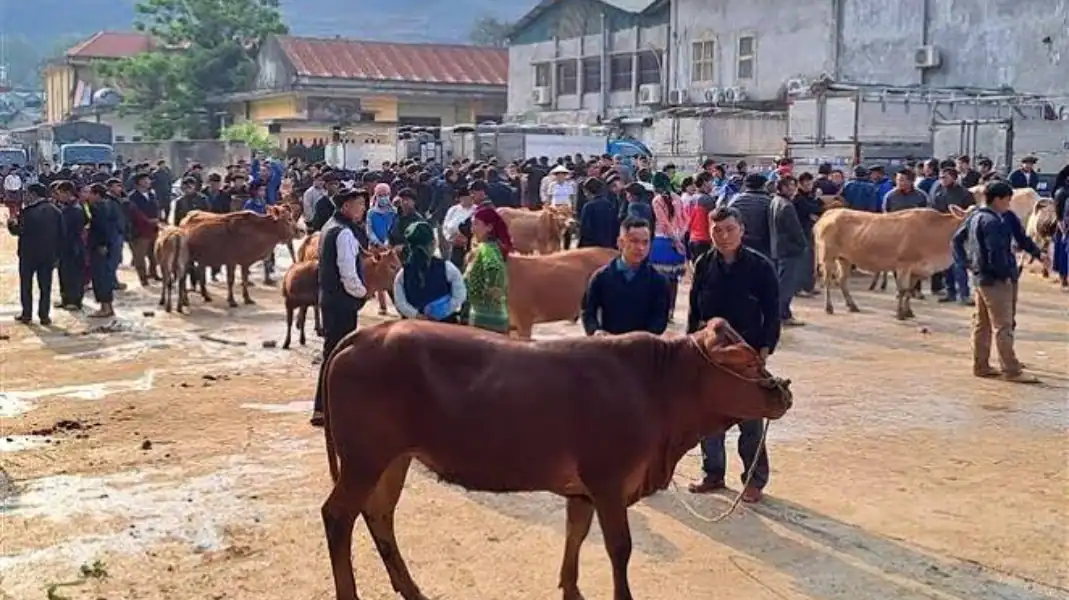
The outdoor livestock trading ring is the market’s most celebrated section. Located behind the covered market halls, this open-air space handles high-value animal sales. Here, mountain farmers sell livestock to local families, regional breeders, and traveling merchants.
Trading begins at dawn around 05:00. Buyers examine yellow cattle, water buffalos, pigs, and pack horses. These animals represent a family’s primary savings and farm labor.
Highland livestock trading follows time-tested customs:
- Physical inspection: Buyers inspect teeth to verify age and check leg joints for strength.
- Behavioral assessment: Buyers observe movement under crowded market conditions.
- Cash negotiation: Parties count cash in Vietnamese Dong without digital transfers.
- Handover rituals: Once agreed, the buyer takes the lead rope with grass for good fortune.
Walking through the livestock ring requires patience. Watch your footing and give way to handlers leading buffalos through narrow alleys.
Market Breakfast and Culinary Traditions
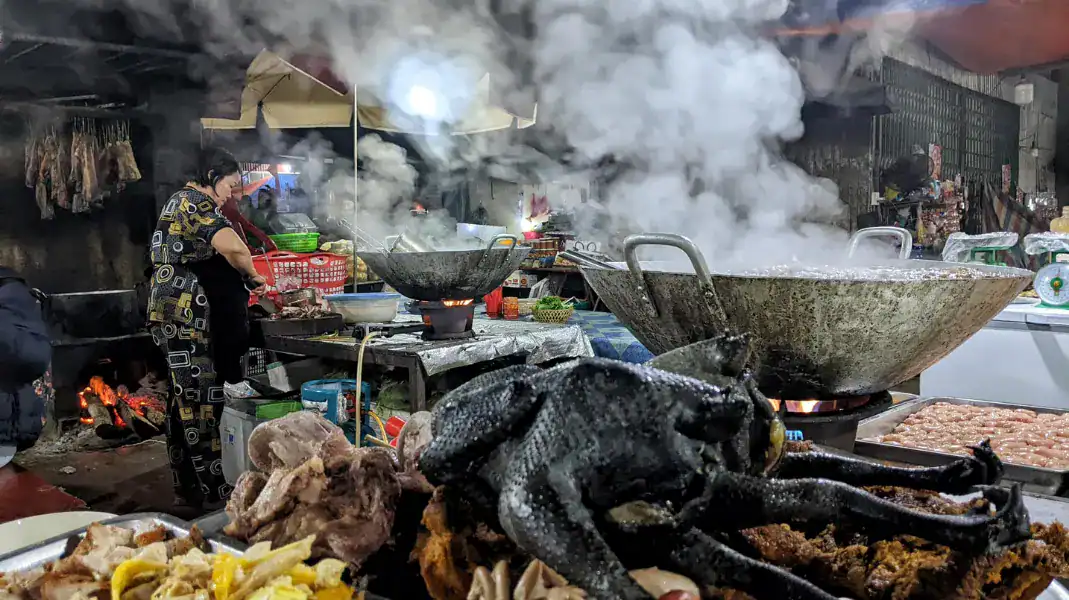
The food pavilion offers an engaging sensory encounter. Iron woks steam over wood fires, filling the air with aromas of star anise and simmering broths. Eating breakfast here connects you directly with highland hospitality.
The signature dish is Thang co. Traditionally prepared by the H’Mong, this hearty stew simmers horse meat and beef inside iron cauldrons. The broth combines star anise, cinnamon bark, and lemongrass. Diners sit together on wooden benches, dipping tender meat into chili and rock salt.
Another staple food is Men men, steamed ground cornmeal that has sustained plateau families across generations. Because rocky limestone cliffs lack water for flooded rice fields, corn serves as the primary staple crop. Dried kernels are stone-ground and steamed twice in wooden barrels. Locals eat men men alongside hot broth.
Other traditional foods to sample include:
- Buckwheat cakes (Banh tam giac mach): Steamed purple cakes made from ground buckwheat seeds, lightly sweet and earthy.
- Smoked mountain pork sausage: Seasoned with wild mountain pepper and cured over kitchen fires.
- Traditional corn wine (Ruou ngo): Fermented using highland herbal yeast, served warm into small bowls.
Stalls maintain basic hygiene for freshly boiled food. If you have a sensitive stomach, choose hot noodle soups cooked directly before you.
Navigating the dawn livestock rush requires deep regional knowledge. TVPalm designs private Ha Giang expeditions led by experienced local guides who bridge cultural boundaries respectfully.
Explore Private Ha Giang Loop ItinerariesItinerary Around the Sunday Market
To experience the Meo Vac Sunday market properly, timing is essential. Peak activity unfolds between 06:30 and 08:30, making dawn travel from distant towns impractical.
The most effective strategy is spending Saturday night nearby:
- Meo Vac Town Center: Staying in town allows you to walk to the market in five minutes at 06:00.
- Pa Vi H’Mong Village: Located four kilometers away, Pa Vi offers traditional homestays and a peaceful mountain setting.
Cross the majestic Ma Pi Leng Pass on Saturday afternoon. Riding the pass in late afternoon light provides spectacular views of the Nho Que River canyon before arriving in Meo Vac.
| Itinerary Format | Saturday Night Base | Sunday Morning Schedule | Loop Route Flow |
|---|---|---|---|
| 3 Days / 2 Nights | Pa Vi Village or Meo Vac | 06:00 – 08:30 Market exploration | Ha Giang – Dong Van – Ma Pi Leng – Meo Vac Market – Du Gia – Ha Giang |
| 4 Days / 3 Nights | Pa Vi Village homestay | 06:30 – 09:30 Market and food tasting | Ha Giang – Quan Ba – Yen Minh – Dong Van – Meo Vac Market – Du Gia – Ha Giang |
| 7 Days / 6 Nights | Meo Vac traditional lodge | 06:00 – 10:00 Deep photography & culture | Extended route linking Ha Giang Loop, Meo Vac Market, Bao Lac, and Cao Bang |
“The true magic of Meo Vac market happens in the quiet dawn before the sun clears limestone peaks. At 06:00, neighbors greet each other after a week of mountain labor. Respect that authenticity by walking gently and observing without interfering in their livelihood.”
Nguyễn Văn Trung, founder of TVPalm
Before tackling rocky passes toward Meo Vac, rest and prepare at our sanctuary in Ha Giang. Enjoy organic meals, mountain bungalows, and detailed route briefing from our professional guiding team.
Discover TVPalm Ecolodge AccommodationsCultural Etiquette and Photography Guidelines for Foreign Visitors
Meo Vac Sunday market is an active workplace, not a staged performance. Local families are conducting business essential to their household survival. Practicing responsible tourism ensures your visit leaves a positive impression on the community.
Follow these practical guidelines during your visit:
- Ask before photographing portraits: Make eye contact and gesture toward your camera before taking a portrait. A warm smile conveys respect. If someone turns away, put your camera down immediately.
- Never disrupt active trade: Keep a respectful distance when farmers negotiate cattle prices or exchange cash. Stepping between traders interrupts deals.
- Do not touch children’s heads: In highland spiritual traditions, the crown of the head holds spiritual significance. Refrain from patting children on the head.
- Avoid giving candy or money: Handing out cash or sweets encourages begging. If you wish to support youth, donate supplies through established schools.
- Dress modestly and wear sturdy shoes: Cover shoulders and knees out of respect for conservative village norms. Wear sturdy shoes, as alleys are often muddy.
- Carry small cash denominations: Bring small notes of Vietnamese Dong (10,000, 20,000, and 50,000 VND). Vendors rarely have change for large bills.
To learn more, consult our guide on ethnic village etiquette. You can also review national travel safety guidelines at Vietnam National Administration of Tourism.
Frequently Asked Questions
What is the exact best time to arrive at Meo Vac Sunday market?
The best time to arrive is between 06:00 and 06:30. At this hour, the livestock trading ring is in full swing, morning mist clings to limestone peaks, and stalls are bustling. By 09:30, livestock trading clears out.
Is the food at Meo Vac Sunday market safe for travelers to eat?
Yes, provided you choose freshly cooked, piping hot items. Soups boiled continuously before you, such as pho or clear noodle broths, are safe. Avoid raw herbs if you have a sensitive stomach. Always drink bottled water.
What is the difference between Meo Vac market and Dong Van Sunday market?
Both markets take place on Sunday mornings, located 22 kilometers apart. Dong Van market sits around an ancient French stone marketplace with souvenir stalls. Meo Vac market is larger and celebrated for its massive livestock trading ring.
Can I visit both Meo Vac and Dong Van markets on the same Sunday morning?
Visiting both is possible but not recommended. Rushing between them across Ma Pi Leng Pass takes nearly an hour. By the time you reach the second market, morning trading has finished. Dedicate your full morning to Meo Vac.
Ready to witness the vibrant colors, livestock traditions, and breathtaking landscapes of the Dong Van Karst Plateau? Let our expert team craft a private Ha Giang Loop journey tailored around the Sunday market schedule.
Book Your Private Loop ExpeditionWritten by Nguyễn Văn Trung, founder of TVPalm. He has led small-group trips across Northeast Vietnam since 2021.


