

A Dao herbal bath is a traditional hot soak in a decoction of mountain plants, taken in a wooden tub. For generations, Dao Ao Dai families in the highland villages of Ha Giang have gathered medicinal forest plants to warm the body and rest after demanding physical labor in a cold, damp climate.
On the slopes of the Tay Con Linh range, local communities such as those in Khuoi My are Dao Ao Dai. Some households still collect wild plants and prepare herbal baths at home as part of their domestic heritage. Please note that TVPalm Ecolodge currently does not offer herbal bath services on-site.
This guide explains what the traditional bath entails, which forest botanicals are customarily used, safe soaking guidelines, and what travelers can realistically expect from a traditional hot soak.
The Dao herbal bath what it is and where it comes from?
What is a traditional Dao herbal bath?
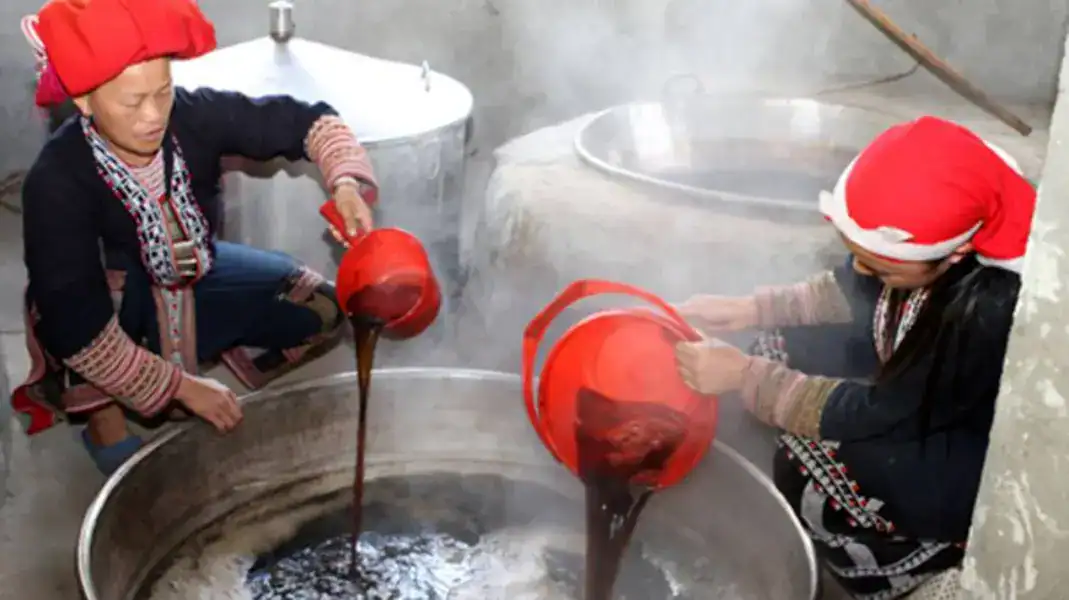
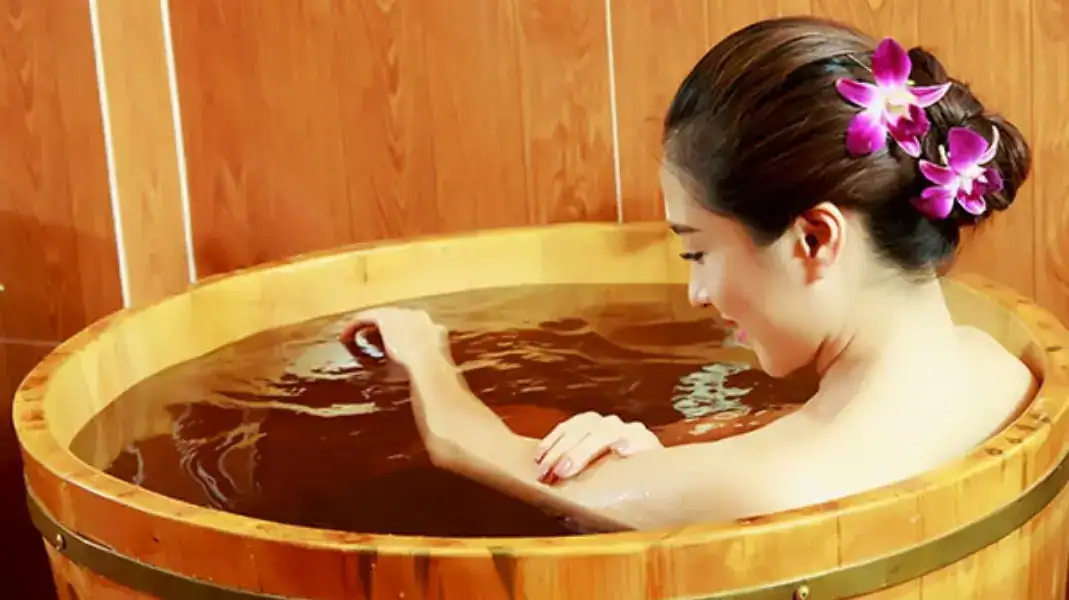
It is a restorative bath prepared by simmering dozens of wild mountain plants in water over a wood fire for several hours, then pouring the hot liquid into a round wooden tub. The tub is traditionally crafted from mature Po Mu wood (Fujian cypress).
In the mountains of Ha Giang, this herbal bathing heritage is preserved primarily by the Dao Ao Dai people living across the foothills and ridges of the Tay Con Linh mountain range.
The resulting liquid is deeply aromatic, dark reddish-brown, carrying a distinct earthy, camphor, and evergreen scent that fills the room as soon as the hot bathwater is poured.
Local households use either fresh or sun-dried leaves, barks, and roots collected from the surrounding primary forest. Specific recipes vary from one family to the next, representing cherished household heritage rather than a standardized commercial formula.
| Botanical & Traditional Parameter | Specification Detail |
|---|---|
| Plant Ingredient Count | 30 to 50 indigenous forest botanical species |
| Primary Ethnic Custodians | Dao Ao Dai mountain communities in Ha Giang |
| Traditional Soaking Vessel | Hand-carved round barrel of native Po Mu wood (Fokienia hodginsii) |
| Optimal Soaking Temperature | 37°C to 40°C (98.6°F to 104°F) |
| Recommended Soaking Duration | 15 to 20 minutes (Maximum 25 minutes) |
| Primary Traditional Purpose | Warming the body, easing muscular tension, and thermal comfort |
| Primary Geographic Hub | Tay Con Linh Range and highland hamlets of Ha Giang |
What a traditional herbal soak can do for you
1. Easing tired muscles after a trek
After a day traversing steep, muddy mountain ridges, legs and lower back muscles feel fatigued. Immersing in warm water helps relax tight muscles and eases physical stiffness, providing general thermal relief.
Many hikers report feeling refreshed the following morning. Local families cherish the soothing properties of the forest plants, though these traditional practices have not been evaluated as clinical therapies.
2. Restoring warmth in the cold season
Cold, damp winters in the northern highlands bring persistent chill. Dao Ao Dai households traditionally rely on warm herbal soaks using plants such to warm the body and comfort stiff joints.
3. Refreshing the skin after the trail
A warm soak helps rinse away trail sweat and dust, leaving the skin feeling clean and refreshed. However, individuals with sensitive skin, allergies, or open scrapes should exercise caution and test the water beforehand.
4. A cultural custom after childbirth
Within Dao cultural tradition, herbal bathing is closely connected to maternal care: new mothers traditionally take warm herbal baths in the days following childbirth. This is a private familial tradition and should not be treated as a medical protocol by visitors.
5. Relaxation and restful sleep
The gentle warmth and natural forest aromas encourage a calm state of mind, helping many travelers sleep soundly after a physically demanding day in the mountains.
The plants and the wooden tub
Plants commonly used in local preparations
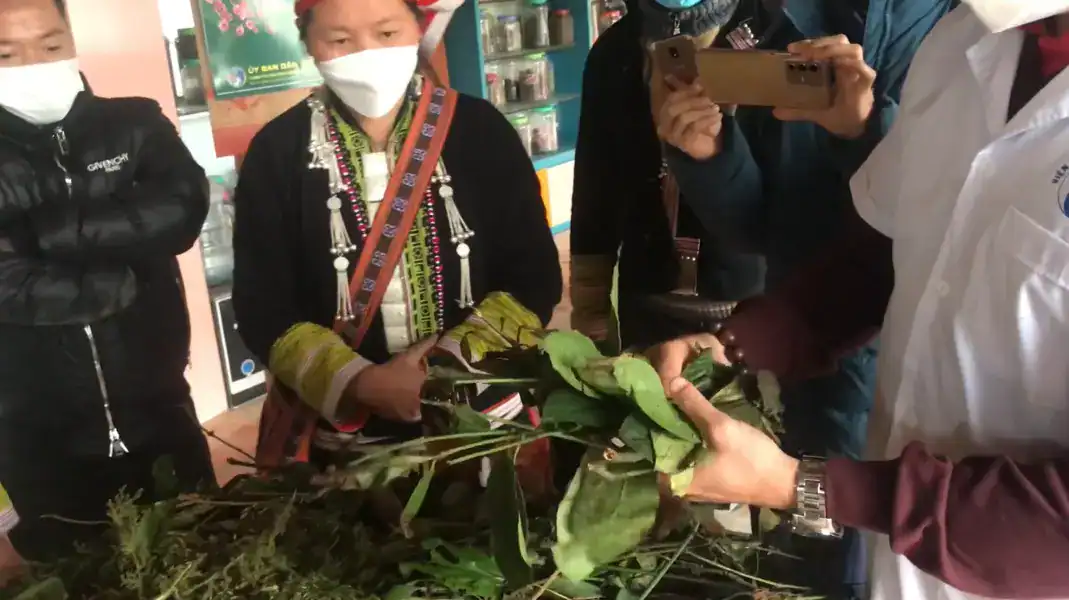
Traditional herbal baths may use a combination of aromatic leaves, roots, rhizomes, bark, and other locally gathered plants. The exact ingredients vary depending on local traditions, seasonal availability, and the preparation method.
- Sambucus javanica (com chay): A native elderberry species traditionally used in warm soaks for tired joints.
- Homalomena occulta (thien nien kien): An aromatic forest rhizome customarily used to ease stiffness.
- Cinnamomum cassia (que rung): Wild cinnamon bark providing warmth and a pleasant natural scent.
- Litsea cubeba (mang tang): Mountain pepper fruit with a fresh citrus and camphor aroma.
- Elsholtzia (chua du): A fragrant herb traditionally used to freshen the skin.
- Gynura procumbens (kim that): A resilient forest herb valued in traditional household remedies.
Ingredient note: The botanical names and local names should be checked against the actual plants used in the preparation. This list describes ingredients, not proven medical benefits.
Why the tub is made of Po Mu wood?
Dao families prefer round tubs crafted from Po Mu wood (Fokienia hodginsii) because the dense wood retains heat effectively and releases a subtle, natural resinous fragrance when heated.
The Fokienia hodginsii tree, commonly known as Fujian cypress, grows on mist-shrouded mountain ridges above 1,000 meters. Its timber is dense, aromatic, and naturally resistant to moisture decay.
When filled with hot water, the wood expands slightly, insulating the liquid so the bath remains pleasantly warm throughout the soak.
| Tub Characteristic | Po Mu Wood Tub | Commercial Plastic / Ceramic Tub |
|---|---|---|
| Thermal Retention | High; thick natural wood walls insulate hot water effectively | Low; heat dissipates more rapidly through thin walls |
| Aromatic Quality | Releases natural evergreen resins when filled with hot water | Neutral or synthetic odor |
| Moisture Resistance | Dense natural wood grain naturally withstands highland dampness | Non-porous synthetic surface |
| Tactile Comfort | Smooth, organic wood grain with natural seating contour | Cold, rigid synthetic surface |
How to take a traditional herbal bath safely
Step-by-step guidance
Follow these practical steps to ensure a comfortable and safe experience:
- Step 1: Take a preliminary warm rinse: Wash away trail dust, sunscreen, and insect repellent with clean warm water before entering the tub.
- Step 2: Check the water temperature: Test the water with your forearm. It should feel pleasantly warm between 37°C and 40°C, never scalding or painful.
- Step 3: Ease in gradually: Sit inside the barrel with water reaching waist height for the first two minutes to allow your body to comfortably adjust to the heat.
- Step 4: Submerge to chest level for 15 to 20 minutes: Relax, breathe slowly, and avoid vigorous scrubbing. Limit your soak to 20 minutes maximum.
- Step 5: Exit slowly and dry off: Step out carefully onto a dry mat, wrap yourself in a towel, keep warm, and sip a warm cup of green tea or ginger water.
Safety precautions and “say thuoc”
Immersing in hot water naturally widens superficial blood vessels and can cause a temporary dip in blood pressure. Soaking for too long can bring about a sensation known locally as say thuoc (herb dizziness).
Common signs include light-headedness, flushed skin, or sudden sleepiness. If you begin to feel dizzy, step out calmly, sit in a well-ventilated area, and drink warm water. To stay safe:
- Limit soaking to 15-20 minutes: Never exceed 25 minutes, even if the water feels pleasant.
- Do not bathe on an empty stomach or after consuming alcohol: Both significantly increase the risk of dizziness.
- Consult a doctor first: Individuals with heart conditions, high blood pressure, pregnant travelers, or those with open wounds should avoid hot herbal baths.
- Keep your head and eyes above water: Concentrated botanical vapors can irritate sensitive eyes.
Traditional Dao herbal baths: common questions
How long should I stay in a herbal bath?
Between 15 and 20 minutes is optimal. Less than 10 minutes is too short to experience full relaxation, while more than 25 minutes increases the likelihood of dizziness and say thuoc.
Does TVPalm Ecolodge provide herbal baths?
No. TVPalm Ecolodge does not offer herbal bath services. Herbal bathing remains an indigenous home custom practiced by local Dao Ao Dai families in their own households.
How can you identify an authentic herbal preparation?
A genuine family preparation uses freshly harvested wild leaves, barks, and roots boiled outdoors in a large cauldron for several hours. The resulting brew is dark and carries a natural earthy, herbal scent, poured directly into a solid wooden tub.
Commercial sachets or powdered extracts in tap water often smell of synthetic fragrances and lack the authentic botanical richness of a slow-simmered forest decoction.


