


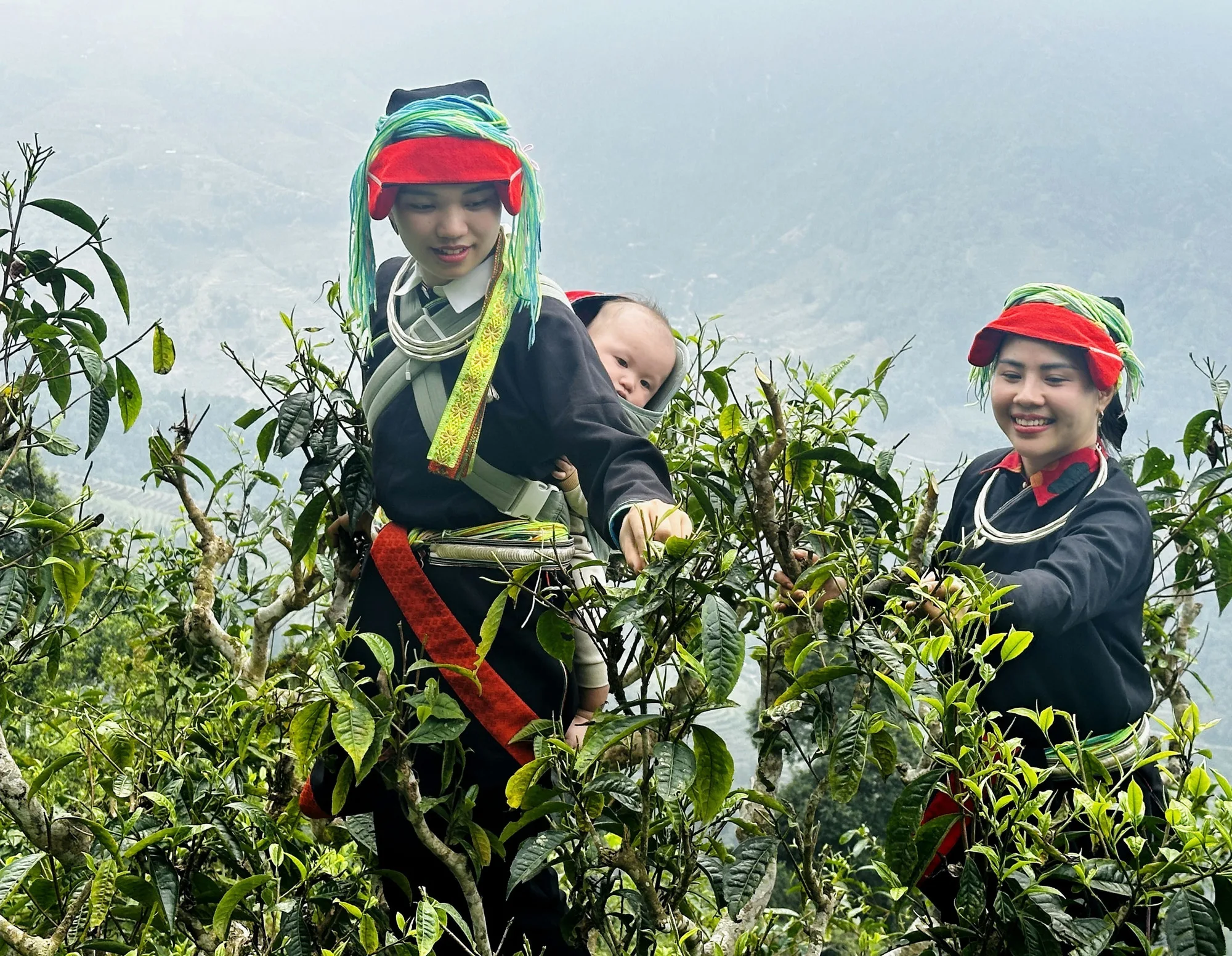
The Dao of Ha Giang (part of Tuyen Quang province since July 2025) have used forest plants for healing for generations. On Tay Con Linh, Dao Ao Dai families still gather leaves, bark and roots for teas, compresses and hot baths.
I am not a doctor, and this is not medical advice. What I can share is how these traditions are used in the villages, what is known about the plants, and how to approach them sensibly as a visitor.
The knowledge is passed down within families, mostly by word of mouth and by working side by side in the forest.
Where Dao plant knowledge comes from
Dao plant medicine grew out of life in the mountains, far from towns and hospitals.
Dao communities in Ha Giang live in places such as Hoang Su Phi, Quan Ba and the slopes of Tay Con Linh. Cold winters, wet seasons and hard physical work shaped what people needed from the forest.
Over generations, families learned which plants to use and how, by smell, taste and experience.
In many Dao families, women hold much of the everyday knowledge of plants, especially for baths and for care after childbirth.
Children learn by going into the forest with their mothers and grandmothers and watching what they pick.
Ritual masters keep books written in Nom Dao for ceremonies. Everyday plant knowledge, however, lives mainly in families, not in books.
Family knowledge, kept at home
In many Dao kitchens you will see bundles of dried leaves and roots hanging above the fire, ready for use.
Each family has its own mixes and its own way of preparing them. They rarely share the full recipe with outsiders, and that should be respected.
Some knowledge is tied to ritual, and is handled by the ritual master rather than the family.
For the Dao, healing is not only about the body. The way a plant is picked, and respect for the forest, are part of it.
The plants and how they are used
Dao families draw on plants from many parts of the forest: herbs from the forest edge, shrubs along streams, bark and roots from older trees.
Researchers in Vietnam have documented the medicinal plant knowledge of Dao communities, and Vietnam’s national tourism body lists some of the plants commonly found in Dao bath mixes.

A few plants often found in Dao baths
The table below lists a few plants that are widely mentioned in Dao bath mixes. Every family’s recipe is different.
| Plant (Vietnamese name) | Botanical name | Part used in the bath |
|---|---|---|
| Elderberry (cơm cháy) | Sambucus javanica | Stems and leaves |
| Vietnamese balm (kinh giới) | Elsholtzia ciliata | Leaves and flowering stems |
| Cinnamon (quế) | Cinnamomum cassia | Bark and leaves |
How a herbal bath is prepared
Fresh or sun-dried plants are chopped and boiled for hours in a large pot over a wood fire.
The hot liquid is poured into a wooden tub, often in a small closed room so the steam stays in. Cool water is added until the temperature is comfortable.
The forest gives as long as people take with care. That is how Dao families think about medicine, and it is why we always talk about these plants with respect.
Nguyễn Văn Trung, Founder, TVPalm
How the plants are used in daily life
In daily life, Dao families use plants in baths, foot soaks, steam and drinks.

After childbirth
The best-known use of the Dao herbal bath is for women after childbirth. Vietnam’s national tourism body notes that the bath is traditionally prepared for women about a week after giving birth.
It is part of a wider set of care customs after childbirth, which differ from family to family.
We do not make medical claims about this practice. Any woman who has recently given birth should follow her own doctor’s advice.
For Dao women it is a family tradition and a moment of care after a hard time.
After a long day of walking
For travellers, a warm herbal bath after a day on the mountain can simply feel very good.
Traditionally, the bath is used to ease muscle and bone aches and to warm the body in cold weather. Enjoy it for what it is: warmth, steam and the smell of the forest.
- Warmth: A warm bath relaxes tired muscles after a long walk.
- Steam and scent: Many people find the smell of the plants calming.
- Rest: After a bath, most people sleep well. For more on the bath itself, see our article on Dao herbal baths.
Foot soaks and drinks
When a full bath is not possible, families use a smaller pot of herbs for the feet, often with ginger.
A warm foot soak before bed is a simple pleasure after a day of walking.
Dao families also make drinks from leaves and roots.
These are everyday drinks in many houses, offered to guests and to family alike. Ask what is in your cup, and drink in moderation if you are not used to it.
Respect for the forest, and for your own health
As herbal products become more popular, some wild plants are picked more than the forest can bear. Dao families have their own customs for taking care.
Customs for the forest
Customs differ from village to village, but some principles are common:
- Do not take everything: Leave enough of each plant so it grows back.
- Do not pull up the root: When possible, cut stems and leaves and leave the plant alive.
- Protect the forest above the springs: Many villages protect the forest around their water sources by custom.
- Grow what you can: Some families plant medicinal herbs near the house, so they need to gather less from the wild.
Advice for travellers
A hot herbal bath is not for everyone. Keep it simple and safe:
- Keep it short: 15 to 20 minutes is enough. Get out at once if you feel dizzy or unwell.
- Drink water: Drink before and after, especially after a long walk.
- Check your health first: If you have heart problems, high blood pressure, skin conditions or are pregnant, ask your doctor before trying a hot bath.
- Choose the right season: A hot bath feels best in the cool months, from autumn to spring.
Frequently asked questions
What is Dao herbal medicine used for?
Traditionally, Dao families use plants for care after childbirth, for aches and pains, and to keep warm in cold weather. These are traditional uses, not proven medical treatments.
How many plants go into a Dao herbal bath?
It depends on the family. Vietnam’s national tourism body says ten or more ingredients is common. Each family keeps its own recipe.
Why do some people feel dizzy in a herbal bath?
Hot water and steam in a small room make the blood vessels widen and can lower blood pressure for a while. Keep the bath short, drink water and get out slowly.
Is a Dao herbal bath safe if I am pregnant or have a health condition?
If you are pregnant or have heart problems, high blood pressure or another health condition, ask your doctor first. When in doubt, don’t. TVPalm Ecolodge does not offer herbal baths yet.
Walk up Tay Con Linh with TVPalm See our 3 days 2 nights Tay Con Linh trekking tour.


