

The Meo Vac Sunday Market is Northern Vietnam’s largest and most culturally vibrant weekly gathering, held every Sunday morning in Meo Vac town from 6:00 AM to 11:30 AM.
At TVPalm Adventure, we design custom Ha Giang Loop itineraries that synchronize overnight stays in Meo Vac on Saturday evenings so travelers can experience the bustling livestock auctions, textile bazaars, and traditional food halls at dawn.
This comprehensive guide details trading schedules, market geography, culinary specialties, photography etiquette, and itinerary planning for respectful exploration.
Understanding the Meo Vac Sunday Market & Culture
Atmosphere and Origins of the Sunday Gathering
The Meo Vac Sunday Market is a weekly high-altitude commercial and social assembly that draws thousands of ethnic minority villagers across Meo Vac District and neighboring mountain communes.
Located at the southeastern terminus of the legendary Ma Pi Leng Pass, the market functions as the primary economic hub for the Hmong people (White H’mong, Flower H’mong), Dao, Tay, Giay, and Lo Lo ethnic groups.
Unlike tourist souvenir markets in lowland cities, Meo Vac remains an authentic, working trade gathering.
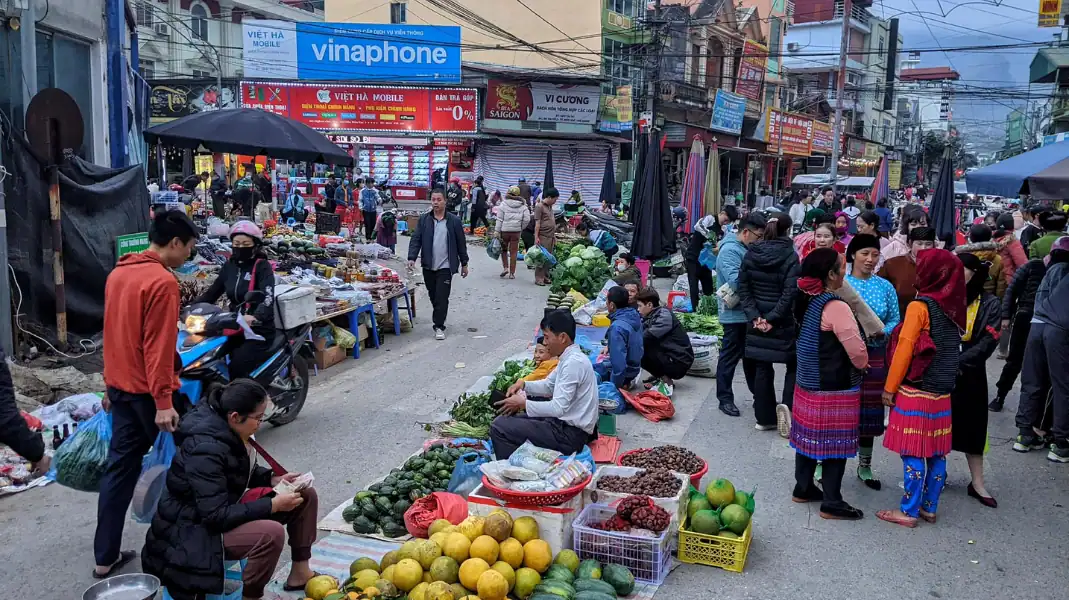
Villagers hike several hours through rugged karst trails before dawn, leading water buffaloes on tethered ropes, carrying bamboo back-baskets filled with mountain vegetables, and dressing in their finest handmade hemp and indigo attire to trade goods, negotiate livestock prices, and socialize with distant relatives.
| Market Zone & Section | Primary Goods & Transactions | Peak Operating Hours | Atmosphere & Sensory Profile |
|---|---|---|---|
| Cattle & Livestock Enclosure | Highland yellow cows, water buffaloes, native pigs, goats | 06:30 AM – 09:30 AM | Intense, fast-paced; physical appraisal of horns, teeth, and muscle mass |
| Outdoor Agrarian Bazaar | Wild honey, Shan Tuyet tea, mountain ginger, seasonal greens | 06:00 AM – 10:30 AM | Earthy, colorful; gentle barter between female farmers and foragers |
| Traditional Textile Alley | Handwoven hemp cloth, indigo textiles, beeswax batik, silver clasps | 07:30 AM – 11:00 AM | Highly photogenic; vibrant embroidery displays and custom tailoring |
| Central Culinary Hall | Steaming cauldrons of Thang Co, men men, buckwheat cakes, pho chua | 07:00 AM – 11:30 AM | Aromatic, smoky woodfires; lively toasts with homemade corn wine |
The Famous Meo Vac Cattle Market: Trading Protocols
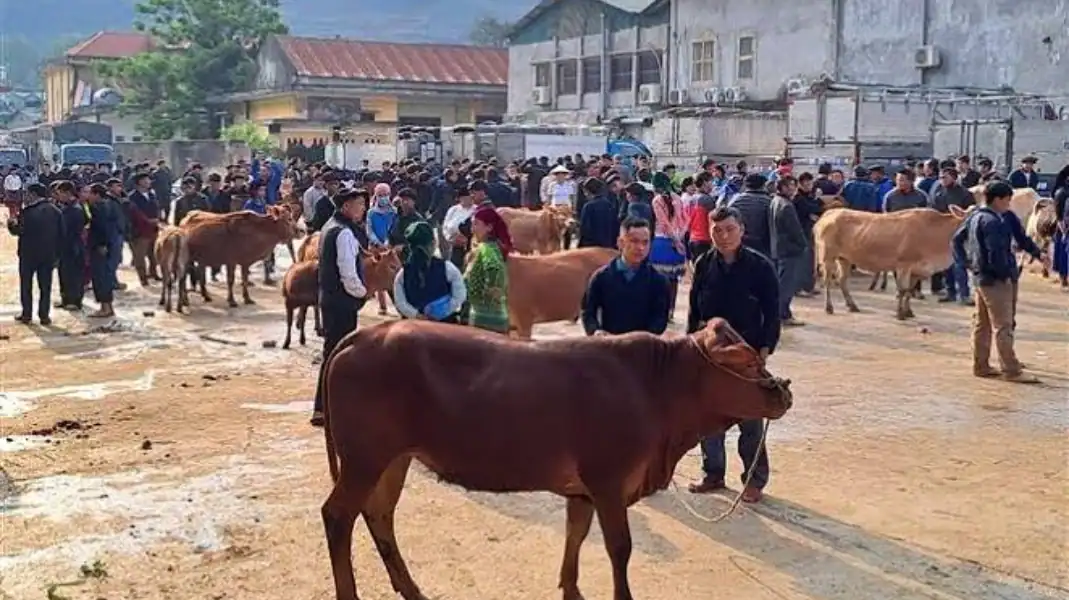
The open-air livestock section, situated in a dedicated walled compound at the rear of the main municipal market, is the undisputed focal point of Meo Vac. It is widely recognized as the largest live animal auction in the northern borderlands.
Trading begins at first light around 6:30 AM. Hundreds of highland yellow cattle and muscular water buffaloes stand shoulder to shoulder, tethered to wooden posts and stone rings. Buyers, often professional livestock traders from lowland provinces or local farmers seeking draft animals for spring terracing, circle each animal methodically:
- Physical Inspection: Buyers inspect an animal’s hooves for structural cracks, pry open jaws to check dentition and calculate age, and press knuckles into the flank to evaluate meat density and stamina.
- Price Negotiation: Unlike retail shops, price bargaining is rapid, direct, and conducted entirely in cash. A healthy adult breeding cow commands between 18,000,000 and 35,000,000 VND ($720 to $1,400), while mature water buffaloes exceed 40,000,000 VND ($1,600).
- Peripheral Small Livestock: Around the perimeter, local villagers trade native black pigs carried in woven bamboo cylinders, highland goats, cages of singing nightingales, and indigenous Ha Giang hunting dogs.
Market Gastronomy and Ha Giang Loop Itinerary Planning
Traditional Gastronomy: What to Taste at the Market
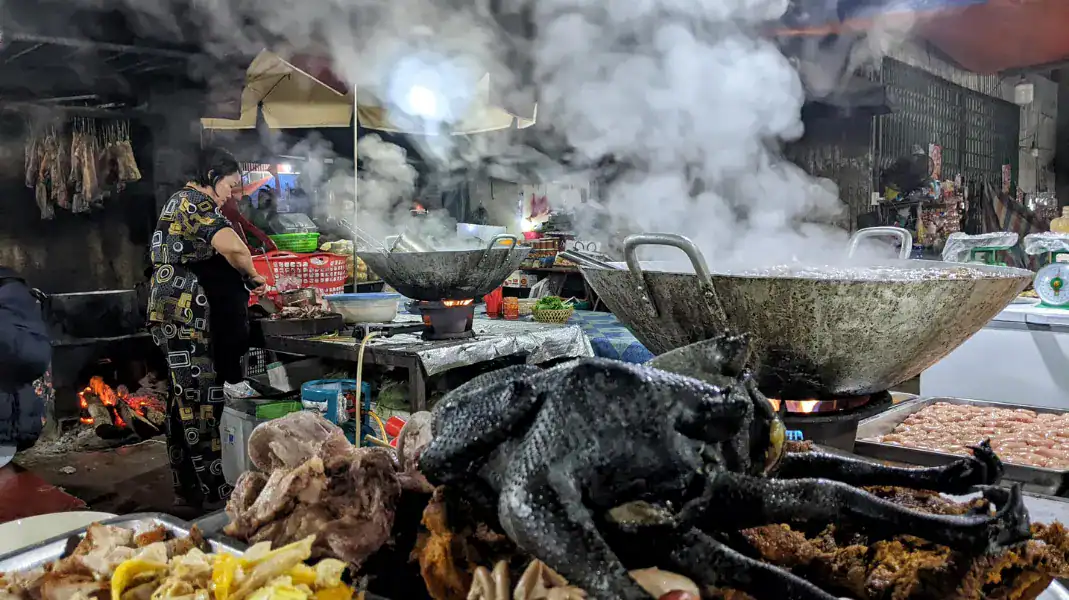
The covered culinary wing of Meo Vac Market is a sensory immersion into highland ethnic gastronomy. Woodstove hearths billow blue cedar smoke into the rafters while communal benches fill with lively groups of friends:
- Thang Co (Traditional Horse Meat Stew): The signature mountain dish of the Hmong people. Coarse chunks of horse meat, beef, organs, and bone marrow simmer for hours inside giant iron cauldrons seasoned with cardamom, star anise, cinnamon bark, and wild pepper (hat doi). Served piping hot with a side bowl of fresh chili paste and fragrant mountain mint.
- Men Men (Steamed Ground Cornmeal): The ancient staple food of the high karst plateau. Golden flint corn is finely milled with stone pestles and double-steamed in wooden barrels, creating a nutty, fluffy starch eaten alongside rich meat broths.
- Banh Tam Giac Mach (Buckwheat Cakes): Flat, circular purple-brown cakes made from roasted buckwheat seeds harvested across rocky mountain slopes. Lightly griddled over hot charcoal, they offer a tender texture and a distinctively nutty, earthy sweetness.
- Ruou Ngo Men La (Leaf-Fermented Corn Wine): High-altitude corn kernels fermented with natural medicinal wild yeast balls gathered from forest barks. Clear, potent, and smooth, corn wine is sipped ceremoniously from small porcelain bowls to cement friendships and celebrate successful trades.
How to Align Your Ha Giang Loop Itinerary with Sunday
Because the market operates exclusively on Sunday mornings and winds down by noon, independent travelers and tour groups must design their driving route to reach Meo Vac on Saturday night:
| Ha Giang Loop Duration | Optimal Departure Day from Ha Giang City | Saturday Night Overnight Base | Sunday Morning Activity |
|---|---|---|---|
| 3-Day / 2-Night Loop | Friday Morning | Meo Vac Town or Pa Vi Ethnic Village | Explore Meo Vac Market (07:00 – 10:00); ride Ma Pi Leng to Dong Van |
| 4-Day / 3-Night Loop | Thursday Morning | Meo Vac Town or Pa Vi Ethnic Village | Explore Meo Vac Market; continue south toward Du Gia waterfalls |
| 5-Day / 4-Night Loop | Wednesday Morning | Meo Vac Town or Pa Vi Ethnic Village | Full dawn market exploration; afternoon hike into Nho Que River canyon |
Staying in the nearby Pa Vi Hmong Cultural Village, situated just four kilometers outside Meo Vac town, provides tranquil traditional lodging with private rooms while keeping you within a ten-minute motorcycle ride of the market gates at dawn.
Cultural Etiquette and Photography Guidelines
Responsible Photography and Cultural Etiquette Guidelines
The Meo Vac Sunday Market is an indispensable socioeconomic lifeline for mountain families, not a staged amusement park. Foreign visitors must exercise deep cultural mindfulness:
- Always Ask Permission Before Close-Up Portraits: Make gentle eye contact, gesture toward your camera, and ask with a polite smile; respect an individual’s refusal without hesitation.
- Do Not Disrupt Active Livestock Deals: Stand at a respectful distance during cash negotiations and animal appraisals; never walk between a buyer and seller in the cattle ring.
- Avoid Crowding or Touching Children: Do not offer candy, snacks, or loose cash to local children, which encourages begging behaviors and undermines parental authority.
- Dress Modestly and Practically: Wear clothing that covers shoulders and knees; sturdy closed-toe trail shoes are essential to navigate muddy livestock enclosures.
- Bargain Gently with Artisan Weavers: Hand-embroidered hemp jackets and batik scarves represent months of artisanal labor; negotiate with good humor and pay fair prices.
- Carry Physical Cash in Low Denominations: Market vendors cannot process credit cards or digital app transfers; bring small VND bills (20,000 to 100,000 VND).
“Meo Vac on Sunday morning is the heartbeat of the plateau. It is where mountain families buy the salt, tools, and buffaloes they need to survive the coming winter. When you step into that crowded square, walk softly as a grateful guest, listen to the hum of voices, and let the real life of Ha Giang unfold around you.”
Văn Trung Nguyễn, TVPalm Adventure
Frequently Asked Questions About Meo Vac Sunday Market
What time should visitors arrive at the Meo Vac Market?
The ideal arrival time is between 6:30 AM and 7:30 AM. Arriving early allows you to witness the dramatic early morning arrival of mountain villagers leading cattle out of the dawn mist and guarantees you experience the lively livestock trades before midday heat sets in and crowds dissipate.
Is the food and Thang Co safe for foreign travelers to eat?
Food served at Meo Vac Market is prepared fresh and boiled vigorously over roaring wood hearths. Soups and grilled dishes served bubbling hot, such as pho ga or grilled buckwheat cakes, are safe for most travelers.
Those with sensitive digestive systems may want to exercise caution with rich organ meats like Thang Co or unbottled tap water, sticking to well-cooked dishes and bottled beverages.
How does Meo Vac Sunday Market compare to Dong Van Sunday Market?
Both markets take place on Sunday mornings, but they offer distinct atmospheres. Dong Van Market takes place inside a historic stone complex in Dong Van Old Quarter and attracts larger numbers of foreign tour groups.
Meo Vac Market is larger, retains a raw agricultural character, and hosts the monumental outdoor cattle auction, making it the preferred choice for cultural purists and documentary photographers.


