

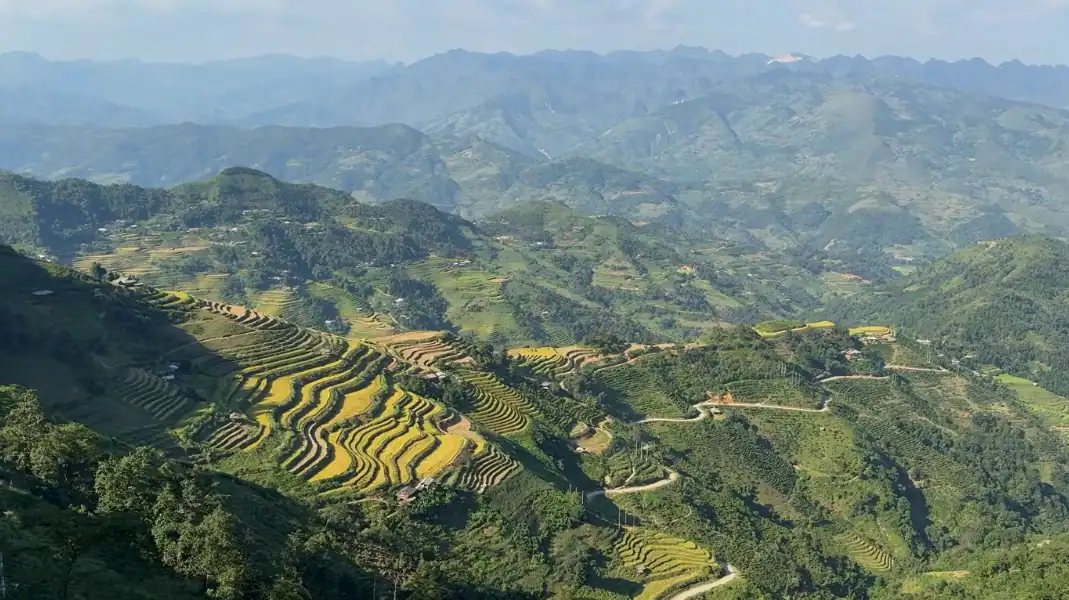
The Ha Giang Loop spans roughly 350 km of mountain road ridden over three to four days. Even as a pillion passenger, you spend four to six hours daily on a motorbike navigating steep gradients, tight hairpin switchbacks, and rapid weather shifts across Ha Giang Province.
This guide covers what genuinely protects your wellbeing: hydration, posture ergonomics, digestive care, first-aid essentials, and emergency protocols along the karst plateau.
What the mountain roads do to your body physical demands and fatigue
To stay healthy on long Ha Giang Loop tours, travelers must proactively manage windchill dehydration, physical vibration fatigue, motion sickness from hundreds of sharp switchbacks, and sudden altitude temperature shifts between river valleys and 1,500m mountain passes.
Taking ten-minute stretch breaks every hour and maintaining hydration prevents severe exhaustion.
Riding through remote karst topography challenges passenger endurance. Road vibrations transmit through the chassis into your spine and hips, while 40 km/h headwinds evaporate moisture rapidly without producing visible sweat. On famous passes like Tham Ma and Ma Pi Leng, continuous lateral forces test your core muscles and inner ear balance.

| Health Factor | Primary Risk Trigger | Preventative Action |
|---|---|---|
| Hydration & Electrolytes | Silent dehydration from windchill and mountain sun | Drink 2.5 to 3 liters daily with electrolyte packets |
| Motion Sickness | Hundreds of consecutive switchbacks and S-turns | Take Dimenhydrinate 30 mins before riding; ginger candies |
| Muscle Fatigue | Lower back and neck strain from static posture | 10-minute stretch breaks every 45 to 60 minutes |
| Altitude & Cold Air | Sudden 10C temperature drops on 1,500m high passes | Thermal windproof base layers, neck gaiter, and gloves |
| Digestive Health | Highland dietary shifts and unboiled water | Eat hot freshly cooked foods; carry Probiotics and Imodium |
Our fundamental rule: drink before you feel thirsty, put on a warm layer before ascending each pass, and get off the bike at every stop to stretch.
Ergonomic riding posture and passenger fatigue management
Sitting behind an experienced driver for up to six hours daily requires active muscular engagement. Poor posture causes premature neck spasms, shoulder stiffness, and lower-back fatigue. Practicing relaxed, biomechanically sound habits minimizes fatigue and enhances stability on our Ha Giang easy rider tours:
- Hold firmly with soft elbows: Grip grab handles or driver hips with bent elbows to absorb road bumps naturally rather than locking joints rigid.
- Lean harmoniously with the bike: Look through corners over the driver shoulder. Follow bike lean angles naturally without counter-leaning outward.
- Secure your footwork and core: Keep feet planted squarely on passenger footpegs. Squeeze knees gently during downhill braking to prevent forward sliding.
- Strap luggage to the rear rack: Never wear a heavy backpack while riding. Carrying shoulder weight compresses spinal discs and destabilizes passenger balance.
| Riding Position / Factor | Optimal Ergonomic Habit | Common Error to Avoid |
|---|---|---|
| Upper Body & Arms | Soft elbows, relaxed shoulder blades, natural lumbar curve | Locked elbows, hunching forward, tensing neck muscles |
| Cornering & Leaning | Look through corners over driver shoulder; follow bike angle | Counter-leaning outward, shifting weight abruptly mid-turn |
| Foot & Knee Placement | Balls of feet on pegs; knees hugging chassis during braking | Dangling feet toward road, splaying knees in crosswinds |
| Rest Break Schedule | Dismount every 45 to 60 mins for shoulder and hamstring stretches | Pushing three continuous hours without stopping |
Hydration, mountain weather layering and altitude management
Maintaining fluid and electrolyte balance is critical. Continuous headwinds strip moisture rapidly from respiratory airways and skin without heavy sweating. Dehydration slows reaction times, causes tension headaches, and worsens motion sickness on winding karst ascents.
Aim to drink 2.5 to 3 liters of water daily. Supplement bottled water with oral rehydration salts (ORS) or electrolyte tablets on warm ascents. Avoid excess coffee or sugary energy drinks, which act as diuretics and trigger fatigue crashes.
Mountain weather fluctuates drastically between deep valleys and high limestone passes. Before departure, check our detailed Ha Giang loop weather guide and equip yourself with a versatile three-layer clothing system:
- Breathable Base Layer: Moisture-wicking synthetic or merino wool shirt keeping skin dry during warm valley riding.
- Insulating Mid-Layer: Compact fleece or packable down jacket trapping core body heat when ascending chilly pass summits.
- Protective Outer Shell: Windproof and water-resistant riding jacket shielding against cold drafts and sudden rain.
- Neck Gaiter & Gloves: Microfiber neck buff shields against windburn, while riding gloves keep fingers warm and nimble.
Water safety, mountain food choices and digestive health
Gastrointestinal distress can easily disrupt a multi-day mountain expedition. Remote highland villages rely primarily on mountain spring catchments rather than municipal treatment facilities, making strict food and water hygiene essential throughout the circuit:
- Drink strictly bottled or boiled water: Never drink unboiled tap water from sinks or streams. Check bottle cap seals, and use bottled water when brushing teeth.
- Avoid unboiled ice in rural stalls: Factory tube ice in towns is generally safe, but avoid crushed block ice in remote roadside stalls.
- Choose piping hot freshly cooked dishes: Enjoy steaming broths, stir-fried vegetables, and freshly cooked meats. Eat peelable fruits like bananas. Explore safe regional dishes in our guide to local foods to try in Ha Giang.
- Avoid high-risk items: Strictly refuse raw blood pudding (tiet canh), which carries severe bacterial infection risks (Streptococcus suis), and undercooked pork.
- Moderate corn wine (“Happy Water”): Local corn wine (ruou ngo) is offered at homestay dinners. Sip politely to honor hosts, but avoid heavy drinking before long riding days.
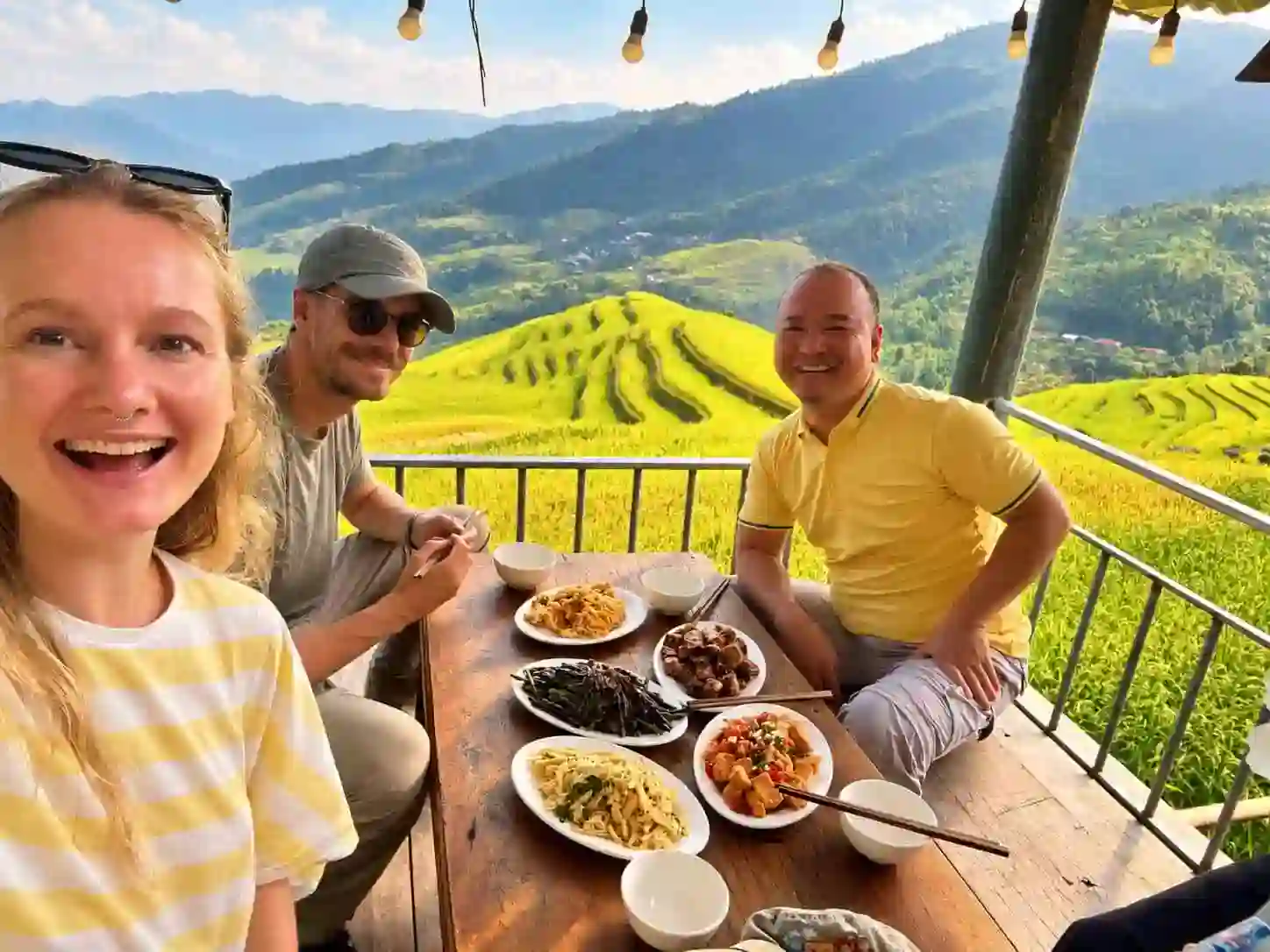
Sharing family dinners is a trip highlight. Read our guide to the homestay experience in Ha Giang for practical etiquette on village dining.
Medical facilities on the Loop and emergency protocols
Healthcare infrastructure along the remote border is basic. Knowing available medical help ensures calm decisions if illnesses or injuries occur:
- District Health Centers (Trung Tam Y Te Huyen): Clinics in Quan Ba, Yen Minh, Dong Van, and Meo Vac handle wound dressing, sprains, IV rehydration, and basic antibiotics. Guides assist with translation.
- Provincial General Hospital (Benh Vien Da Khoa Tinh Ha Giang): Located in Ha Giang City, this 500-bed facility handles surgical care, diagnostic imaging, and orthopedic treatment.
- Emergency Medical Evacuation to Hanoi: For severe trauma, patients are stabilized before road transfer. Ambulance transport to Hanoi international hospitals takes approximately six hours.
- Comprehensive Travel Insurance: Ensure your insurance explicitly covers motorbike riding as passenger or operator, with at least $50,000 emergency evacuation coverage.
Health and first-aid checklist
Carrying a compact, well-organized personal medical kit in a waterproof daypack pouch prevents small physical ailments from spoiling your tour. Pack your medical essentials with easy accessibility:
- Wound Cleansing & Dressings: Povidone-iodine wipes, sterile gauze pads, adhesive tape, elastic bandage for sprains, and blister plasters.
- Pain & Inflammation Relief: Paracetamol or Ibuprofen to treat tension headaches, neck stiffness, and muscle fatigue after long riding days.
- Motion Sickness Management: Dimenhydrinate (Nautamine) or ginger tablets, taken 30 minutes before winding mountain passes.
- Gastrointestinal Support: Loperamide (Imodium), activated charcoal tablets, and 4 to 6 oral rehydration salt (ORS) sachets.
- Allergy & Insect Defense: Antihistamine tablets (cetirizine) for dust allergies, plus DEET 20%+ insect repellent for evening homestay outdoor settings.
- Skin & Eye Protection: Water-resistant SPF 50+ sunscreen, UV lip balm, and lubricating saline eye drops to rinse out road dust.
- Prescription Medications: Personal inhalers, daily medications, and prescription copies in a waterproof pouch. See our outdoor trekking packing list for complete gear advice.
Frequently asked questions
Is altitude sickness a genuine risk on the Ha Giang Loop?
Acute Mountain Sickness is unlikely. Highest passes like Ma Pi Leng sit between 1,200m and 1,500m elevation, well below the 2,500m threshold where altitude sickness typically occurs. Rapid ascents and chilly winds can cause mild sinus headaches if dehydrated or under-dressed. Warm layers and electrolyte water resolve symptoms quickly.
What medical facilities exist along the Loop if I become ill?
District clinics in Quan Ba, Yen Minh, Dong Van, and Meo Vac treat minor injuries, wound cleaning, basic medications, and IV hydration. Ha Giang Provincial General Hospital in Ha Giang City provides advanced surgical care and imaging. Critical emergencies require transfer to Hanoi international hospitals.
Can travelers with mild asthma or dust allergies complete the Loop safely?
Yes. Dry conditions can produce limestone dust on road stretches. Wear a well-fitting KN95 mask under your helmet, keep your inhaler easily accessible in an outer jacket pocket, and pack saline eye drops to rinse out dust at rest stops.
Does standard international travel insurance cover easy rider motorbike tours in Vietnam?
Not automatically. Many policies exclude motorized two-wheelers or restrict coverage to 50cc scooters. Check that your policy covers riding as a pillion passenger on motorcycles up to 150cc and includes emergency medical evacuation.
Written by Nguyễn Văn Trung, founder of TVPalm. He leads small-group trips across Northeast Vietnam.
Planning your own Loop? See the TVPalm 3 days 2 nights Ha Giang Loop with an easy rider and hotel or homestay stays along the route.
Before you book, read how to choose a Ha Giang Loop tour company: safety, insurance and who actually runs the trip.
Finished the Loop and not ready for the bus back? After the Loop is one or two nights at our lodge, 25 minutes from Ha Giang city, with meals from our garden and one price.
Not sure what travel insurance to take? Read our travel insurance guide for the Ha Giang Loop and trekking.


