

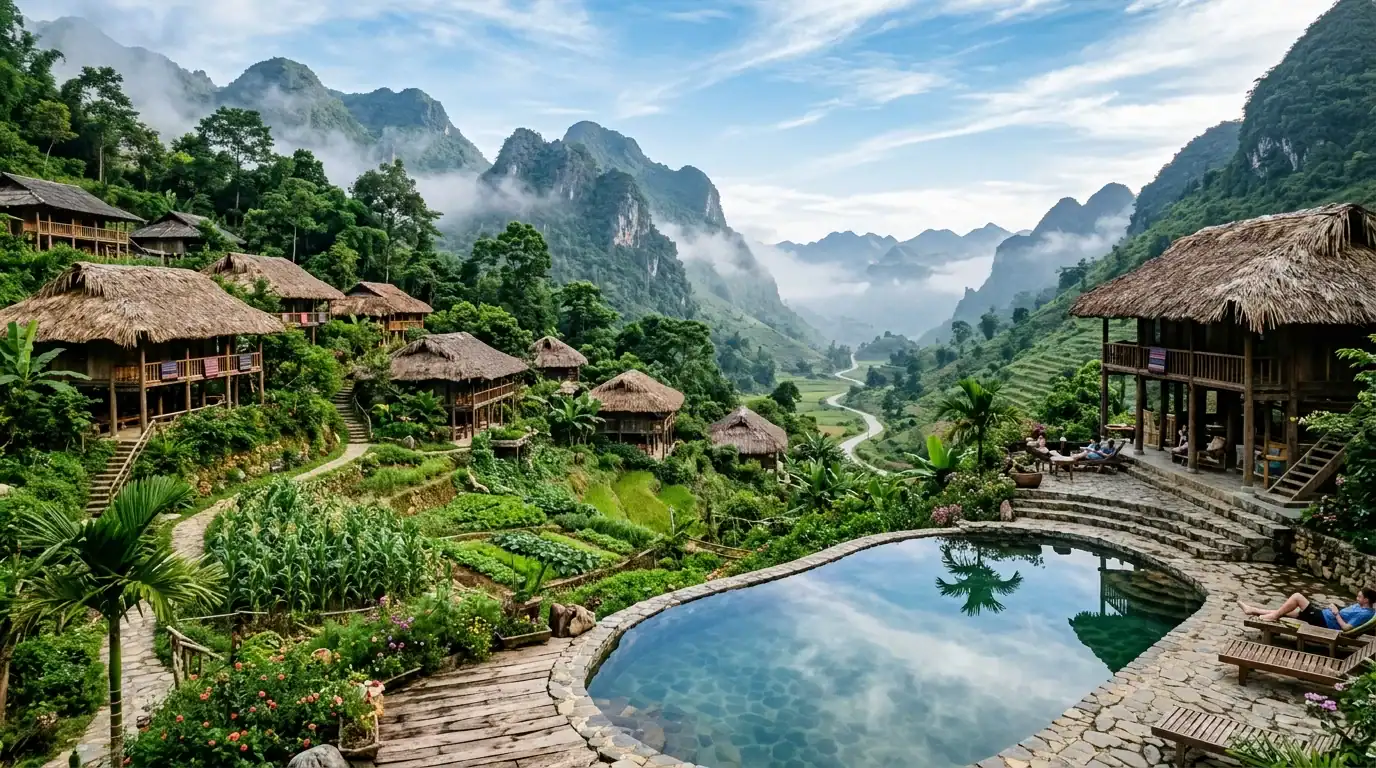
The best eco lodge in Ha Giang provides an immersive mountain sanctuary that balances authentic ethnic architecture with low-impact conservation practices and regenerative hospitality. Situated across high karst valleys and mist-shrouded tea foothills, premier properties like TVPalm Ecolodge offer private wooden bungalows, spring-fed natural swimming pools, and certified organic farm-to-table dining.
Choosing a verified eco lodge ensures your highland journey directly supports indigenous village communities while safeguarding the fragile primary rainforest ecosystems of Northern Vietnam.
What Defines an Authentic Eco Lodge in Ha Giang?
An authentic eco lodge in Ha Giang is an environmentally responsible accommodation facility designed to minimize ecological disturbance while actively empowering indigenous highland communities.
In a region where mass tourism often leads to rapid concrete construction and cultural commodification, verified eco lodges operate under strict sustainability standards that protect native biodiversity and heritage.
When selecting sustainable lodging in Ha Giang, look for properties that fulfill five essential operational pillars:
- Vernacular Low-Impact Architecture: Structures constructed primarily from local renewable materials such as bamboo, sustainably harvested timber, thatch palm leaves, and natural river stone rather than industrial concrete.
- Zero Single-Use Plastics and Chemical-Free Cleaning: Rigorous elimination of disposable plastic bottles, single-use toiletries, and harsh chemical cleaners, replacing them with reusable glass carafes and botanical soapnut detergents.
- Fair-Wage Local Employment: Over 70% of permanent operational staff hired directly from surrounding ethnic minority hamlets (Dao, Tay, Hmong), ensuring tourism revenue remains within the indigenous mountain economy.
- Closed-Loop Farm-to-Table Gastronomy: Onsite organic gardens supplying seasonal vegetables and herbs, complemented by local smallholder farm sourcing to eliminate food transport emissions.
- Water and Energy Stewardship: Gravity-fed mountain spring water filtration systems, natural greywater wetland filtration, and low-energy architectural layouts utilizing natural valley breezes for cross-ventilation.
Top 6 Best Eco Lodges in Ha Giang Ranked
Ha Giang Province spans distinct geographical territories, from the sub-alpine tea ridges of Tay Con Linh to the terraced rice amphitheatres of Hoang Su Phi and the UNESCO Global Geopark in Dong Van. The following verified eco lodges represent the finest sustainable hospitality options across these diverse northern landscapes.
| Eco Lodge Name | Geographic Location | Signature Eco Feature | Accommodation Style | Price Range / Night | Best Suited For |
|---|---|---|---|---|---|
| 1. TVPalm Ecolodge | Phuong Do, Ha Giang City | Spring-fed pool, 2 ha organic garden, 70%+ local staff | Private wooden bungalows & traditional stilt house | $45 to $95 USD | Pre/post loop sanctuary, trekking gateway, wellness seekers |
| 2. Panhou Retreat | Thong Nguyen, Hoang Su Phi | Natural hot spring baths, botanical herbal medicine park | Rustic garden chalets built along riverbanks | $90 to $160 USD | Deep luxury wellness, rainforest relaxation, couples |
| 3. Hoang Su Phi Lodge | Nam Hong Village, Hoang Su Phi | Overlooking cascading rice terraces, Red Dao cultural hosts | Thatched-roof stilt bungalows on stilts | $55 to $110 USD | Photographers, harvest season hikers, cultural immersion |
| 4. Ha Giang Ecolodge | Thon Tha Village, Ha Giang | Set in preserved Tay village, palm-leaf roofing | Communal stilt lodge & private rooms | $35 to $70 USD | Budget-conscious eco travelers, cycling enthusiasts |
| 5. Meo Vac Clay House | Pa Vi Village, Meo Vac | Traditional Hmong rammed-earth clay wall architecture | Boutique heritage lodge inside karst valley | $40 to $85 USD | Karst plateau explorers, Ma Pi Leng Pass transit |
| 6. Du Gia Panorama Ecolodge | Du Gia Valley, Yen Minh | Mountain stream setting, solar hot water heating | Valley-view wooden cabins on stilts | $30 to $65 USD | Waterfall adventurers, slow-paced loop travelers |
1. TVPalm Ecolodge: The Premier Sustainable Sanctuary
Spread across two hectares of tranquil botanical gardens in Phuong Do commune, just nine kilometers from Ha Giang city center, TVPalm Ecolodge represents the gold standard of sustainable highland accommodation.
Positioned at the foothills of the Tay Con Linh mountain range, the lodge serves as the ideal launchpad for wilderness treks and motorbike loop departures.
The architecture features hand-carved indigenous timber, local river cobblestones, and palm-leaf roofs crafted by master builders from neighboring Dao and Tay communities.
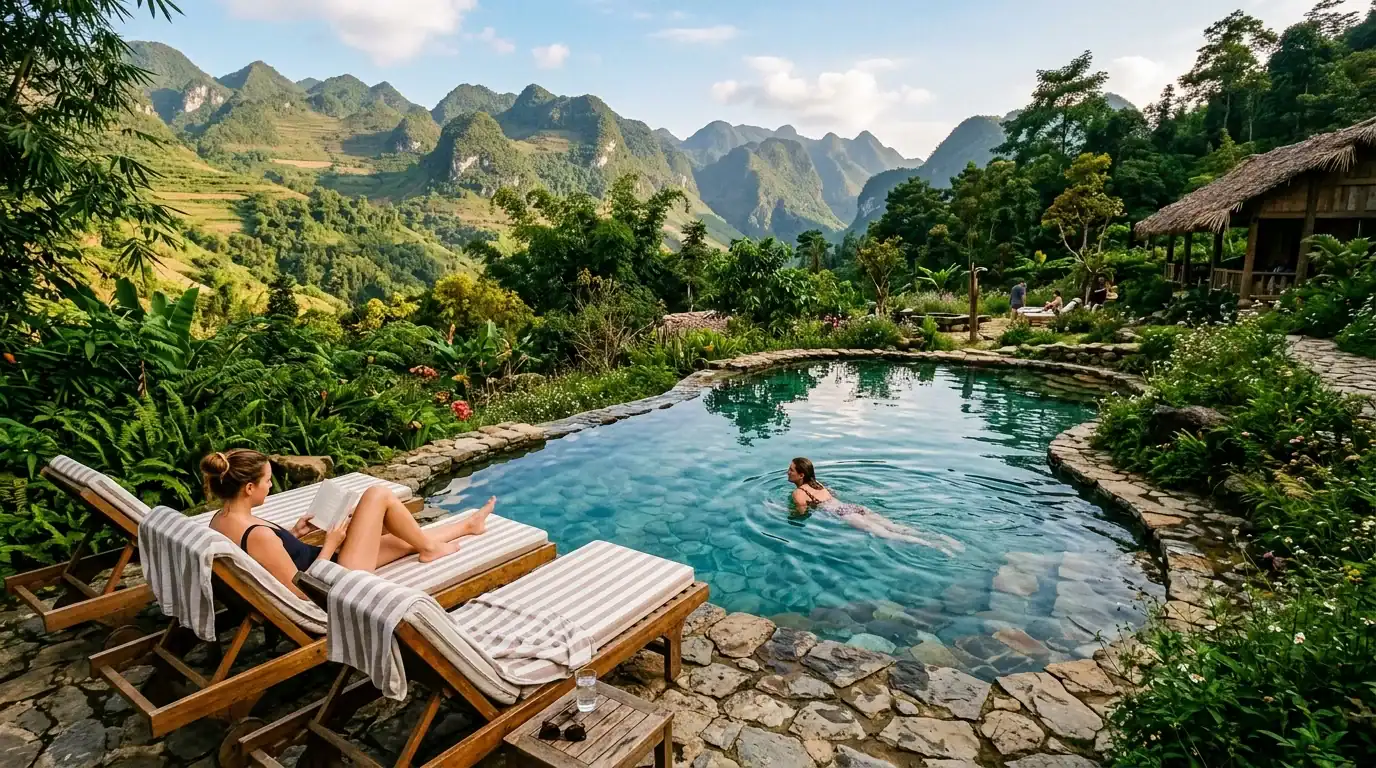
Guests can unwind in an unchlorinated, spring-fed natural swimming pool filled continuously from mountain streams, stroll through organic fruit and vegetable orchards, and savor hyper-local cuisine at The Palm Restaurant.
2. Panhou Retreat (Hoang Su Phi)
Established as one of Northern Vietnam’s pioneering ecological resorts, Panhou Retreat lies secluded in Thong Nguyen valley in Hoang Su Phi. The property focuses heavily on holistic natural wellness, offering mineral-rich spring baths, traditional herbal saunas, and medicinal therapies rooted in Red Dao ethnobotanical knowledge.
Single-story wooden chalets are scattered across dense subtropical gardens bordered by babbling mountain torrents. The retreat produces solar-heated hot water, operates gravity composting systems, and bans motor traffic inside its perimeter to maintain absolute acoustic peace.
3. Hoang Su Phi Lodge (Nam Hong)
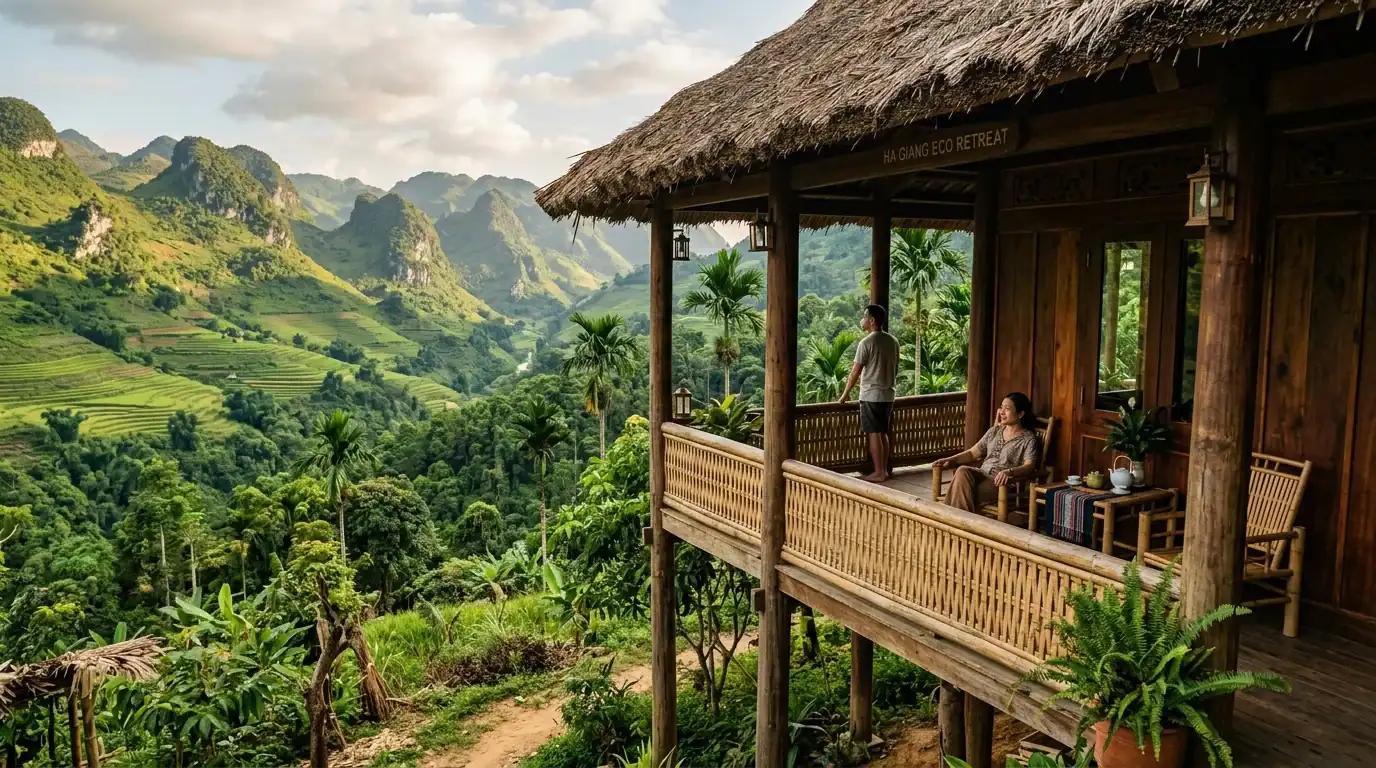
Perched high on the ridgeline of Nam Hong village, Hoang Su Phi Lodge provides front-row panoramas of Vietnam’s national heritage terraced rice fields. Built entirely on traditional wooden stilts, each private bungalow features private viewing balconies that float above morning mist and carved mountainsides.
The lodge is owned and staffed by local Red Dao villagers, offering travelers genuine cultural exchanges without commercial staging. Activities include guided hikes through ancient Shan Tuyet tea forests, participatory rice harvesting in September and October, and authentic hot herbal baths in cedar barrels.
4. Ha Giang Ecolodge (Thon Tha)
Located in the idyllic village of Thon Tha, just four kilometers outside Ha Giang City, Ha Giang Ecolodge integrates seamlessly into an authentic Tay community. The main lodge replicates the architectural proportions of historic Tay stilt dwellings, featuring woven bamboo walling, split-palm rafters, and open communal living quarters.
Guests can rent mountain bicycles to navigate surrounding buffalo trails, participate in seasonal organic rice transplanting, and sample traditional home-cooked Tay family dinners prepared over open hearth fires.
5. Meo Vac Clay House (Pa Vi)
Constructed in the Pa Vi Hmong Community Cultural Tourism Village near the base of the Ma Pi Leng Pass, Meo Vac Clay House showcases the ingenious thermal engineering of traditional Hmong rammed-earth architecture. Thick clay walls provide natural indoor climate regulation, keeping interiors refreshingly cool during summer sun and pleasantly warm through freezing highland winters.
The lodge features reclaimed pine furnishings, hand-spun hemp textiles, and an open stone courtyard where travelers gather in the evening. It offers a culturally rooted resting stop before tackling the dramatic rocky switchbacks of the Meo Vac canyon.
6. Du Gia Panorama Ecolodge
For riders completing the southern arc of the Ha Giang Loop, Du Gia Panorama Ecolodge offers a tranquil alternative to noisy central backpacker dorms. Nestled against steep karst hillsides above the river valley, the cabins provide sweeping vistas over cascading streams and emerald rice fields.
The lodge utilizes local mountain timbers, promotes minimal lighting to preserve nocturnal night skies, and supports community-led swimming excursions to nearby Du Gia Waterfall without motorboat intrusion.
Sustainable Hospitality in Practice: The TVPalm Model
True sustainability requires more than hanging a wooden sign or displaying an eco-friendly slogan. At TVPalm Ecolodge, every operational facet is designed to nurture ecological balance and regenerate local livelihoods through actionable commitments.
- 100% Homemade Soapnut Detergents: All guest rooms, linens, and communal dining wares are sanitized using organic soapnut enzymes produced on site, preventing harmful chemical runoff from contaminating downstream village waterways.
- Farm-to-Table Nutrition at The Palm Restaurant: More than 80% of daily vegetables, leafy greens, and aromatic herbs are harvested each morning directly from The Palm Eco Garden, delivering fresh meals with zero food miles.
- Authentic Red Dao Herbal Wellness: Hot restorative baths are prepared in aromatic cedarwood tubs using over 30 wild medicinal herbs harvested by local Dao medicine masters from the upper slopes of Tay Con Linh.
- Decentralized Community Economic Value: Over 70% of the lodge team members are indigenous young adults from neighboring villages such as Khuoi My and Xa Phin, receiving fair living wages, healthcare, and career training in sustainable tourism management.
“Sustainable hospitality in Ha Giang is not about sacrificing comfort. It is about understanding that true luxury in our modern world is clean mountain air, unpolluted spring water, authentic local food, and knowing that your presence leaves the forest healthier than you found it.”
Văn Trung Nguyễn, Founder of TVPalm
How to Choose the Right Eco Lodge for Your Itinerary
Selecting the best eco lodge depends on your broader travel objectives, transportation choices, and highland route pacing:
- The Arrival and Departure Basecamp (1 to 2 Nights): Choose an eco lodge situated close to Ha Giang City like TVPalm Ecolodge. This allows you to rest after the six-hour sleeper bus journey from Hanoi, acclimatize in tranquil gardens, securely store heavy luggage, and conduct pre-trip route briefings before hitting the mountain passes.
- The Wilderness Trekking Hub (2 to 4 Nights): If your goal is summiting high mountain ridges, base yourself at lodges bordering conservation zones. From TVPalm, you can directly access guided ascents across Ha Giang trekking tours and immerse yourself in Dao culture.
- The Post-Loop Rejuvenation Oasis: After riding 350 kilometers across rugged karst roads, ending your journey with two nights of stillness, spring pool swims, and rejuvenating Red Dao herbal bath benefits provides the perfect physical restoration before returning to urban life.
Frequently Asked Questions
What is the average price range for staying at an eco lodge in Ha Giang?
Rates typically range from $35 to $70 USD per night for comfortable private rooms and $60 to $120 USD per night for premium standalone wooden bungalows. Authentic communal stilt house dormitory beds at eco-conscious properties start around $15 to $22 USD per night, including fresh breakfast prepared from local ingredients.
How does an authentic eco lodge differ from a standard Ha Giang homestay?
While standard homestays offer welcoming family hospitality, they often lack intentional ecological management systems such as solar heating, organic farm-to-table dining, and comprehensive waste reduction protocols. Verified eco lodges combine the cultural warmth of homestays with professional eco-architecture, private sanitary amenities, spring-fed pools, and certified sustainability standards.
When is the best season to stay at an eco lodge in Ha Giang?
The ideal window extends from September to April. Autumn (September to November) brings comfortable temperatures, golden rice terrace harvests, and blooming buckwheat fields. Spring (February to April) offers lush green tea picking seasons and clear skies for swimming in natural spring pools and exploring mountain forests.


