

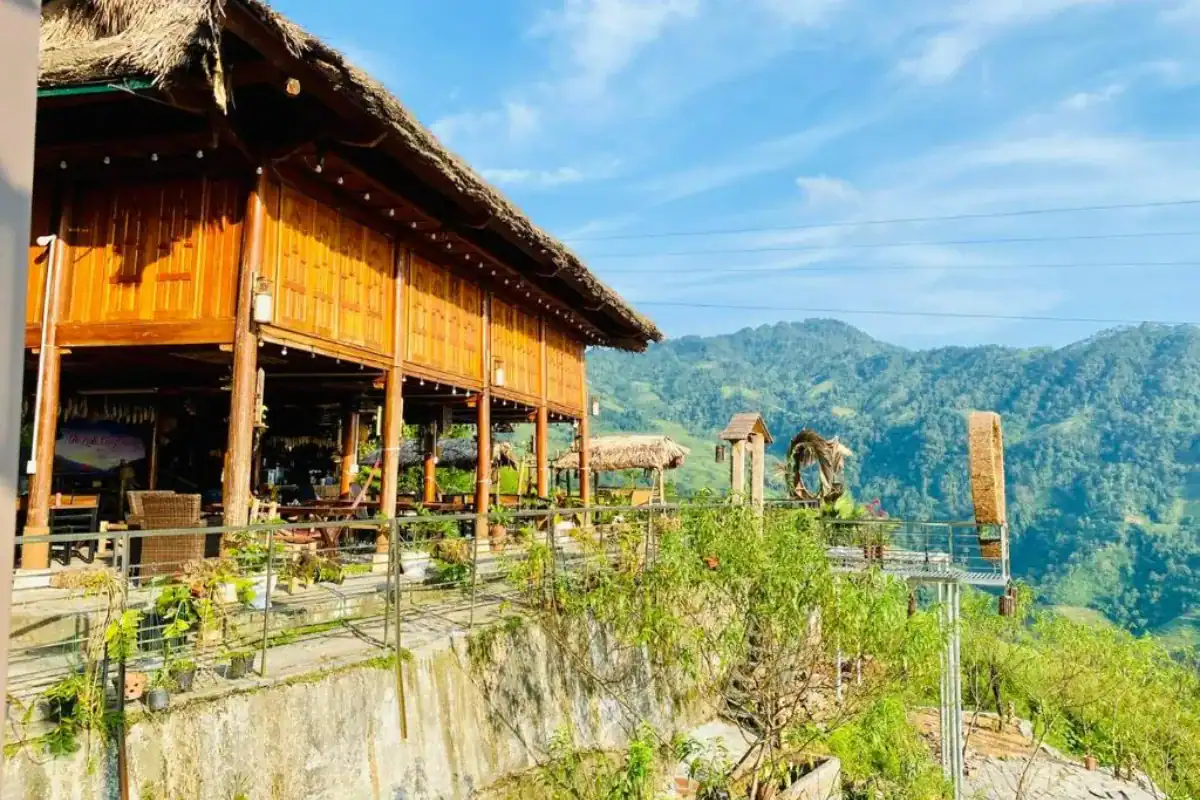
Eco-friendly lodge design in Vietnam merges ancestral indigenous building wisdom with modern bioclimatic engineering to create low-impact mountain retreats that regenerate both nature and local communities.
By elevating timber bungalows on stilts, utilizing local bamboo, river stone, and thatch palm roofs, and integrating gravity-fed spring water cycles, sustainable architecture avoids the ecological destruction of concrete resort developments.
At TVPalm Ecolodge in Ha Giang, these principles demonstrate how regenerative design delivers luxurious hospitality while preserving the primary subtropical rainforests of Northern Vietnam.
The Core Principles of Eco-Friendly Lodge Design in Vietnam
Eco-friendly lodge design in Vietnam is a comprehensive architectural and operational methodology focused on creating regenerative tourism facilities that operate in harmony with tropical ecosystems.
Rather than imposing urban concrete structures onto fragile highland hillsides, sustainable architects prioritize low-impact footprints, local cultural synergy, and long-term environmental restoration.
To qualify as genuine sustainable architecture rather than superficial greenwashing, an eco lodge must adhere to five fundamental design pillars:
- Passive Bioclimatic Adaptation: Orienting buildings along prevailing valley wind corridors and solar paths to maximize natural cross-ventilation, eliminating energy-intensive mechanical air conditioning.
- Embodied Carbon Reduction: Sourcing building materials within a 30-kilometer radius to minimize haulage emissions, prioritizing rapidly renewable resources such as timber, bamboo, thatch palm, and unbaked earth.
- Topsoil and Hydrological Preservation: Employing elevated stilt footings that preserve natural mountain contours, prevent soil compaction, and maintain seasonal surface runoff patterns without causing erosion.
- Closed-Loop Resource Cycles: Harnessing gravity-fed mountain spring water, treating greywater through botanical reed-bed wetlands, and recycling organic dining waste into onsite permaculture compost.
- Cultural Continuity and Village Economy: Employing indigenous ethnic craftspeople (Dao, Tay, Hmong) throughout construction, ensuring traditional architectural skills are valued, preserved, and fairly compensated.
Bioclimatic Engineering: Cooling Without Air Conditioning
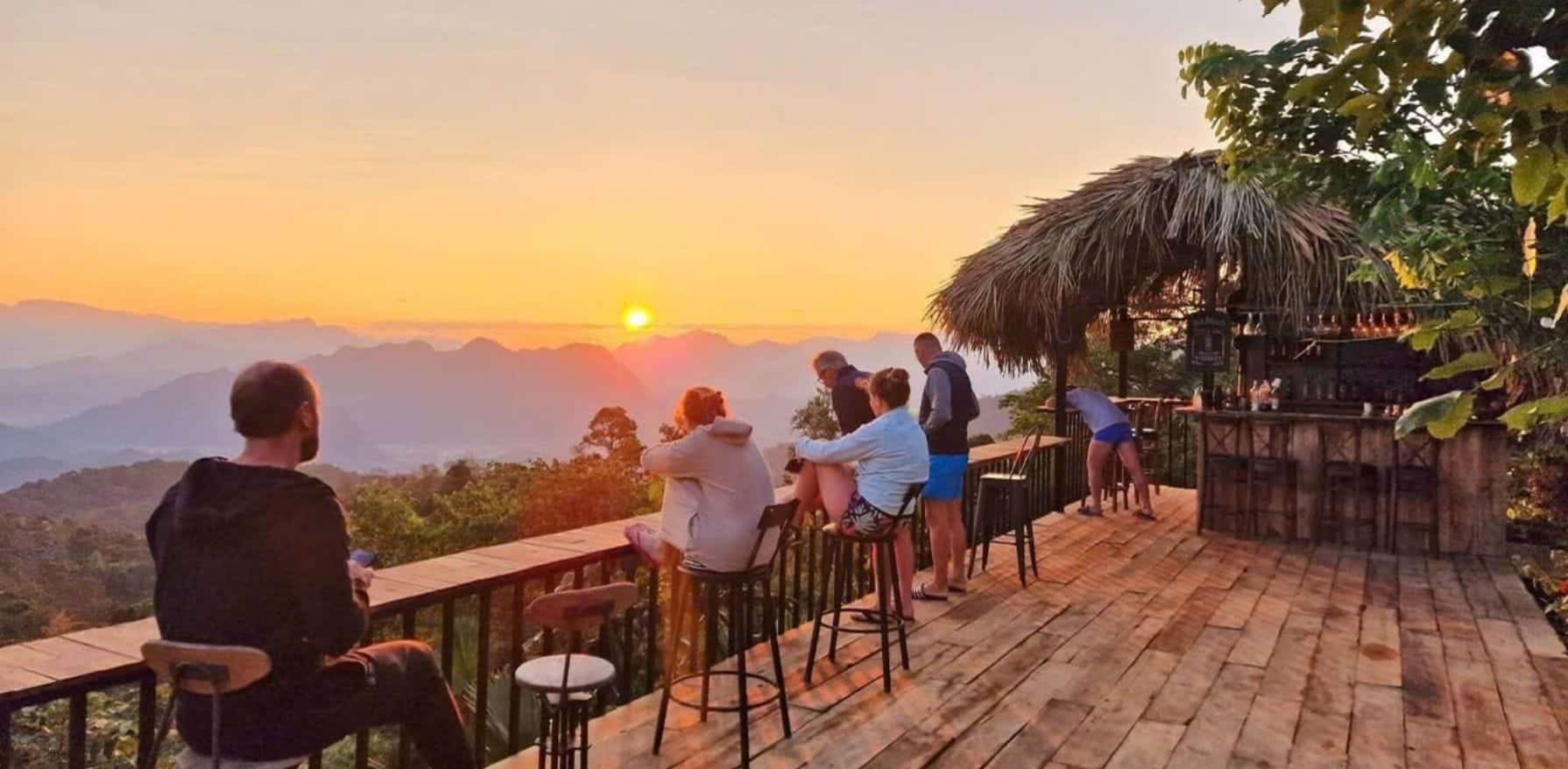
Elevated Stilt Foundations
Lifting bungalows 1.2 to 2.5 meters above the terrain allows cool mountain air to circulate freely beneath floorboards, dissipating ground heat and preventing rising damp during the summer monsoon. This elevation also protects travelers from ground-dwelling insects and reptiles while preserving underground root systems.
Double-Ventilated Thatched Roofs
A continuous layer of densely woven thatch palm leaves (measuring 25 to 35 centimeters in thickness) creates exceptional acoustic dampening against heavy tropical downpours and offers natural thermal resistance.
An intentional air cavity between the inner bamboo ceiling and outer thatch allows trapped hot air to escape naturally through ridge vents via the chimney effect.
Extended Roof Eaves and Shadow Shading
Overhanging eaves extending 1.8 to 2.2 meters past exterior walls shield living quarters from direct solar radiation during midday heat, while simultaneously preventing driving rainwater from hitting wooden facades. Open-slat timber shutters allow cross-breezes while maintaining guest privacy.
| Architectural Component | Conventional Resort Design | Sustainable Bioclimatic Eco Lodge | Ecological Performance Advantage |
|---|---|---|---|
| Wall Construction | Reinforced concrete & cement brick | Local timber frame, bamboo weave & rammed earth | 85% lower embodied carbon; zero toxic off-gassing |
| Thermal Cooling | Central electrical split-unit AC | Passive cross-ventilation & double roof airflow | 70% reduction in daily electricity consumption |
| Foundation Footing | Massive concrete slab excavation | Elevated wooden stilts on isolated stone piers | Preserves 90% of natural topsoil hydrology and flora |
| Roofing Material | Corrugated zinc or synthetic tile | Hand-thatched indigenous palm leaves (30 cm) | Superior acoustic dampening; 100% biodegradable |
| Water Supply | Municipal piped water & chlorine tanks | Gravity mountain spring water & stone pool | Chemical-free living; zero pumping electricity |
Vernacular Materials Specification Guide
The essence of sustainable Vietnamese lodge design lies in selecting locally abundant, biodegradable materials that age gracefully alongside the surrounding mountain forest. Rather than requiring heavy industrial supply chains, these elements are cultivated and gathered through regenerative forestry practices.
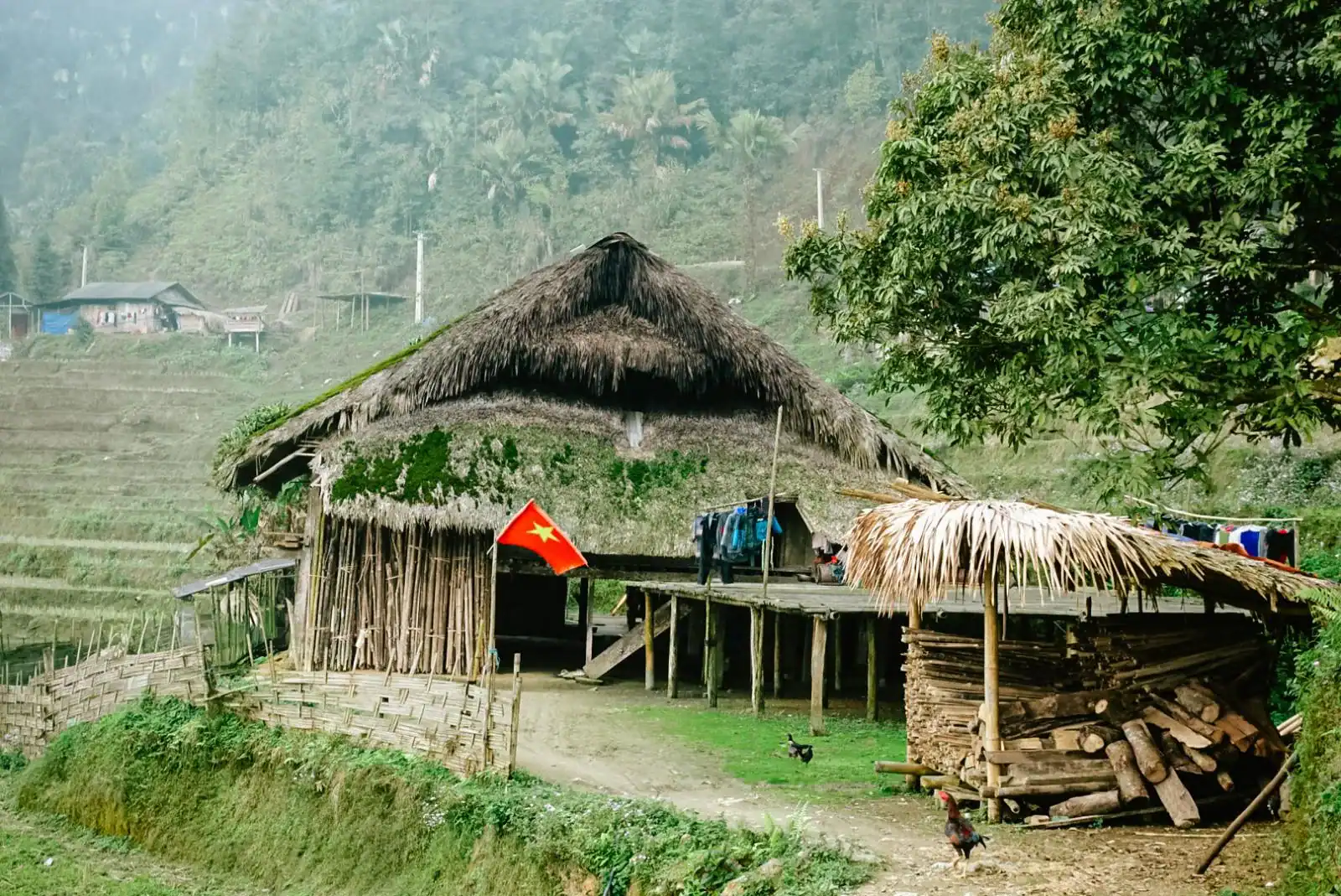
Bamboo and Dendrocalamus Structures
Locally known as tre or giant timber bamboo (Dendrocalamus barbatus), bamboo boasts tensile strength matching mild steel while sequestering four times more carbon dioxide than timber trees.
When treated through traditional mud-soaking or boron-salt immersion, bamboo becomes resistant to powder-post beetles and termites, providing a durable structural lifespan of over 25 years.
Dry-Stacked Limestone and River Boulders
Foundations, retaining terraces, and natural pool linings utilize smooth river stones and locally quarried karst limestone boulders. Masonry built with interlocking stone techniques permits subterranean groundwater seepage without hydro-pressure buildup, preventing landslips on steep mountain plots.
Rammed Earth and Compacted Clay Walls
Inspired by traditional Hmong nhà trình tường dwellings in Dong Van, rammed earth walls are compacted inside wooden formworks using regional subsoils, sand, and straw binders. The resulting 40-centimeter dense walls act as natural thermal batteries, absorbing excess atmospheric moisture and balancing interior temperatures across chilly highland winters.
Closed-Loop Water and Waste Infrastructure
True ecological integrity is measured by how an establishment treats its water, waste, and energy. A master-planned eco lodge must return clean resources to the surrounding ecosystem rather than generating pollution.
- Continuous Gravity-Fed Spring Aqueducts: Mountain stream water is captured high in the watershed and transported via gravity lines through multi-stage quartz sand and volcanic gravel filters, eliminating electrical pumping needs.
- Chemical-Free Natural Swimming Pools: Unlike conventional swimming facilities that rely on chlorine and chemical algicides, eco pools utilize constant mountain spring flow and submerged aquatic plants to maintain crystal-clear water suitable for sensitive skin.
- Constructed Wetland Greywater Treatment: Sink, shower, and laundry drainage channels through reed-bed filtration ponds populated by water hyacinths, papyrus, and vetiver grass, naturally metabolizing organic matter before entering irrigation channels.
- Onsite Soapnut Enzyme Hygiene: Chemical laundry detergents and petrochemical dish soaps are replaced with fermented soapnut (Sapindus mukorossi) solutions, preserving beneficial soil microorganisms across the property.
“When designing an eco lodge in the mountains of Ha Giang, the first rule is humility. The forest, the river boulders, and the indigenous village carpenters were here centuries before us. Our buildings must touch the earth lightly, listen to the valley winds, and leave the landscape cleaner than we found it.”
Văn Trung Nguyễn, Founder of TVPalm
Cultural Co-Design Empowering Ethnic Communities
The most crucial distinction between genuine sustainable lodge design and commercial imitation is community integration. In Northern Vietnam, indigenous ethnic groups have inhabited these mountains for generations, possessing invaluable knowledge regarding climatic hazards, soil stability, and native timber species.

Sustainable development requires participatory co-design where local village elders and master carpenters guide construction decisions. At TVPalm Ecolodge, over 70% of permanent team members belong to the surrounding Dao Ao Dai and Tay communities of Khuoi My and Xa Phin.
Master carpenters assemble timber frameworks using traditional mortise-and-tenon wood joinery without relying on industrial iron nails, preserving architectural heritage while ensuring seismic resilience. Travelers who stay here participate in authentic living culture, learning respectful Ha Giang ethnic village etiquette and supporting village families directly.
To explore accommodation options across the province, review our curated guide to the best eco lodge in Ha Giang, learn more about our operational standards on about TVPalm Ecolodge, or combine your eco-stay with guided mountain expeditions via our Ha Giang trekking tours.
Frequently Asked Questions
How long do vernacular materials like bamboo and thatch palm roofs last in Vietnam?
When properly harvested during dry winter months and treated with natural borate salts or river mud fermentation, timber bamboo frames last 25 to 35 years. Densely thatched palm roofs typically last 8 to 12 years before requiring a re-thatching layer, which is 100% biodegradable and compostable into garden mulch.
Can an eco lodge remain comfortable during cold highland winters without electric heating?
Yes. Bioclimatic eco lodges utilize high thermal-mass rammed earth walls and double-glazed timber windows to trap heat accumulated during sunlit daytime hours. Natural wool or organic cotton duvets, combined with hot herbal footbaths and evening hearth fires, ensure comfortable warmth without high electric loads.
Does building on stilts provide better earthquake and landslide safety on mountain slopes?
Yes. Flexible wooden joinery with mortise-and-tenon connections absorbs seismic vibrations significantly better than rigid concrete slabs. Furthermore, elevated stilt piers leave natural hillside water runoff unblocked, preventing saturation and catastrophic slope failures during torrential monsoon downpours.


