

Some visitors ask us:
“What is the best dish in Ha Giang?”
That is a very natural question.
But also a very difficult one to answer.
Not because Ha Giang lacks dishes.
But because we do not think a place can be understood through the names of a few specialties.
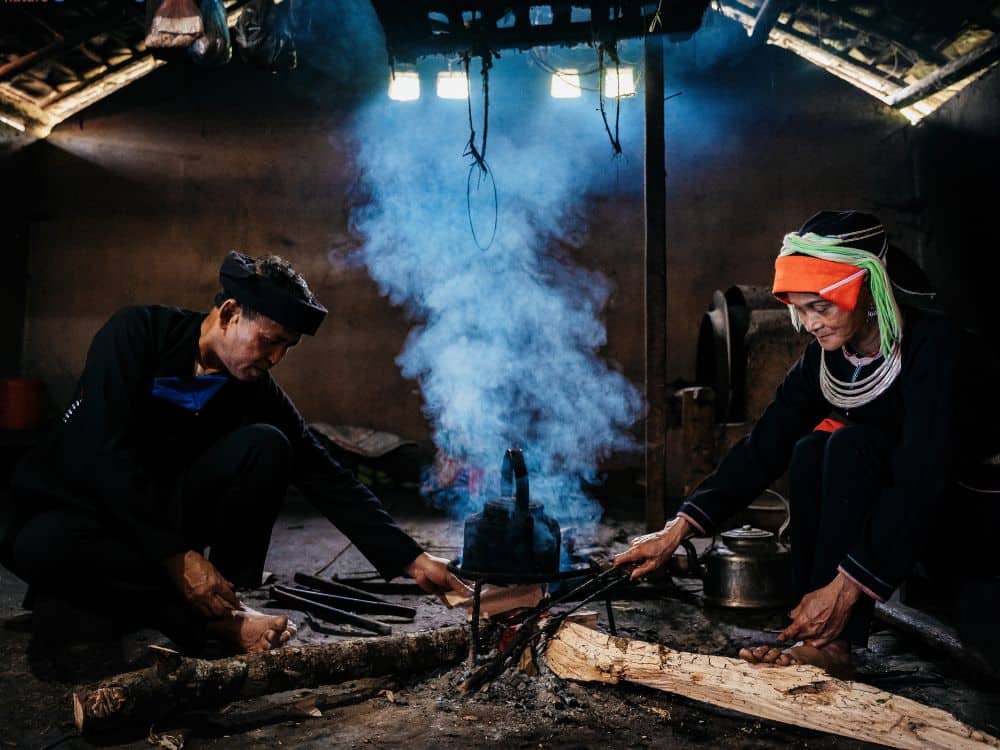
A local meal does not begin at the table.
It begins in the forest.
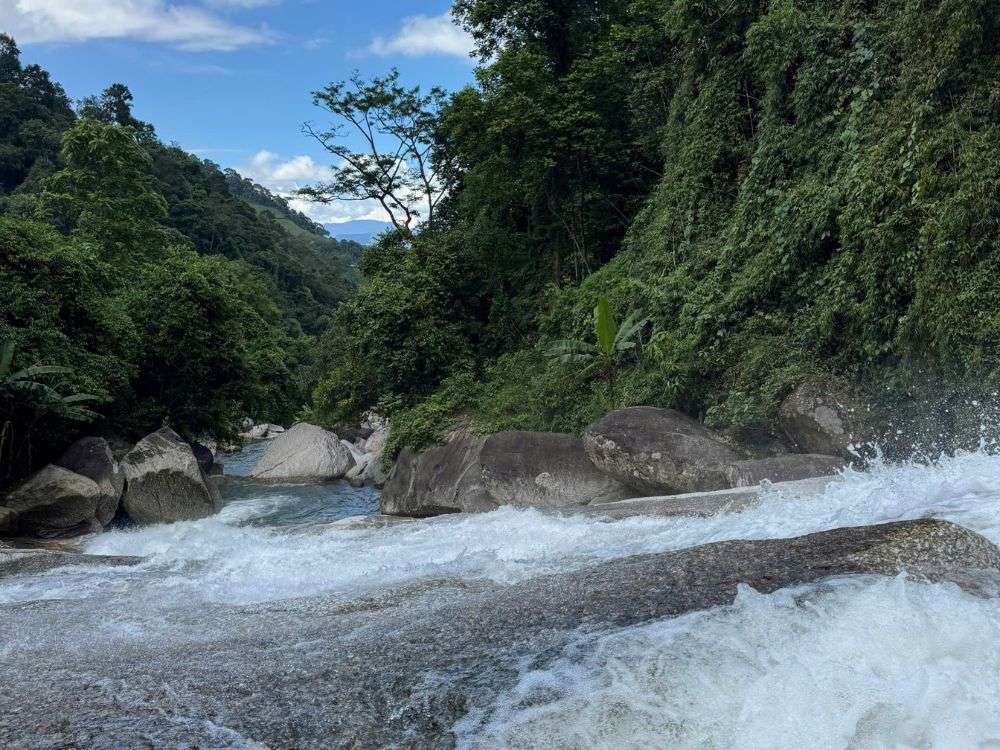
In the water.
In the soil.
In the seasons.
And in the people who have spent a great deal of time producing what is on the tray.
If you only ask “what to eat”, you very easily miss the more important question.
Where does that dish come from?
Every meal begins in nature
In the Tay Con Linh area, many dishes cannot be separated from the environment that created them.
A ca bong (freshwater perch) that grows in cold, clear water flowing from watershed forests will be different from
one raised in a stagnant pond.
An ancient Shan snow tea tree cannot grow without cool climate, the right altitude and forests still strong enough to hold water.
A small vegetable garden of a Dao family does not depend only on the hands that tend it.
It depends on the soil.
On the water.
On the rain.
On how people preserve the forest above the water source.
Here, nature does not stand outside the meal.
Nature is where the meal begins.
Not every dish should be available all year
Many people are used to walking into a restaurant and ordering whatever they want.
But the mountains do not operate that way.
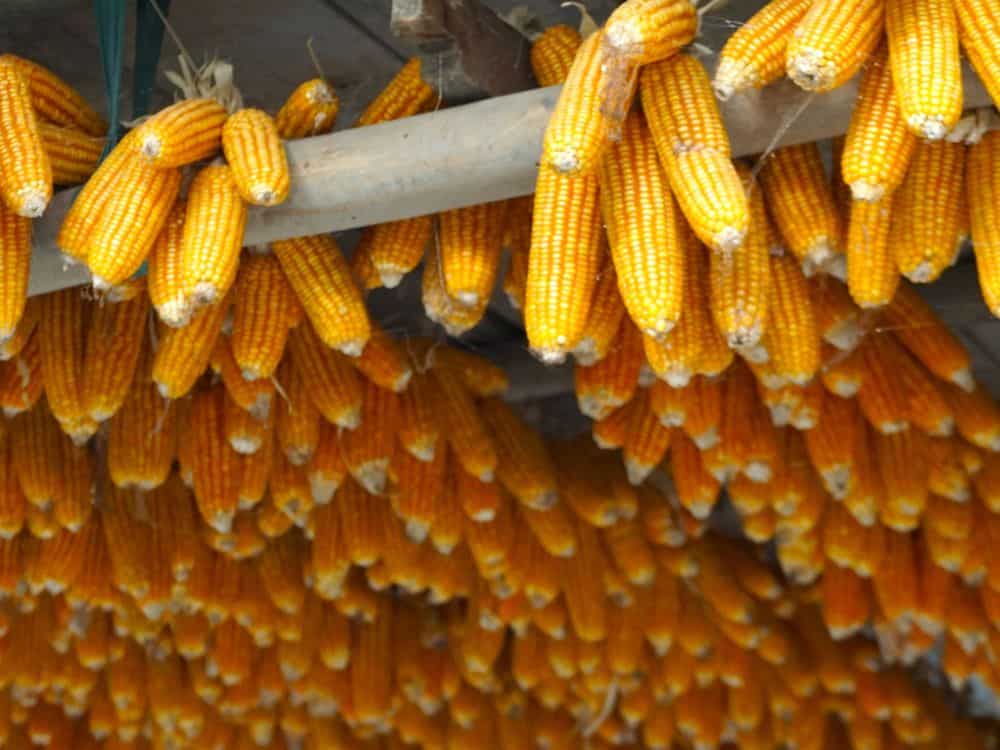
Some vegetables only appear for a very short time.
Some mushrooms only grow after the first rains of the season.
Some bamboo shoots are only good at exactly the right time.
Some ingredients, when the season ends, should wait for the next.
This is not scarcity.
It is the natural rhythm of the land.
We do not try to keep every dish available year-round just to satisfy visitors.
Because if a dish must be obtained by over-exploiting or disrupting natural cycles, what is lost is not only flavor.
What is lost is balance.
A ca bong does not grow in a few months
Some dishes make us think not because of how they are cooked.
But because of the time it takes to create them.
Ca bong is an example.
This is a freshwater fish native to the northern highlands, raised by many households in clean water flowing
continuously from watershed areas.
It grows very slowly.
It cannot be rushed.
It cannot be raised industrially to harvest in just a few months.
To have an adult fish takes many years.
That period of time is itself part of the value of the dish.
If the water source is no longer clean.
If the watershed forest degrades.
If the water supply changes.
The first thing lost may not be the forest itself.
It may be the very ordinary things on the family tray.
A meal sometimes reflects the health of an entire ecosystem.
Shan snow tea is not only a drink
Some drink tea to stay awake.
Some drink tea for the flavor.
In Tay Con Linh, many people drink tea because it is part of life.
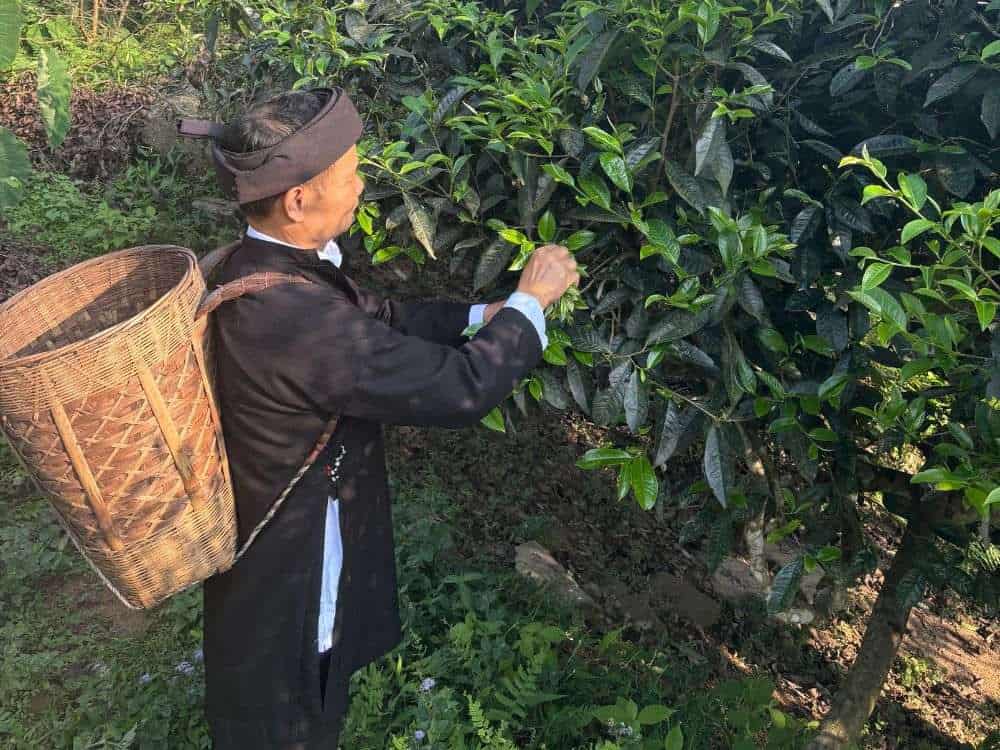
The ancient Shan snow tea trees have stood on mountain slopes through many generations.
People who pick tea cannot use machines.
Each harvest season depends on the weather.
Each bud must be chosen carefully.
Each roasting session demands experience.
A cup of tea therefore carries more than the flavor of tea leaves.
It carries the climate.
The altitude.
The morning mist.
The hands of the person who made it.
And patience.
If we only drink to judge whether it is good, we have only understood a very small part.
The most precious thing on the tray is not the dish
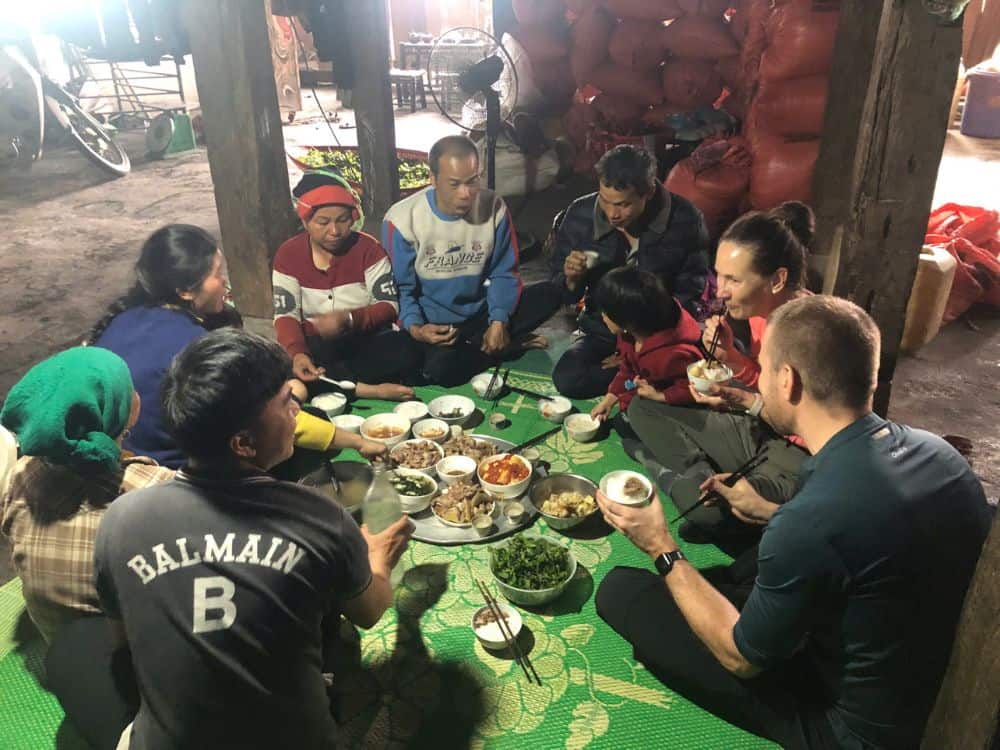
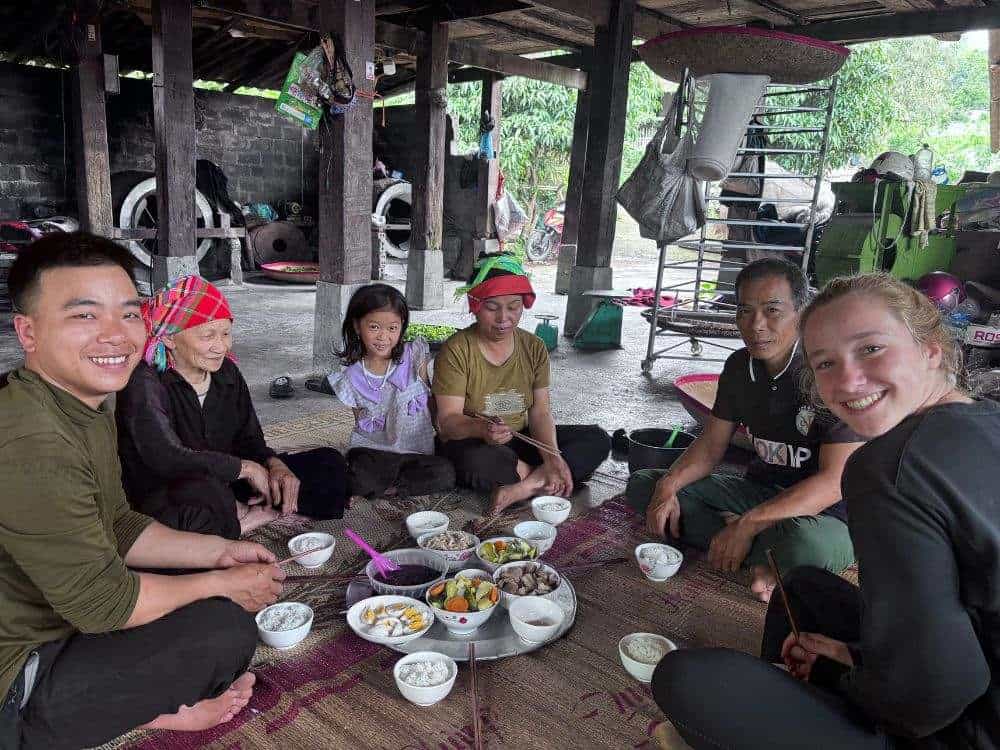
In many highland families, a meal is not elaborate.
Perhaps only a few simple dishes.
A seasonal vegetable.
A free-range chicken.
A little black pork.
A bowl of soup.
A pot of tea.
But what many visitors remember most, years later, is not the menu.
It is how they were invited to sit down.
How the first cup of tea was poured for them.
How they heard a story about the forest behind the house.
How they learned why the vegetables came late this year.
Why the stream still has water.
Why the Dao people still keep some old seed varieties.
A delicious meal may be remembered for a few days.
An honest meal can be remembered for many years.
What We Can Do
We can choose ingredients that come from local people whose methods we know well.
We can prioritize seasonal food rather than trying to serve everything year-round.
We can explain the origin of each dish to visitors, instead of only introducing the dish’s name.
We can tell the story of the tea picker, the fish farmer, the vegetable grower, the chicken keeper.
We can let a meal become an opportunity to understand this land a little more.
But we do not want to turn local food into a list of “must-try specialties”.
Food only truly has meaning when it still holds its connection to the people who created it.
What We Will Not Do
We will not call every local dish a “specialty” just to attract visitors.
We will not serve out-of-season ingredients if doing so goes against how the mountains work.
We will not tell romanticized stories about food that ignore the labor of those who made it.
We will not treat a meal as just a service add-on in a journey.
And we will not forget that if the forest, the soil and the water source are no longer healthy, the dishes that define this land will slowly change.
A meal can tell the story of an entire landscape
Perhaps after many years, you will no longer remember exactly what you ate in Tay Con Linh.
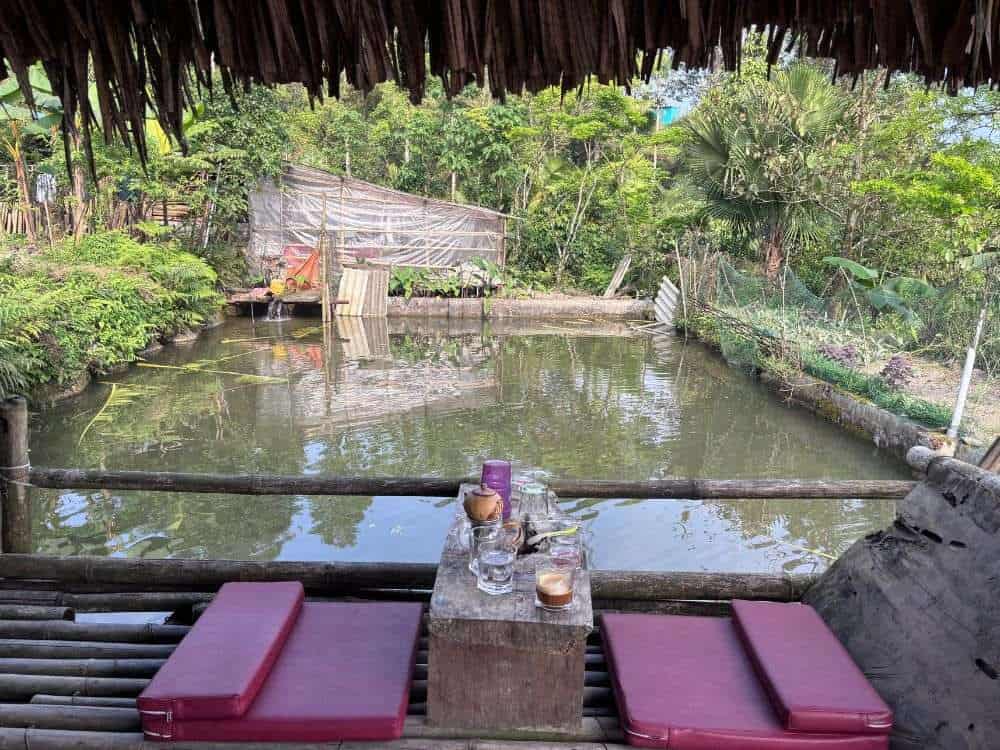
But perhaps you will remember the cold water where the ca bong grew.
The smell of Shan snow tea still lingering in the cup.
An evening meal in the mountains when the only sounds outside were insects and running water.
And the understanding that the best thing in that meal was not the seasoning.
It was that each dish still held its connection to the place that gave it life.
Perhaps that is also what we hope to keep.
Not just the flavor of a dish.
But the whole land that created that flavor.


