

There is one thing very easy to forget when stepping into a highland market.
That is: most of the people there did not come because of us
They came because today is market day.
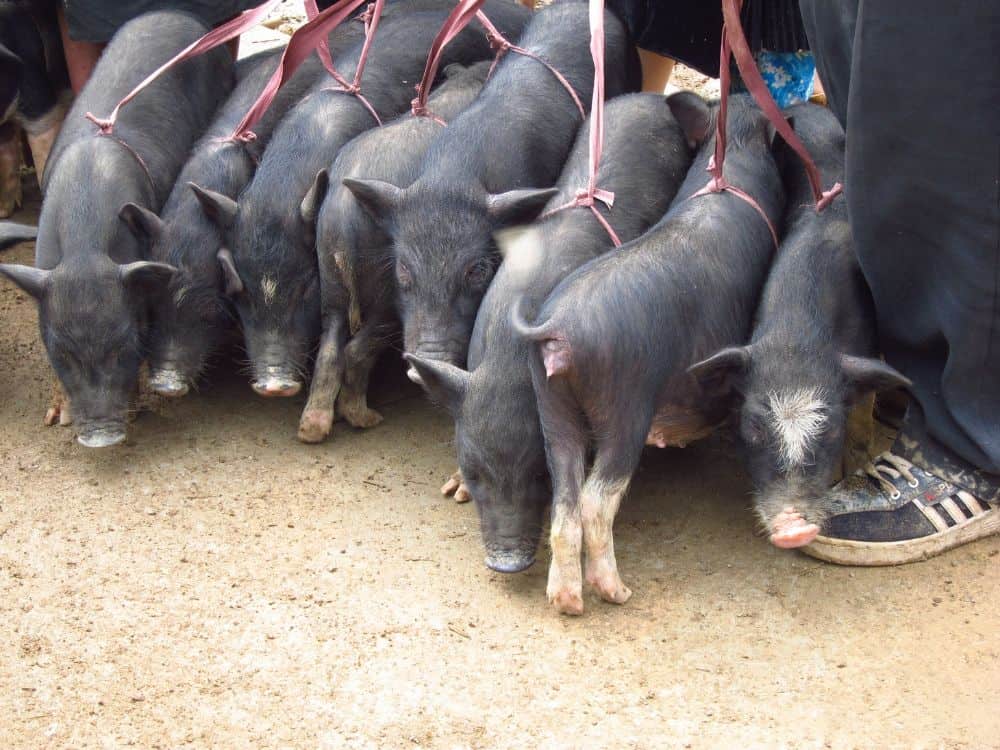
Some set out before daybreak. Some carry vegetables, corn, bamboo shoots, honey, dried tea or a little produce from the garden on their backs. Some lead a buffalo, a cow, a pig raised for many months. Some come down to buy salt, knives, hoes, fabric, veterinary medicine, a few things for the family. Some buy or sell very little — they just want to meet familiar faces, drink a bowl of corn wine, eat a bowl of thang co, hear a few stories from another village, then make their way home.
If not a single tourist appeared that day, the market would still go on.
Perhaps that is exactly what gives the market its value.
Not because it is exotic.
Not because it is beautiful.
But because it was never born to serve those just passing through.
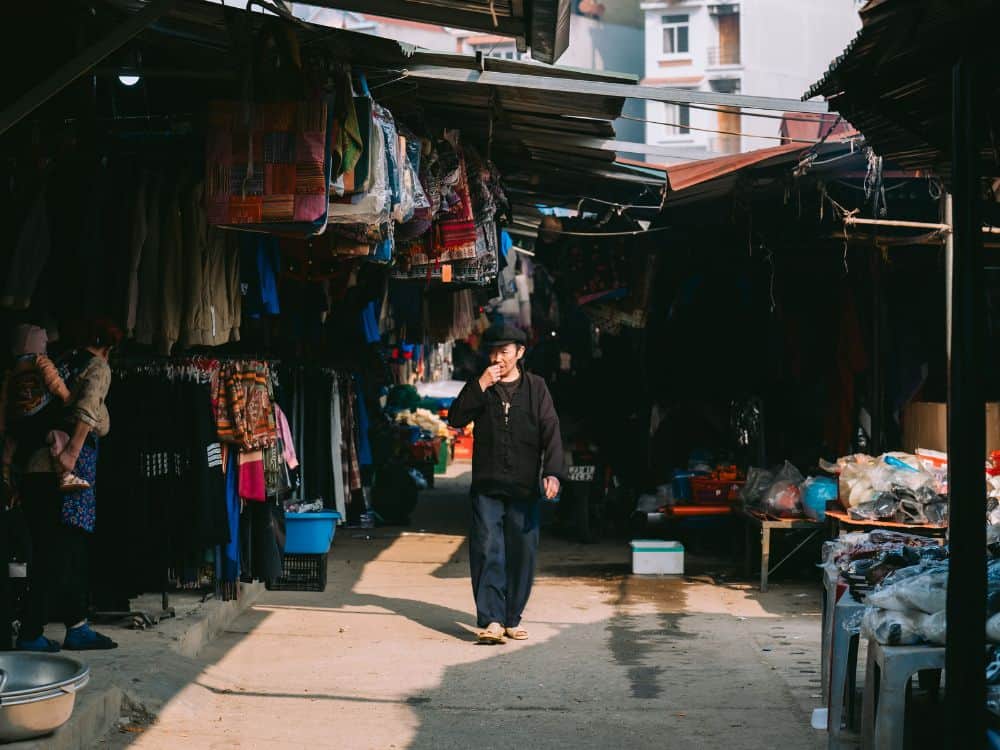
The highland market is a living institution
In the highlands of Northeast Vietnam, a market is not only a place to buy and sell.
It is a social institution.
A single market holds many functions at once: economic, communicative, matrimonial, informational — maintaining kinship ties, connecting villages, and sometimes the only place during the week where someone from a remote hamlet can step outside the closed rhythm of their life and meet a wider community.
People from the lowlands tend to see a market as a destination.
People from the highlands see it as part of life’s rhythm.
The difference is there.
For a tourist, a market session might be a few hours on the itinerary. For local people, it is where they bring out their products to exchange, where they measure the value of a season of labor, where they meet siblings and cousins, where they hear about a wedding, a funeral, a harvest, a new road, a change in the village.
A market is not a cultural museum.
A market is culture still unfolding.
And because it is still alive, it must be treated as a real life — not a stage.
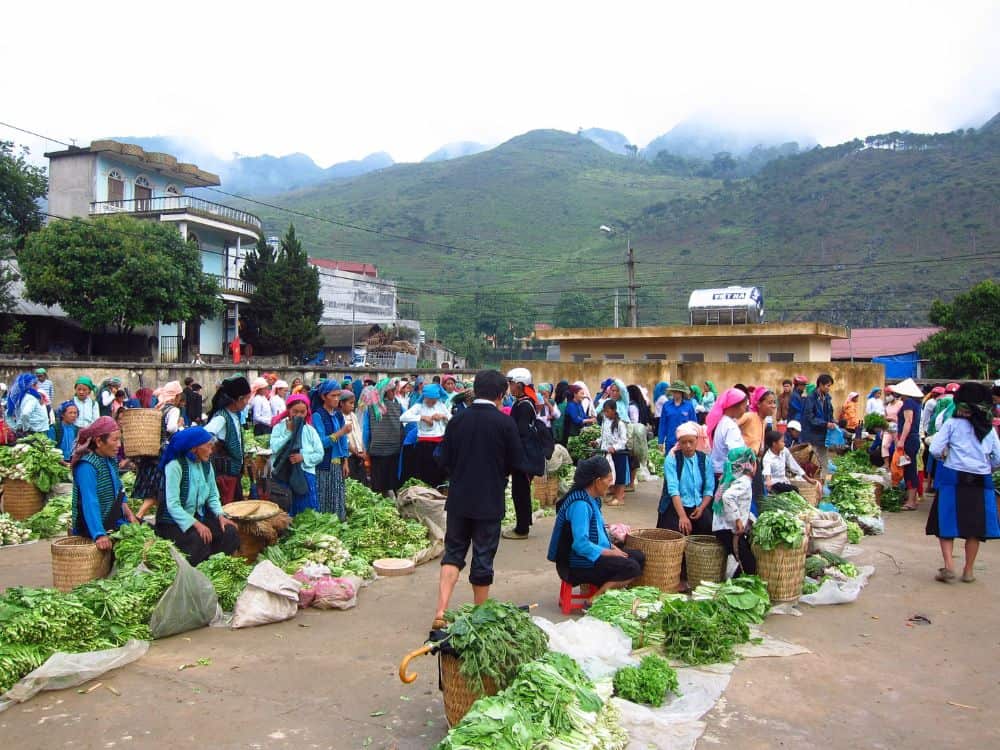
The beauty of a highland market is easily misread
A highland market can be very beautiful.
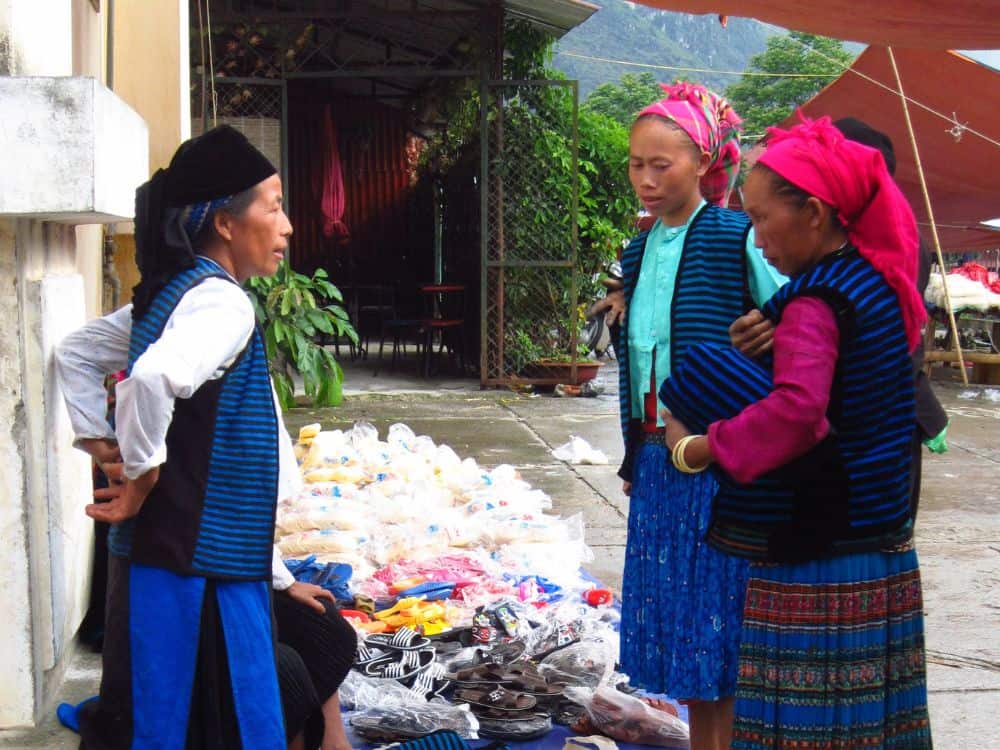
Colorful clothes. Morning mist still resting on the market roof. Voices mixing with livestock sounds. Small stalls. Women sitting beside baskets of vegetables. Men standing by the cattle area. Children following their mothers to market — half asleep, half curious, watching strangers.
But that beauty is very easily misread.
If we only look through a lens, we easily forget that the person in front of us is not “a cultural moment”. They are a human being living their own life.
An elderly woman selling vegetables is not a prop.
A Dao child is not a cute image for posting online.
A Hmong woman in traditional dress did not put on that dress to complete someone else’s travel album.
A seller has no obligation to smile just because a visitor raised a camera.
A visitor’s curiosity is not wrong.
But if that curiosity does not come with respect, it can turn other people into a backdrop.
That is something we do not want to encourage.
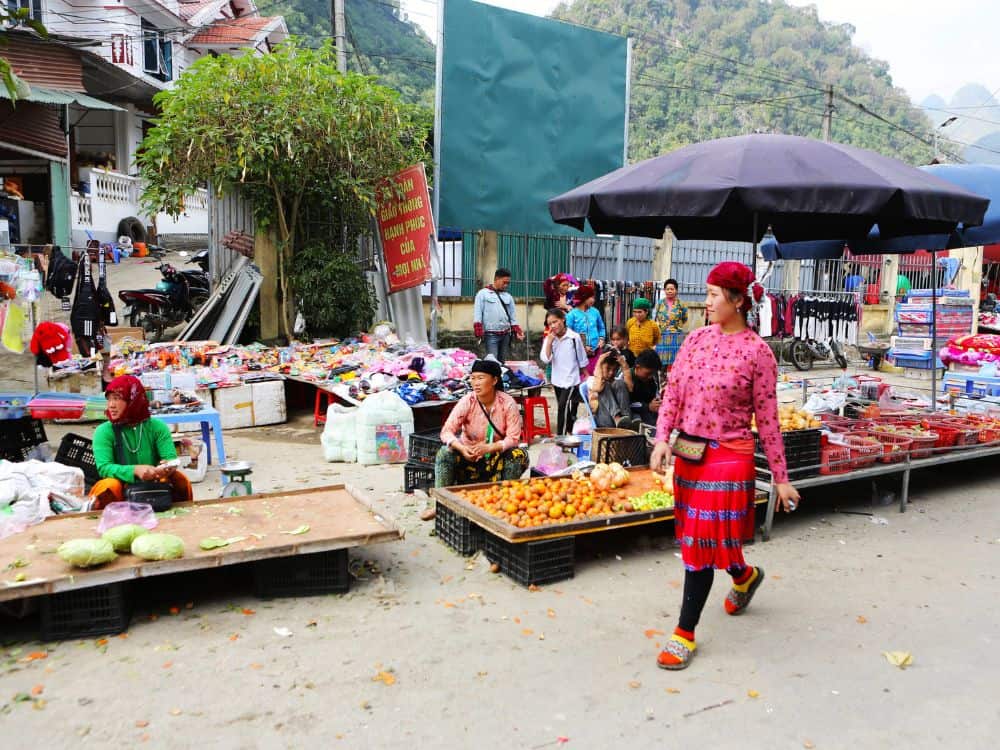
Going to market is not about “hunting” photographs
The more beautiful a place, the more slowly we should move through it.
A highland market is one such place.
Before taking a photograph, observe.
Before observing, understand that you are stepping into someone else’s living space.
If you want to photograph someone, ask permission. If they disagree, put the camera down. If they do not speak your language, use eye contact, a smile, gestures, patience. If you are still unsure, it is best not to photograph.
There are photographs not taken that preserve something more important: common decency.
A responsible trip is not measured by how many photographs you bring home. It is measured by whether, after you leave, the people who remain still feel comfortable with your presence.
That is a very small thing.
And also a very large one.
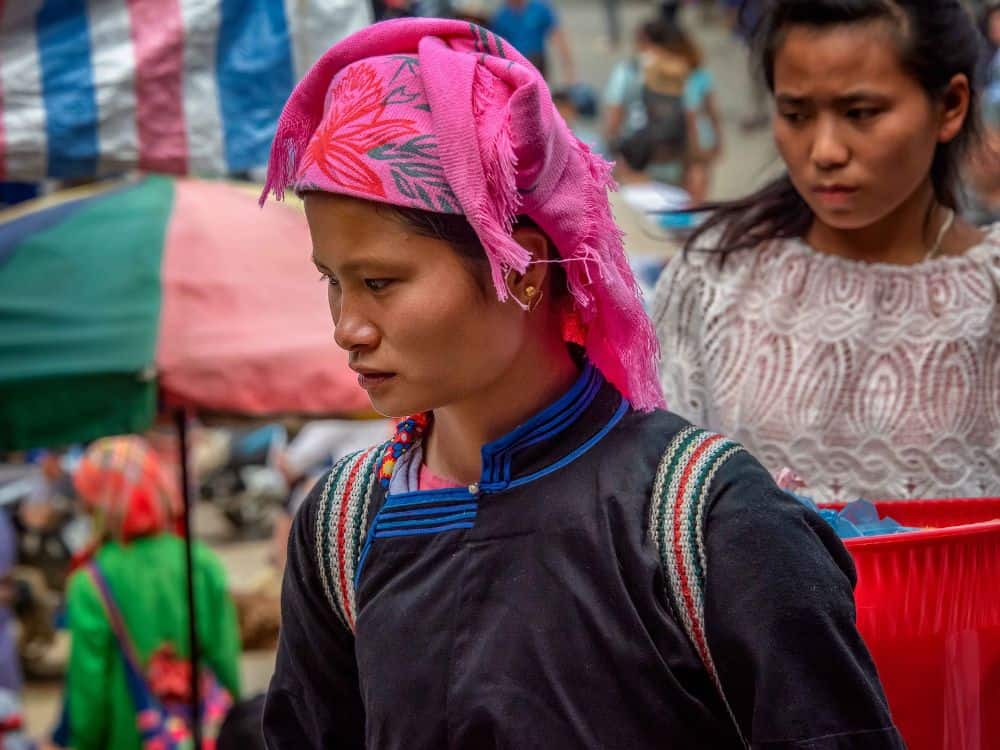
Buying is also a relationship
At a highland market, a transaction is not just the exchange of money and goods.
It can be recognition of the labor of the person who made it.
A bunch of vegetables may have been cut before dawn. A packet of tea may have gone through many steps: picking, roasting, drying, tending the fire. A chicken may have been raised for months. A piece of cloth may be time, hands, habit and knowledge passing through many generations of women.
Bargaining is not always wrong.
But bargaining just to win a few thousand dong is not a good way to enter a community poorer than your own.
Visitors have the right to consider the price.
Sellers also have the right to be respected.
Something bought at a highland market should not only be seen as a “souvenir”. It is part of the local economy. If purchased with care, however small, it is still a decent flow of money reaching the people who created the value.
What is worth bringing home is not just the object.
It is the feeling that neither side was diminished in the exchange.
Not every market should receive visitors
This is something rarely said.
Not every market is right for visitors.
Some markets are larger, busier, more accustomed to tourists. Some are smaller, more private, more easily disrupted by a large group. Some moments in a market are very sensitive: the livestock area, financial transactions, private negotiations, family situations, or moments when people do not want to be watched.
A responsible tourism operator does not only ask: “Is this market beautiful?”
The better question is: “Is our presence here appropriate?”
If not, it should not be on the itinerary.
If visitors are brought, they should be briefed on how to behave.
If the group is too large, it should be split — or not go.
If visitors only want to photograph local people as a collection of images, we should not encourage it.
A market does not disappear in a day.
But it can slowly lose its dignity if it is misread for many years.
Markets to explore in Ha Giang
For visitors to Ha Giang, some highland markets frequently mentioned include Dong Van, Meo Vac, Yen Minh, Lung Phin, and a number of smaller markets scattered across the high-altitude districts.
Dong Van and Meo Vac usually meet on Sundays — larger, more accessible, and more accustomed to visitors than most other markets. Lung Phin, Yen Minh and other local markets require checking specific schedules beforehand, as market days may vary by period, locality and actual conditions.
But for us, what matters is not listing as many markets as possible.
What matters is choosing the right market, the right timing, the right group size and the right approach.
A market should not be put on an itinerary simply to make the program “feel more local”.
It should only appear if visitors are prepared to enter with respect.
What We Can Do
We can help visitors understand before they arrive.
Not just which day the market meets, but why it matters to local people.
Not just pointing the way to the market, but explaining where to stand, how to observe, how to photograph, how to buy with the right attitude, and why there are moments best left alone.
We can prioritize small groups.
We can choose appropriate markets rather than the most famous ones.
We can encourage visitors to buy products that truly carry local value.
We can remind visitors that local people have no obligation to perform their culture for anyone.
And we can do something more important: help visitors shift from a posture of “going to see” to one of “being allowed to witness”.
Those two things are very different.
Going to see is standing outside and consuming.
Being allowed to witness is understanding that you are stepping into a part of someone else’s life that does not belong to you — and therefore moving more lightly, speaking more quietly, looking more deeply.
What We Will Not Do
We will not call a highland market a check-in spot.
We will not bring a large group to a small market.
We will not ask local people to pose.
We will not encourage visitors to photograph children, elderly people, women, or sellers without permission.
We will not turn traditional dress into a backdrop for outsiders’ curiosity.
We will not treat aggressive bargaining as a “local experience”.
And we will not forget that, before becoming a stop on an itinerary, a highland market is a part of life for the people of the highlands.
A market does not need us to make it special
Perhaps after many years, you will not remember exactly what you bought at Dong Van or Meo Vac.
Perhaps you will forget the name of a dish, a slope, a corner of the market.
But you may still remember the feeling of standing still in a highland morning, watching people from many different villages meet, exchange, laugh, trade, eat — and then scatter back along their mountain roads.
No one performing.
No one trying to create an experience.
Everything simply happening as it always has.
A highland market does not become special because more tourists arrive.
It is special because after all these years, the people here still need it.
And if one day we happen to be present there, perhaps the most valuable thing to bring home is not a beautiful photograph.
But to leave with the feeling of having witnessed a piece of real life.
Not a performance staged for us.


