

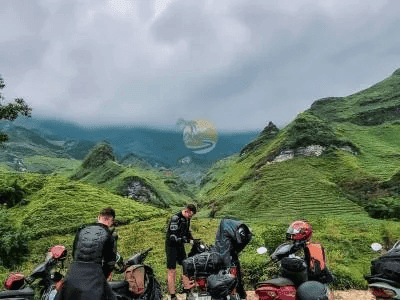
The Ha Giang Loop is one of Southeast Asia’s best-known road journeys: a circuit of about 350 kilometres across limestone passes, deep river canyons and ethnic minority villages. TVPalm runs it as an Easy Rider tour only, so you ride as a passenger behind a local guide who handles the mountain driving, the navigation and the safety. Ha Giang has been part of Tuyen Quang province since July 2025.
Why Easy Rider is the only way TVPalm rides the Loop
Riding pillion behind a professional local guide shapes your whole trip. TVPalm does not sell, rent or encourage self-drive trips on the Loop.
- Zero riding stress: no mountain-road fatigue and no concentration needed on every turn.
- Both hands free for photos and video of the views.
- No licence needed for passengers.
- A local expert handles navigation, repairs and safety.
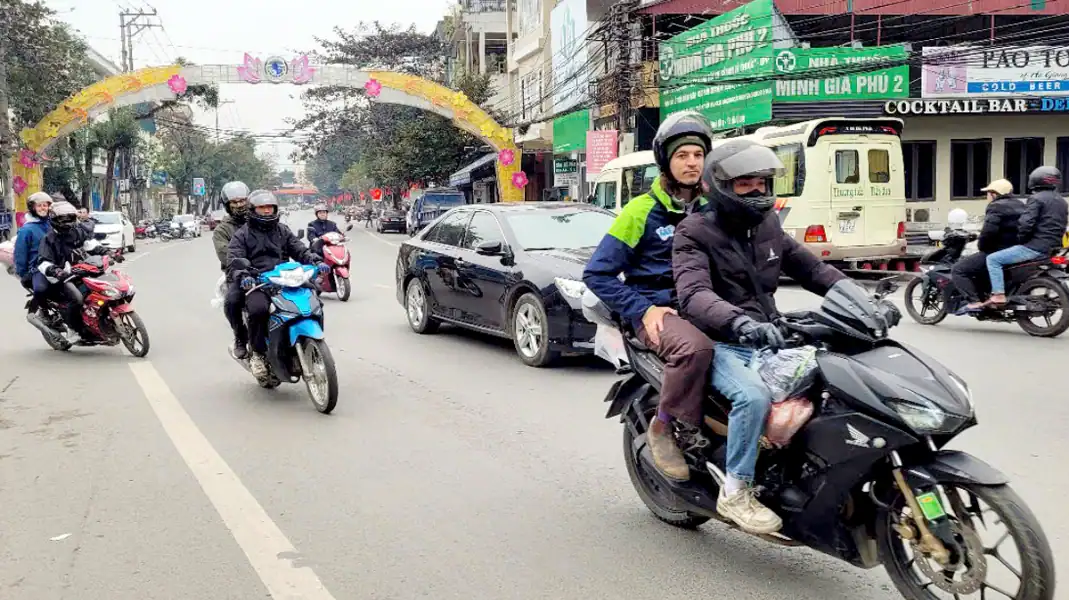
An Easy Rider tour suits non-riders, beginners and experienced motorcyclists alike: you travel on a well-maintained motorbike behind a driver who knows every bend, who handles heavy traffic and road hazards, and who lets you enjoy the 360-degree views. For an in-depth breakdown, see our dedicated Ha Giang Easy Rider Tours guide.
“The Ha Giang Loop is a serious mountain road. If you have only ridden scooters in low-traffic beach towns, leave the driving to us. With an Easy Rider you are safer and less tired, and you can take in the scenery.” – Nguyễn Văn Trung, Founder, TVPalm
What you need as a passenger
As a passenger you do not need a motorcycle licence or an International Driving Permit. Bring your passport, your personal travel insurance and the clothes and gear from our packing guidance. PVI Inbound Insurance is included in the tour.
Standard 4-day Loop itinerary
A 4-day, 3-night itinerary keeps a comfortable pace of 80 to 125 kilometres per day and avoids late-afternoon mountain driving, when fog and fatigue increase.
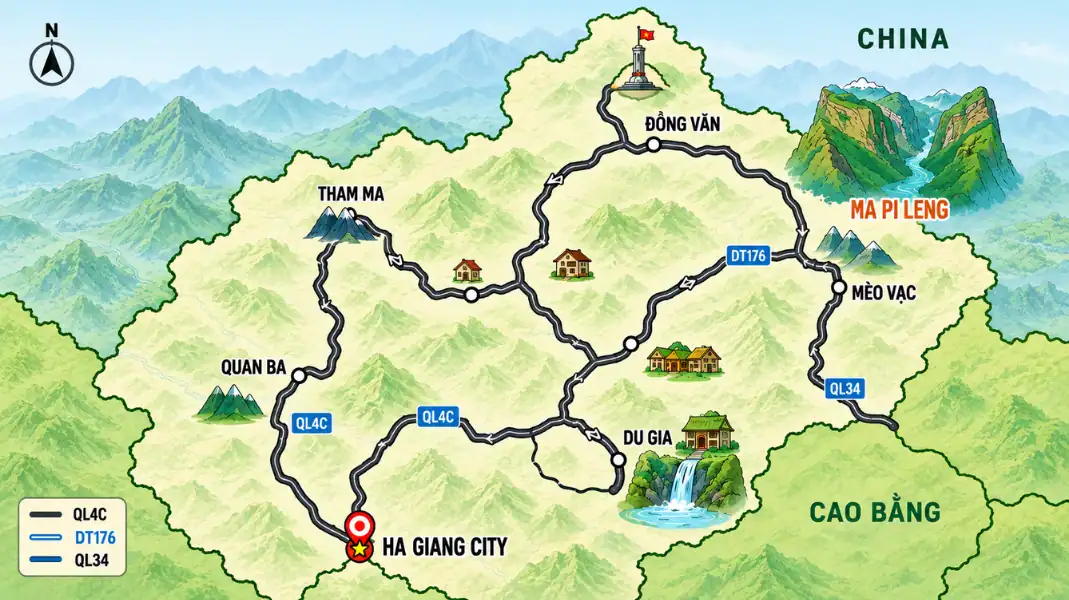
- Day 1: Ha Giang City to Yen Minh (96 km): climb Bac Sum Pass, stop at Heaven’s Gate in Quan Ba, pass the Twin Mountains and ride through pine forests to Yen Minh.
- Day 2: Yen Minh to Dong Van via Lung Cu (115 km): cross Tham Ma Pass, visit the H’Mong King Palace, detour to Lung Cu Flag Tower, the northernmost point of Vietnam, and overnight in Dong Van Old Quarter.
- Day 3: Dong Van to Meo Vac and Du Gia (90 km): cross the Ma Pi Leng Pass, optionally walk the Sky Path, then descend via Mau Due on DT176 to Du Gia.
- Day 4: Du Gia to Ha Giang City (74 km): swim at Du Gia Waterfall in the morning, descend through the Bac Me and Tung Ba valley and return to Ha Giang City by about 15:30.
For detailed waypoints and road segments, see our Complete Ha Giang Loop Map.
What a 4-day Easy Rider tour includes
| Item | TVPalm Easy Rider tour (4 days, 3 nights) |
|---|---|
| Motorbike and fuel | Included |
| Driver and guide | Included (local guide) |
| Accommodation | Included (private rooms in local homestays) |
| Meals | Included (all breakfasts, lunches and dinners) |
| Permits and entrance fees | Included in the tour price (border permit 260,000 VND per guest, about $10) |
| Insurance | PVI Inbound Insurance included |
| Price per person | From $359 |
Passenger safety and preparation checklist
Before you leave Ha Giang City, check each item with your guide:
- Helmet: wear a 3/4 or full-face helmet with an undamaged visor. Open half-helmets give no chin protection in a fall.
- Clothing: closed shoes, long trousers and a jacket, even on hot days.
- Rain gear: pack a 2-piece waterproof rain suit, waterproof boot covers and dry bags for your luggage.
- Riding on the bike: keep your feet on the pegs, hold the grab rail and lean with the guide through bends, not against them.
- No night driving: we plan to reach each homestay by about 16:30, before the mountain passes fill with fog and unlit truck traffic.
FAQ
How much luggage can I bring on a motorbike tour?
Space on the motorbike is limited. Pack a small-to-medium soft backpack (10-15 kg maximum) that can be strapped securely to the rear rack. Large hard-shell suitcases cannot be carried; TVPalm Ecolodge provides secure, free luggage storage for your main bags while you complete the Loop with your daypack.
Do I need a licence to ride as a passenger?
No. Passengers on a TVPalm Easy Rider tour need no motorcycle licence and no International Driving Permit.
Does TVPalm offer self-drive tours?
No. TVPalm sells Easy Rider tours only and does not rent or encourage self-drive trips.
Written by Nguyễn Văn Trung, founder of TVPalm. He has led small-group trips across Northeast Vietnam since 2021.


