

Counting on ATMs along the Ha Giang Loop is a common mistake. Machines in the district towns run out of notes, go offline in storms and sometimes refuse foreign cards, often when you are far from the city and out of signal.
Are there ATMs on the Ha Giang Loop?
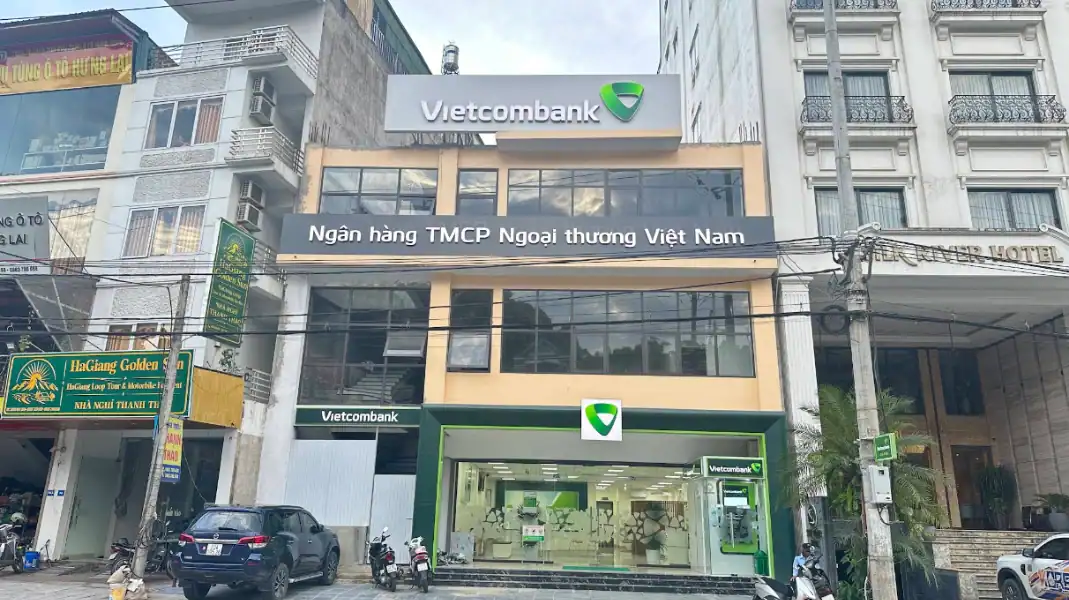
Yes, in Ha Giang City and in the district towns of Quan Ba, Yen Minh, Dong Van and Meo Vac. But Ha Giang City is the only place where you can really count on them. Treat every ATM after that as a backup, not a plan.
District ATMs can run dry on Sunday market days, lose power in mountain storms, and reject international cards when the connection is slow.
ATMs along the loop (for reference):
| Location | Bank / ATM | Street Address | Foreign Card Reliability |
|---|---|---|---|
| Ha Giang City | Vietcombank | 141 Nguyen Trai Street | Excellent – Visa, Mastercard, Plus |
| Ha Giang City | BIDV | 264 Nguyen Trai Street | Excellent – Visa, Mastercard |
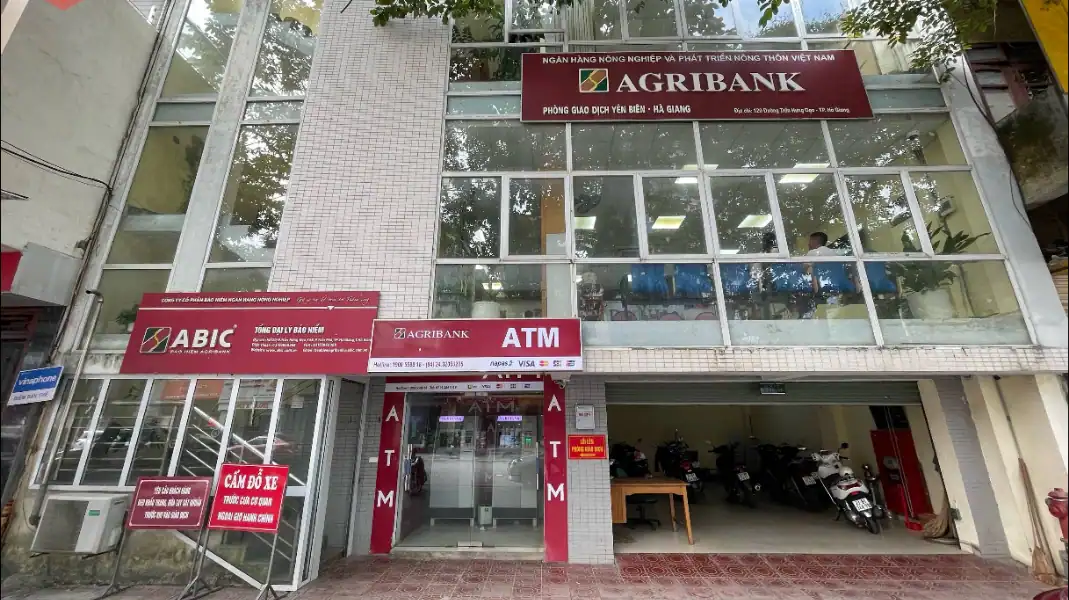
| Ha Giang City | Agribank | 12 Nguyen Chi Thanh Street | Good – NAPAS, Visa |
| Ha Giang City | Vietinbank | 188 Tran Phu Street | Good – Visa, JCB |
| Yen Minh Town | BIDV | 153A Tran Hung Dao Street (Group 03) | Moderate – Accepts Visa, often empty on weekends |
| Dong Van Town | BIDV | 01A Ba Thang Hai Street (Group 6) | Moderate – Most reliable in Dong Van |
| Dong Van Town | Agribank | Dong Van Town Center | Low-Moderate – Cash runs out by Sunday afternoon |
| Meo Vac Town | Agribank | Group 2, Meo Vac Town | Low-Moderate – Power outages common |
Our rule: leave Ha Giang City with all the cash you need for the loop. Nobody should be looking for an ATM at the top of Ma Pi Leng Pass.
How much cash to bring
On a TVPalm easy rider tour, rooms, meals, entrance fees and the border permit are already included. Bring cash for drinks, snacks, souvenirs, tips and a small reserve.
Typical daily costs on the road (for reference only):
| Expense Category | Daily Cost (VND) | Notes |
|---|---|---|
| Homestay Bed | 150,000 – 250,000 | Basic room or dorm; some include breakfast |
| Evening Family Dinner | 80,000 – 150,000 | Communal homestay dinner with local rice wine |
| Breakfast & Lunch | 80,000 – 150,000 | Local noodle soup + market snacks |
| Drinking Water & Coffee | 30,000 – 60,000 | 500ml bottles + ca phe trung at rest stops |
| Border Permit (one-time) | 260,000 | Mandatory for foreign nationals; arranged by TVPalm on its tours |
| Entrance Fees | 20,000 – 50,000 | Lung Cu Flag Tower, Fairy Bosom peaks, viewpoints |
Daily total: roughly 620,000 – 1,460,000 VND. For a 4-day independent loop, many travellers carry 4,000,000 – 5,000,000 VND, including the permit and a 1,000,000 VND reserve. On a TVPalm tour you need far less.
ATM limits and fees
Knowing the limits saves you from paying fees on many small withdrawals:
- Per withdrawal: district ATMs often allow less per withdrawal than the big banks in Ha Giang City. Check the screen before you choose an amount.
- Bank fees: Vietnamese ATMs usually charge foreign cards a small fee per withdrawal.
- Daily cap: most Vietnamese ATMs also have a daily limit across all withdrawals.
- Your own bank: may add a foreign transaction fee and a flat international ATM fee.
To keep fees down: use a card with low or no foreign fees, and make one large withdrawal in Ha Giang City rather than several small ones on the loop.
If a district ATM fails: backup options
At some point, a remote ATM may let you down. Know your options:
- Homestay owner: some long-established hosts can give you cash against a card payment or bank transfer, usually for a small fee. Ask politely.
- Bank QR transfer (VietQR): some guesthouses in Dong Van accept a bank transfer by QR code. You need mobile data and a way to pay into a Vietnamese account.
- US dollars: a few shops in Dong Van and Meo Vac will change US dollar notes, at a poor rate. Keep a small note only as a last resort.
- Your tour operator: if you travel with TVPalm, tell your guide. We can usually help with a short-term cash problem.
In the highland border districts, card and phone payment is still limited in the villages. Carry enough Vietnamese dong for the whole trip.
Cards and phone payments in Ha Giang
- Which cards: bring two debit cards on different networks (one Visa, one Mastercard), kept in separate bags.
- Tell your bank: give your home bank your travel dates before you leave, so a withdrawal in a Vietnamese border area does not trigger a fraud block.
- MoMo and ZaloPay: these Vietnamese wallets need a local phone number and SIM, so they are not practical for a short visit.
- Credit cards: accepted in only a few places in Dong Van town. Elsewhere, assume cash only.
Cash checklist before you leave
- Withdraw your full loop budget at an ATM in Ha Giang City
- Work out your budget: daily spend × number of days + 260,000 VND permit + a 1,000,000 VND reserve
- Split your cash into three waterproof bags: one for the day, one main reserve, one emergency stash
- Ask for a mix of 50,000, 100,000 and 200,000 VND notes
- Bring two debit cards on different networks, kept in separate places
- Tell your home bank your travel dates
- Save the location of an ATM in Dong Van on your offline map, as a backup
Frequently asked questions
Can I pay by Visa or Mastercard at homestays on the loop?
Usually not. Homestays, petrol stations, roadside restaurants and markets on the loop run on cash in Vietnamese dong. Even in Dong Van and Meo Vac, few businesses take cards.
Which ATM should I use in Ha Giang City before the loop?
The big banks in the city centre, such as Vietcombank and BIDV, are the most reliable for foreign cards and usually have English menus. Withdraw during the day, when the connection is better.
What if I run out of cash in a remote village?
Talk to your homestay host first: many have helped travellers in the same situation, with a small advance or a contact in the next town. On a TVPalm trip, tell your guide.
Written by Nguyễn Văn Trung, founder of TVPalm. He has led small-group trips across Northeast Vietnam since 2021.


