

Some mornings we leave Khuoi My before the sky is fully light.
Not to guarantee a sighting.
But to have a better chance of not disturbing them.
No one talks much on the way.
The engine stops very early.
The remaining distance is only footsteps, the sound of water below a rock crack, and the wind moving through treetops still heavy with dew.
Some mornings the forest is very quiet.
Some mornings the birds begin singing very early.
Some mornings we only hear dry leaves being slowly turned by the wind.
We stop at a familiar clearing.
Silent.
Waiting.
Then keep walking.
Near midday.
Turn back.
Did not see any monkeys.
That is completely normal.
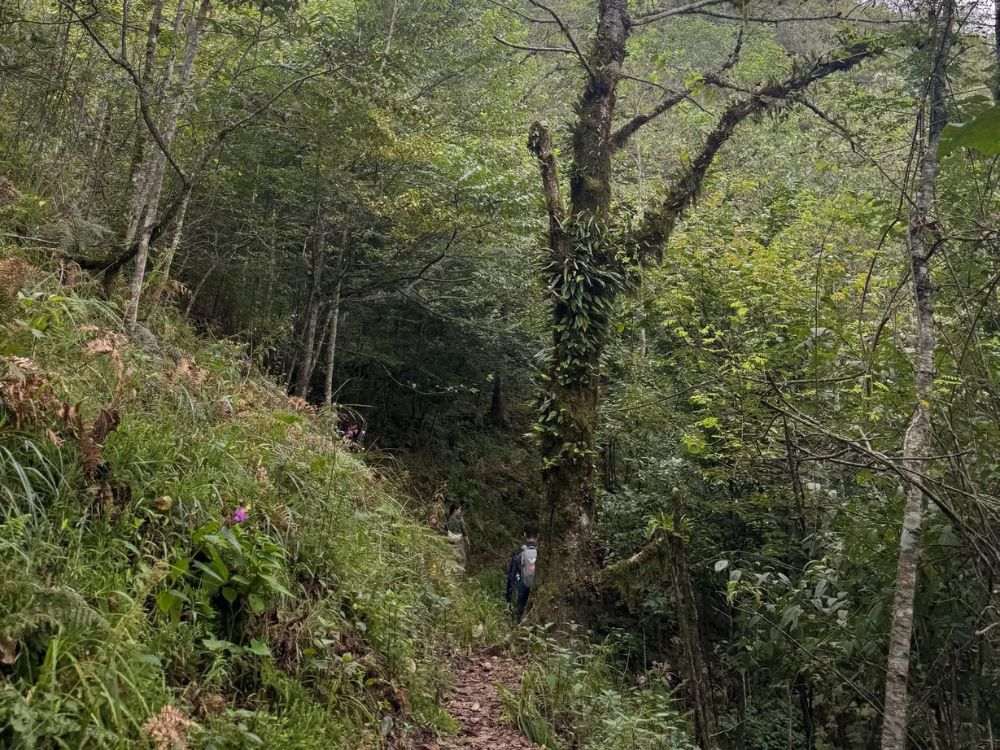
Nature does not work on a human schedule
Many people going on a wildlife observation trip for the first time ask:
“What if we don’t see them?”
The question is understandable.
But it also shows how accustomed we have become to a world where everything can be arranged according to plan.
Planes depart on time.
Hotels check in on time.
Dinner is served on time.
Nature is not.
A troop of Tonkin snub-nosed monkeys does not appear because there are visitors waiting.
They move by food source.
By weather.
By wind direction.
By safety.
By signals that humans understand only a tiny fraction of.
Some days they are very close.
Some days they have already crossed to another slope before sunrise.
Some days they sense human presence from far away and quietly change direction.
That is not a failure of the trip.
That is nature still being nature.

If we see them every time, perhaps we should be more worried than pleased
Wild animals survive through vigilance.
Knowing how to avoid people.
Knowing how to change routes.
Knowing when to leave a place with sound.
Knowing how to keep distance.
If a critically endangered species like the Tonkin snub-nosed monkey always appeared on cue, always stayed close to people, always remained calm enough to be photographed — the first question we should probably ask is not “how wonderful”.
It is: “What happened to their instinct for wariness?”
A healthy forest is not a place where people can easily approach any species.
A healthy forest is a place where animals still have the right to choose not to appear.
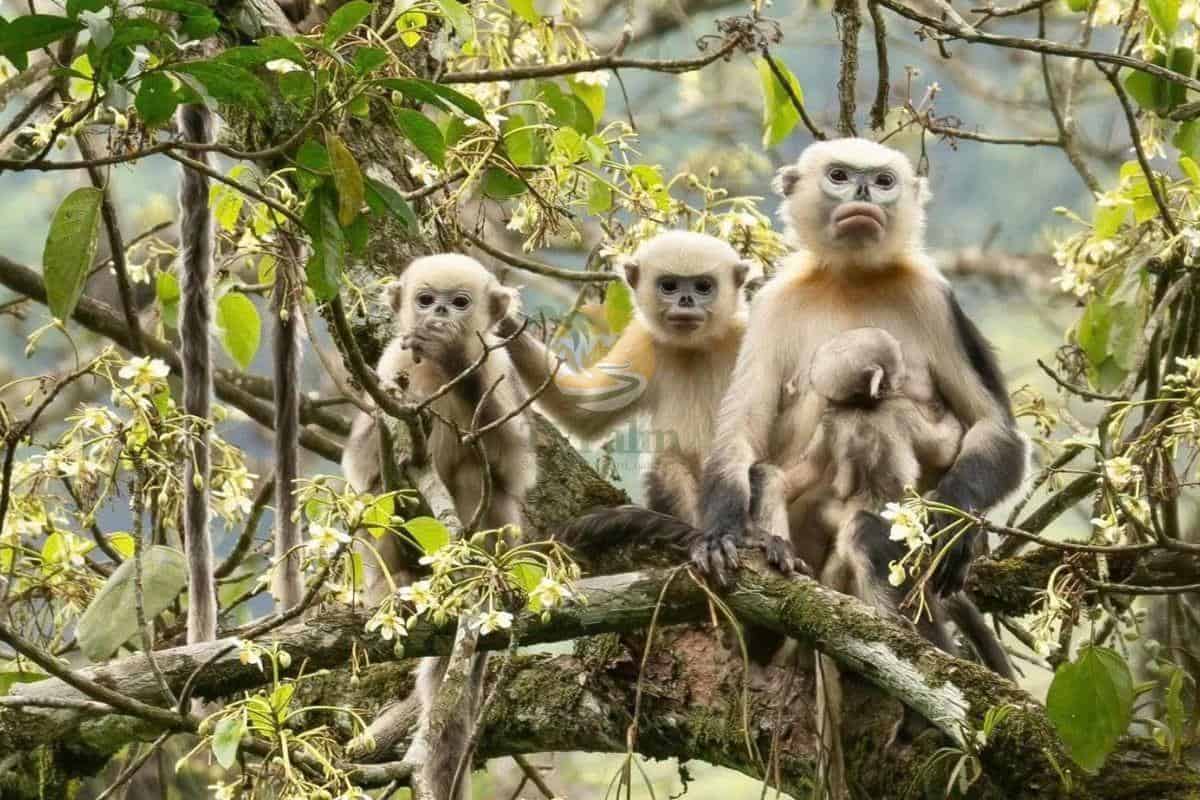
We have learned to observe more than to search
Some mornings we see no monkeys.
But we see many other things.
A freshly broken branch.
A small footprint on damp soil.
A forest tree just budding.
An unfamiliar birdsong from the slope.
A thin layer of mist dissolving very slowly as the sun rises.
A stream still clear after the heavy rain the night before.
Some trips return with no photographs at all.
But they help us understand the forest a little more.
And perhaps that is also the reason for returning many times.
Not to collect moments.
But to learn to read the very small changes of nature.
We will not call.
We will not make sounds.
We will not use recorded animal calls.
We will not feed them.
We will not chase.
We will not close the distance.
We will not pursue just to get one more photograph.
Some people ask why.
Because a memorable moment for a human being is not worth trading for the distress of a species struggling to survive.
A beautiful photograph can be shared thousands of times.
But a troop of monkeys whose behavior has been altered will carry that consequence much longer.
There are limits not set by law.
But by the conscience of those doing this work.
What TVPalm Can Do
We can prepare visitors to understand before entering the forest.
We can explain why silence is needed.
Why small groups matter.
Why distance is always more important than a close-up photograph.
Why some trips end without seeing the animal you hoped to find.
We can tell more about the forest.
About the habitat.
About the trees.
About the water.
About the rangers.
About the local community.
So that visitors understand: a wildlife observation experience has never only been about the animal.
It is about the whole ecosystem holding that animal’s life.
But there is one thing we will not do.
What We Will Not Do
We will not promise you will see the monkeys.
We will not advertise with guaranteed promises.
We will not put pressure on guides to “find them at any cost”.
We will not consider a trip without a sighting a failure.
We will not trade the forest’s peace for an easier-to-sell experience.
We will not forget that, before it is something we want to see, the Tonkin snub-nosed monkey is a wild animal trying to survive.
Some trips succeed precisely because… nothing happened
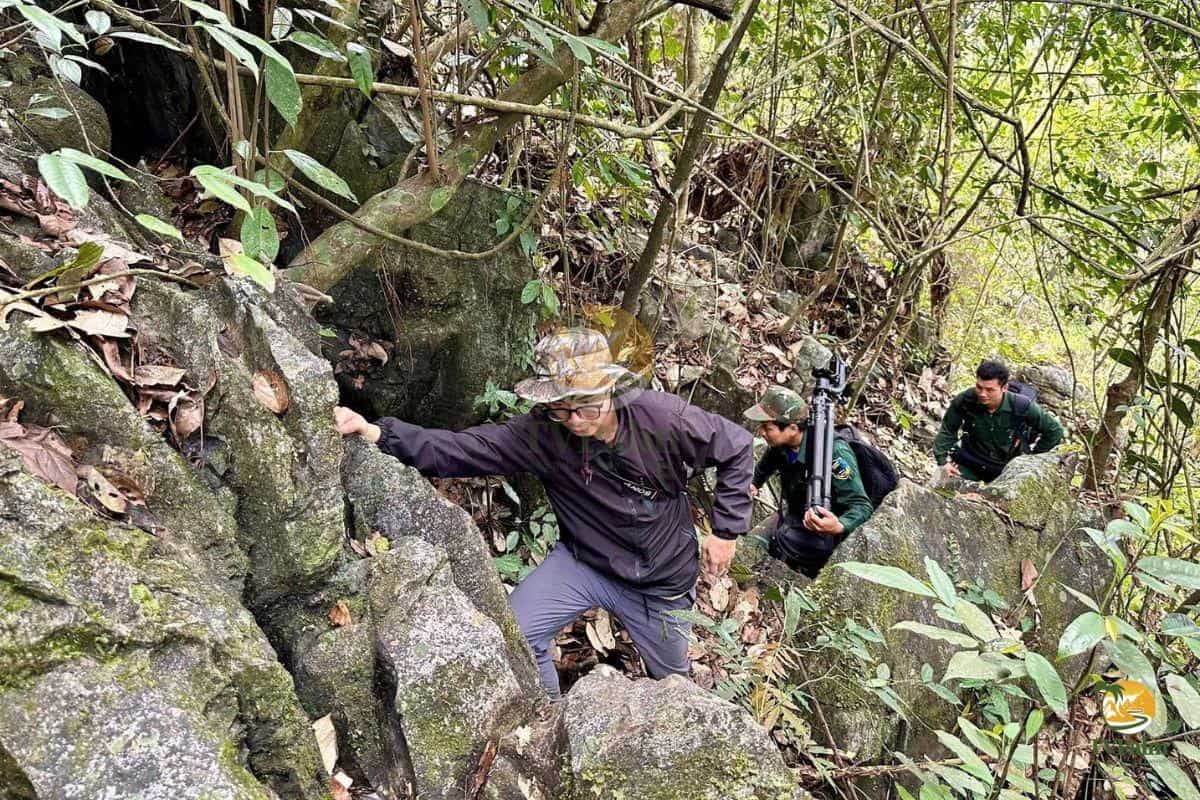
Some mornings we come back with no photographs.
Nothing dramatic enough to post on social media.
No story that would make anyone gasp.
Only shoes still carrying soil.
A little of the forest’s scent still on our clothes.
And the feeling that the forest today is still as quiet as it always was.
Many years from now, perhaps we will have forgotten which slope we stood on.
Forgotten how long we waited.
Forgotten whether the sky that day was cloudy or bright.
But perhaps one thing will remain.
That nature has never owed human beings a spectacular moment.
And perhaps that is the most beautiful thing of all.
Because if a forest is still peaceful enough that a rare animal can choose not to appear before people — then that forest still holds its own dignity.
Sometimes the best result of a trip into nature is not what we bring back.
But what we chose not to take away.


