


Some roads become famous too quickly.
The Ha Giang Loop is one of them
In just a few years, from a remote journey for those who loved mountains, mountain passes and the feeling of riding through places still very real — the Ha Giang Loop has become a name appearing densely on social media, in travel groups, in short videos, in very easy invitations: beautiful scenery, freedom, cheap, fun, worth doing once in a lifetime.
None of that is wrong.
Ha Giang is very beautiful.
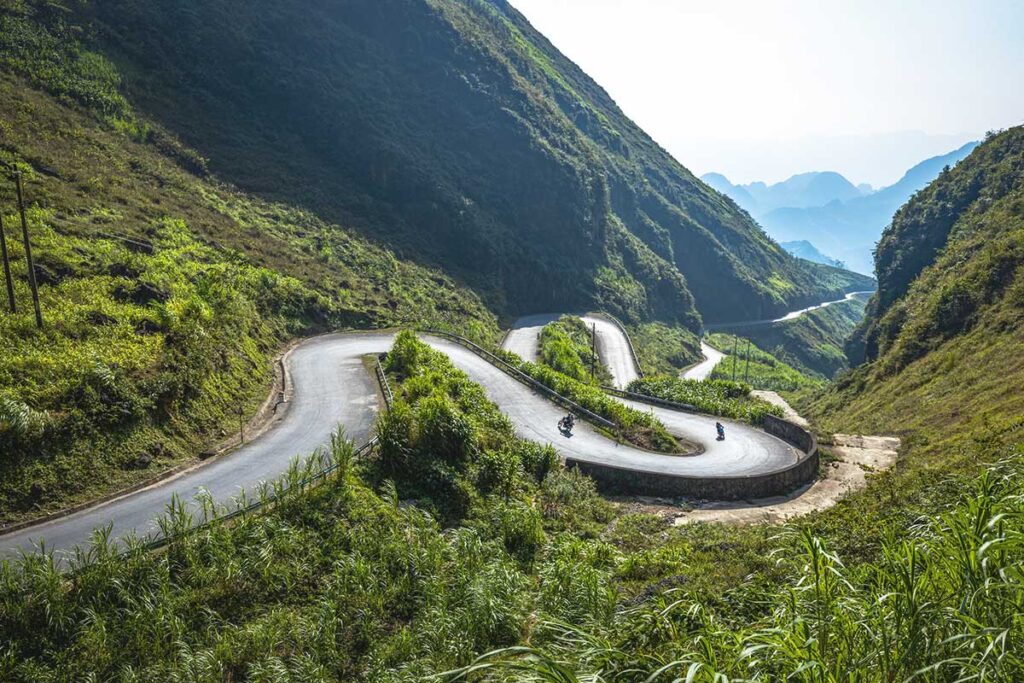
The roads through Quan Ba, Yen Minh, Dong Van, Meo Vac, Ma Pi Leng have enormous pull. Rocky karst, valleys, the Nho Que River, villages perched on mountain slopes, foggy mornings, hairpin bends opening onto new mountain layers — all of it is real.
But when a place becomes very famous, the important question is no longer: “Should I go?”
It is: “How should I go so that I do not contribute to ruining the very place I want to visit?”
A beautiful road does not automatically make a good trip
Many people think that simply going to Ha Giang will give them a memorable trip.
Not quite.
Beautiful scenery can make a strong first impression. But a good trip depends on many other things: the guide, the pace, the level of safety, how you work with local communities, vehicle quality, sleeping spots, how risks are handled, how weather is navigated — and especially the attitude of the organizer toward the land they are using.
A Loop trip without responsibility can still have beautiful photographs.
It can still have videos with many views.
It can still be cheap.
It can still be fun for a few days.
But then who lives with the noise, the waste, the accidents, the overloaded roads, the hastily-built homestays, the culture turned into a show, the tour groups passing through villages as if passing through a backdrop?
Not the visitors.
The local people who stay.
The mountains that stay.
The roads that stay.
The communities that stay.
And so a responsible trip must begin before a visitor books the tour.
It begins with the right questions.
Question one: who is actually guiding you on the road?
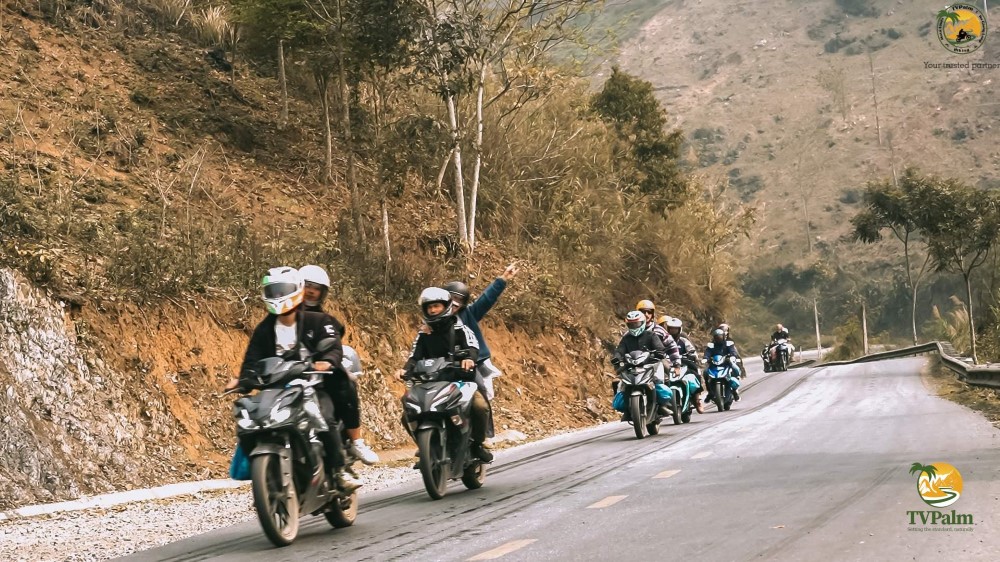
On a Ha Giang Loop, the guide is not simply someone who knows how to ride.
They decide a great many things: fast or slow, where to stop, which sections to avoid, how to handle rain, how to interact with local people, whether to push the schedule, whether to put safety before experience.
A good easy rider needs more than steady hands.
They need to understand mountain roads.
Understand the weather.
Understand a visitor’s limits.
Know when to stop.
Know when not to push.
Know that carrying a passenger is not a display of riding skill — it is accepting responsibility for another person’s safety.
Before booking, ask: is the guide trained? Do they know this route? Can they handle difficult situations? Are their health, documents and vehicle checked? Are they paid fairly?
If an operator cannot answer clearly about the person who will actually guide you on the road, be careful.
Because on the Loop, the most important person is not the one who sold you the tour.
It is the one sitting behind the handlebars.
Question two: is this trip designed for experience or for quantity?
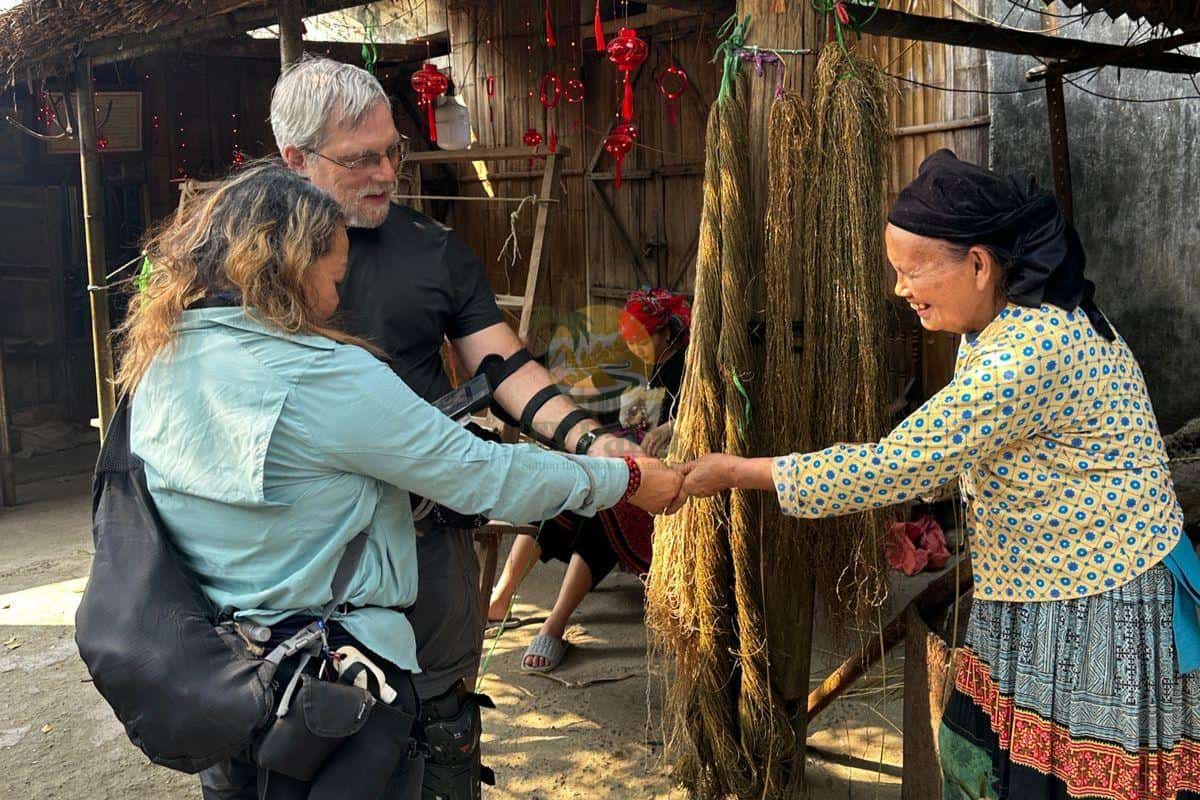
Some tours are designed to visit as many stops as possible.
Wake up early, ride fast, stop briefly, photograph, get back on, ride on.
The itinerary looks full.
But the experience is thin.
Traveling like that, visitors can “complete” the Ha Giang Loop and have barely been in Ha Giang at all.
A responsible trip does not necessarily go fewer places. But it must know why it goes as it does.
Is there enough rest time?
Enough time so the rider is not overworked?
Are dangerous stretches avoided when weather is poor?
Is local life respected?
Do visitors understand the places they pass through, or are they only taken to familiar photo spots?
A good itinerary is not the fullest itinerary.
It is the itinerary with room to breathe.
Question three: where does the low price come from?
Visitors have every right to think about price.
But low price always has a source.
It may come from cutting back on vehicle maintenance.
From paying the rider too little.
From using poor-quality accommodation.
From having no safety procedures.
From having no proper insurance.
From pushing risk onto the visitor, the guide, the easy rider, or the local community.
An expensive tour is not always a good tour.
But a very cheap tour usually deserves careful questioning.
In responsible tourism, price is not just the number the visitor pays.
It is also how that money is distributed among the people who actually make the trip: the rider, the local guesthouse, the cook, the guide, the vehicle mechanic, the logistics team, the community the visitors pass through.
If a trip is so cheap that no one in that chain is paid decently, then cheap is no longer an advantage.
It is a warning.
Question four: is safety being told truthfully or softened?
The Ha Giang Loop is beautiful, but it is not an easy road.
Narrow mountain passes. Many bends. Some steep sections. Mist. Rain. Trucks. Falling rocks. Road surfaces that change by season. Days with very poor visibility. Some visitors riding pillion on a mountain motorbike for the first time — or riding themselves on terrain they do not understand.
A responsible operator will not minimize risk just to make visitors comfortable enough to book.
They will be clear.
They will ask about riding experience if visitors want to self-drive.
They will recommend an easy rider when needed.
They will have a vehicle check process.
They will have proper helmets.
They will have speed limits.
They will adjust the itinerary if weather is unsafe.
And they will accept that sometimes the best decision is not to continue.
Safety should not be a small line in the terms and conditions.
It must be the way the entire trip is organized.
Question five: does this trip respect the local community?
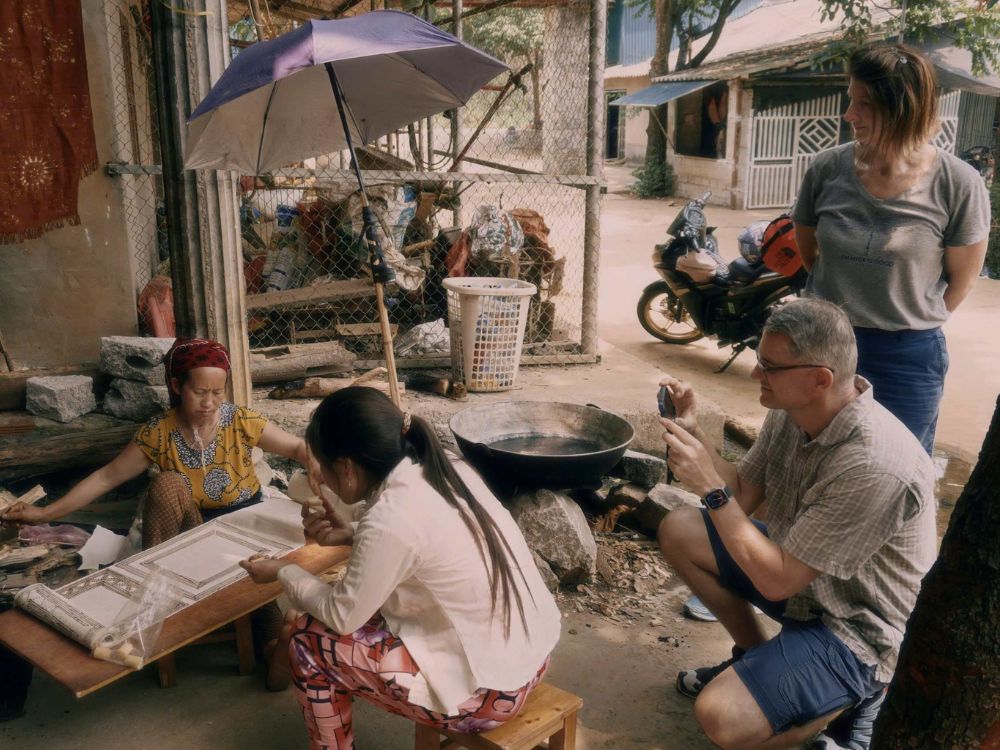
Ha Giang is not only scenery.
Ha Giang is home to many ethnic communities — with languages, customs, agricultural calendars, private spaces and limits that need to be respected.
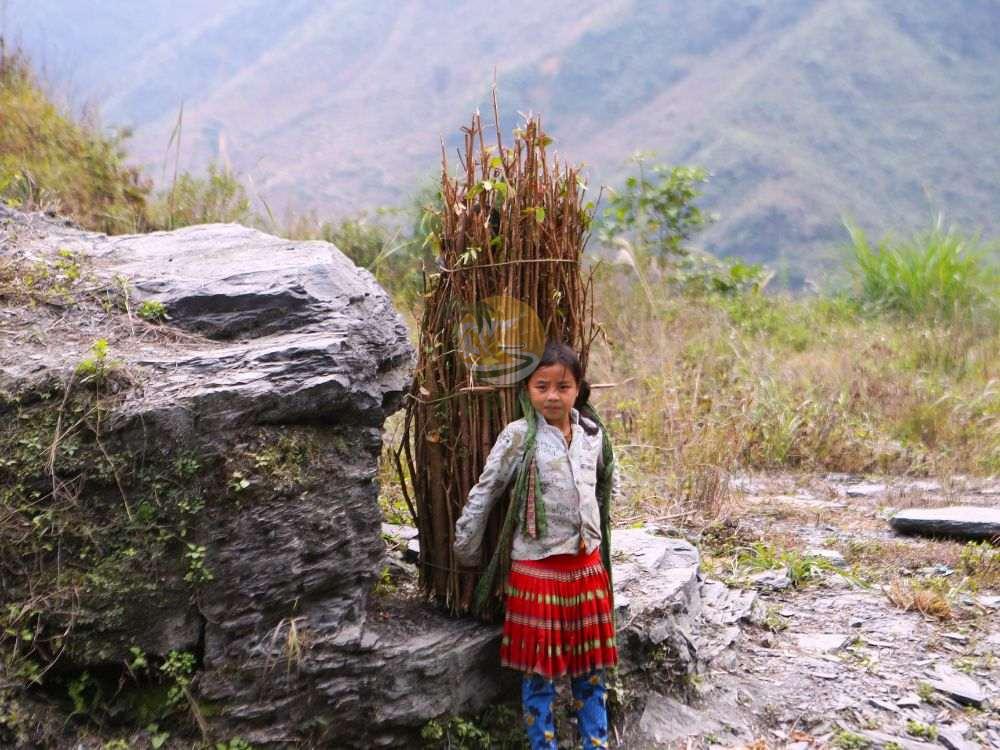
An irresponsible trip can turn a village into a photo stop, turn children into recipients of candy, turn traditional dress into a backdrop, turn a market into a stage, turn a family home into a place visitors walk through without understanding whose life they just passed through.
Before booking, ask: does the operator guide visitors on how to behave? Do they remind visitors to ask permission before photographing? Do they work with long-term local suppliers? Do they avoid behaviors that damage community dignity?
Responsible tourism does not begin with grand declarations.
It begins with how a visitor steps off a vehicle, greets a local person, puts the camera away at the right moment, and understands that not everything they see belongs to them.
Question six: does the operator know how to say “no”?
This is perhaps the most important question.
A responsible tourism operator must know how to say “no”.
No to groups too large if that compromises safety.
No to visitors who want to self-drive without enough experience.
No to overly packed itineraries.
No to continuing in unsuitable conditions.
No to stops that put pressure on communities.
No to using animals, children, dress or local life as entertainment.
No to selling a landscape at any cost.
If an operator always says “yes”, you should ask again.
Because in mountain tourism, not every visitor request should be accommodated.
Some refusals are exactly the sign of responsibility.
For us, the Ha Giang Loop is not a race through famous spots.
It is a journey through a living mountain region.
Through roads that are beautiful but fragile.
Through communities that do not exist to serve tourism.
Through places where fame is creating both opportunity and pressure.
We do not want to run the Loop as fast as possible.
We do not want to sell it with easy promises.
We do not want to turn a visitor’s sense of freedom into risk for the rider, the community and the visitor themselves.
If we organize a trip, we must put certain things first: safety, small groups, the right guide, an itinerary with room to breathe, respectful behavior, reliable local suppliers, and the right to change plans when real conditions no longer allow the original.
A proper Loop does not need to be perfect.
But it must be decent.
We will not sell the Ha Giang Loop as a risk-free adventure, not encourage self-driving by those without enough experience, not push easy riders beyond their limit to complete a packed schedule, not take too-large groups through places that cannot handle them, not turn villages, markets, children or local life into entertainment, and not promise that every day on the Loop will be beautiful.
And we will not see changing the itinerary for safety reasons as a failure.
Sometimes it is the most professional decision.
Riding the Loop is easy. Riding it right is hard.
Today, booking a Ha Giang Loop is not difficult.
There are many options.
Many price points.
Many promises.
Many beautiful images.
But before booking, perhaps the most important thing is not to ask which stops this tour includes.
It is to ask: who is guiding me? How are they treated? Is this trip safe? Is the local community respected? If the weather turns bad, who has the authority to stop? And does the organizer have enough principle to say “no” when needed?
Ha Giang does not need more hurried trips that only prove someone was there.
Ha Giang needs visitors who understand they are passing through a real place — where every bend, every village, every market, every road has its own life.
The Ha Giang Loop can be a very beautiful experience.
But that beauty only holds its meaning if after the trip, the road is still safer, the community still more respected, the guide still treated more fairly, and the visitor leaves with more understanding than just a few photographs.
That is a Loop worth remembering.
Not only because it was beautiful.
But because it was right.


